This series documents a tailoring shop in the Somali quarter of Kakuma refugee camp in northern Kenya. Kakuma hosts over 270,000 refugees from countries including Somalia, South Sudan, and the Democratic Republic of Congo, and has developed a dense informal economy built around small businesses, including tailoring, retail, and repair services.
The shop is run by a Somali refugee who learned tailoring through skills traditionally practiced by women in his family. Here, tailoring functions as both a source of income and a social space. Young men from different national and cultural backgrounds gather in and around the shop, spending time together while work continues. Conversation moves between English and Kiswahili, creating a shared space across communities.
The photographs were made during a single visit, following time spent building familiarity within the space. The images show moments of routine, work, and interaction within a predominantly male environment, structured by the rhythm of the sewing machine, the movement of the foot pedal, and the handling of fabric.
Attention is given to materials and personal objects within the space. Fabrics, tools, and reused materials sit alongside items such as bracelets, photographs, and handmade shoes, reflecting connections to family, identity, and place.
The series presents the shop as a place of work and exchange, where tailoring supports both livelihoods and social connection within the camp.
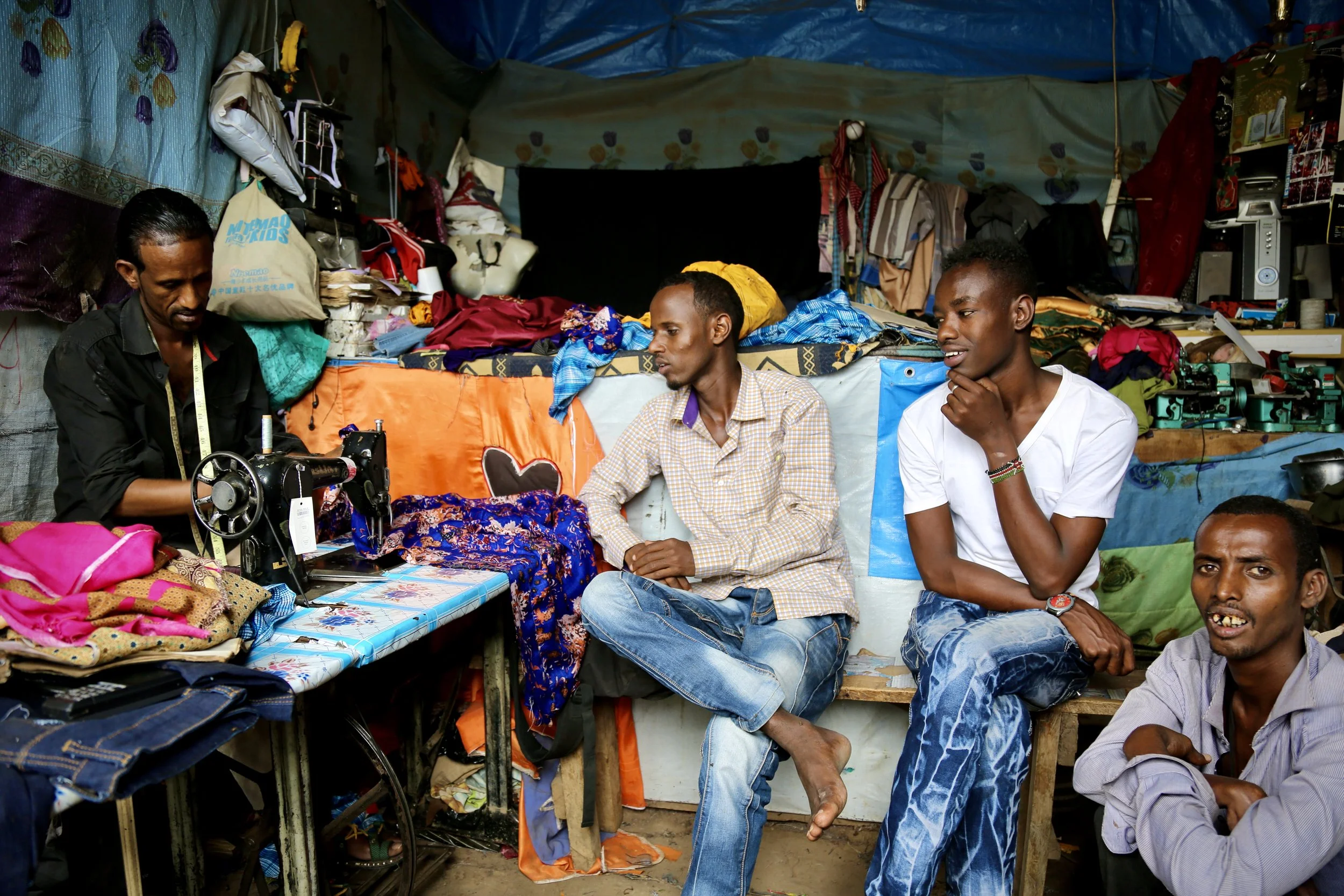
Young men gather inside a tailoring shop in the Somali quarter of Kakuma refugee camp, Kenya.
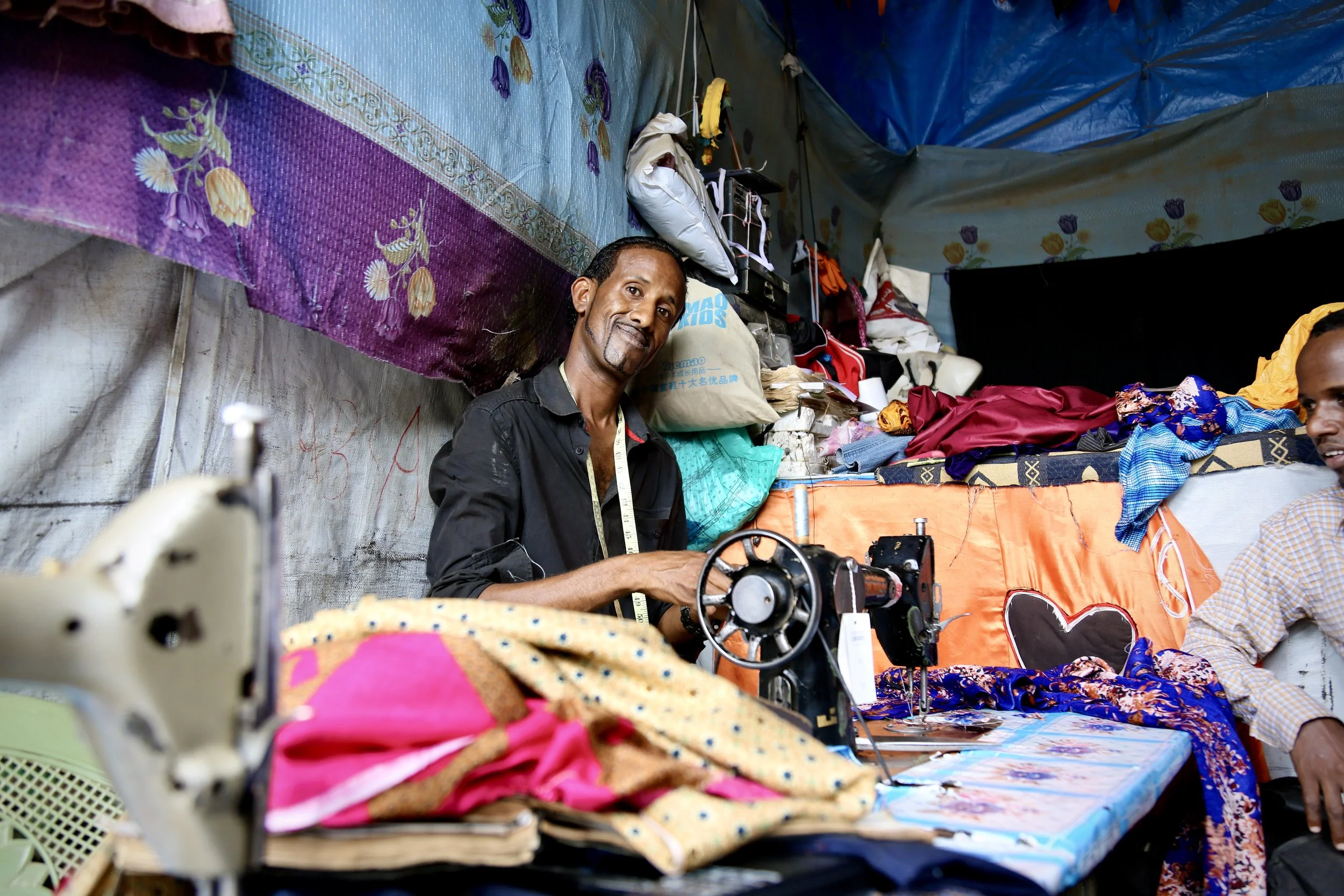
The tailor in his workshop. He learned the craft through skills practiced by women in his family.
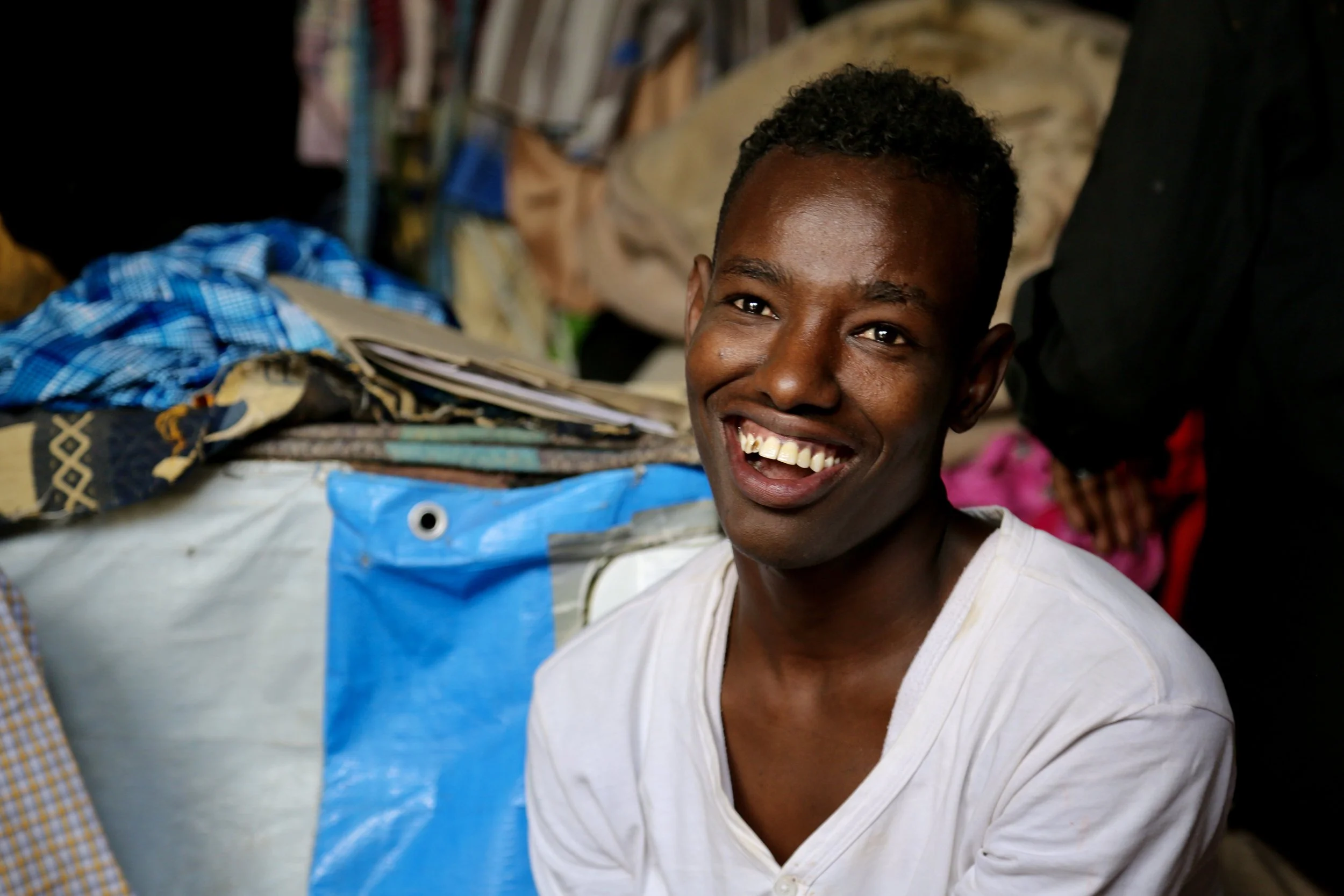
A young man from South Sudan spends time in the shop, exchanging jokes in English and Kiswahili with others who gather there.
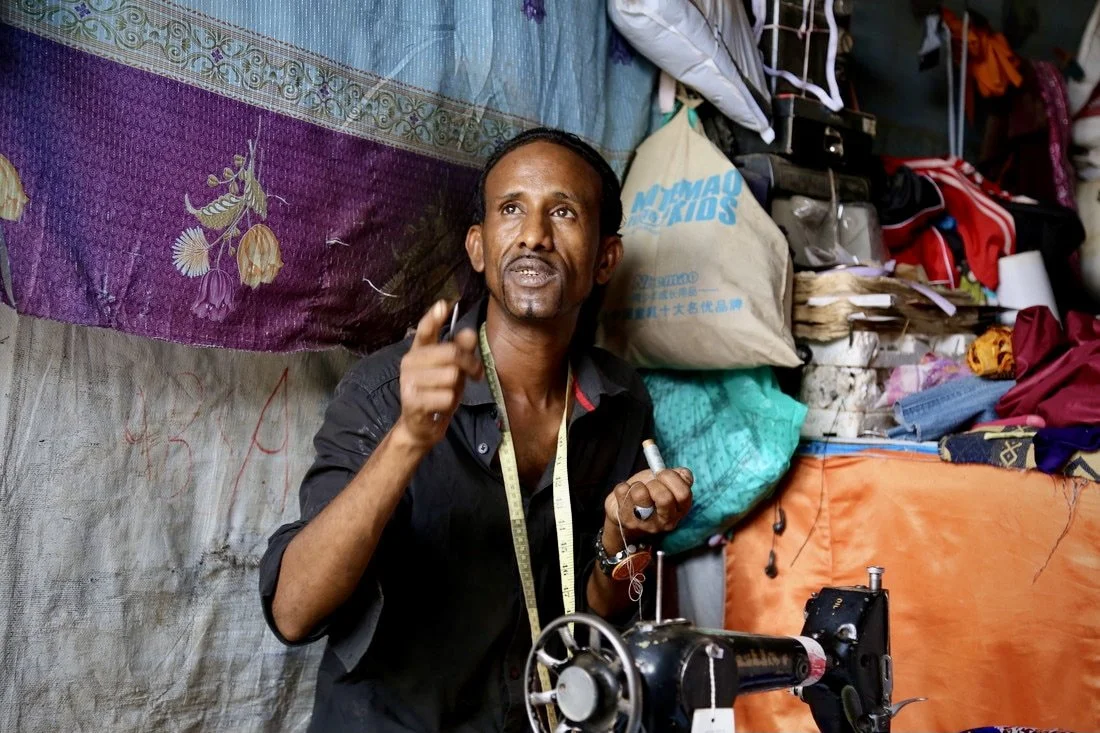
The tailor gestures while speaking with visitors who spend time in the shop.
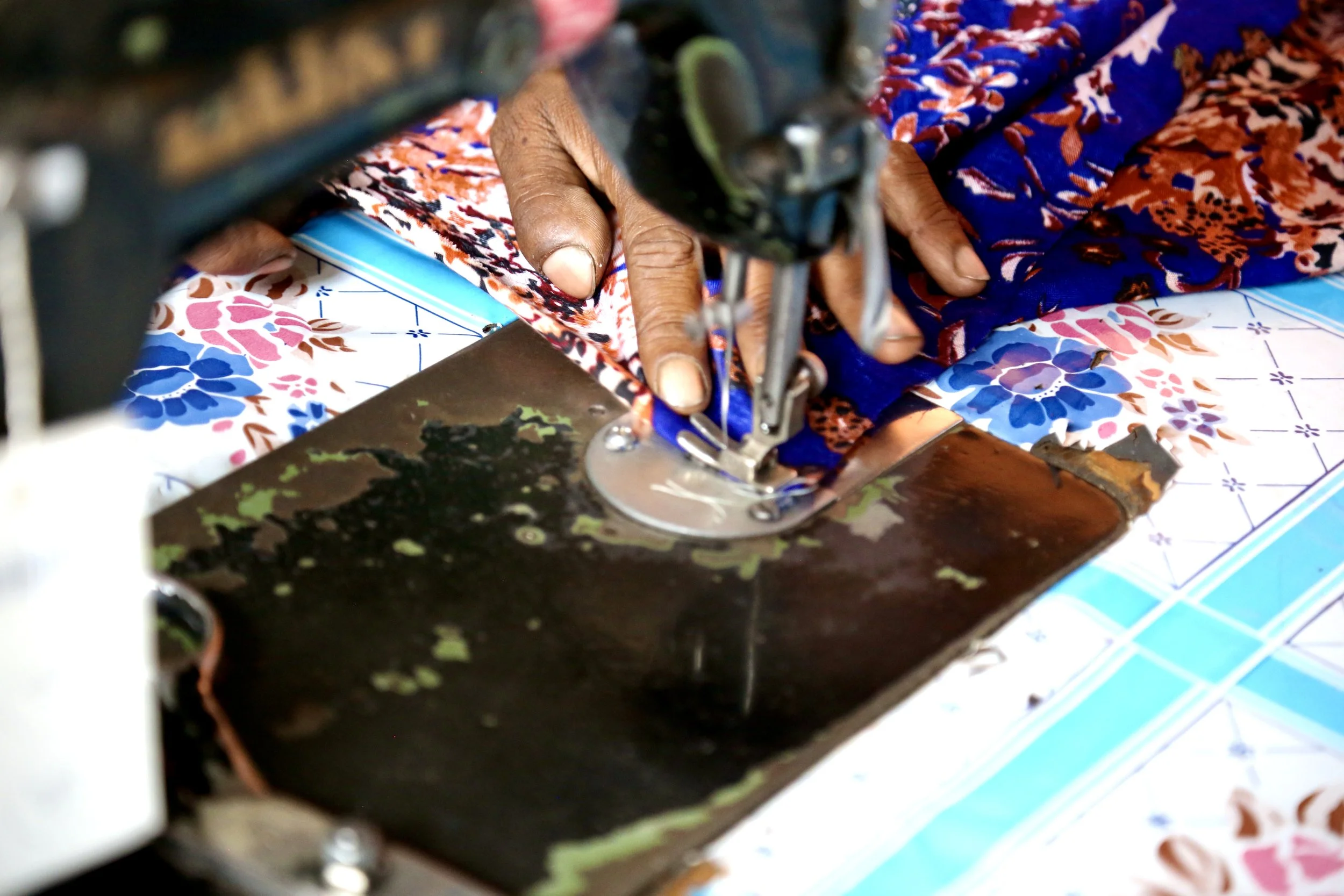
Fabric is guided through the sewing machine during garment construction.
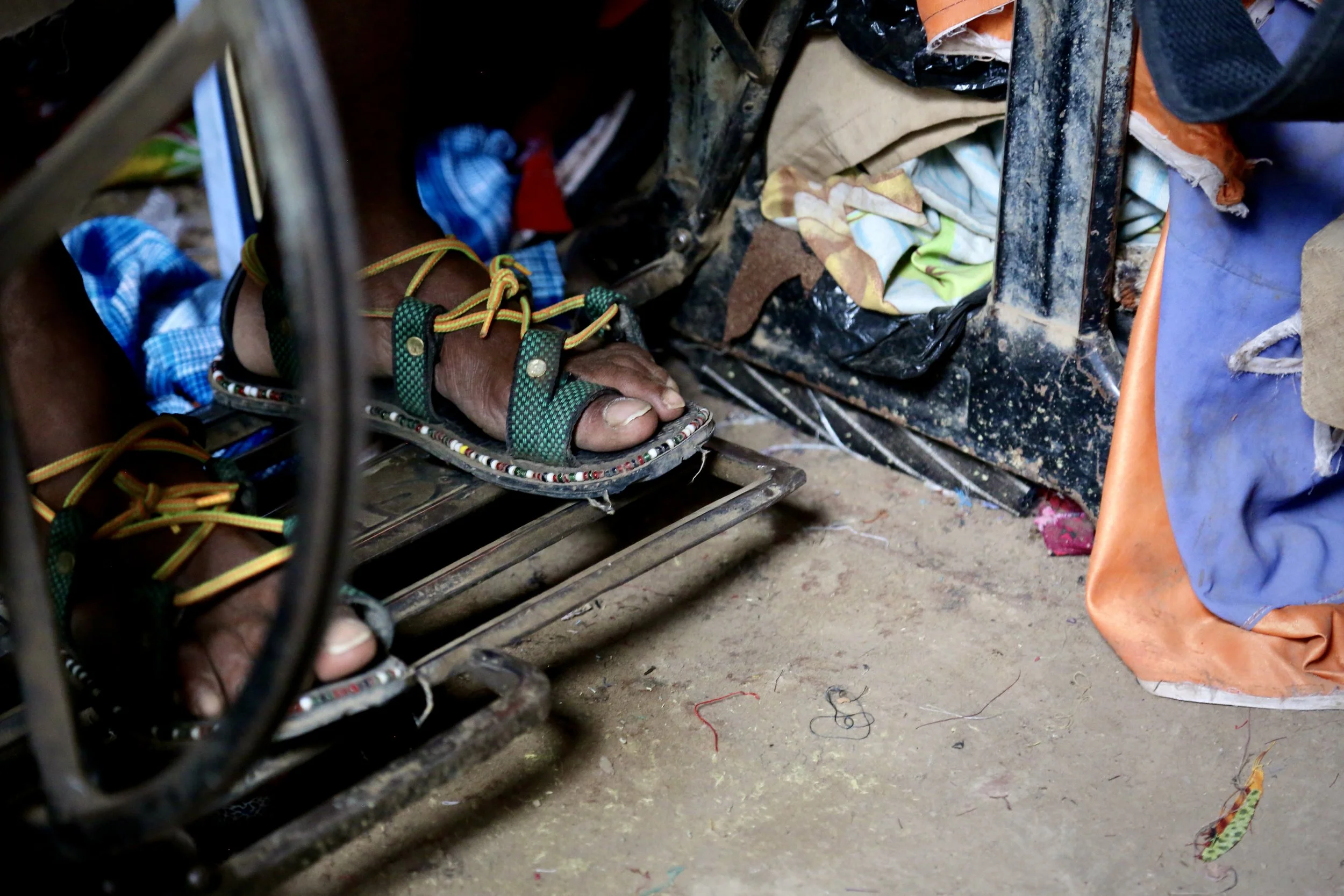
The tailor operates the foot pedal of his sewing machine. He wears locally made sandals, typical of the camp, crafted from recycled materials and decorated with beads.
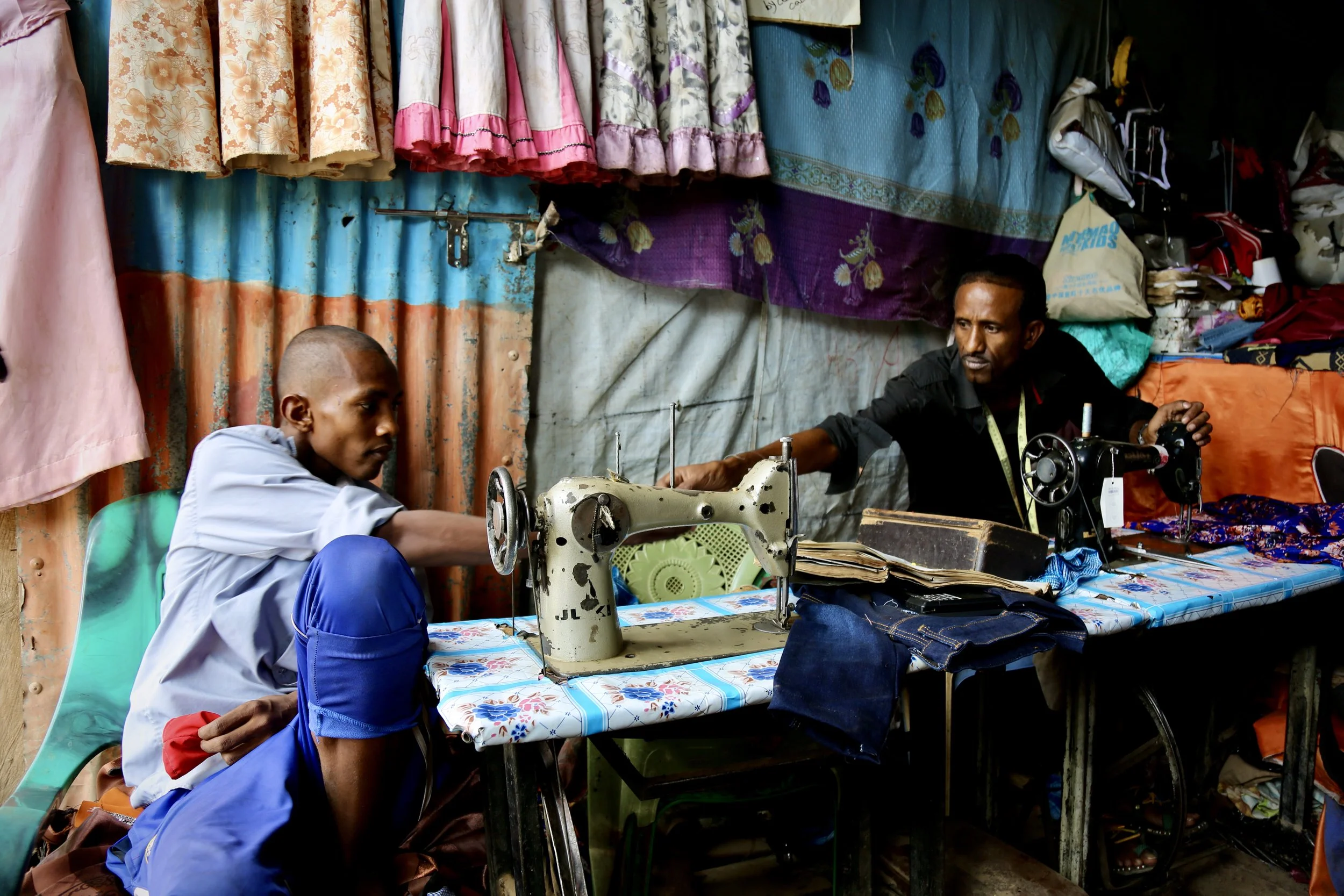
Work and conversation take place side by side inside the shop.
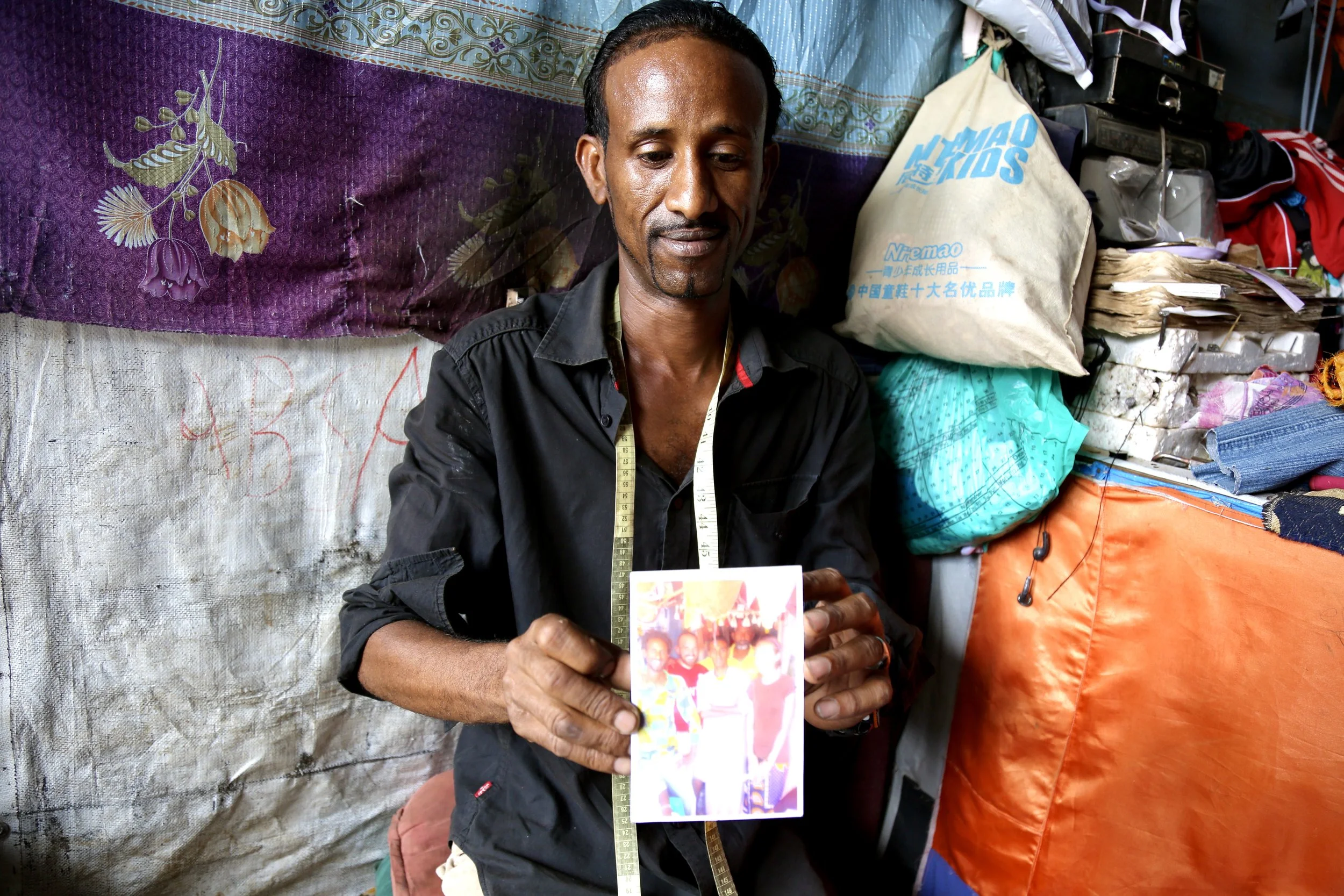
A photograph kept in the workshop references family and personal history.
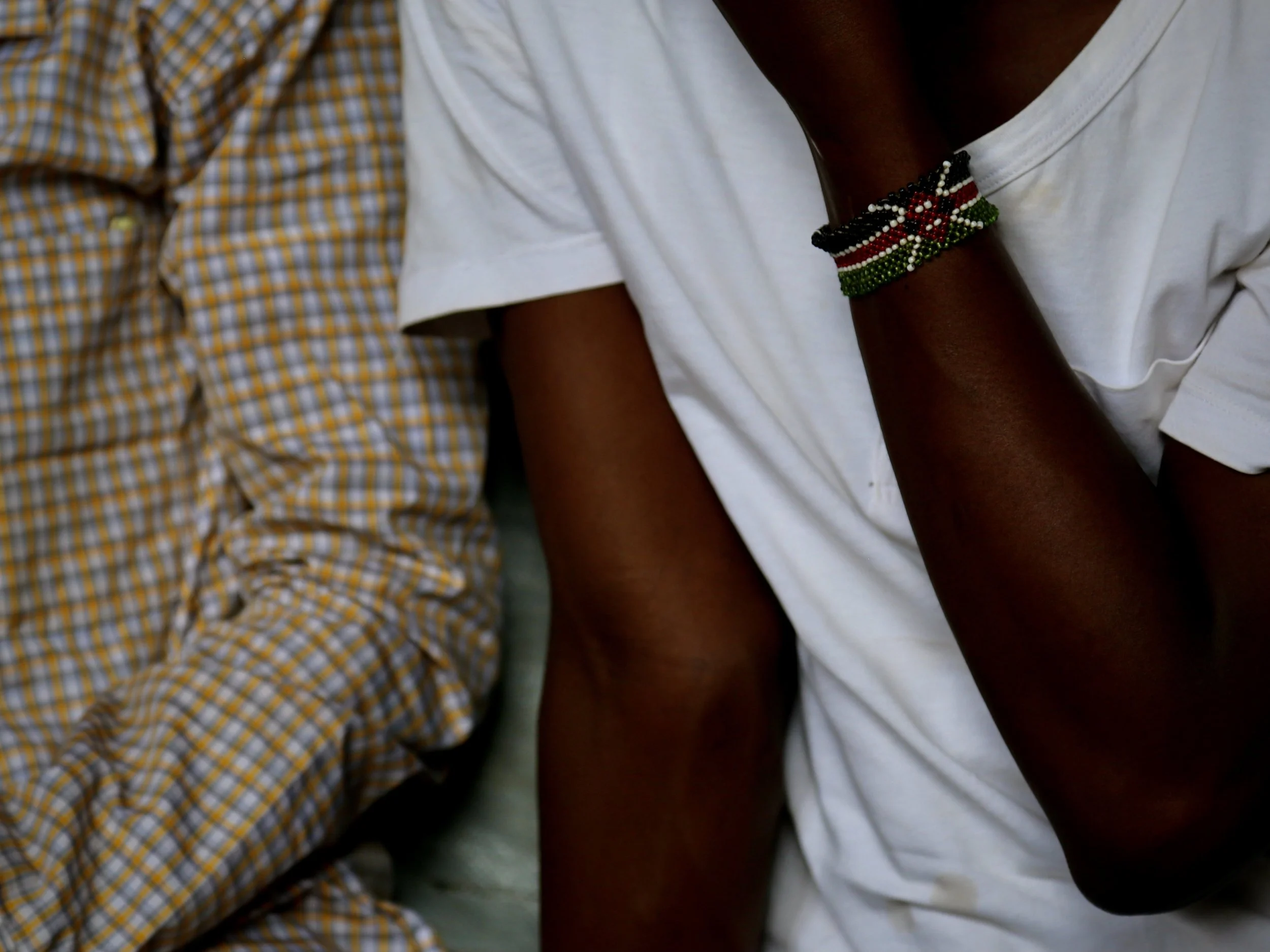
A young man from South Sudan wears a bracelet in the colours of Kenya while spending time in the shop.
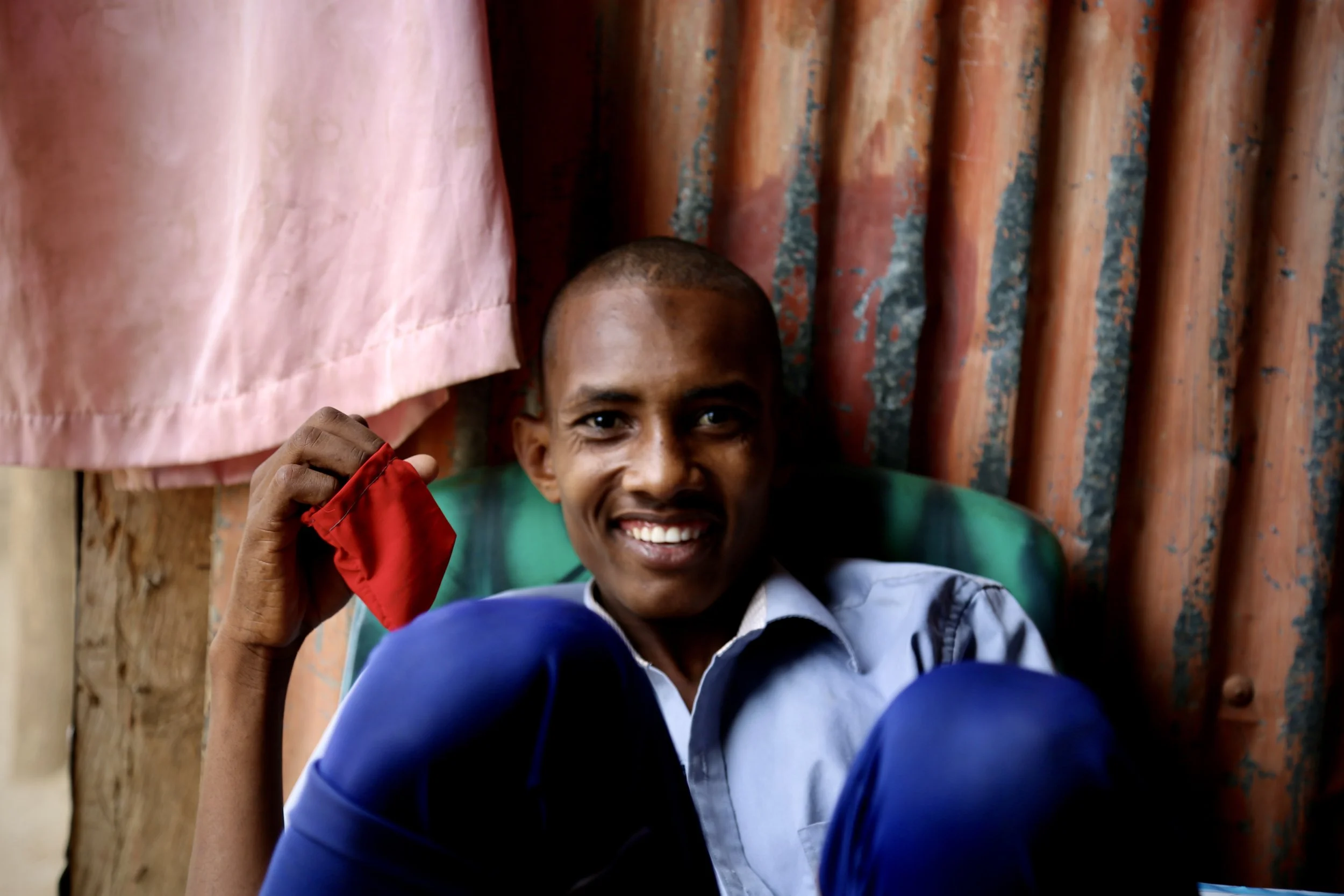
A visitor in the shop. The space functions as a place to meet and spend time together.