In September 2011, Elsa Buchanan spent a day on the water with a crew of fishermen working out of Jambiani, on Zanzibar's southern coast. The man leading them was known locally as Captain Fruit, which is a nickname that usually belongs to the beach vendors who sell mangoes and coconuts from their boats. He'd inherited the name without the trade; instead, he fished. The dhow itself - hand-built, hand-carved, rigged with rope and canvas rather than engine or synthetic line - is a vessel largely unchanged in design for centuries along this coast. The technique matched it: sandworms dug from the tidal flats at dawn as bait, hand lines rather than rods, fish gutted and scaled with a single knife on a plank of timber.
This isn't a conflict series, rather it is a record of a working day, where labour has sustained coastal Zanzibari communities for generations, apart from the tourism economy visible elsewhere on the island. The trip fell during the run-up to Zanzibar's October 2011 Igunga by-election, visible only incidentally in a campaign t-shirt and a faded wall poster; a marker of the moment and not the subject. Revisited fifteen years on, the series is as much about a place and a method as it is about one man.
The sequence follows the working day in order: dawn bait-digging, departure, fishing at sea, the catch, and the return to shore. A handful of frames step back into the village (including carved doors, coral-stone walls, and sand alleys) to place the labour in its wider community context. Two registers run throughout: close, hands-on technique (knots, knives, and scales), and wider frames setting the dhow against the turquoise coastline. Captain Fruit anchors the narrative, but the crew and cook carry roughly half the frames as the series stays about the work, not one portrait.
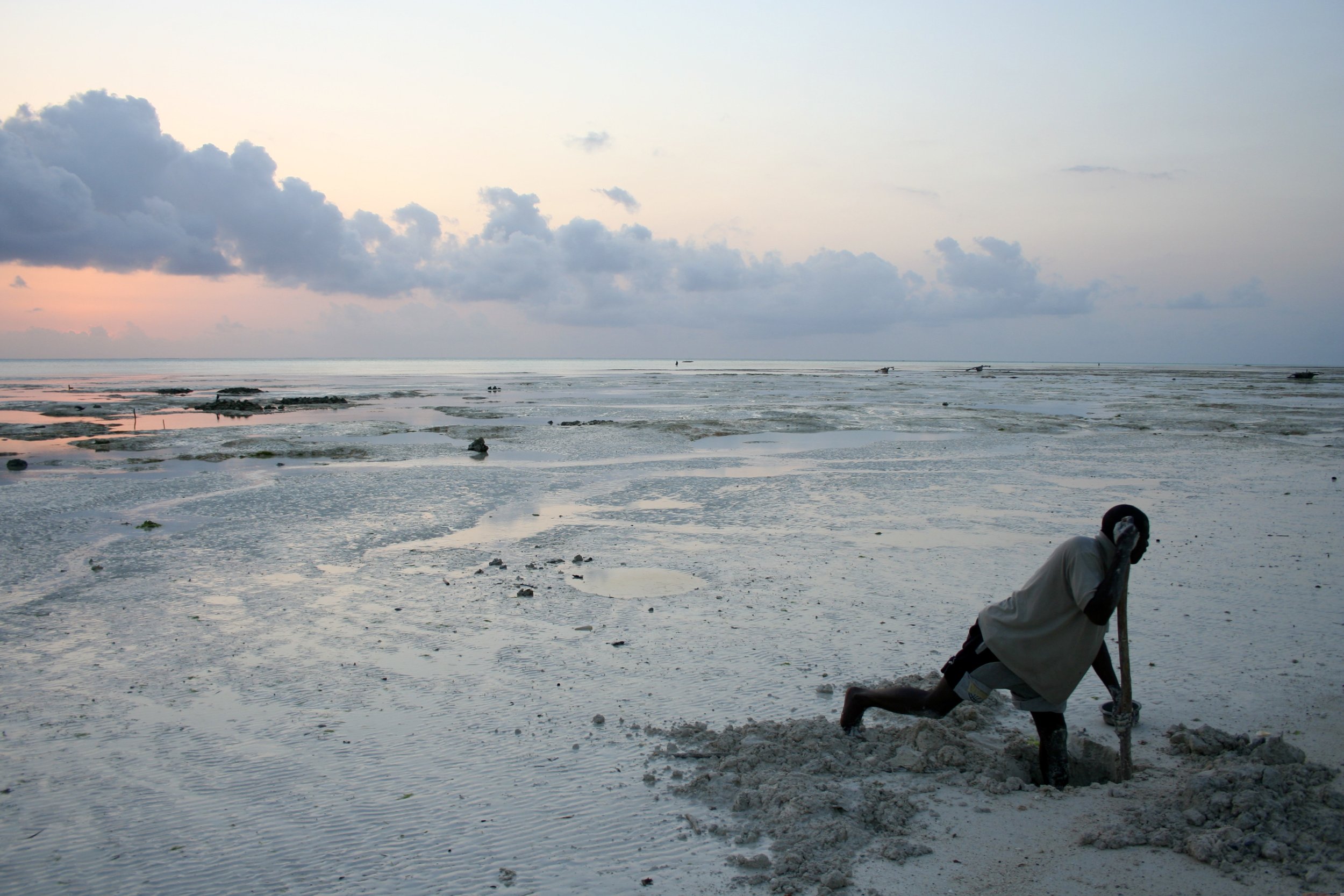
Before first light, a fisherman digs for sandworms in the tidal flats- the first stage of a day's fishing trip, and bait for the fish that will themselves become bait later on.
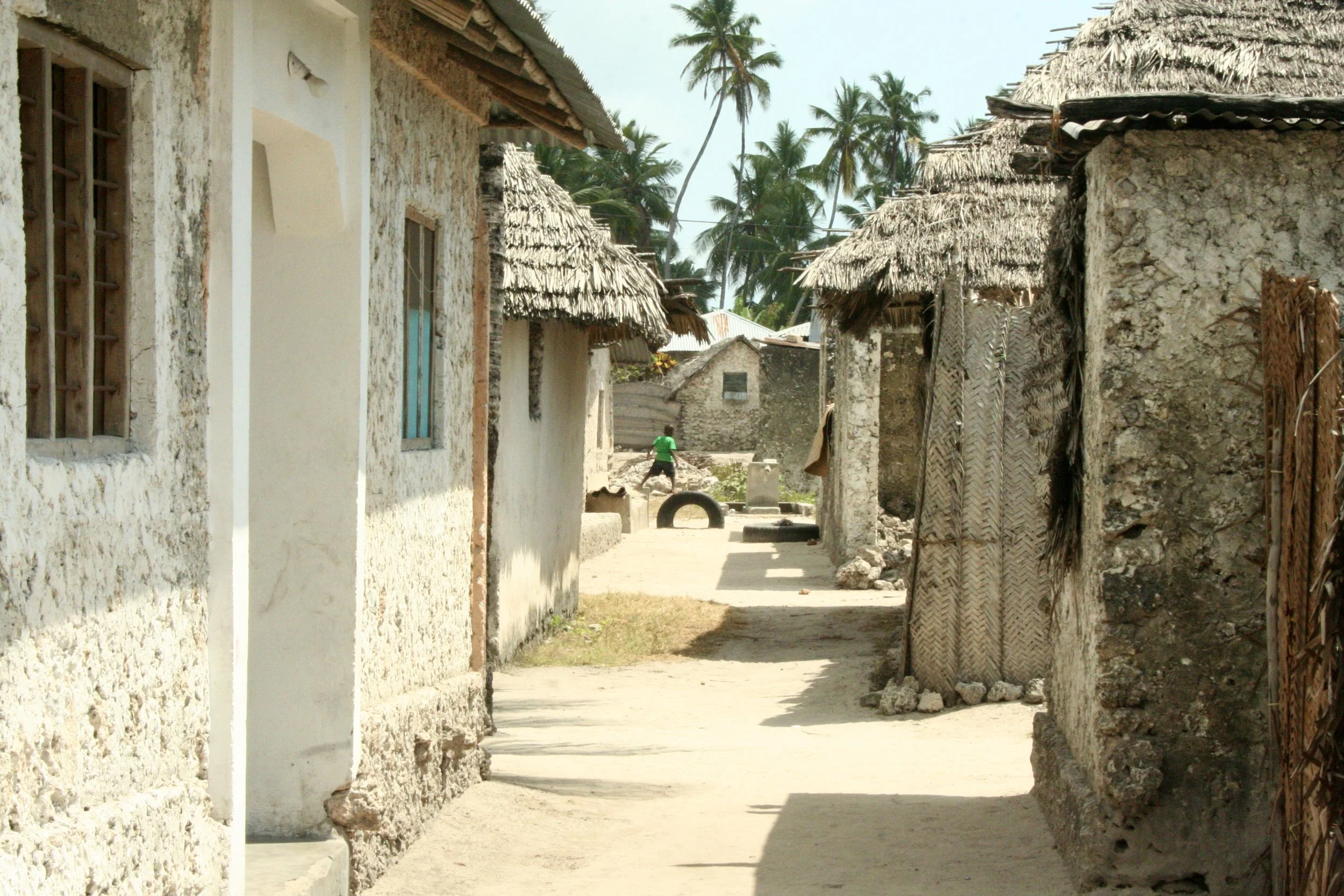
A narrow sand passage between coral-stone houses in the village the crew calls home, with its thatched roofs, dust and hand-built walls, in a contrast to the open water beyond.
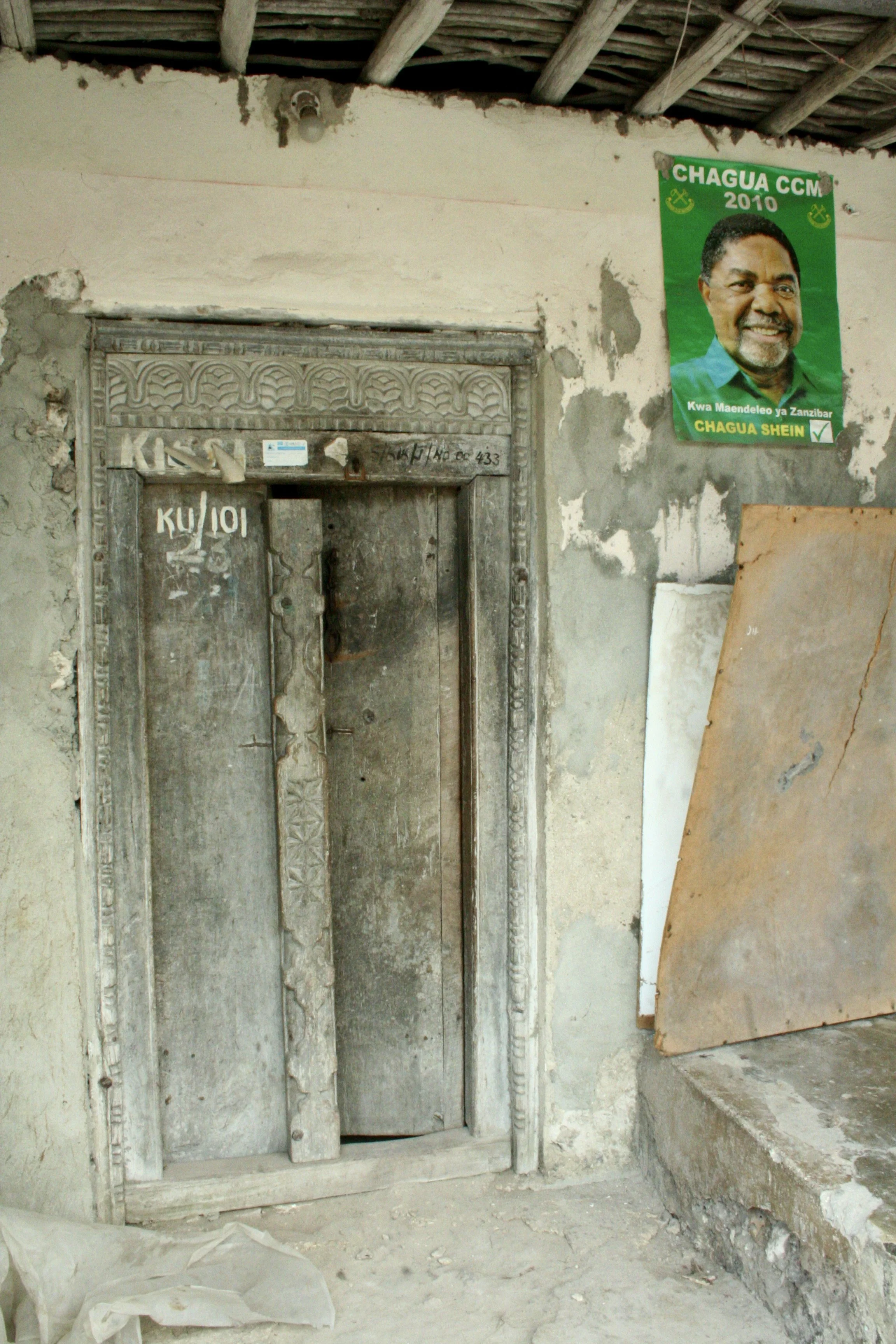
A traditional carved Zanzibari door, its craftsmanship as old as the fishing techniques practised nearby. A campaign poster for October 2011's Igunga by-election is pinned above it as an incidental record of the political moment the series was shot in.
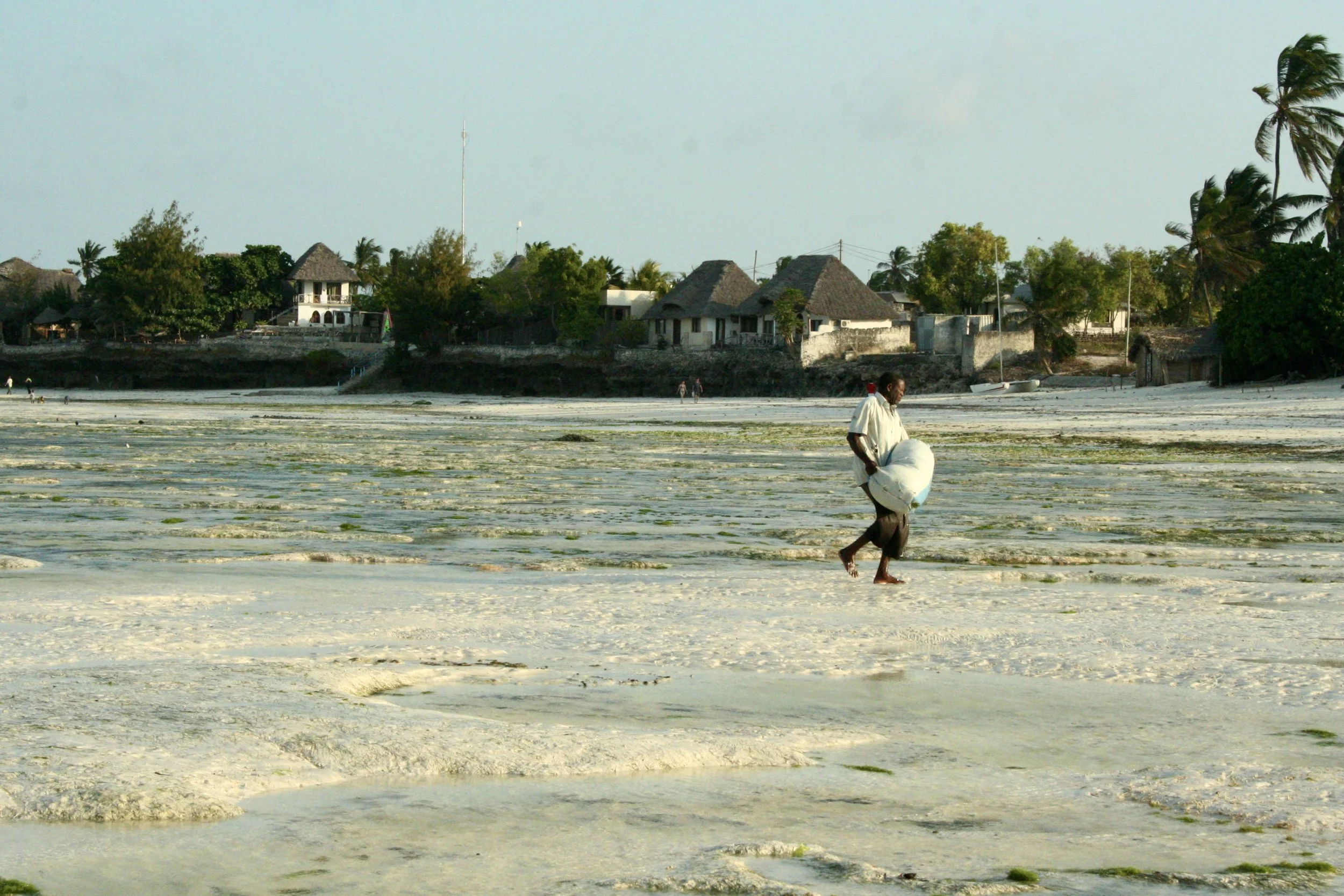
A man carries in the morning's seaweed harvest across the exposed reef flat, village and thatched roofs behind him. Zanzibar's shallow eastern lagoons support a community-led seaweed industry (usually the domain of women, known locally as "Mwani Mamas," who wade out at low tide to tend and harvest algae destined for the global cosmetics and food trade). Here, a man carries the load instead.
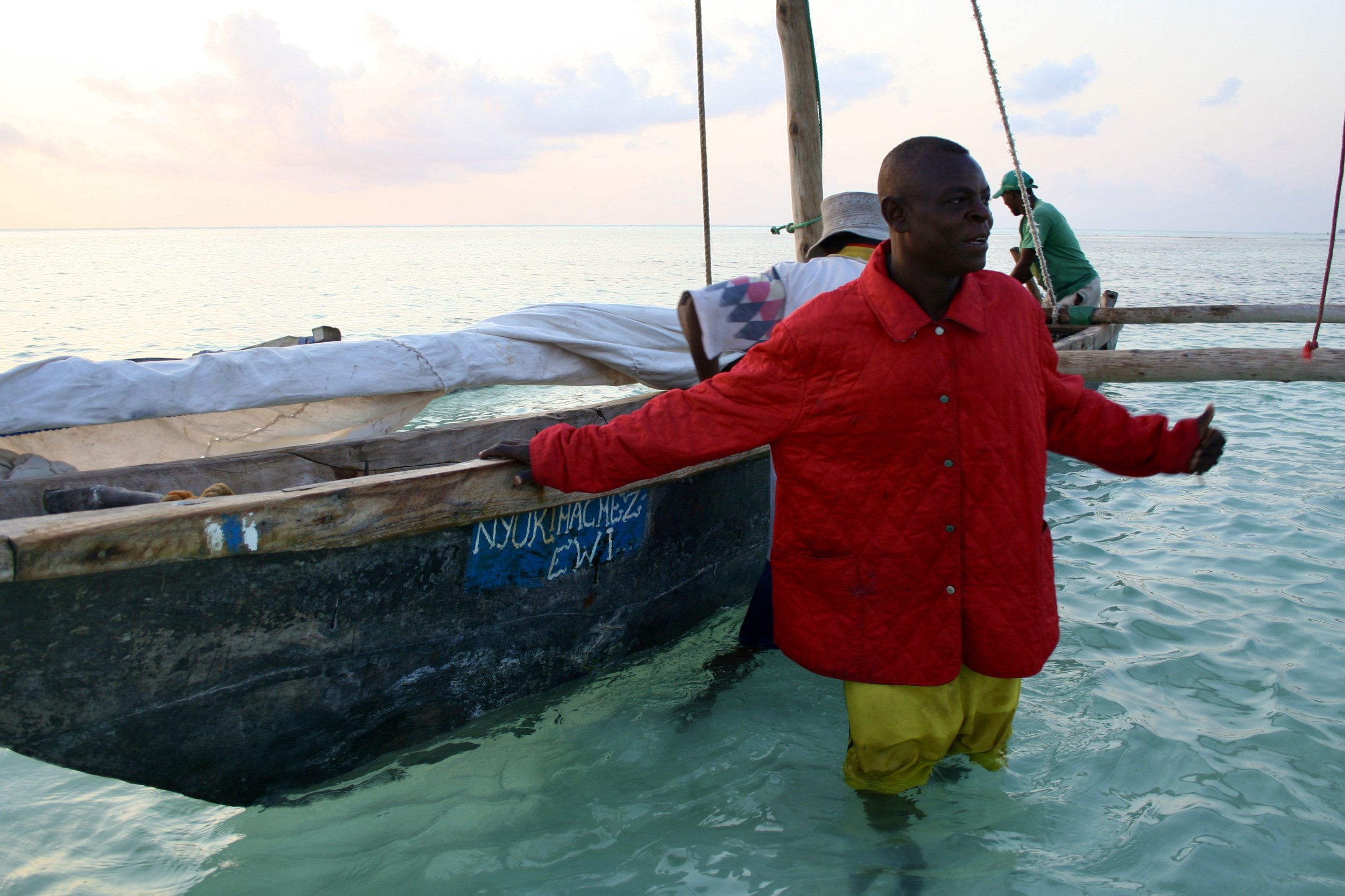
Captain Fruit wades out through the shallows to Nyuki Machezi, the hand-painted name of the family dhow visible on its hull.
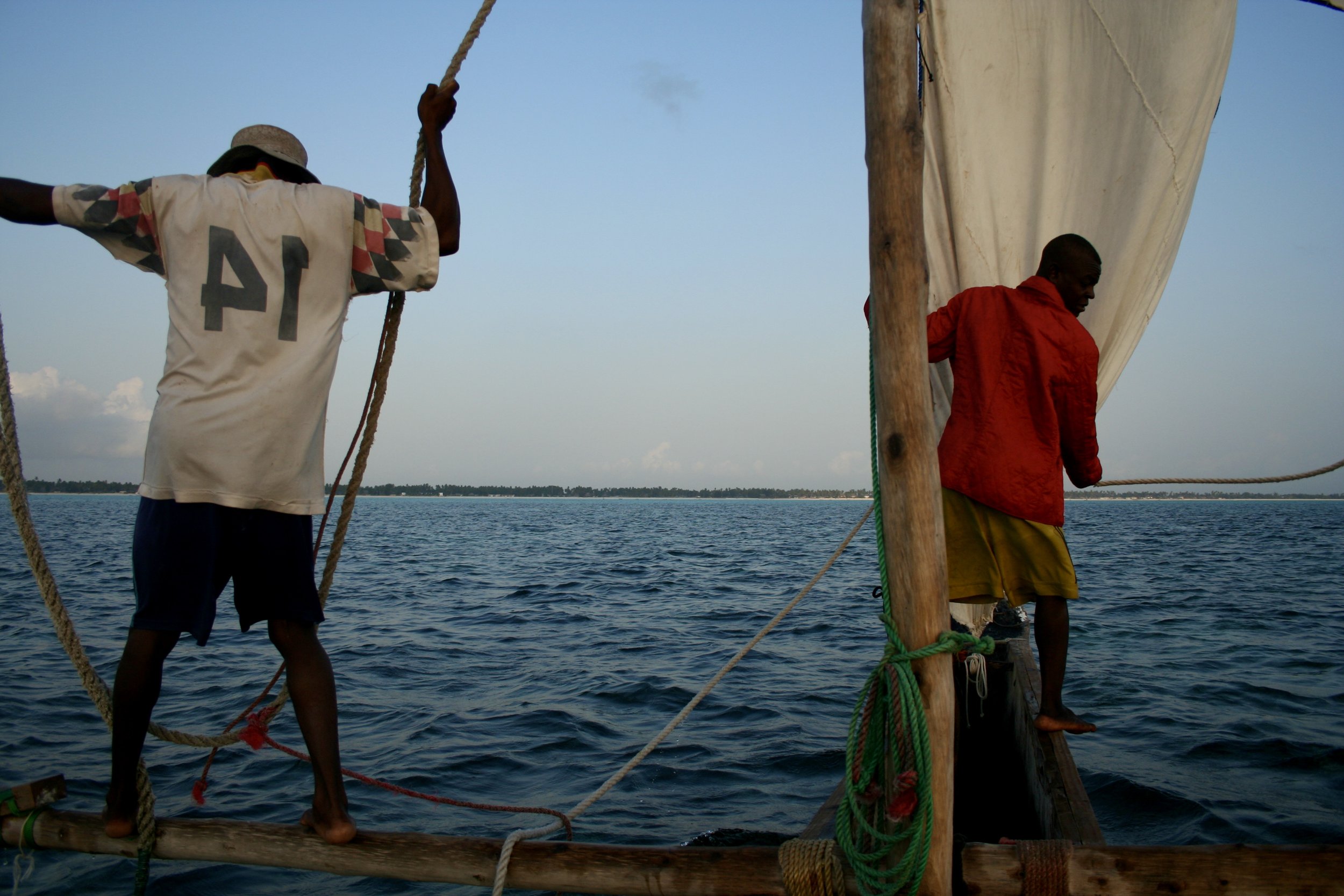
Captain Fruit and a crewman haul the canvas sail into position as the dhow prepares to leave the shallows.
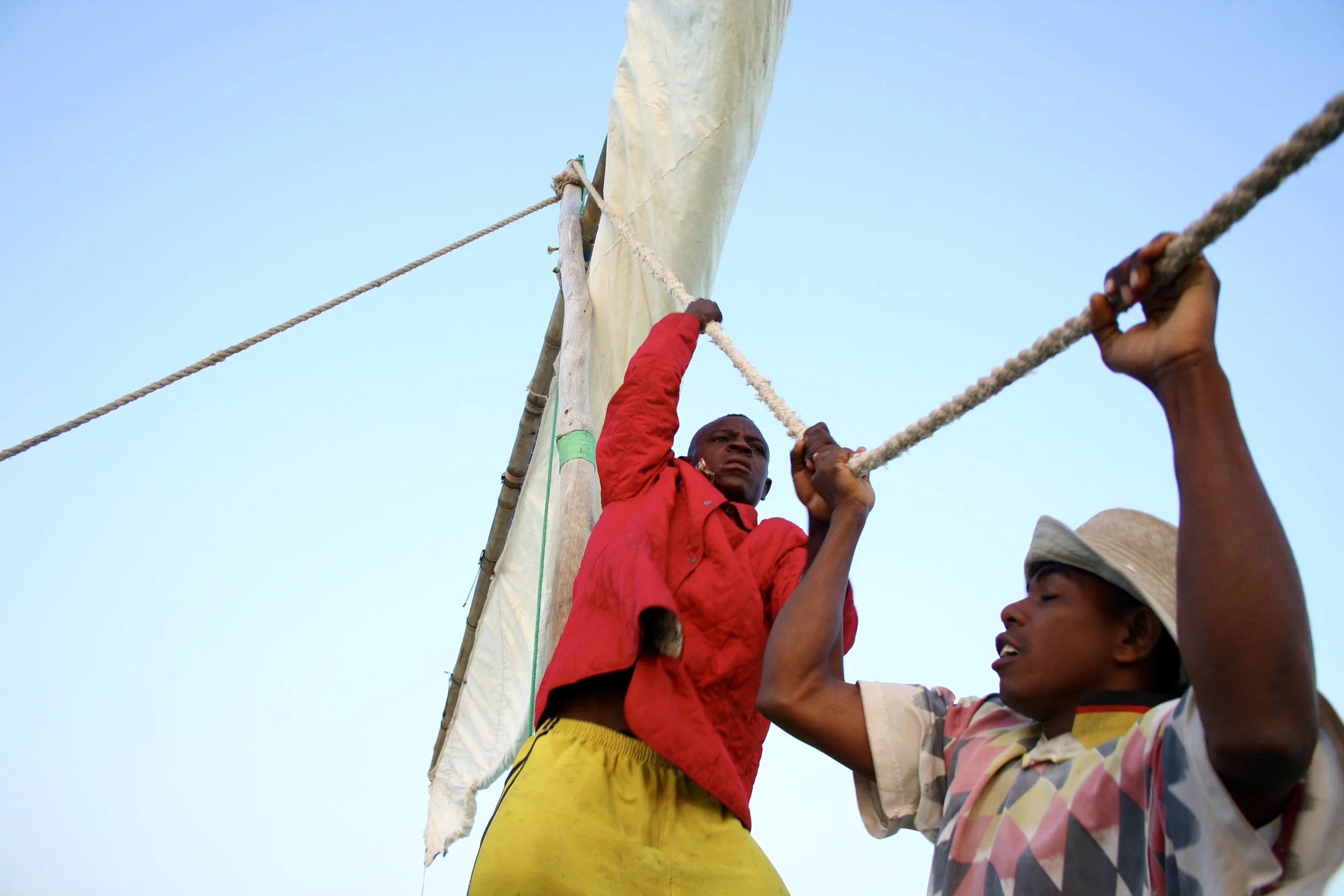
Two crew members pull together on the rigging — the physical choreography of raising a sail with rope and muscle rather than any mechanism.
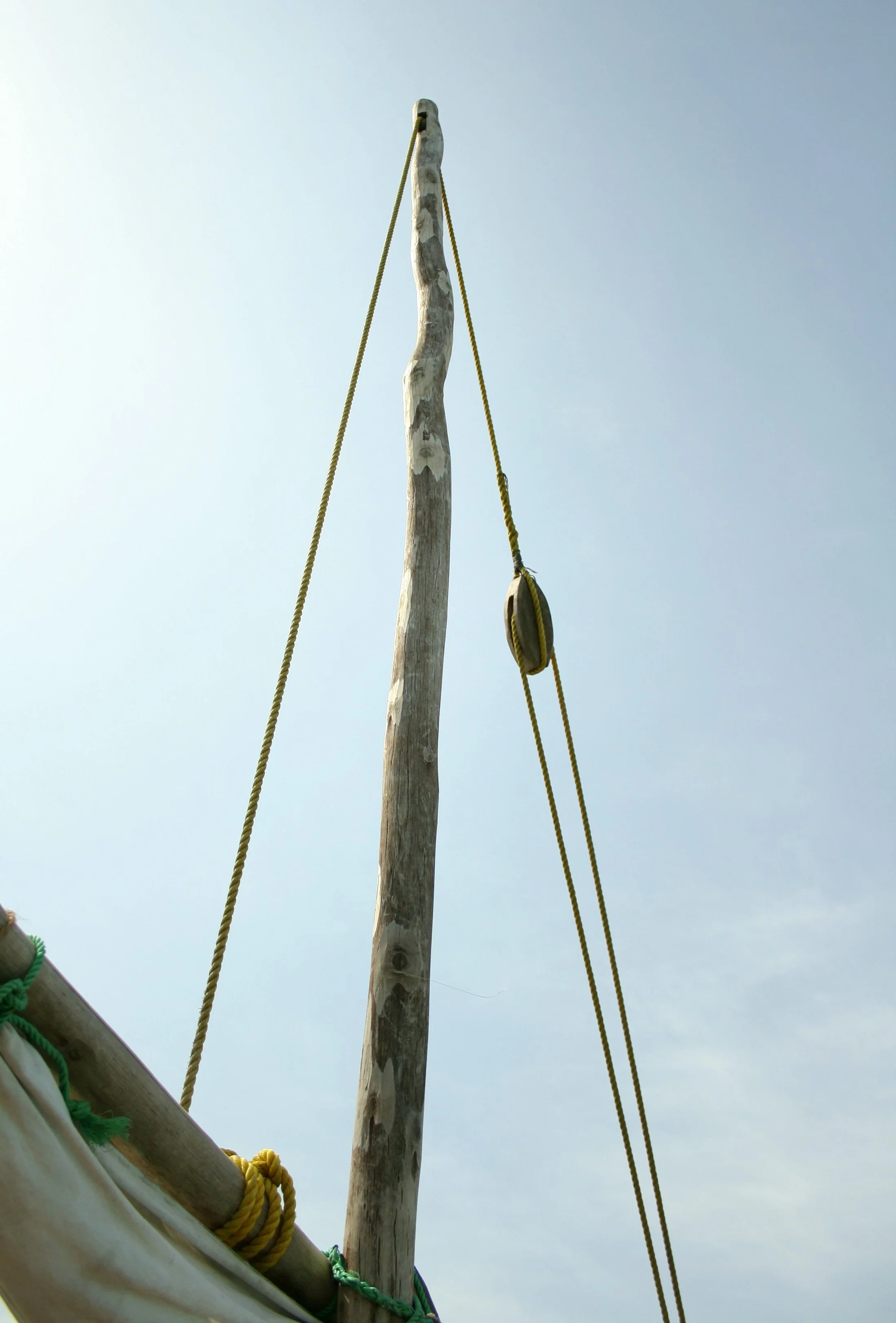
Hand-carved timber, hand-spliced rope, and a wooden pulley - construction details of a dhow built using techniques passed down rather than manufactured.
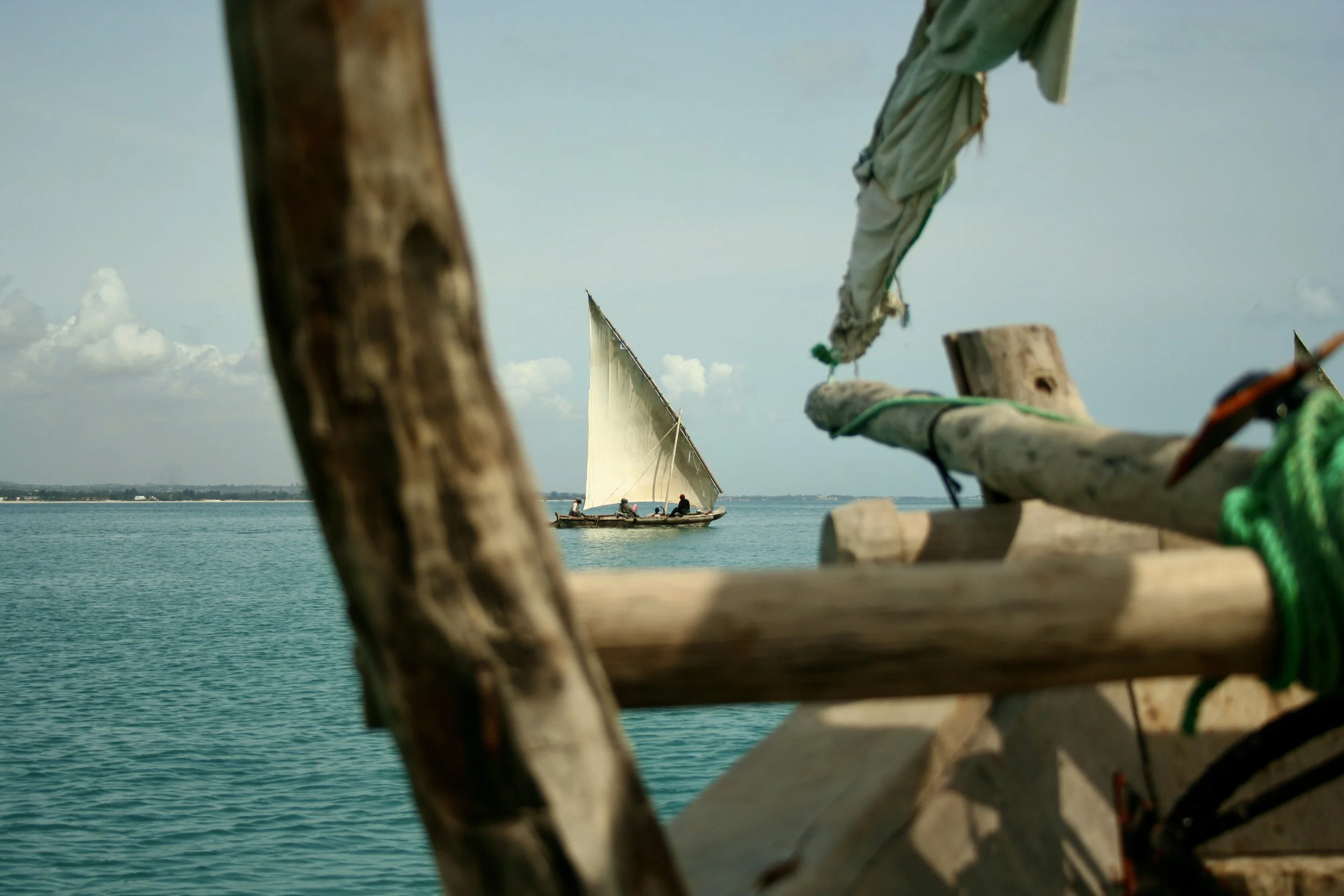
The dhow heads out from shore, seen through the rigging of a second boat; one working vessel framing another.
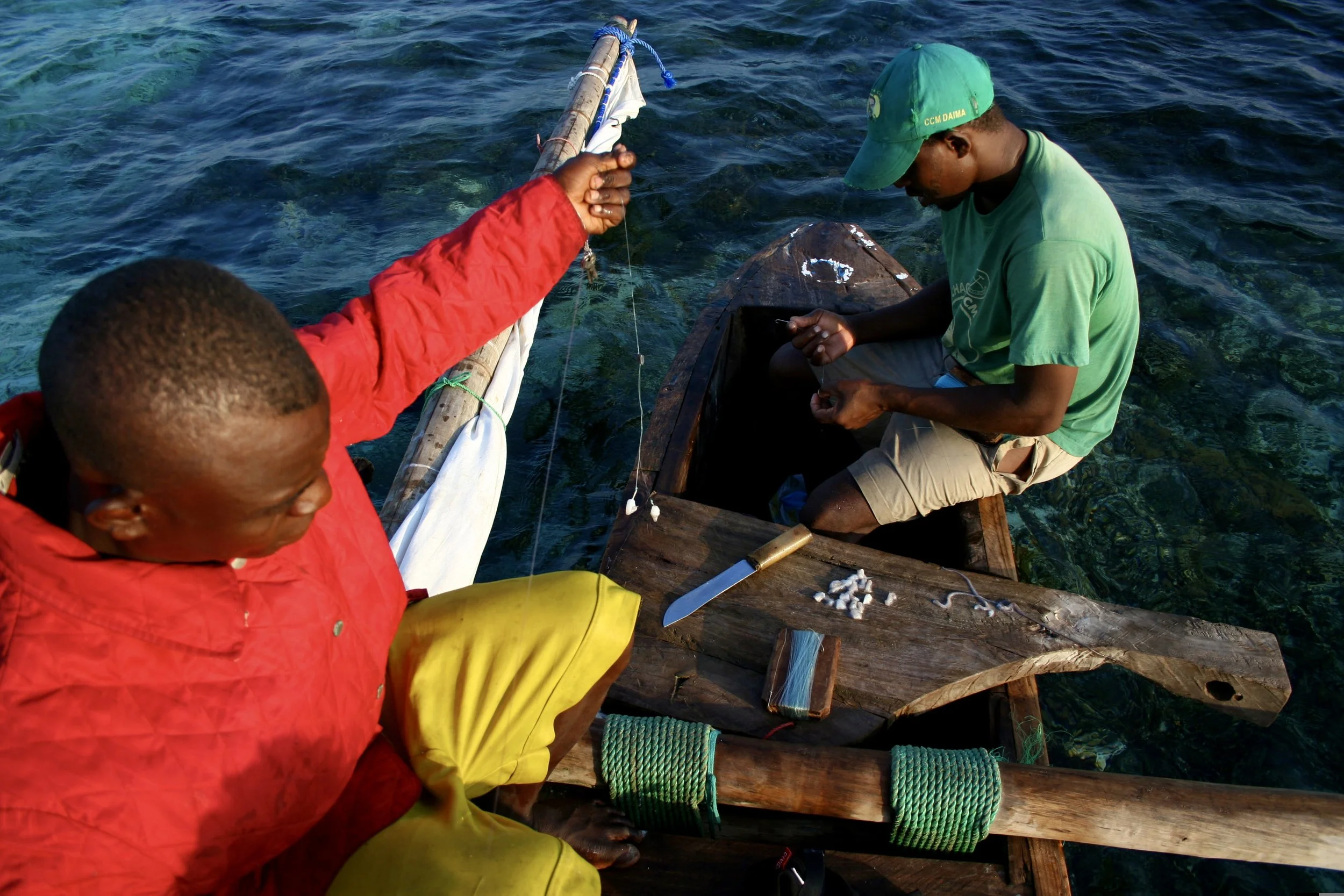
Crew members prepare hand lines and hooks aboard the dhow, knife and bait laid out on the worn timber gunwale.
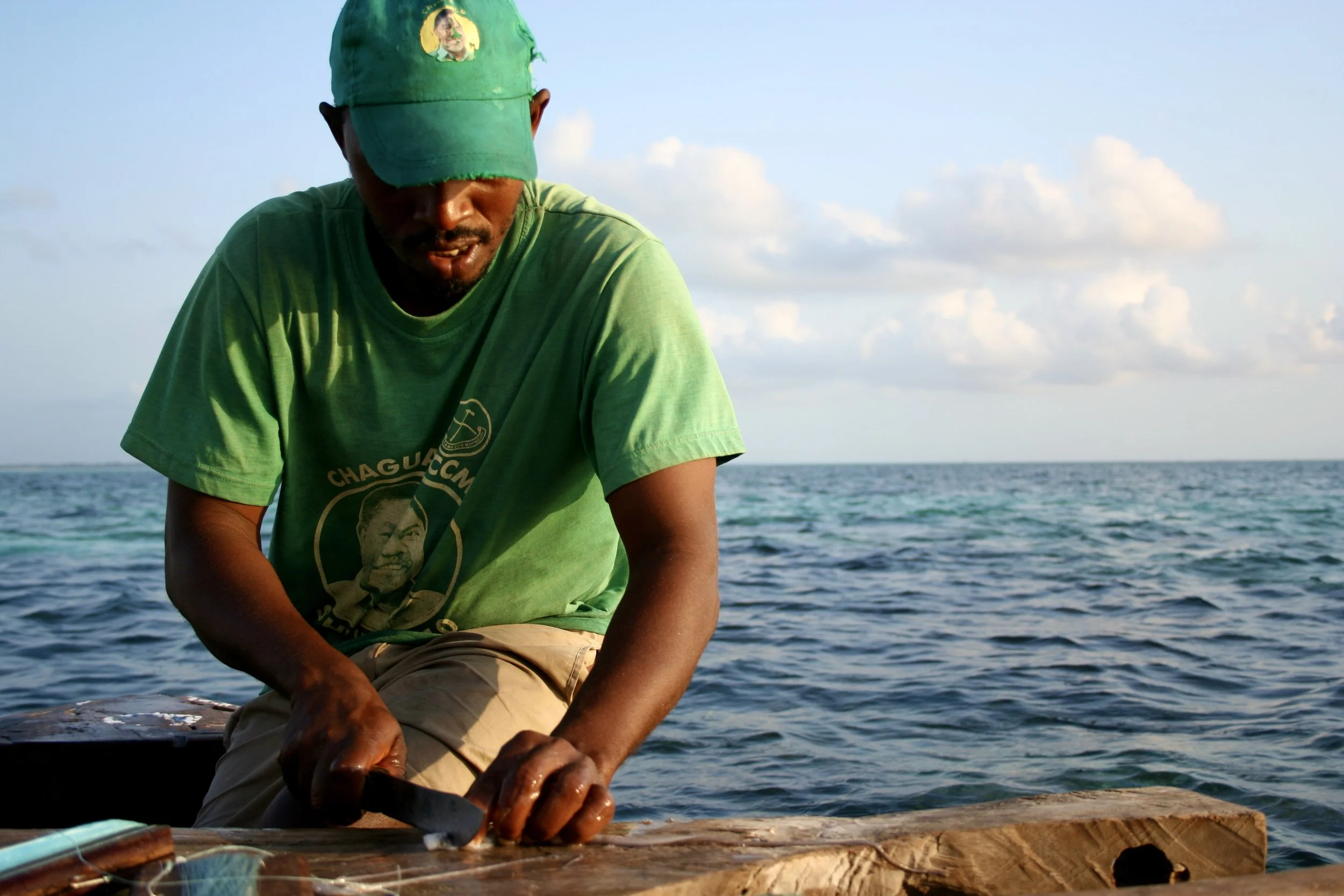
A crewman cuts bait with the same knife and technique used throughout the boat.
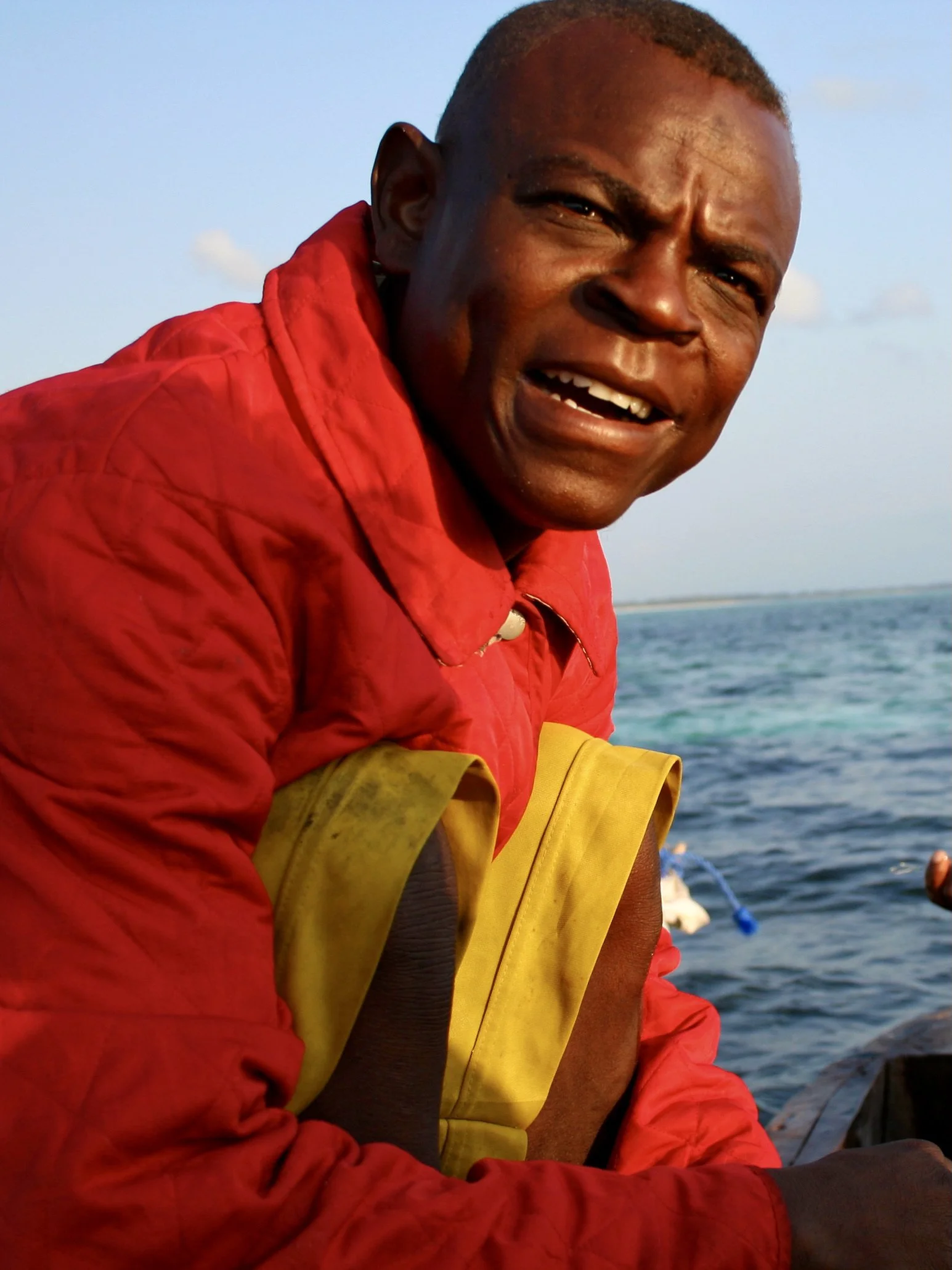
Captain Fruit's portrait taken mid-morning, the open water behind him.
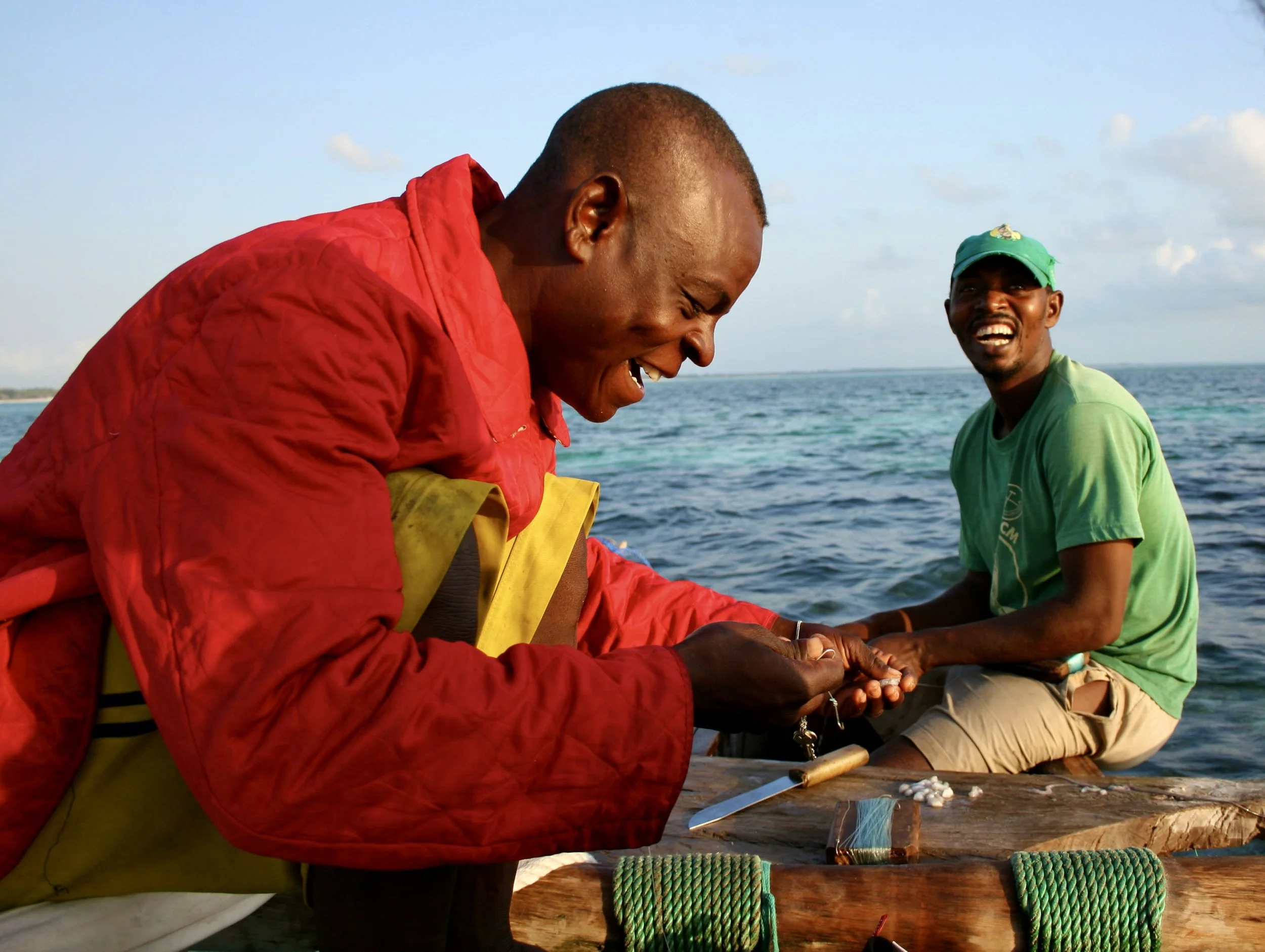
Captain Fruit and a crewman share a moment of humour over the bait, a rare pause in an otherwise task-focused day.
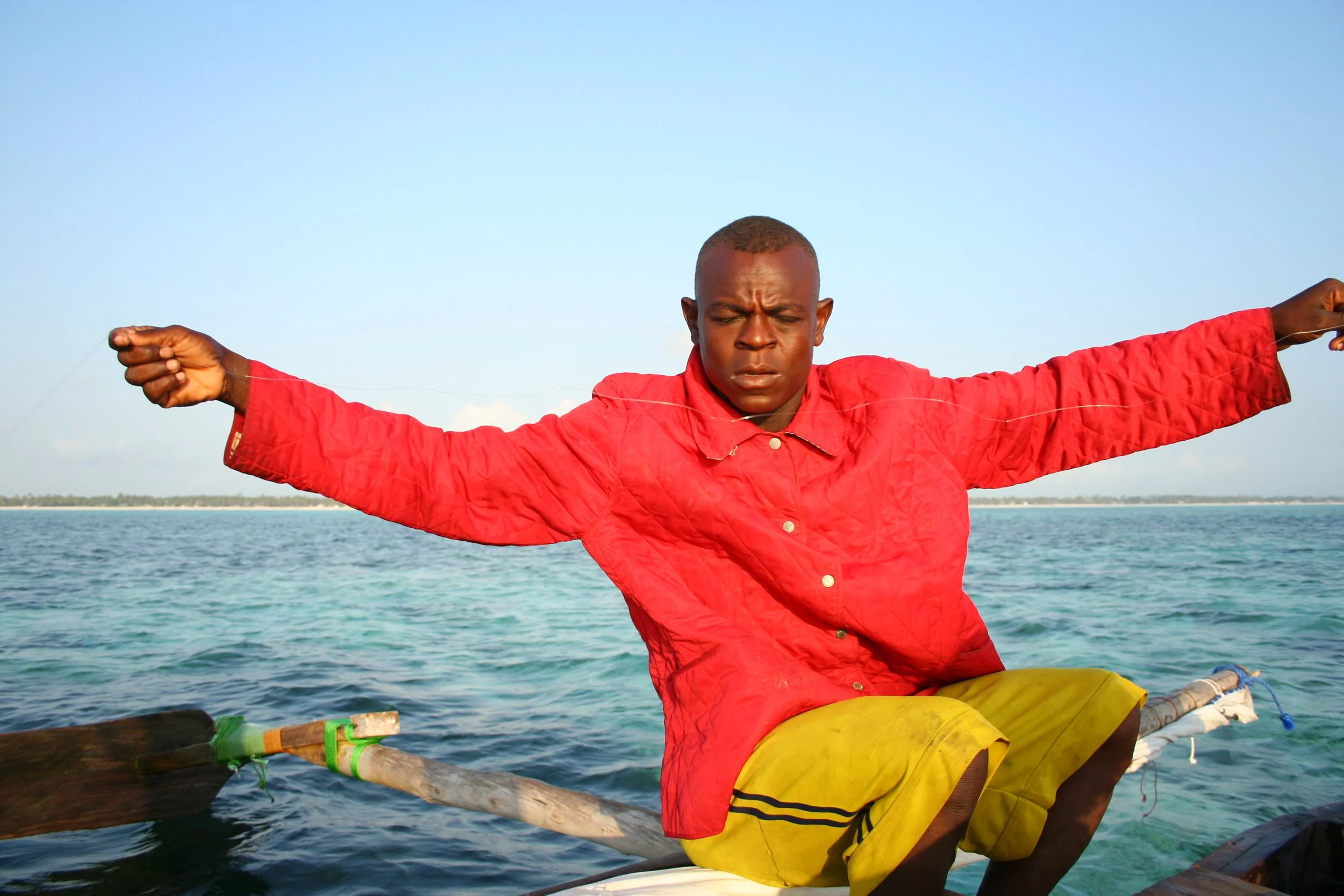
Captain Fruit works a hand line taut between both hands, eyes closed in concentration against the glare off the water.
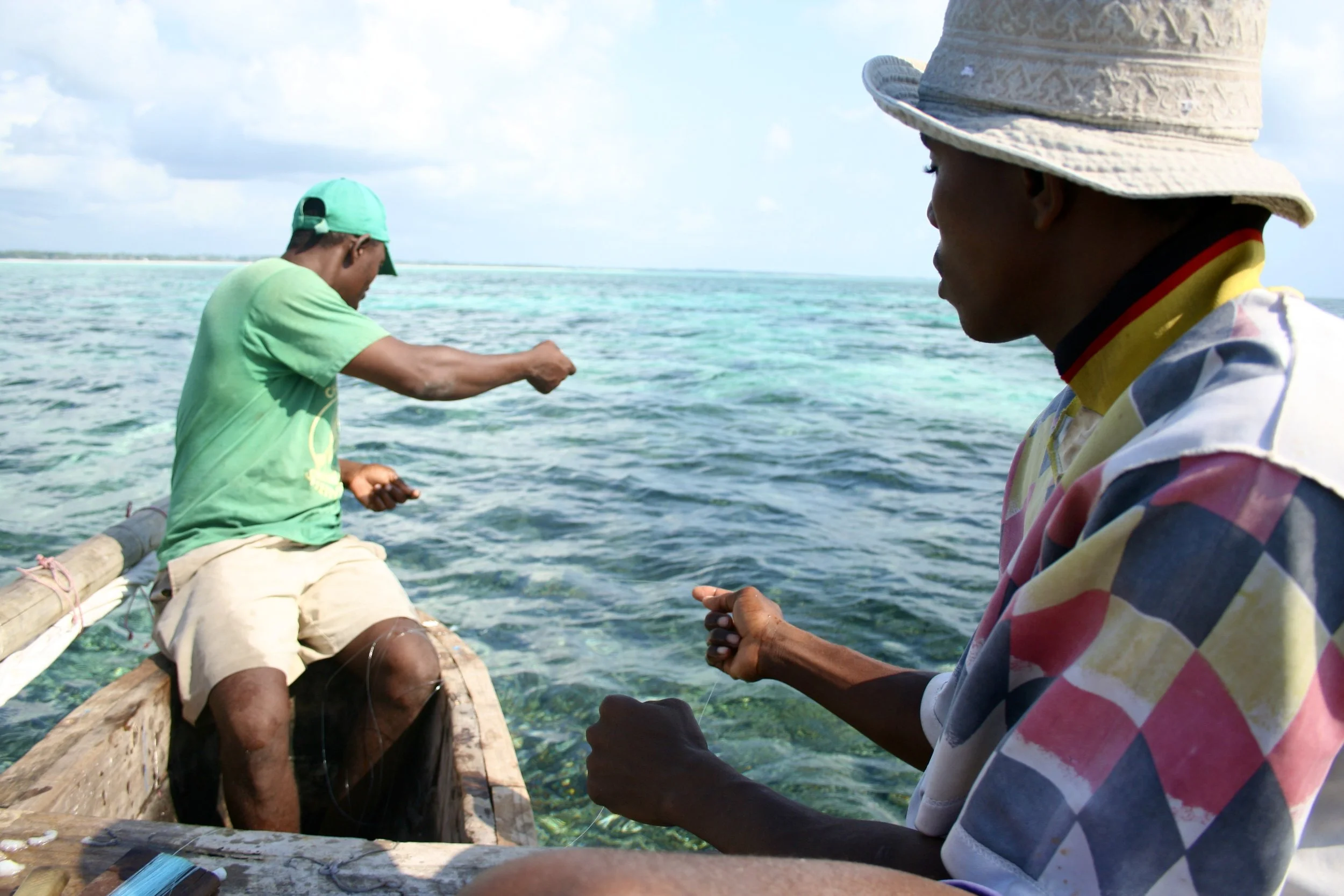
Two fishermen work their lines against the turquoise shallows of the reef.
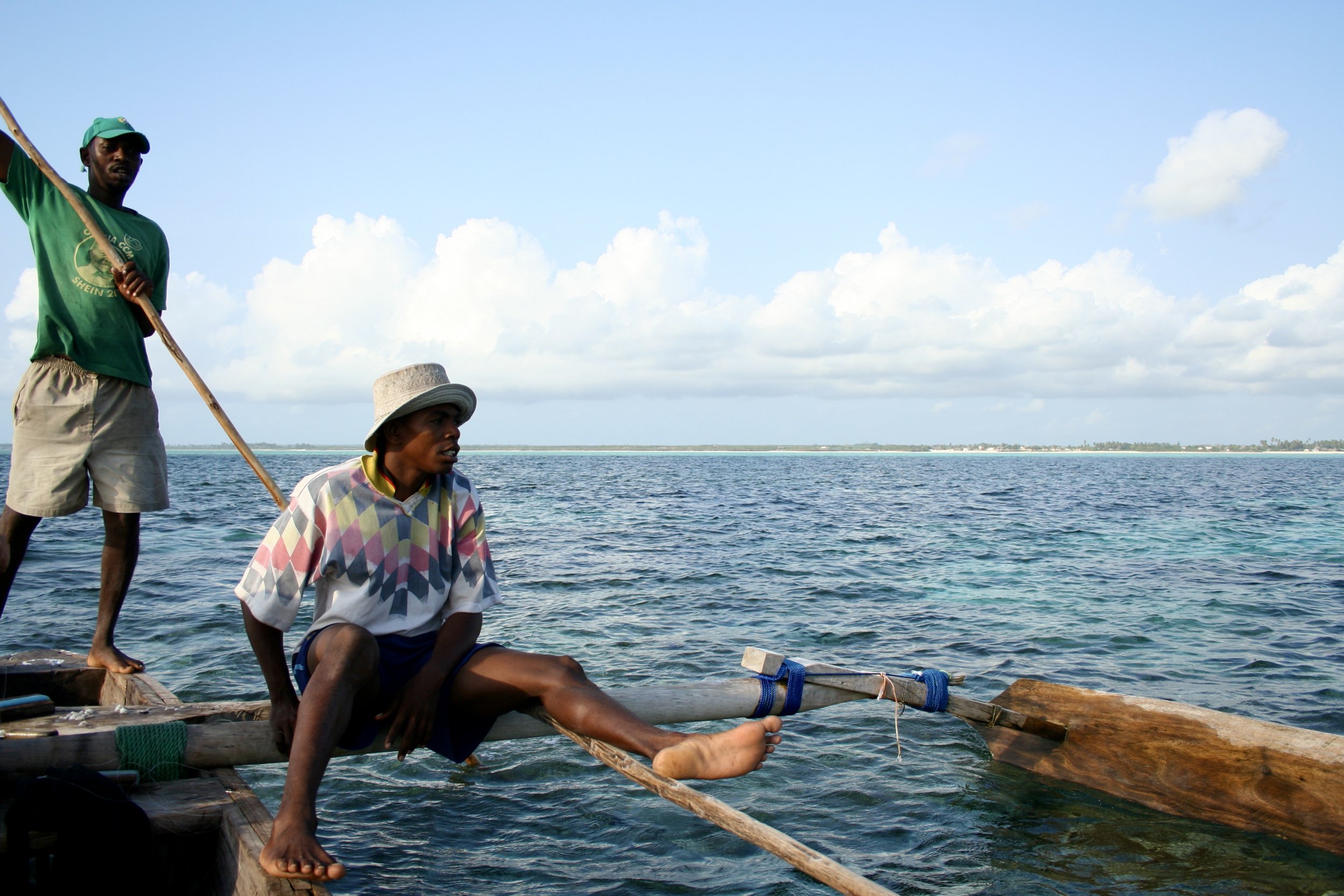
The dhow's outrigger holds steady against the current as Jambiani's white-sand coastline stretches behind it.
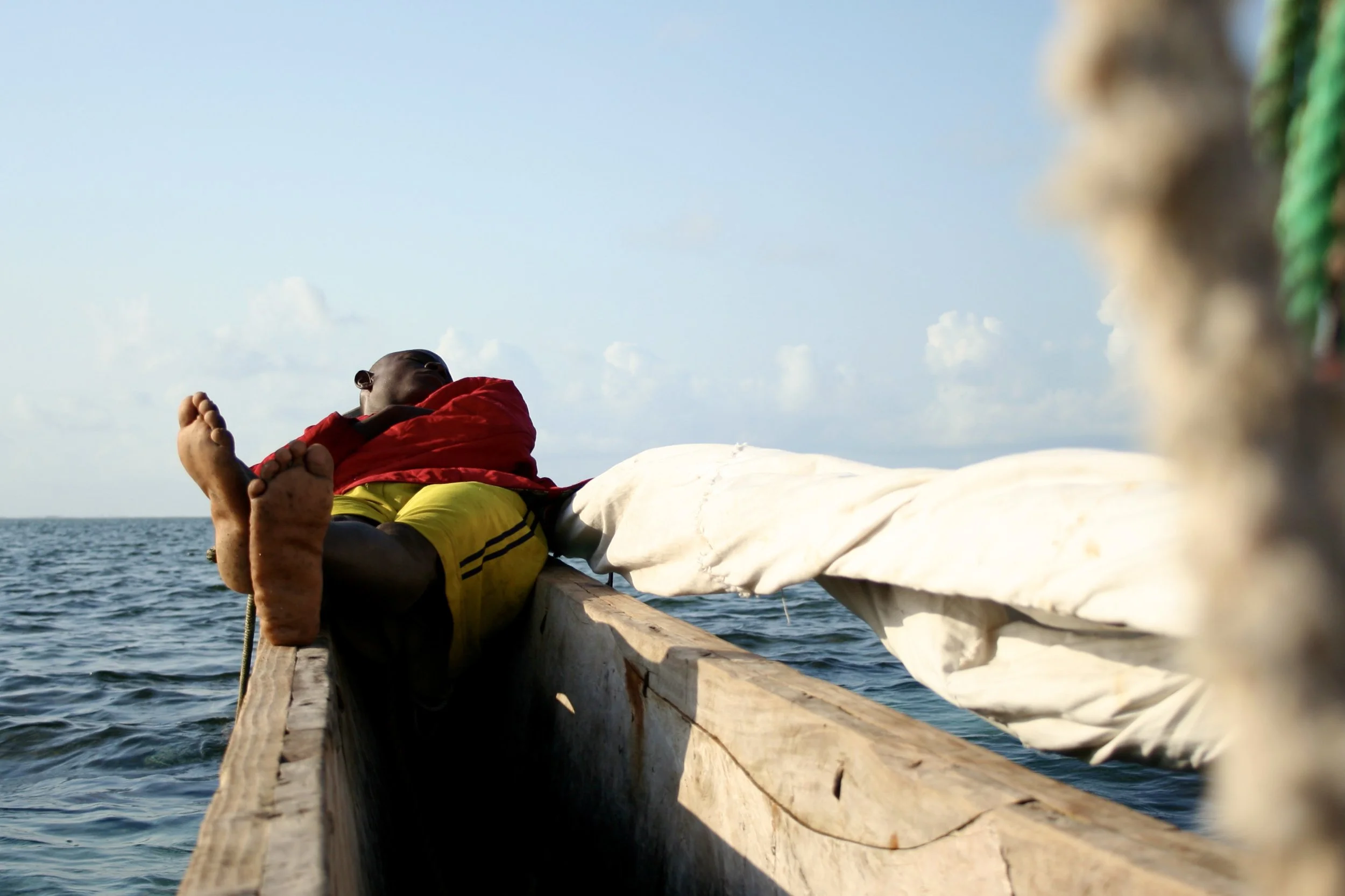
Captain Fruit sleeps against the bow between tasks with the ocean's rhythms dictating the pace of the day as much as the fishing does.
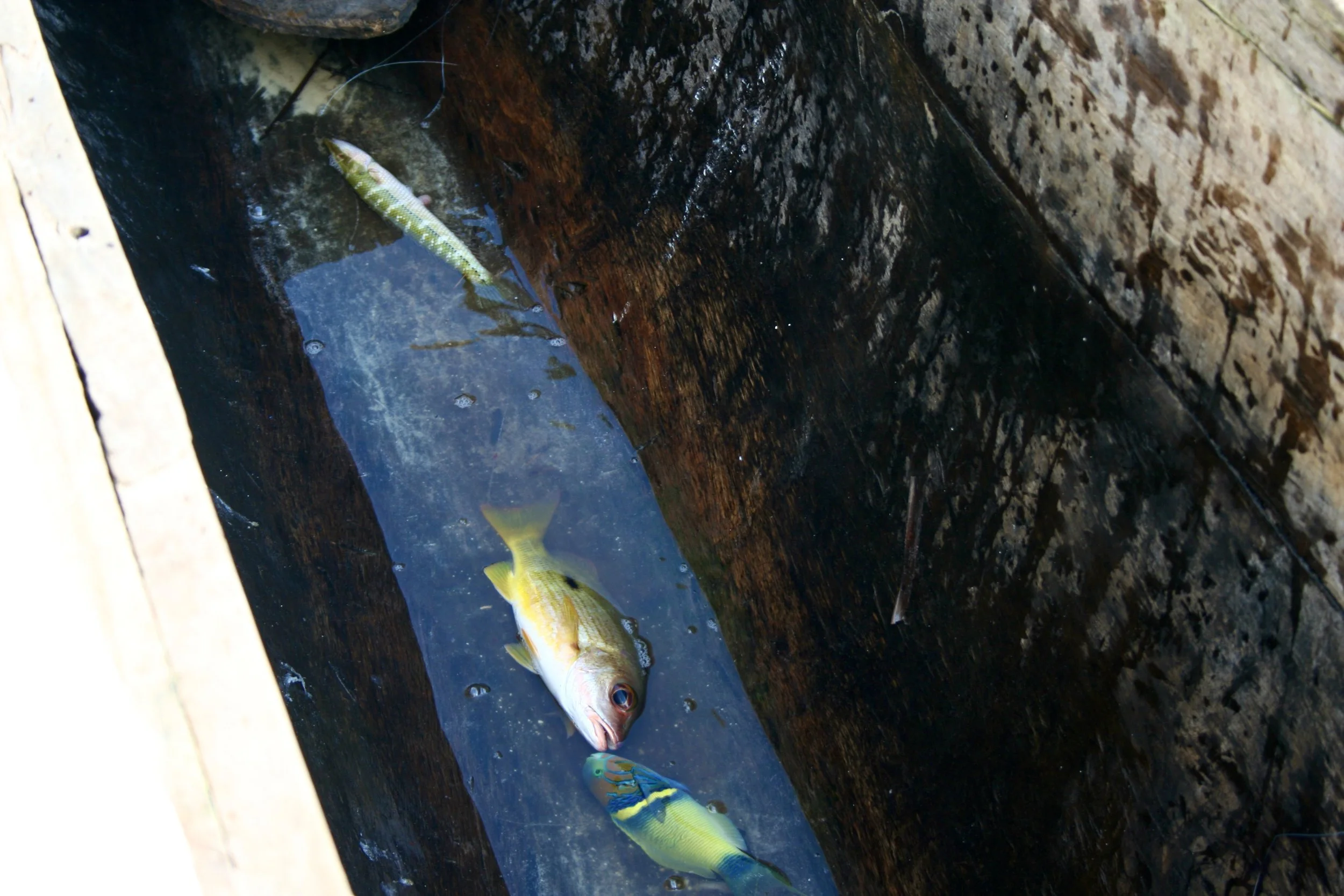
Three fish (caught within the hour) lie in the dark, wet hull of the dhow.
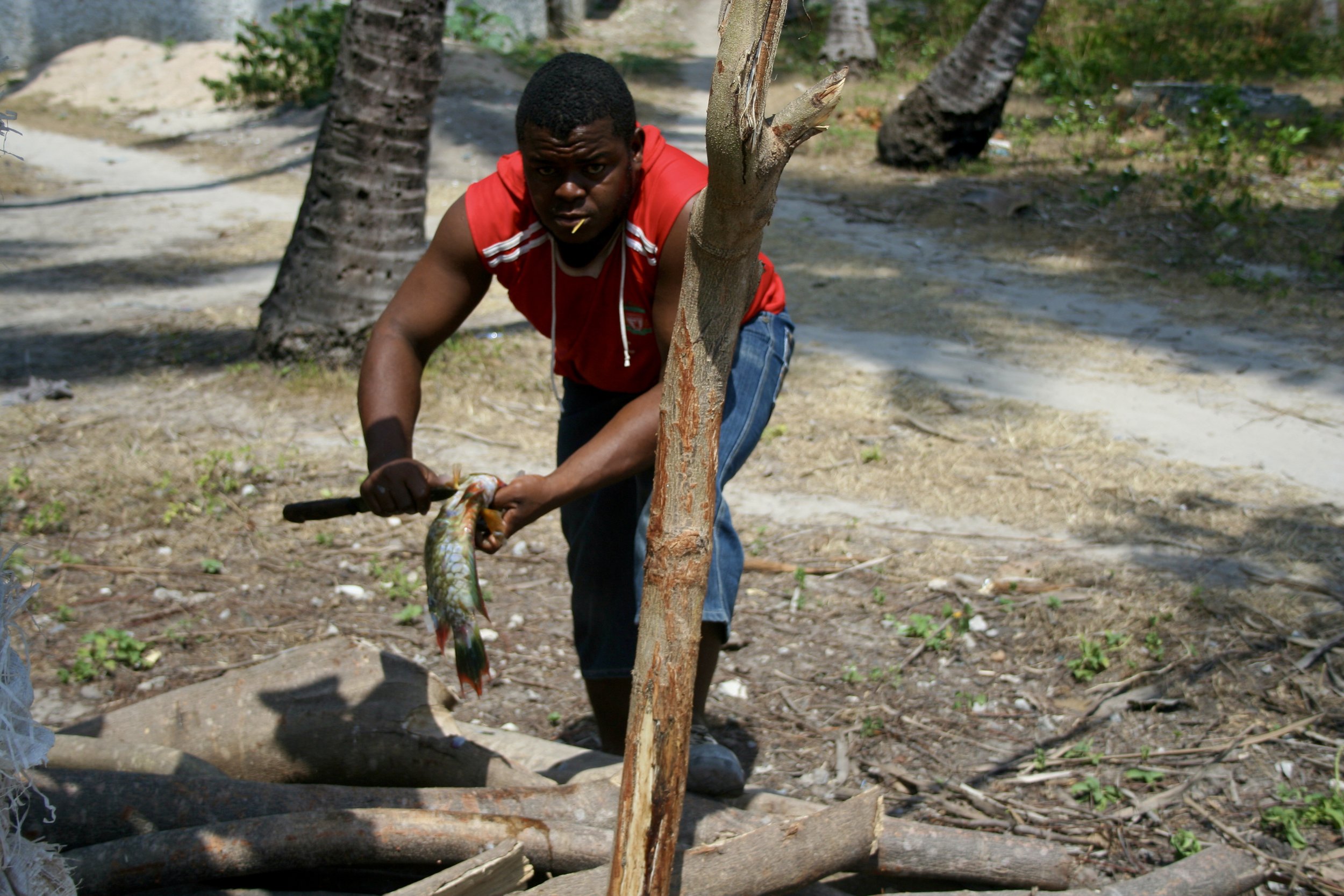
Captain Fruit delivers the day's catch to the Sea Horse in exchange for a little money. Here is Soube, the restaurant's cook, putting it straight to work, scaling a parrotfish in a kitchen that runs without electricity.
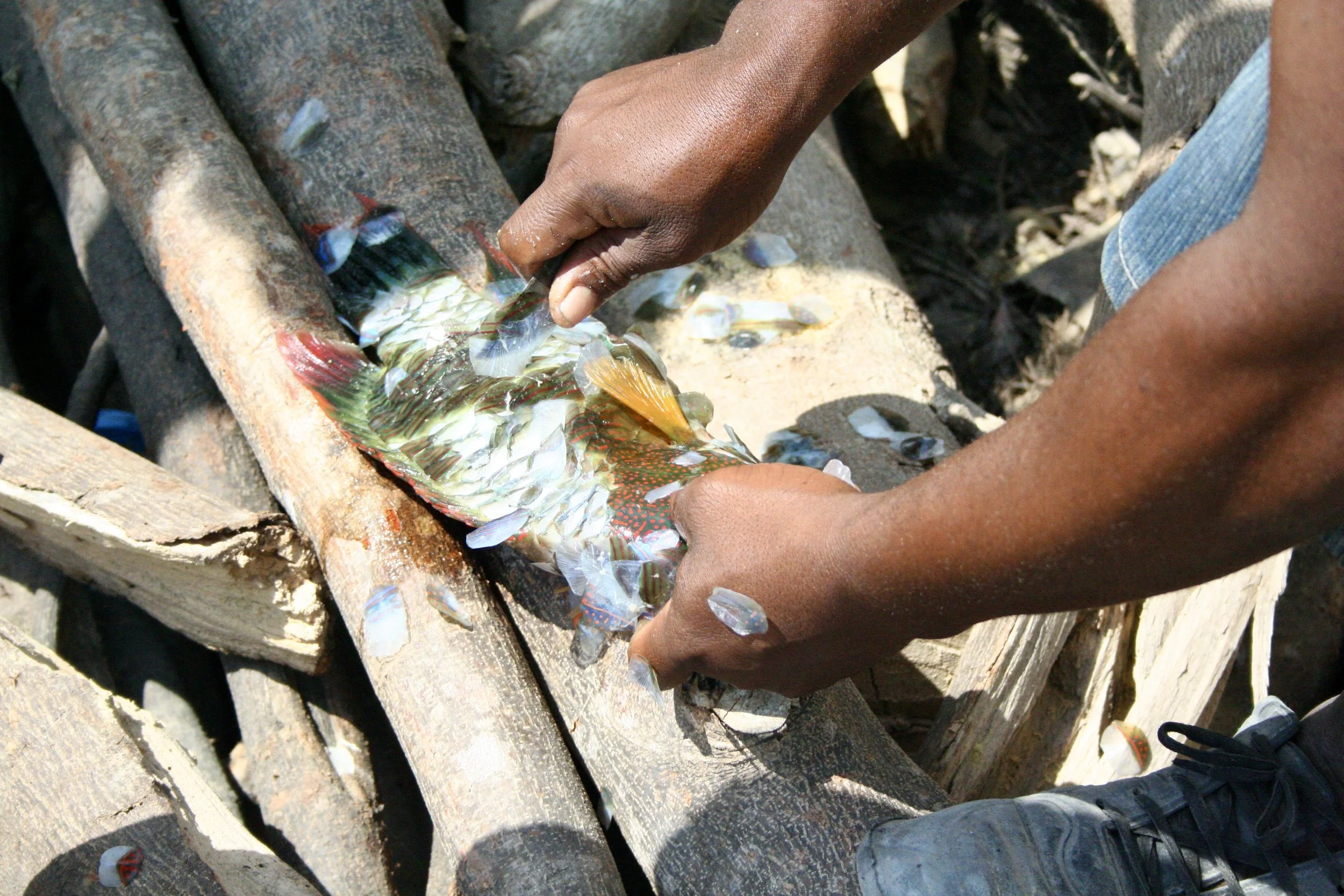
Soube's hands at work on the parrotfish's scales with the same unhurried, practised technique he brings to every dish at the Sea Horse, his tiny unelectrified restaurant nearby.
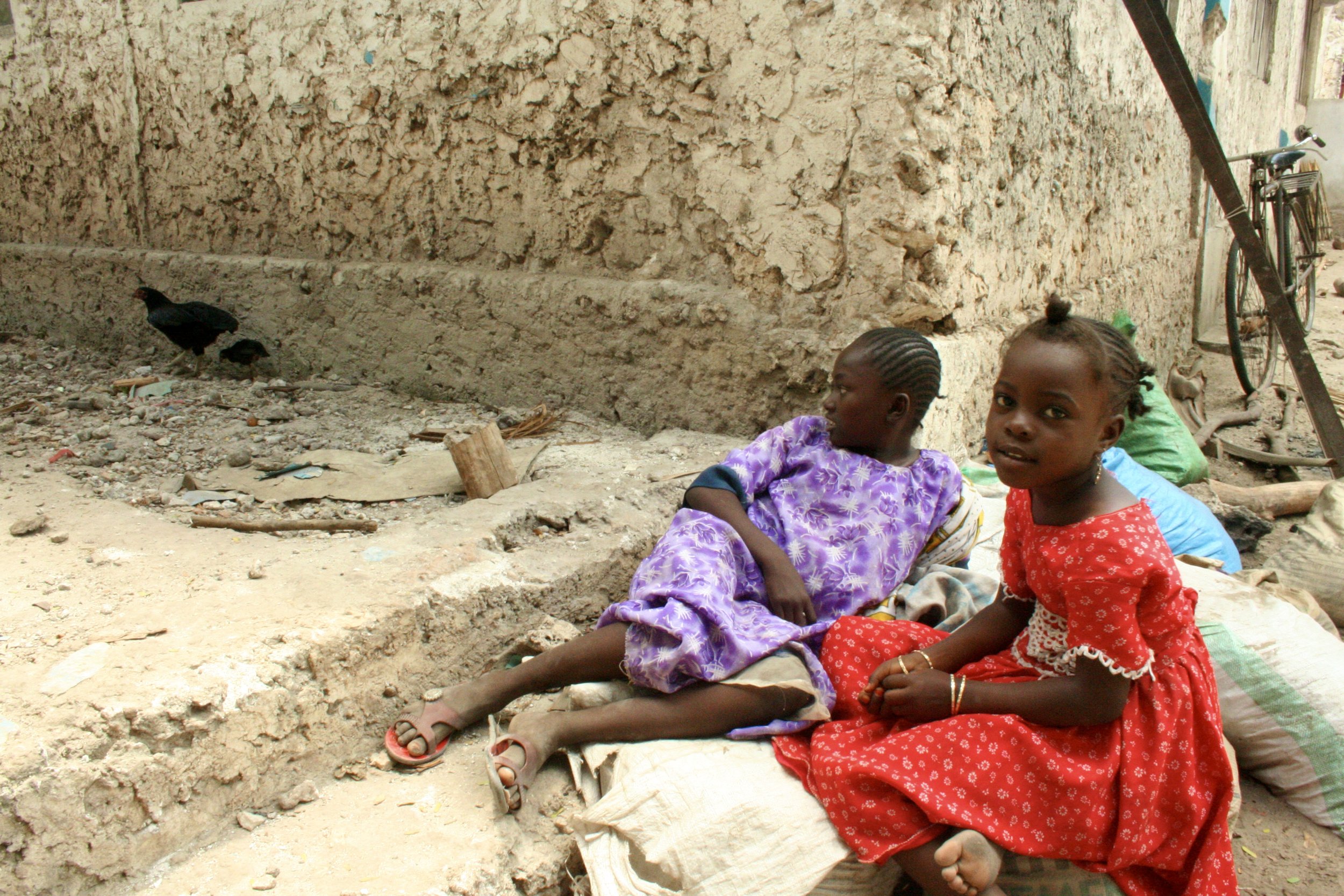
Two girls sit in a coral-stone courtyard elsewhere in the village. A closing note on the community this catch will feed, beyond the boat and beyond Captain Fruit himself.