This series documents the life and work of “Paballo,” a 21-year-old entrepreneur in Ha Magele, Leribe District, Lesotho, who opened a small roadside shop after joining a Sentebale-supported Worth Group for unemployed young women. In a country marked by high youth unemployment, widespread poverty, gender-based violence, high rates of teenage pregnancy and one of the world’s highest HIV prevalence rates (particularly among young people) economic independence can profoundly shape a young woman’s future.
Because of personal vulnerabilities and safety concerns, Paballo chose not to be photographed directly. Instead, this work focuses on the spaces and details that define her daily life: shop shelves, handwritten price lists, passing customers, light through windows and the rhythms of daily work.
By centring environment rather than identity, the series reflects both the fragility and resilience of young women building independence in communities where opportunity remains limited.
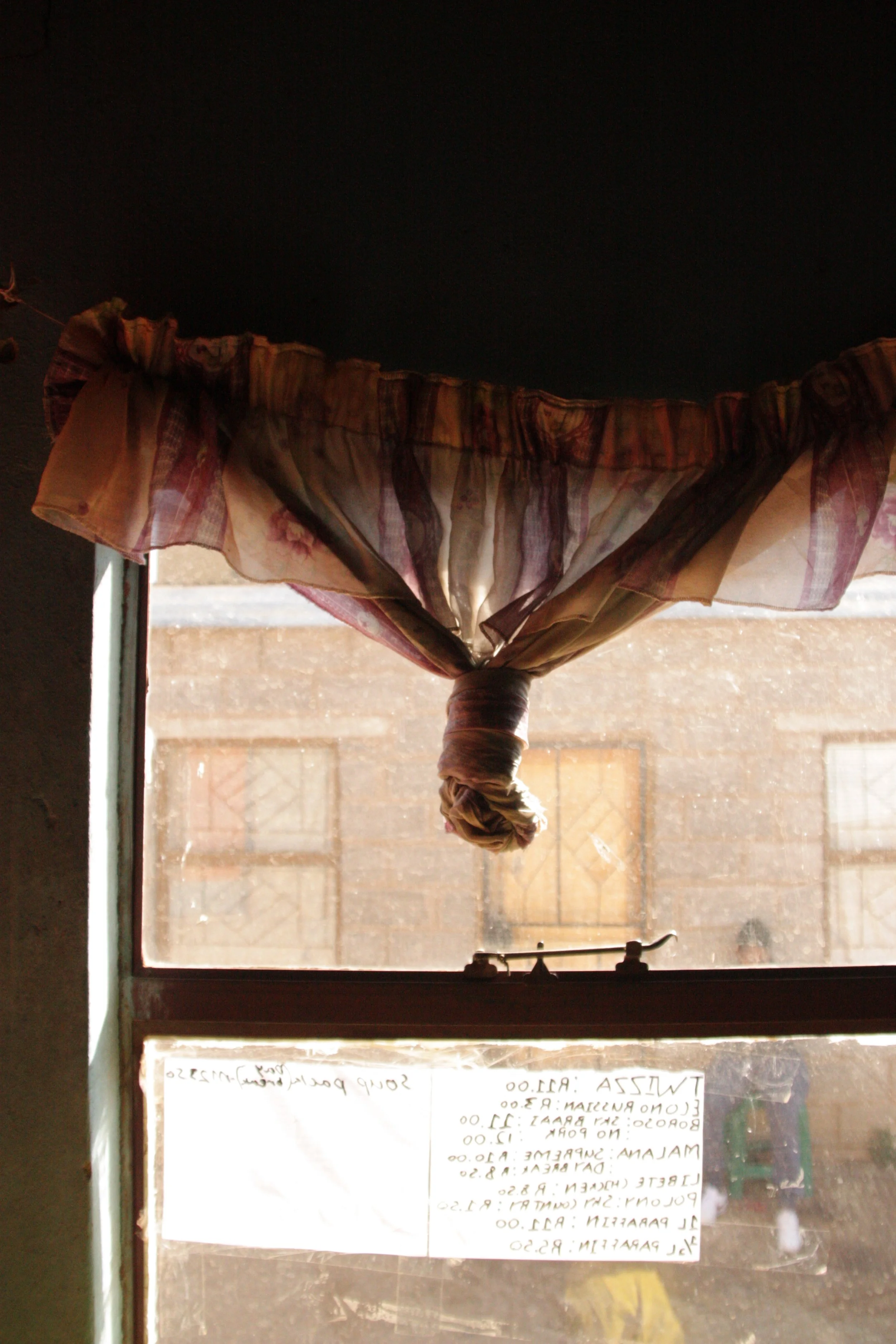
A curtain hangs over the window of Paballo’s small shop in Ha Magele, Leribe District, Lesotho, where handwritten prices for bread, paraffin and snacks are taped to the glass. With youth unemployment high and economic opportunities limited, many women rely on informal businesses like this one to support themselves and their families.
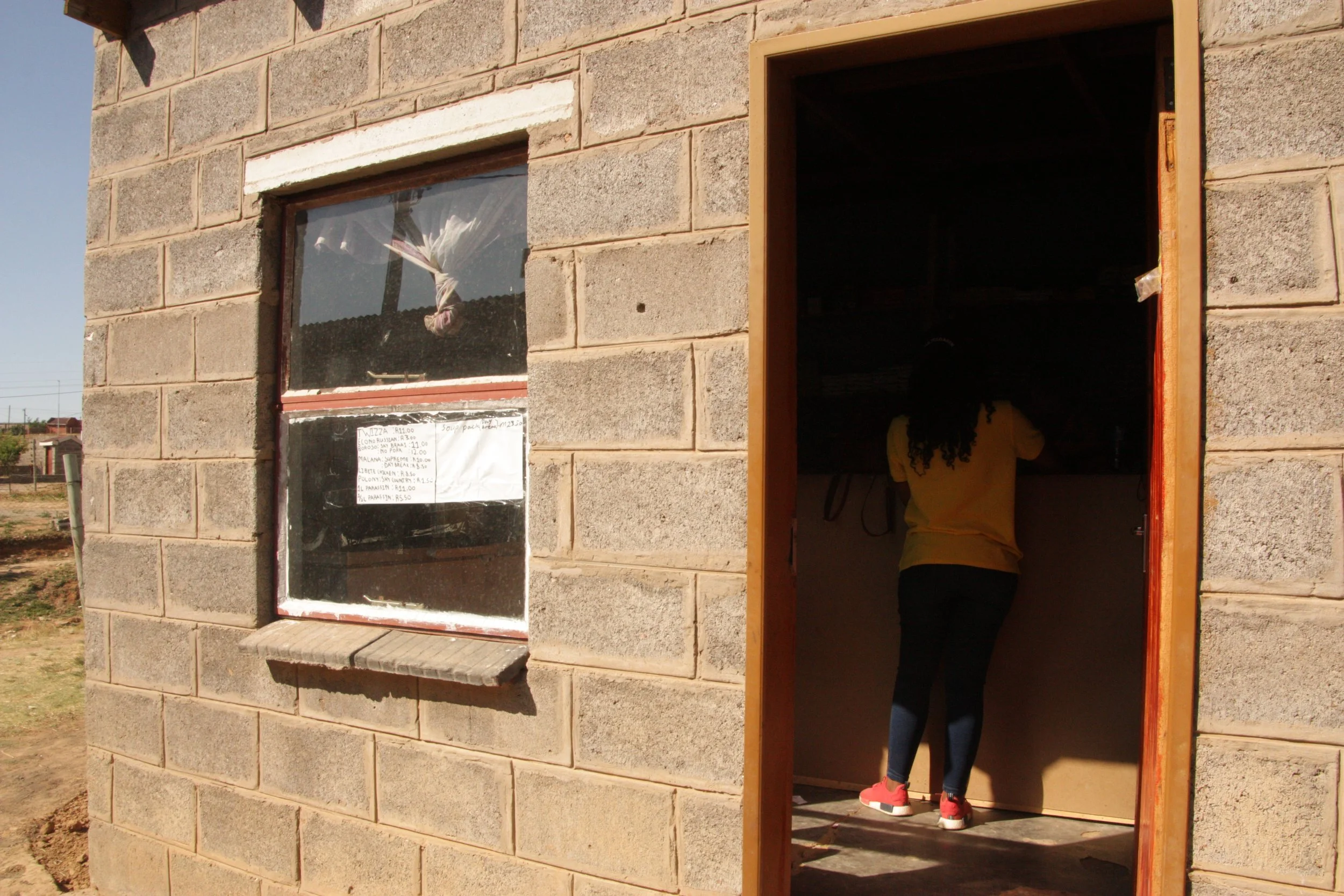
A customer stands inside the doorway of Paballo's one-room shopin Ha Magele, Leribe District, Lesotho. The business serves neighbours and schoolchildren in the area, selling essentials in small quantities to households managing rising costs and unstable incomes.
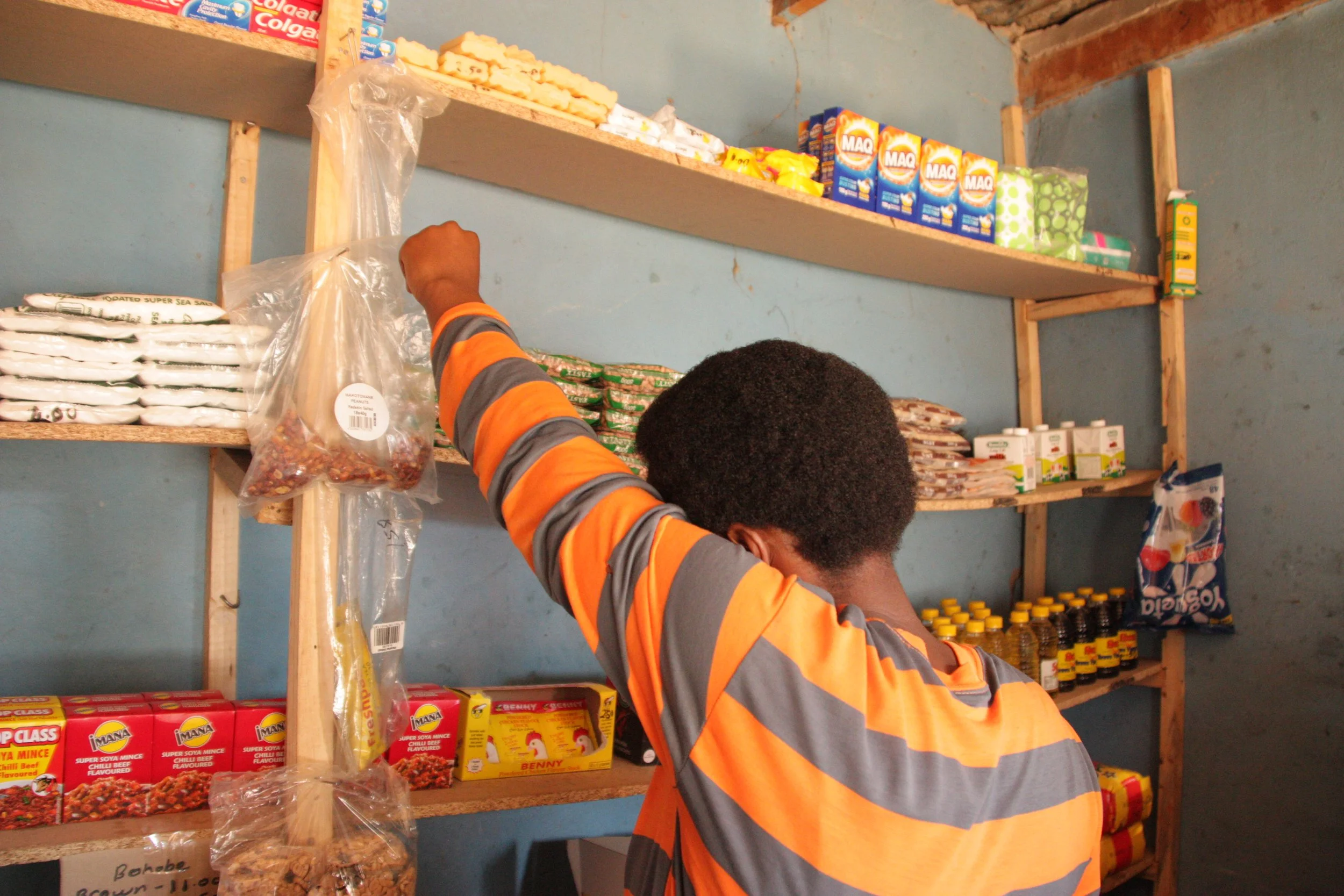
Paballo reaches for packets of snacks inside her shop. In a country where many young women face unemployment, gender-based violence and limited economic opportunities, small informal businesses can provide rare financial independence.
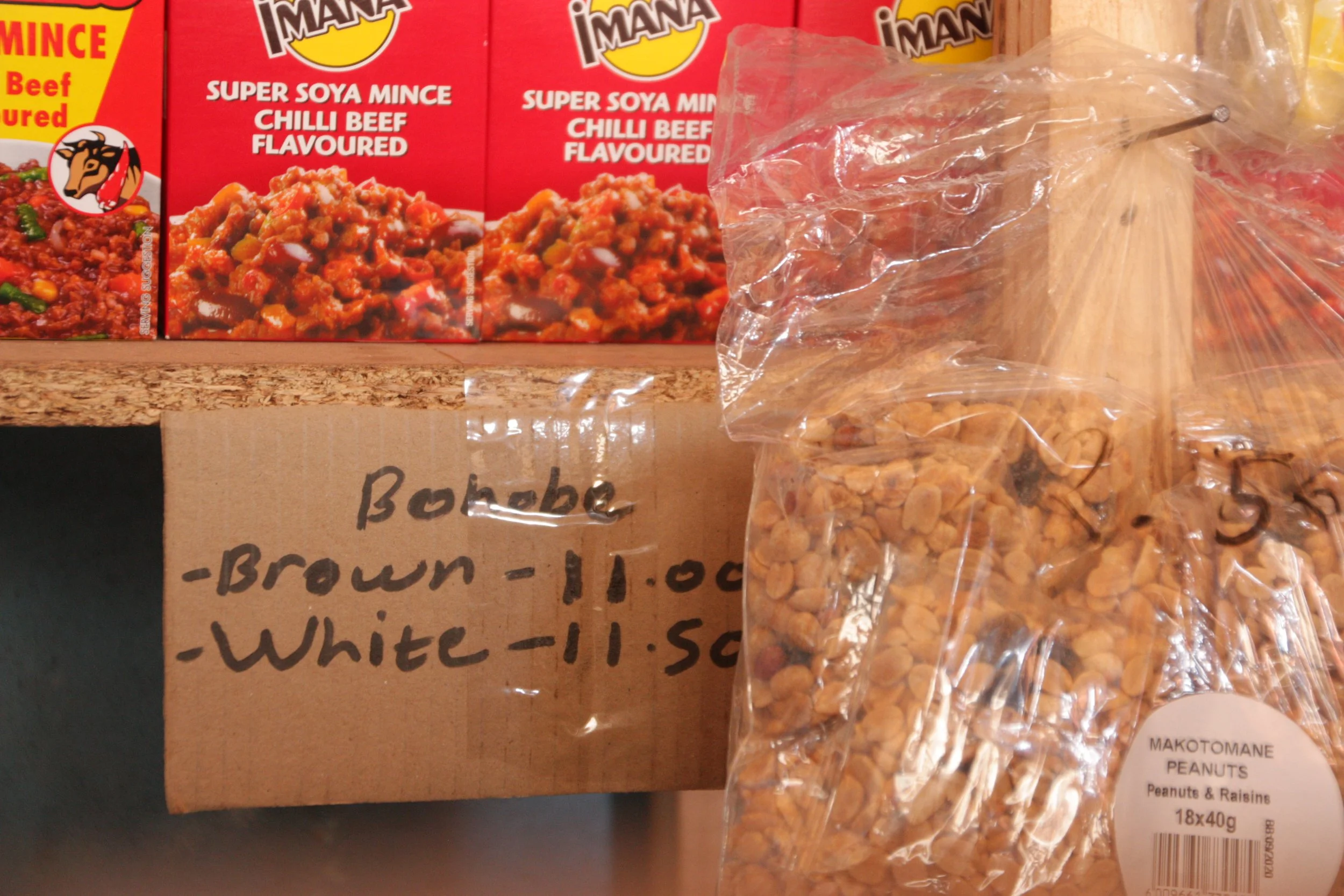
Handwritten prices for bread and packets of peanuts hang beside shelves stocked with inexpensive food items inside Paballo’s shop. Customers often buy goods in small amounts, reflecting the economic pressures many families face.
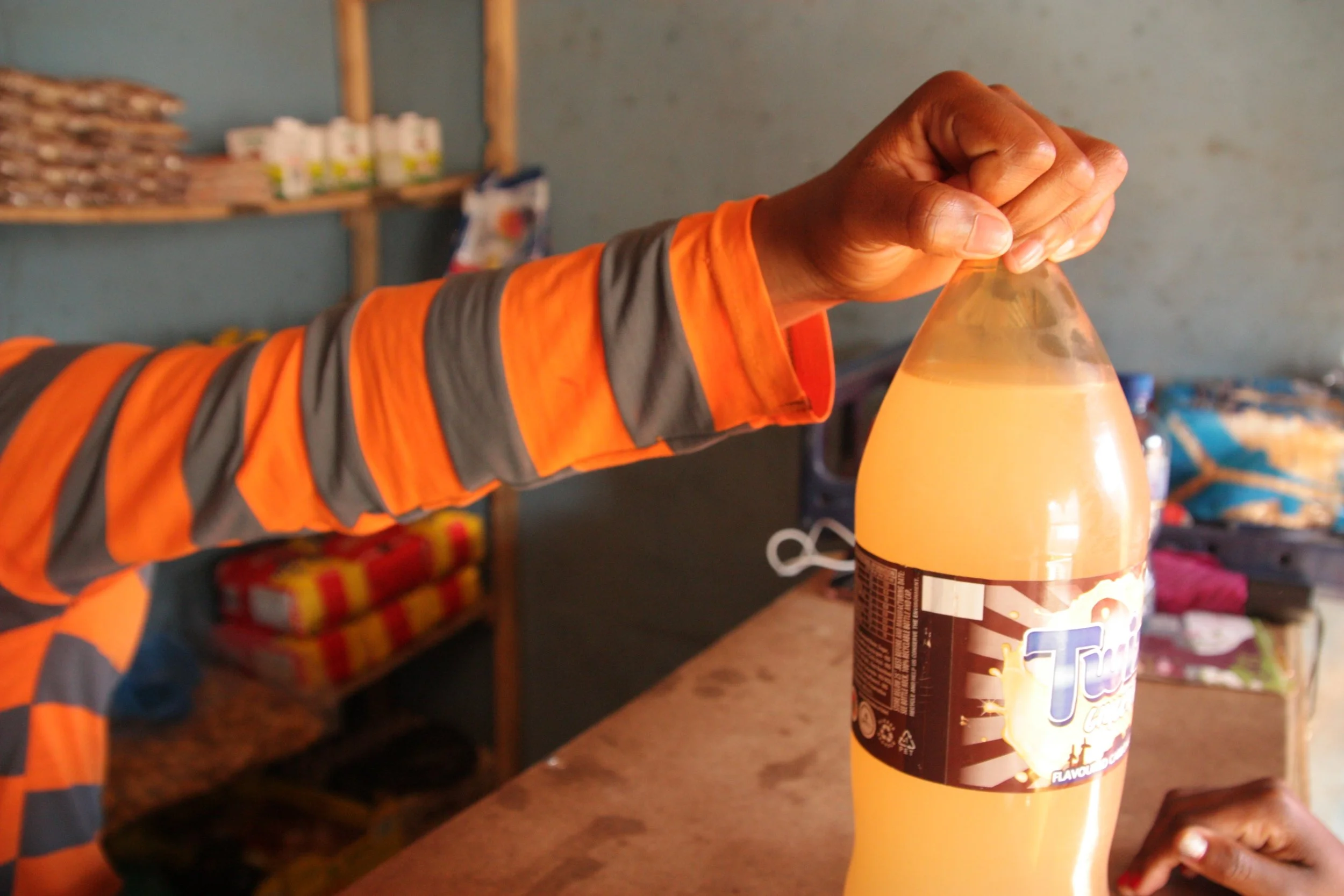
A customer purchases a soft drink inside Paballo’s shop. Small neighbourhood stores like this one often become informal social spaces as well as sources of income within the community.
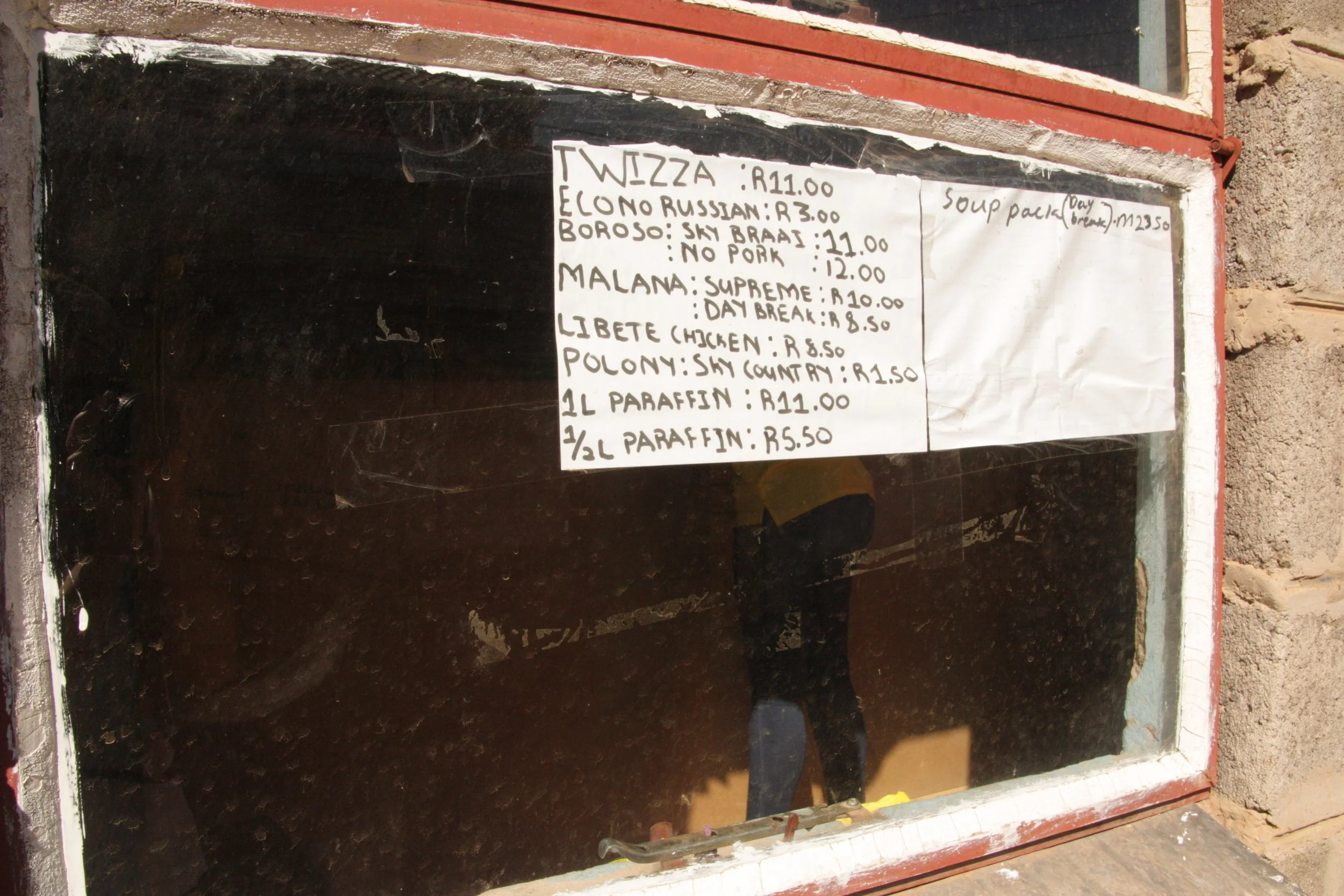
Seen through the dusty shop window, a woman waits at the till behind handwritten price lists outside Paballo’s store in Lesotho. The photographs avoid fully identifying Paballo in order to protect her privacy and safety while documenting the environment she has created through her work.
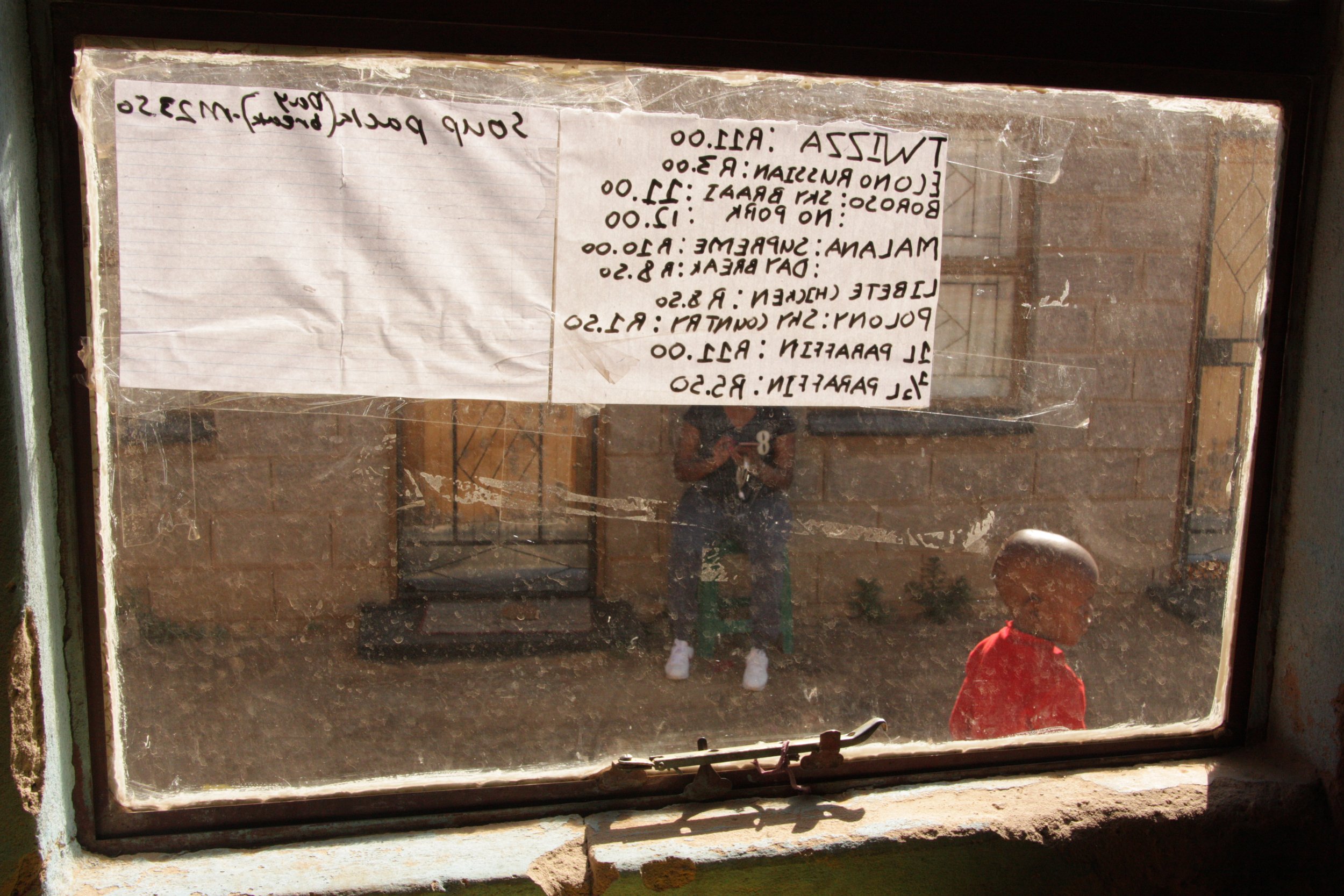
A child passes outside Paballo’s shop after school in Ha Magele, Leribe District, Lesotho. The storefront acts as both a small business and a gathering point within the neighbourhood, where children stop for snacks and residents meet throughout the day.
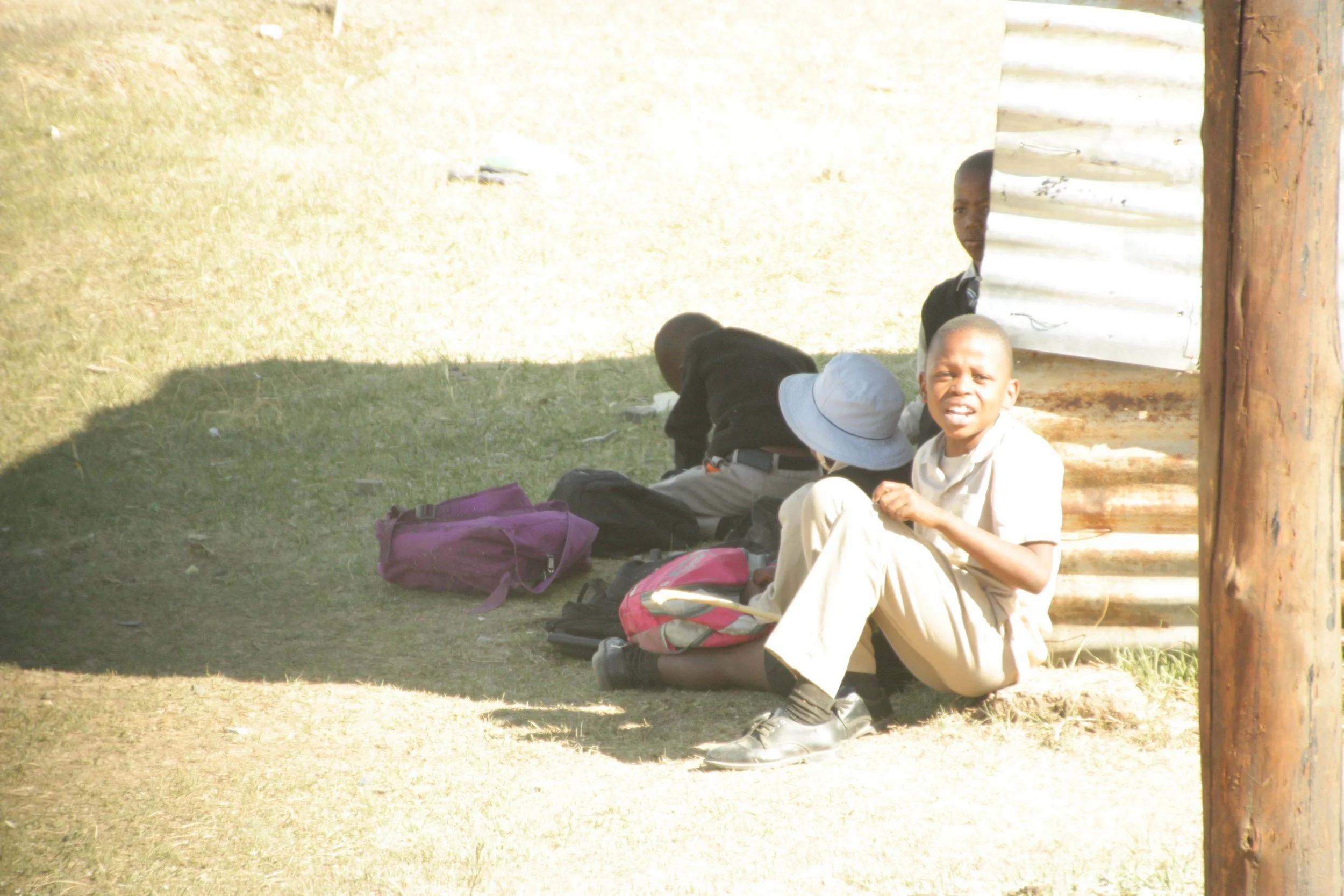
Schoolchildren gather outside Paballo’s shop after classes in Ha Magele, Leribe District, Lesotho. The series focuses on the spaces, objects and routines surrounding her work rather than her identity, reflecting both the vulnerabilities many women face and the resilience required to sustain an independent livelihood.