At Ibrahim Aqeel School in Taiz, Yemen, classrooms once used for learning were turned into storage depots for landmines and improvised explosive devices during the occupation of parts of the city by Houthi militias.
The contamination and destruction left lasting consequences for students and teachers. Thirteen-year-old Mariam Fouad, from Habil Salman in Taiz, lost two years of education because landmines and unexploded devices made her school unsafe. Now in eighth grade, she studies alongside her younger brother Mohamed, 10, who is in the same class after the war disrupted both of their education.
Across Taiz governorate, 85 schools were mined, according to local officials and demining authorities. Thirty schools were completely destroyed and 55 partially damaged. Project Masam, the Saudi-funded demining initiative operating in Yemen, says at least 221 male and female students were killed or injured by mines and improvised explosive devices planted in or around schools in Taiz alone.
The impact extends beyond Taiz. In Marib governorate, where large numbers of displaced families have settled during the conflict, more than 54,000 students have reportedly been deprived of education after educational facilities were damaged, militarised, mined, or rendered inaccessible.
These photographs document the fragile return of education in spaces still marked by war — damaged classrooms, rooftops turned into study areas, children learning beside ruins, and students attempting to reclaim ordinary school life in environments shaped by violence and contamination.
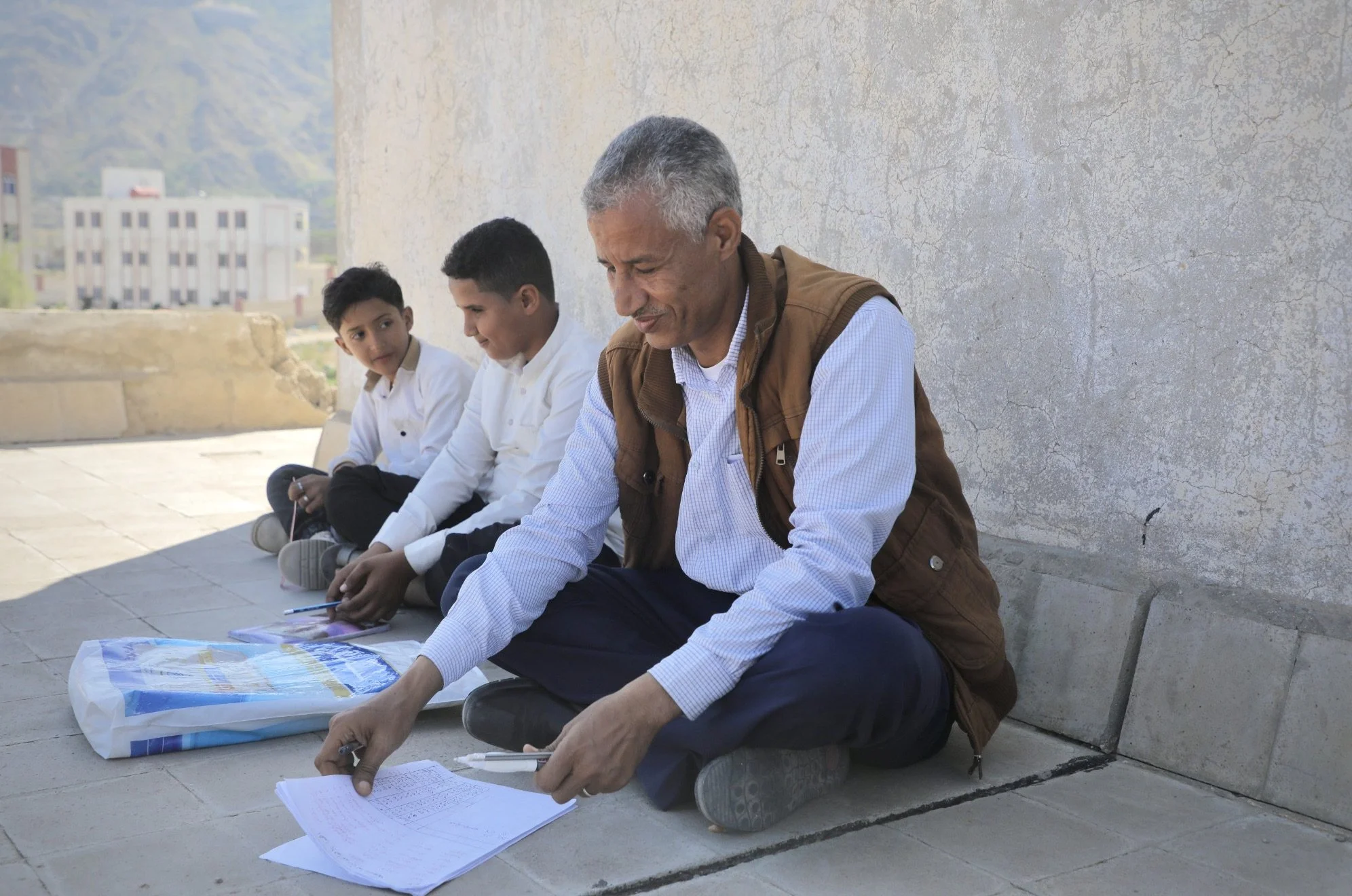
Abdulghani al-Haidari, director of Ibrahim Aqeel School, sits on the rooftop beside students during exam sessions at the school in Taiz, Yemen. After classrooms and administrative buildings were damaged following the discovery of landmines and improvised explosive devices stored at the school during the Houthi occupation of parts of the city, students now take exams on the rooftop because there is not enough classroom space available.
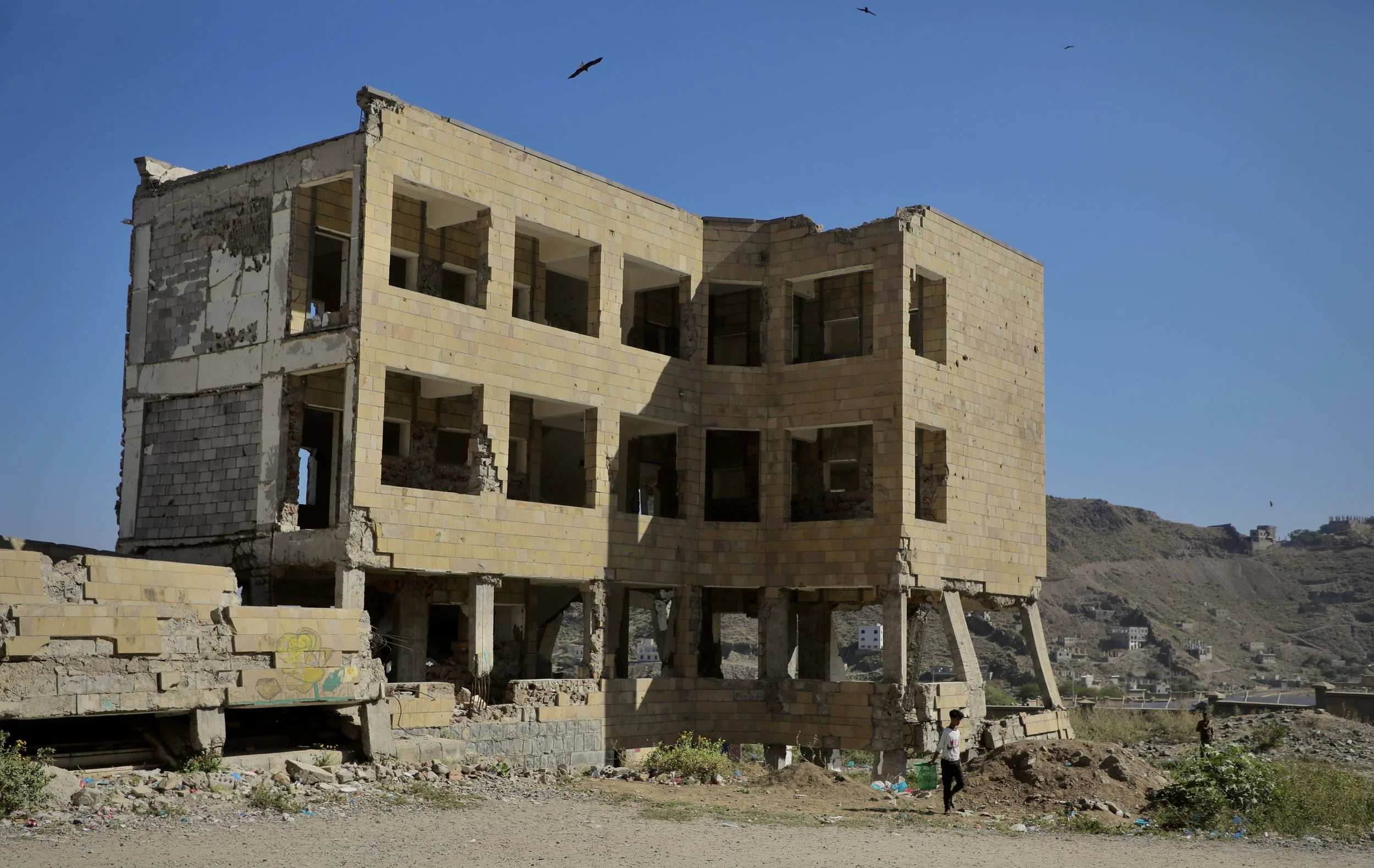
Ibrahim Aqeel School in Taiz, Yemen, partially destroyed after landmines and improvised explosive devices stored there during the war exploded. According to Project Masam, Houthi forces used parts of the school as a storage depot while occupying areas of the city.
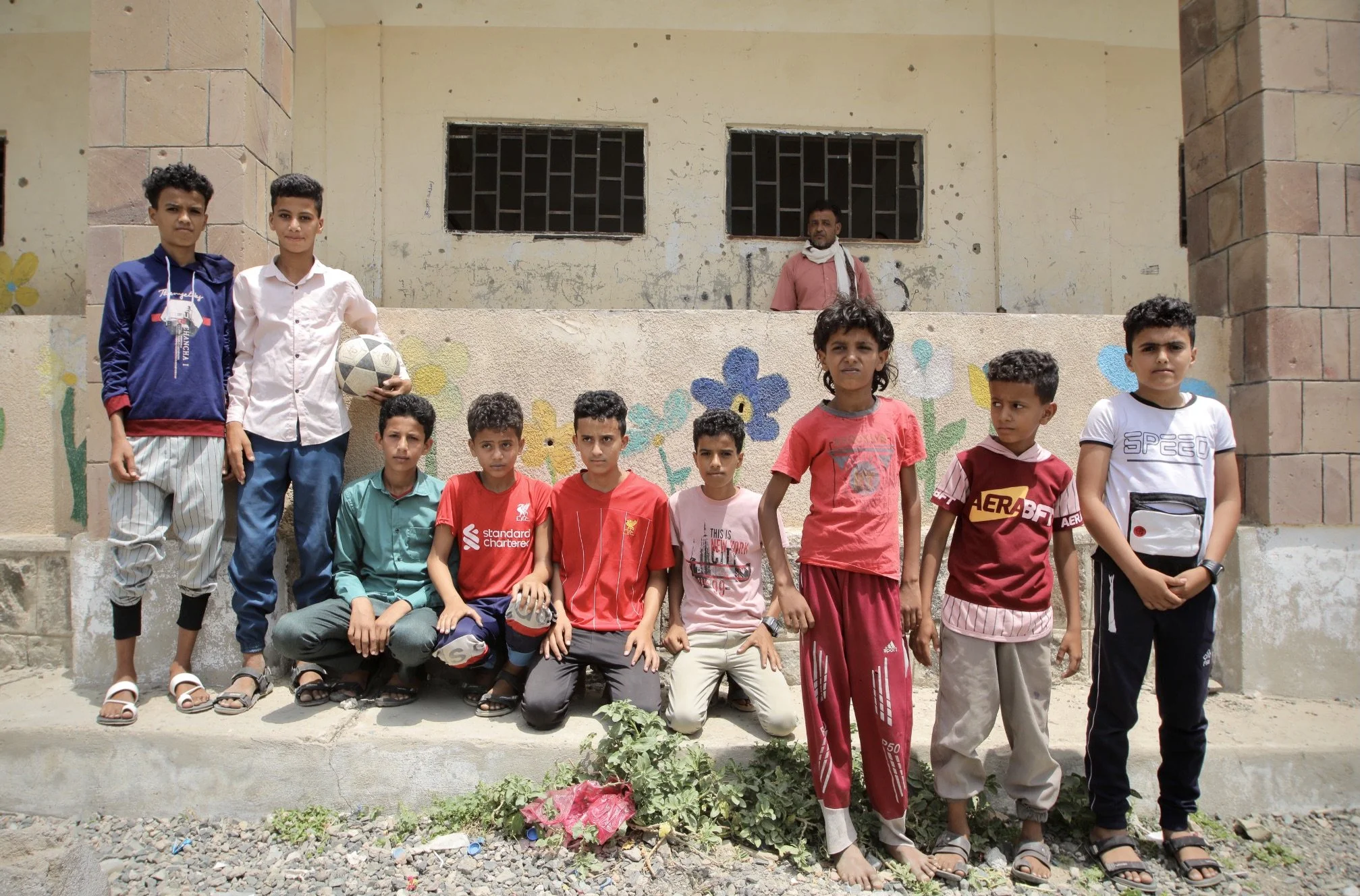
Students gather outside damaged classrooms at Ibrahim Aqeel School in Taiz, Yemen. Parts of the school were destroyed after Houthi forces used the site to store landmines and improvised explosive devices during the conflict.
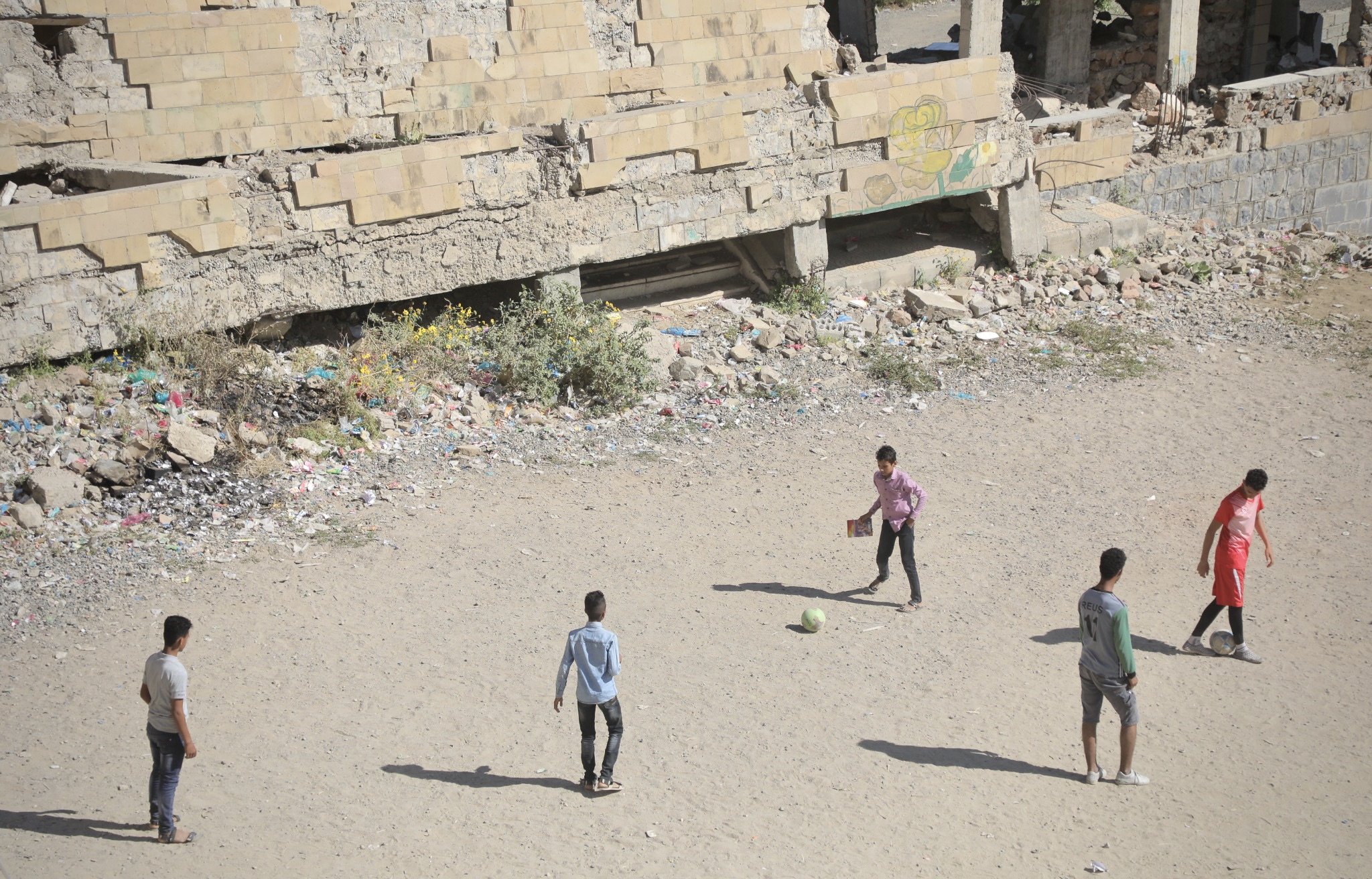
Children play football in the yard of Ibrahim Aqeel School in Taiz, Yemen, as school life continues despite years of conflict and damage to the campus.
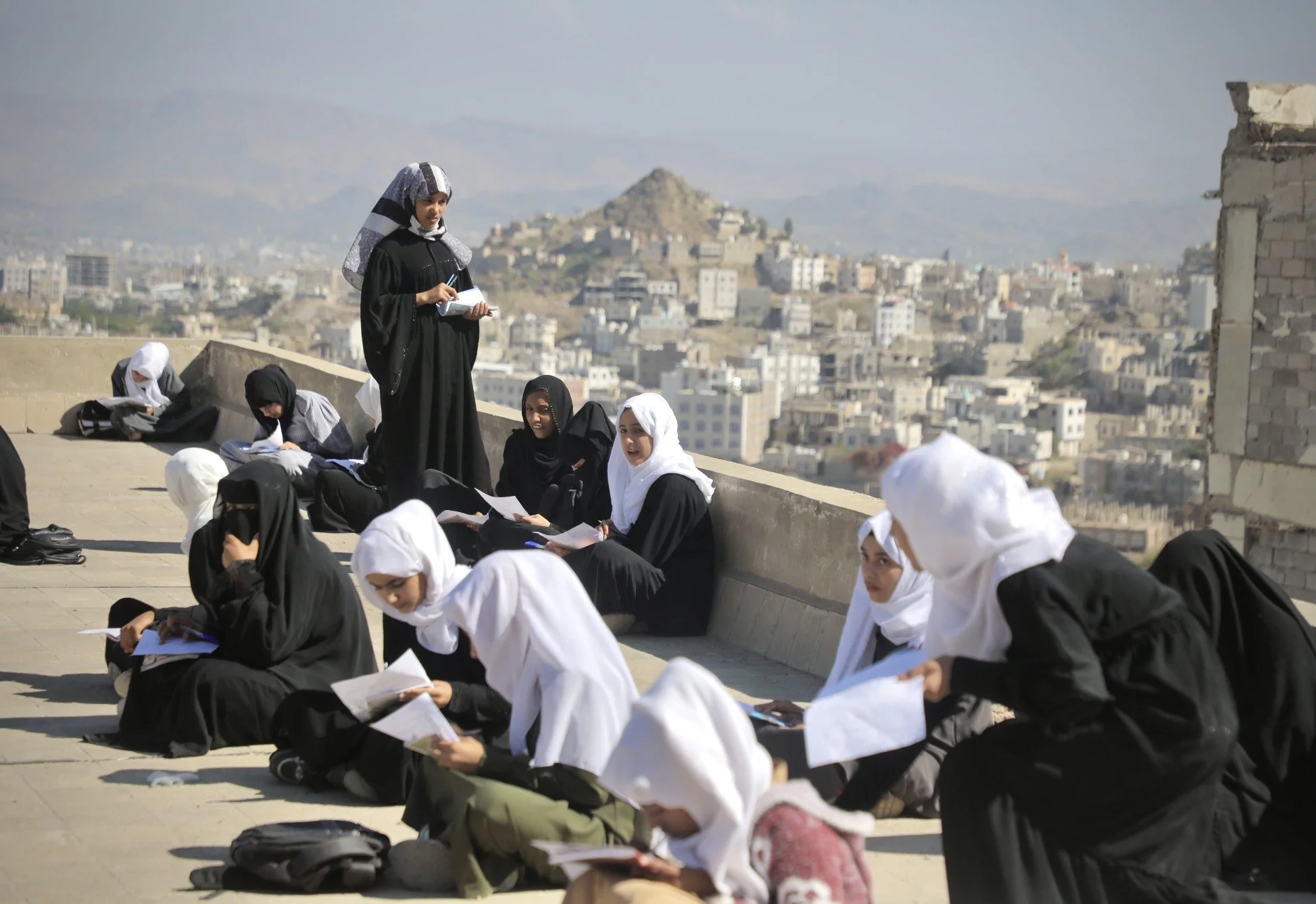
Female students sit on the rooftop of Ibrahim Aqeel School during exam sessions in Taiz, Yemen. With several classrooms destroyed or unusable, students have been forced to study and take exams in open-air spaces.
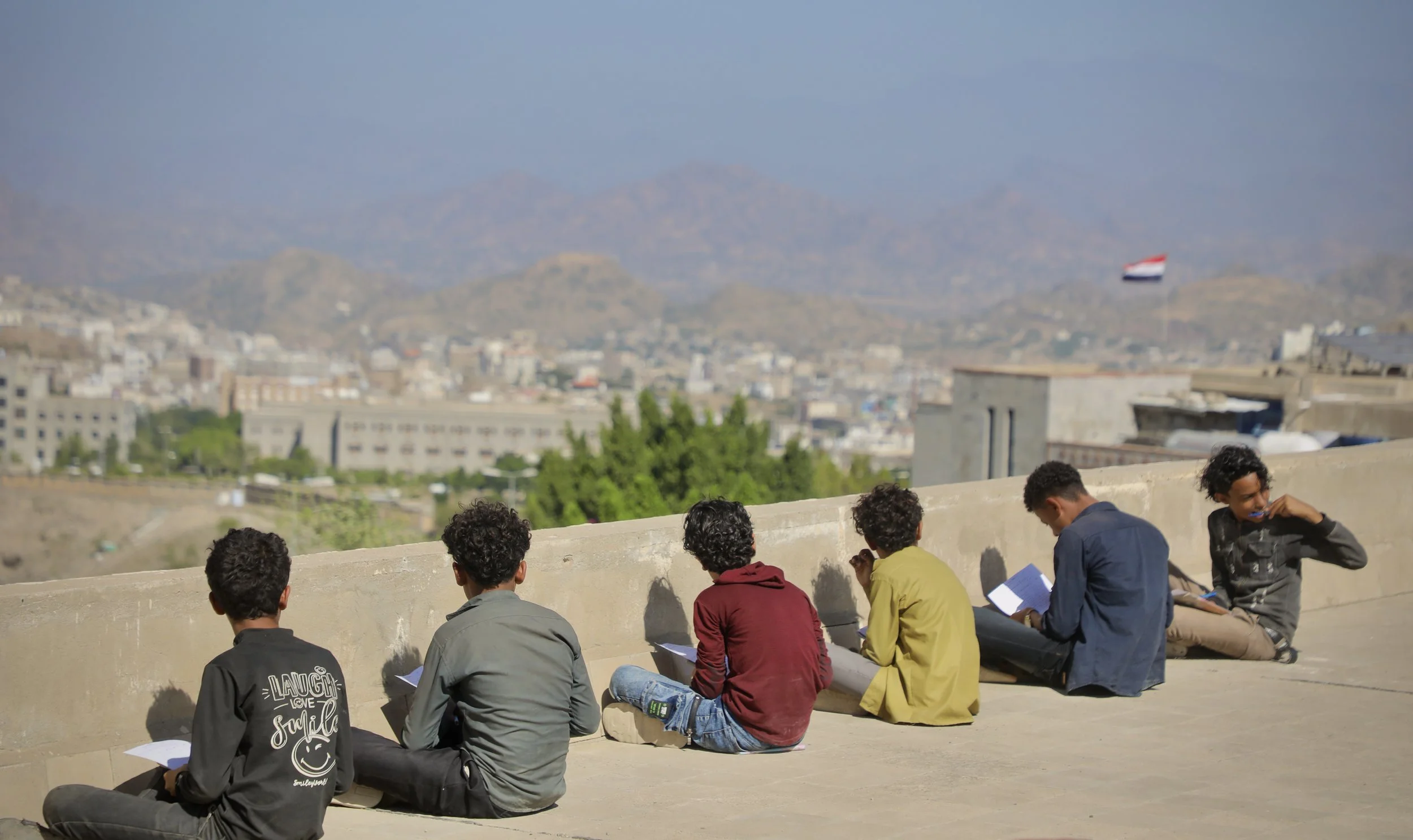
Students take exams on the rooftop of Ibrahim Aqeel School in Taiz, Yemen, after damage to the school left insufficient classroom space for pupils.
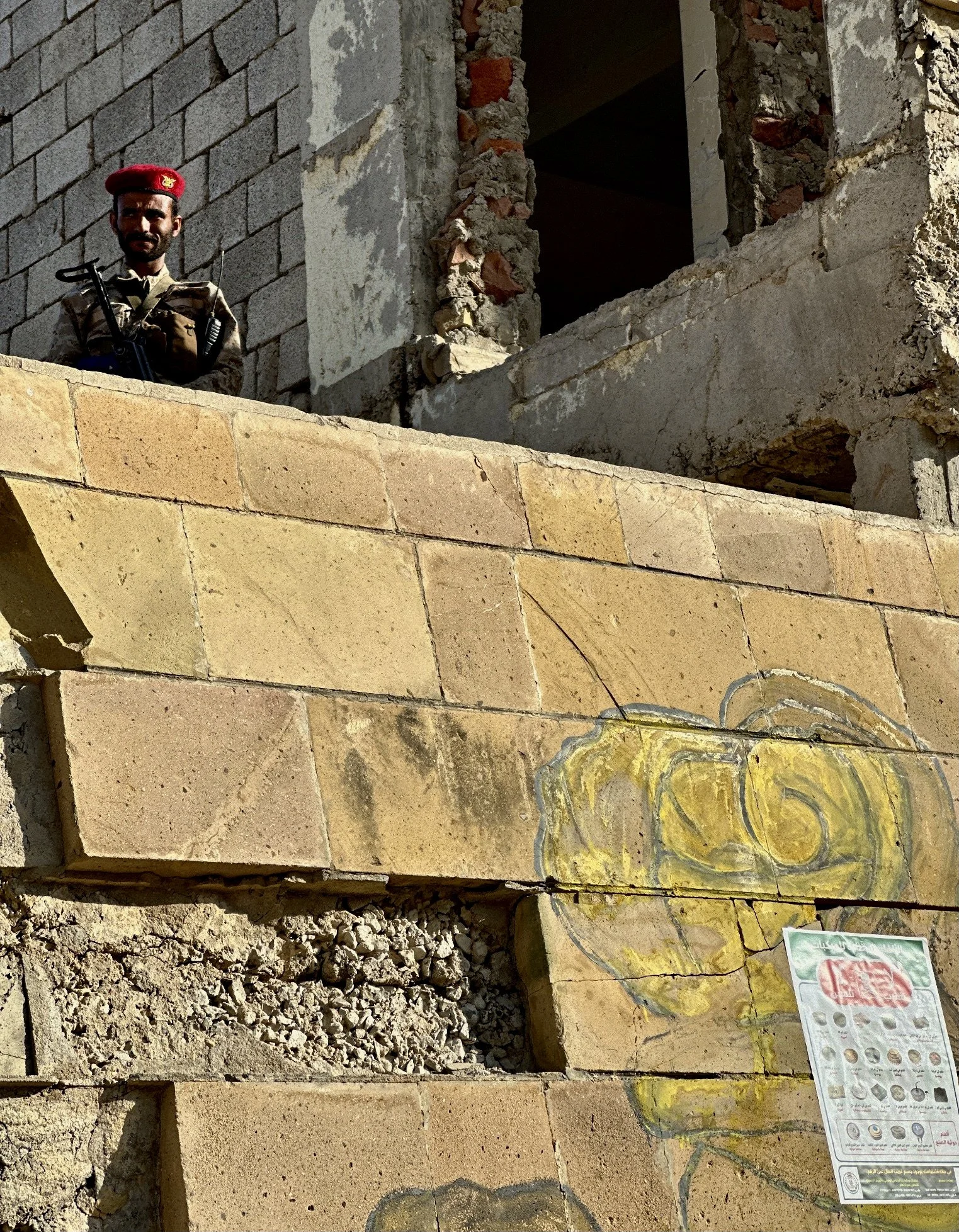
A soldier stands beside a damaged section of Ibrahim Aqeel School in Taiz, Yemen, where warning posters about landmines and improvised explosive devices are displayed on the walls.
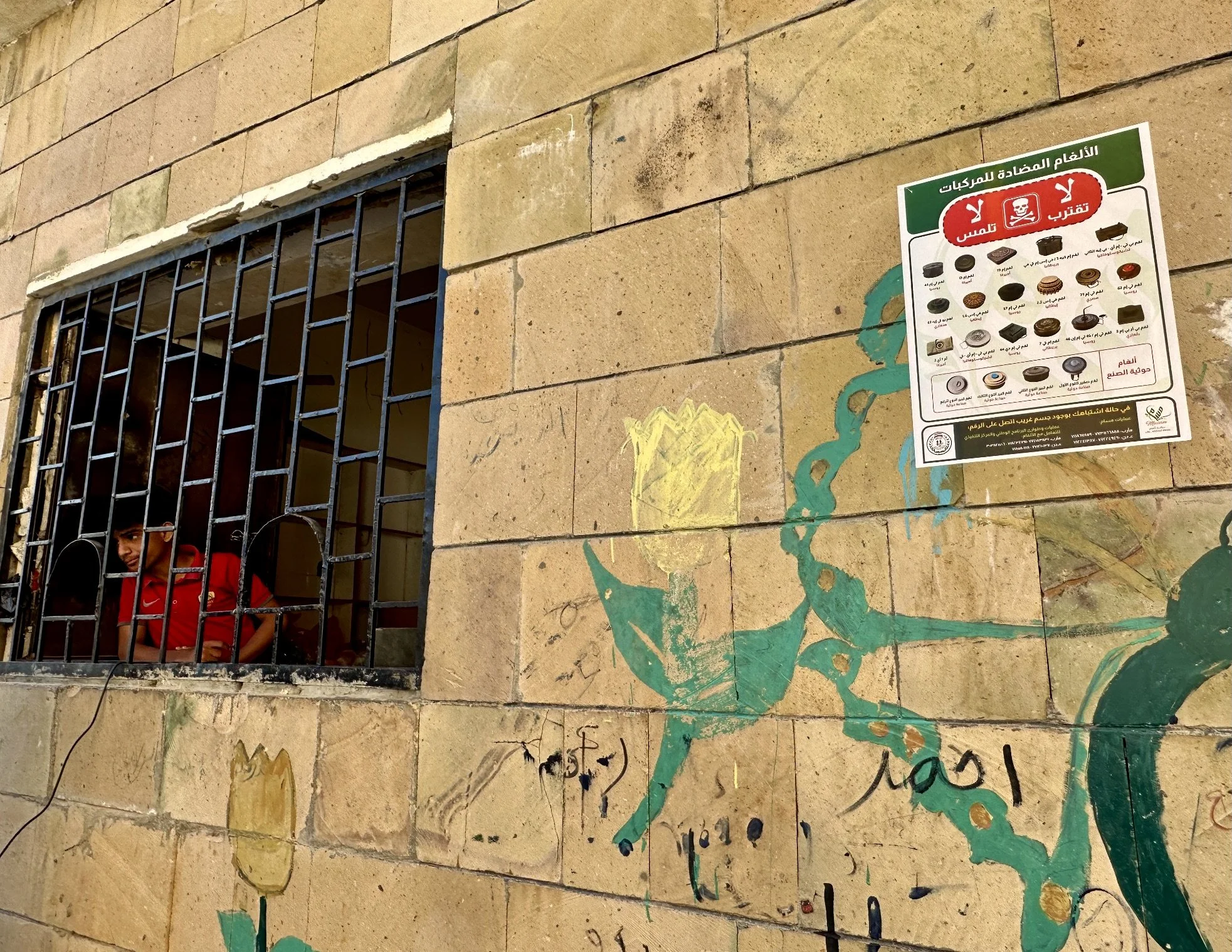
A warning poster showing different types of landmines and improvised explosive devices is displayed on a wall inside Ibrahim Aqeel School in Taiz, Yemen.
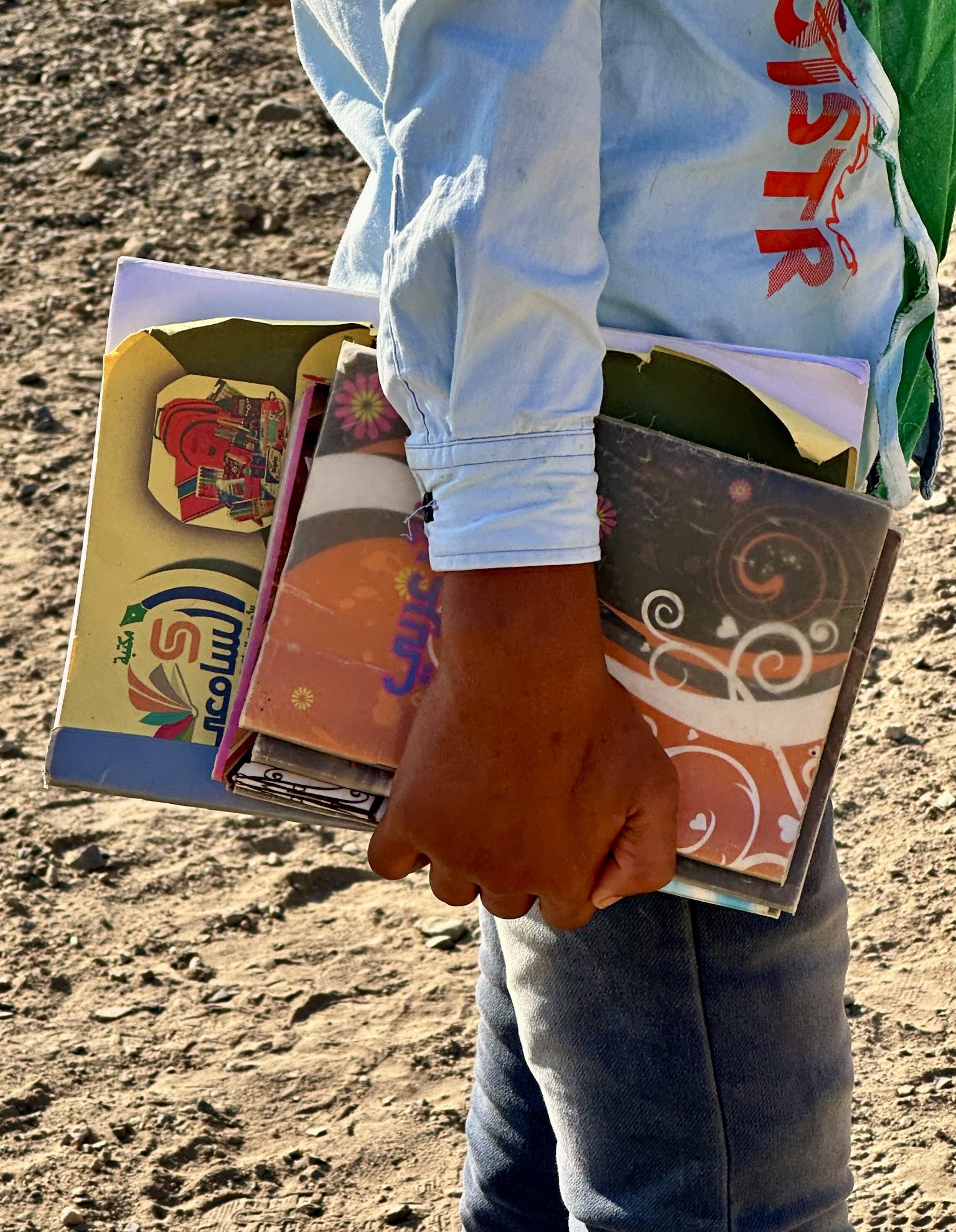
A student carries schoolbooks across the grounds of Ibrahim Aqeel School in Taiz. Many children at the school lost years of education because of conflict, displacement, and landmine contamination.
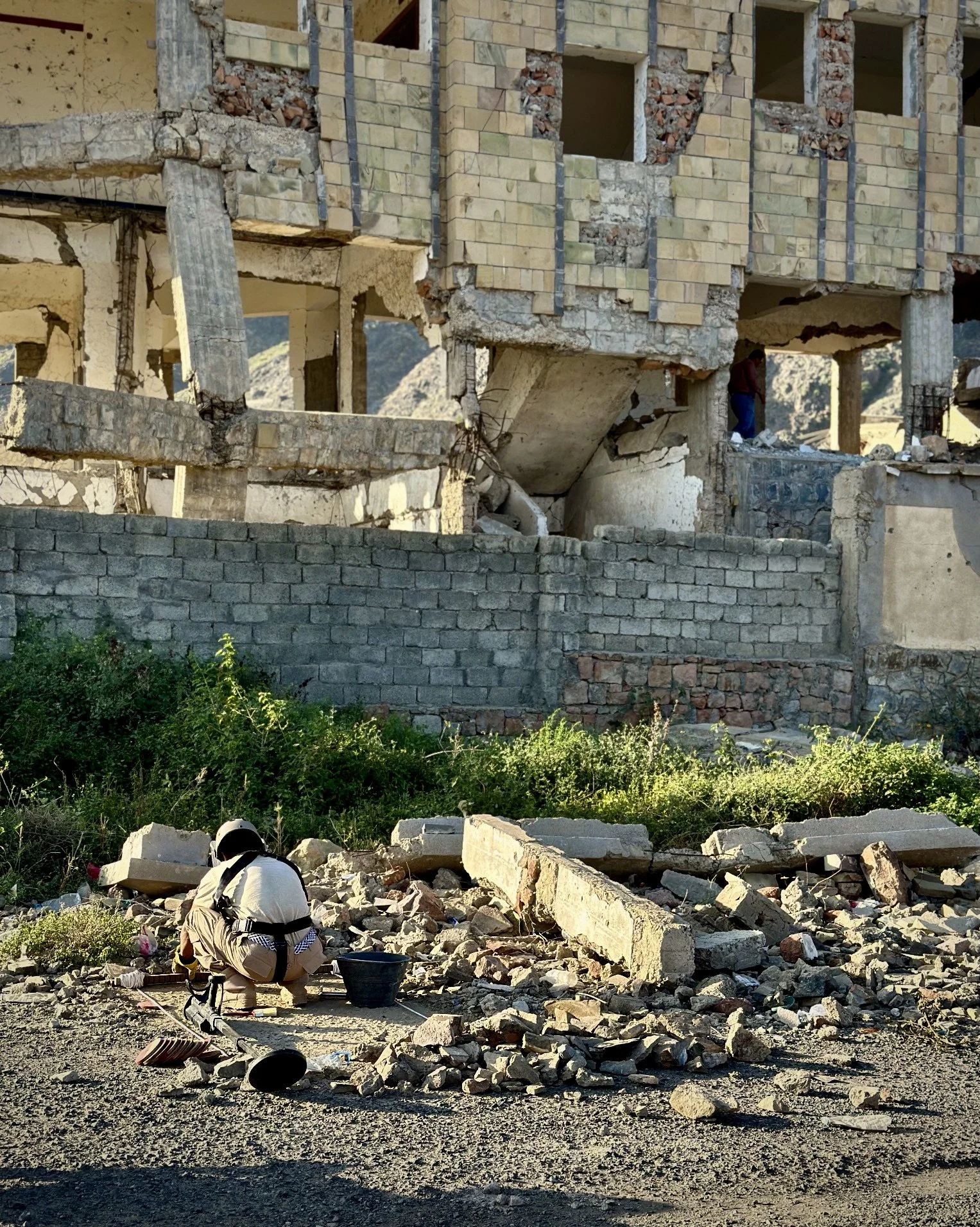
A deminer works near the damaged remains of Ibrahim Aqeel School in Taiz. Across the governorate, dozens of schools were mined or damaged during the conflict, according to Project Masam and local rights groups.
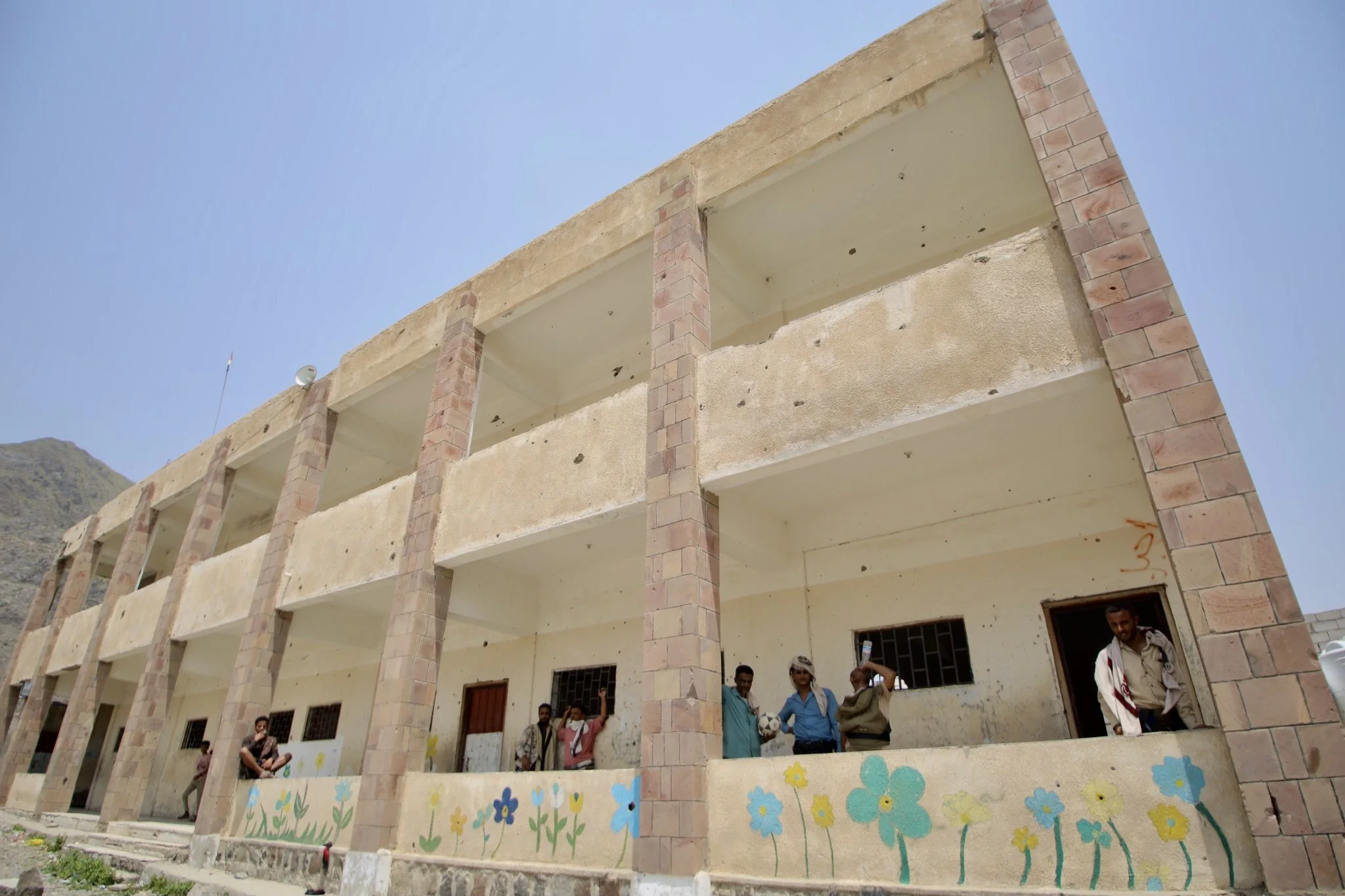
A school building bearing blast and artillery damage remains in use at Ibrahim Aqeel School in Taiz, Yemen. Classrooms and administrative buildings at the school were previously used to store landmines and improvised explosive devices during the Houthi occupation of parts of the city.
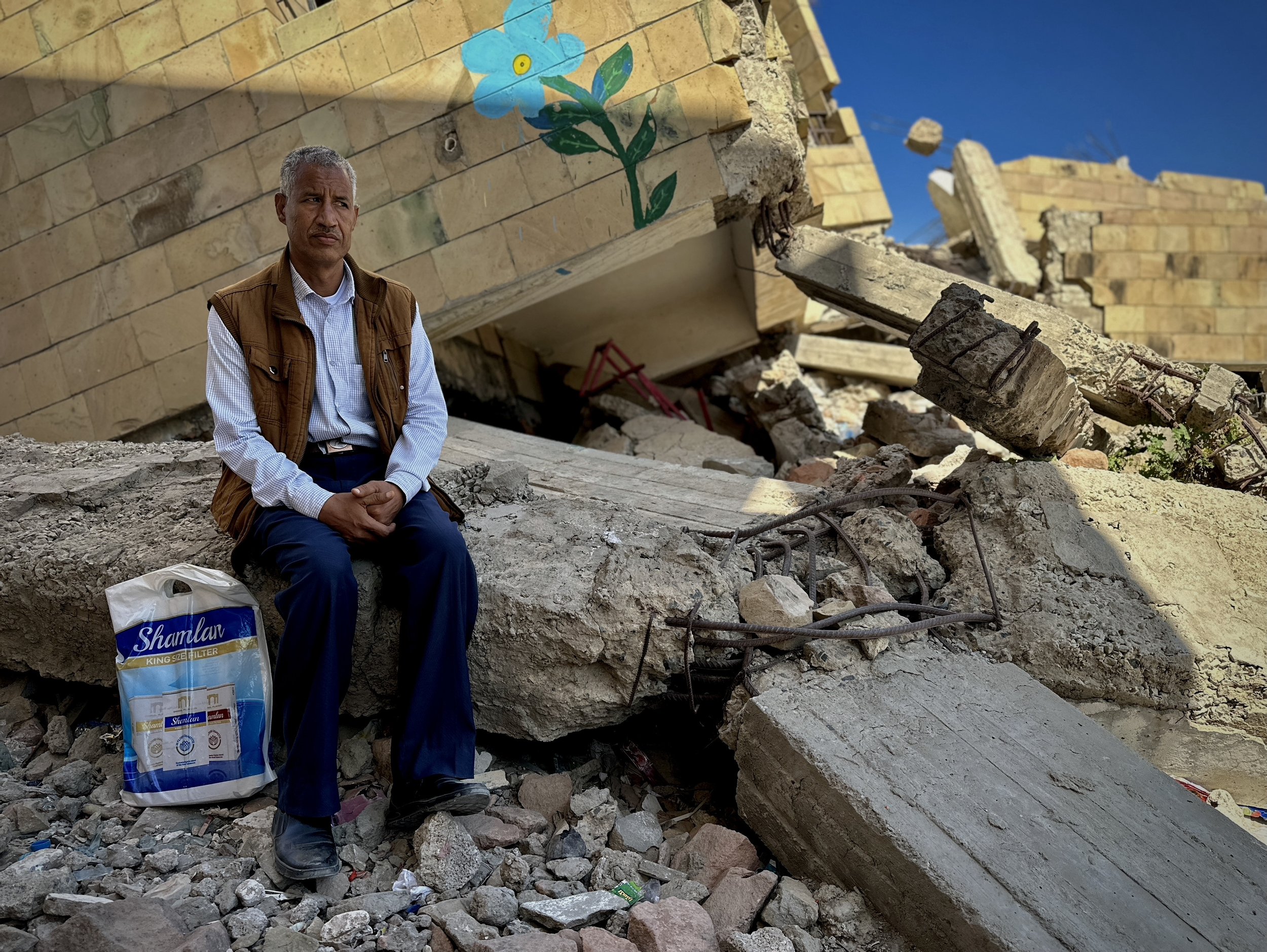
Abdulghani al-Haidari, director of Ibrahim Aqeel School, sits among the rubble of the damaged campus in Taiz - including the administrative building.
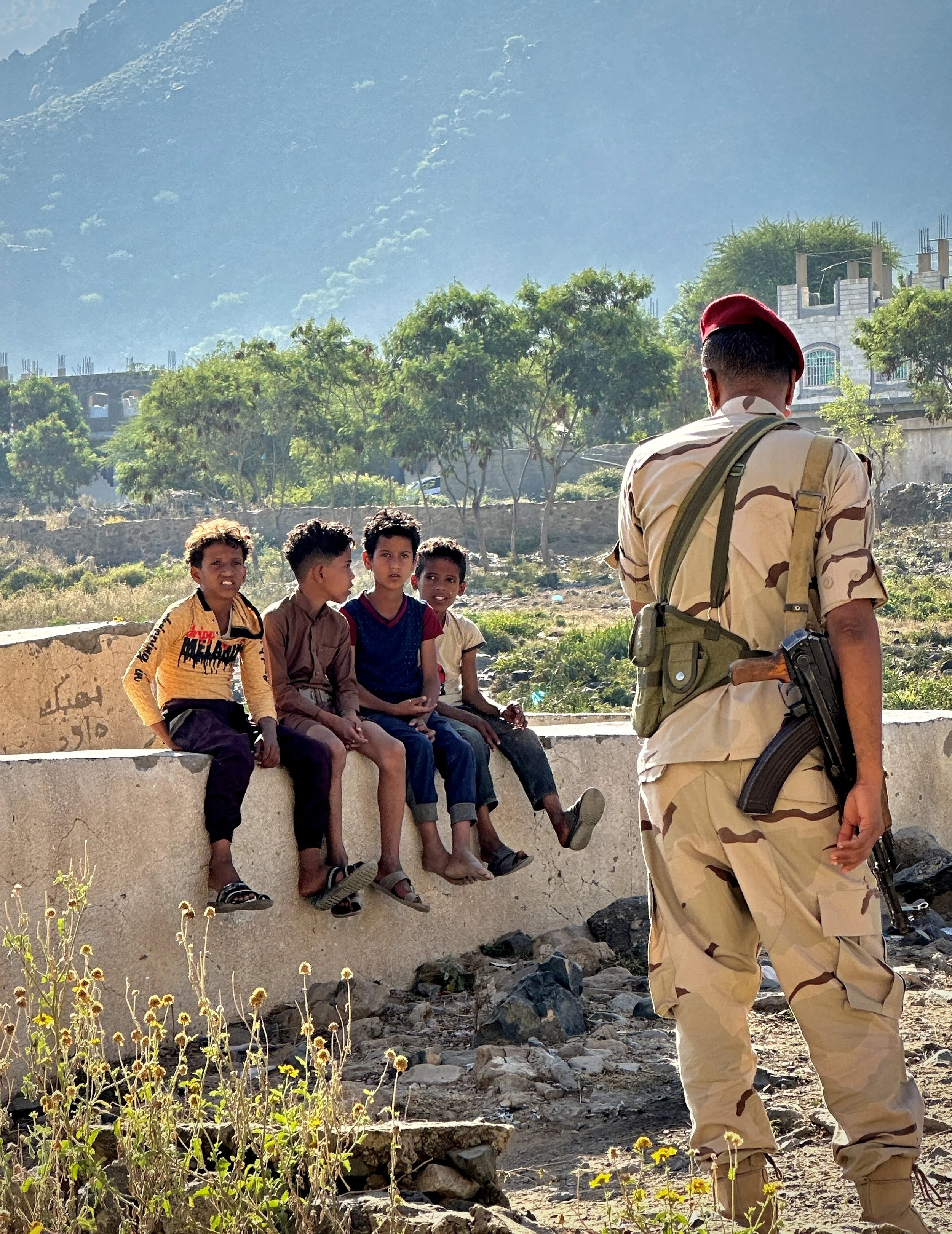
Children sit near an armed guard in the Ibrahim Aqeel School courtyard in Taiz. The school continues operating amid the long-term effects of conflict and landmine contamination in the area.
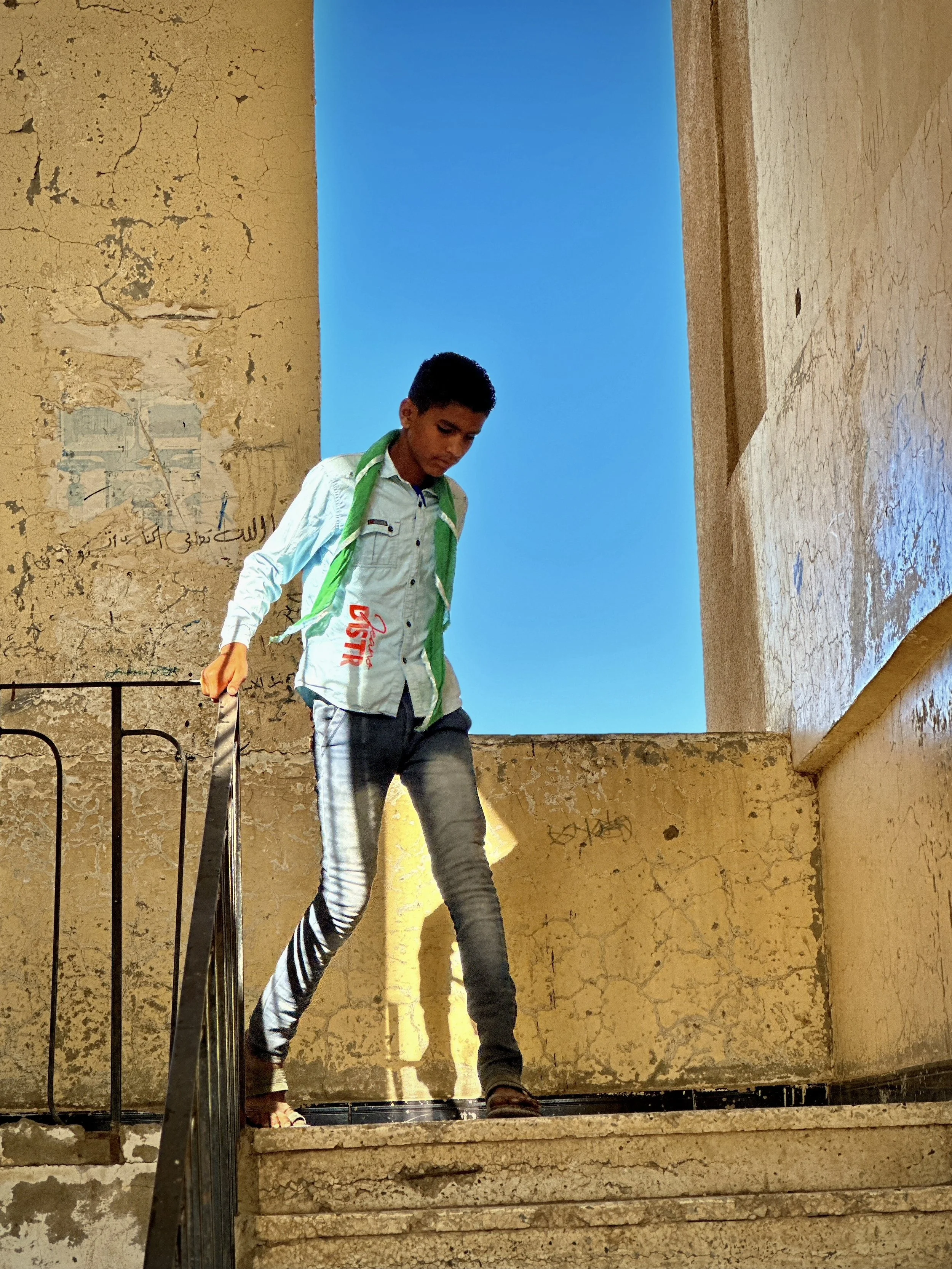
A student wearing a green prefect’s scarf walks through a damaged stairwell at Ibrahim Aqeel School in Taiz. Parts of the school were destroyed after landmines and improvised explosive devices stored there during the war exploded, leaving students to navigate damaged classrooms and corridors each day.
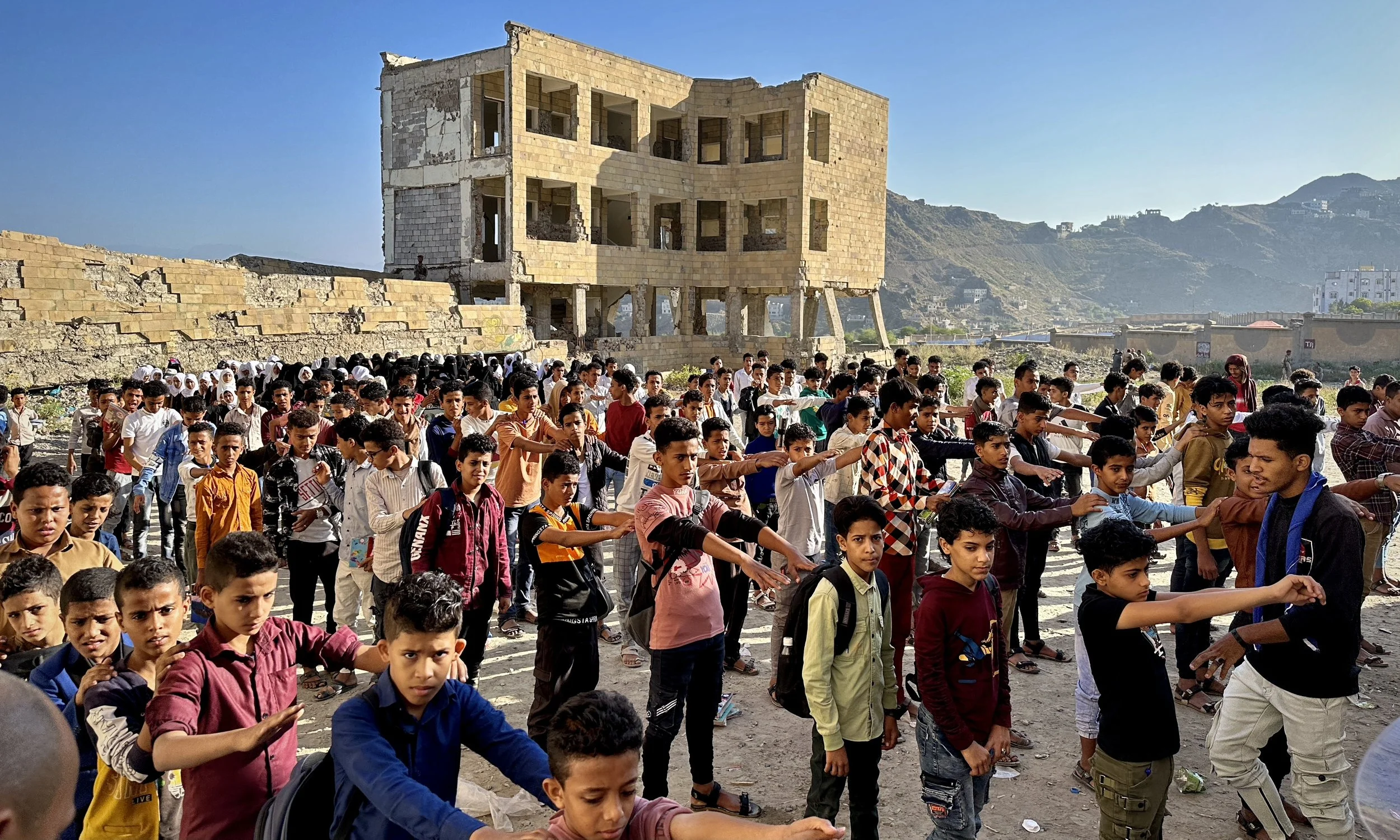
Students line up in the courtyard of Ibrahim Aqeel School in Taiz, Yemen, during morning roll call and physical exercises before the start of the school day.
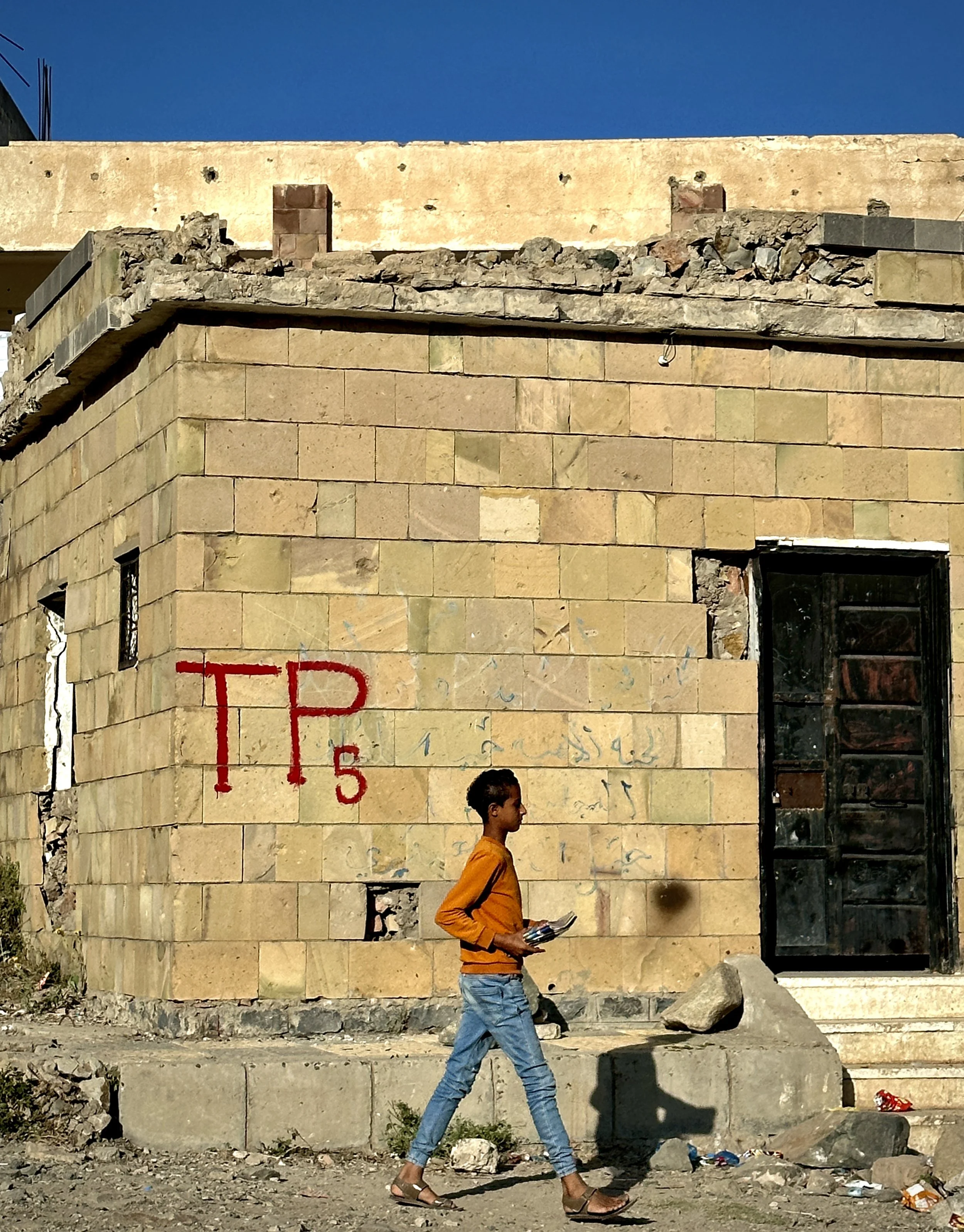
A child walks past a wall marked “TP5” inside Ibrahim Aqeel School in Taiz, Yemen. In humanitarian mine action, “TP” refers to a “Turning Point,” a surveyed marker used to indicate a change in the boundary of a suspected or confirmed hazardous area during landmine clearance operations.
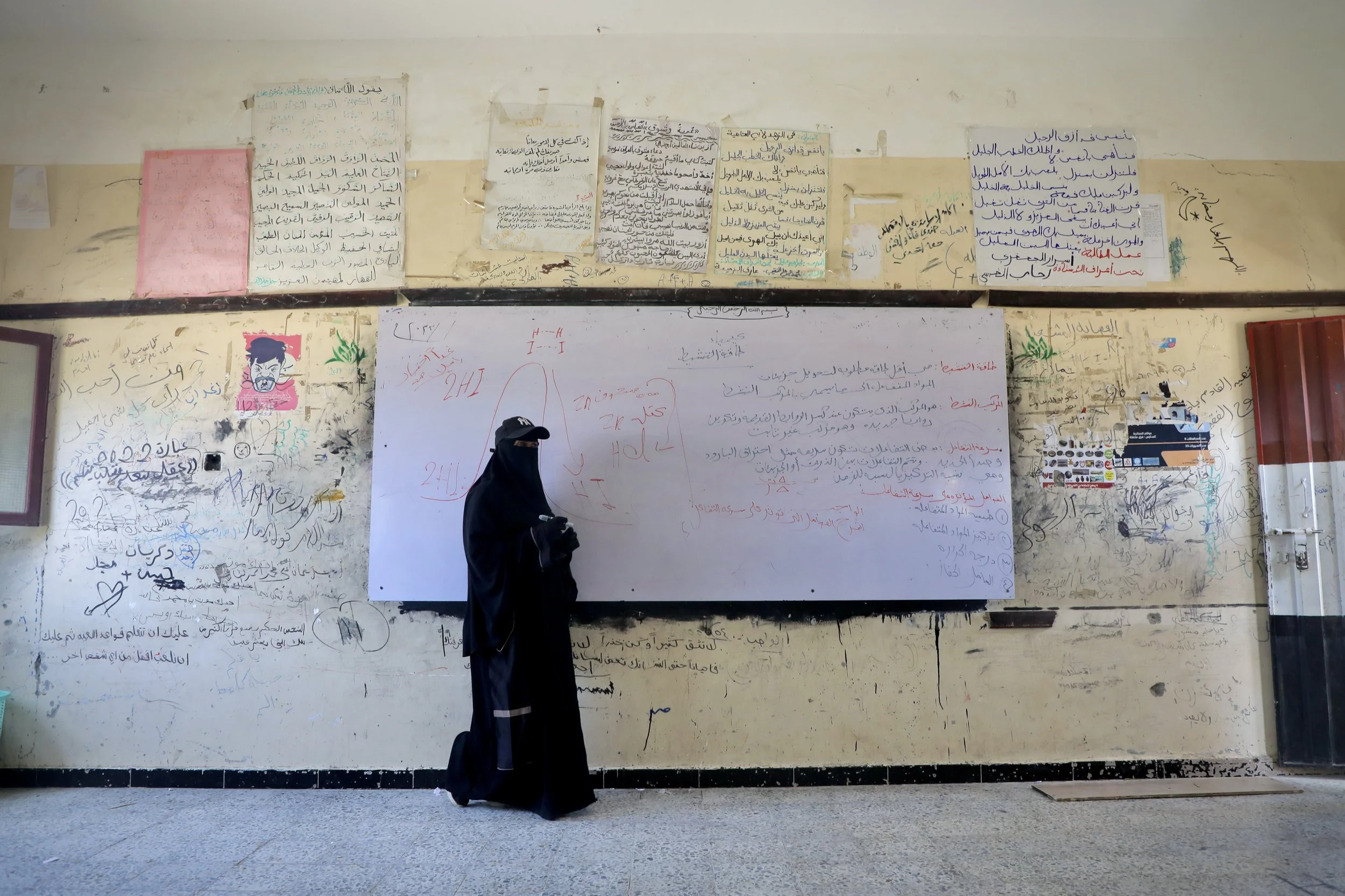
A teacher conducts a lesson inside Ibrahim Aqeel School in Taiz, where students and staff continue classes despite extensive damage to parts of the campus.
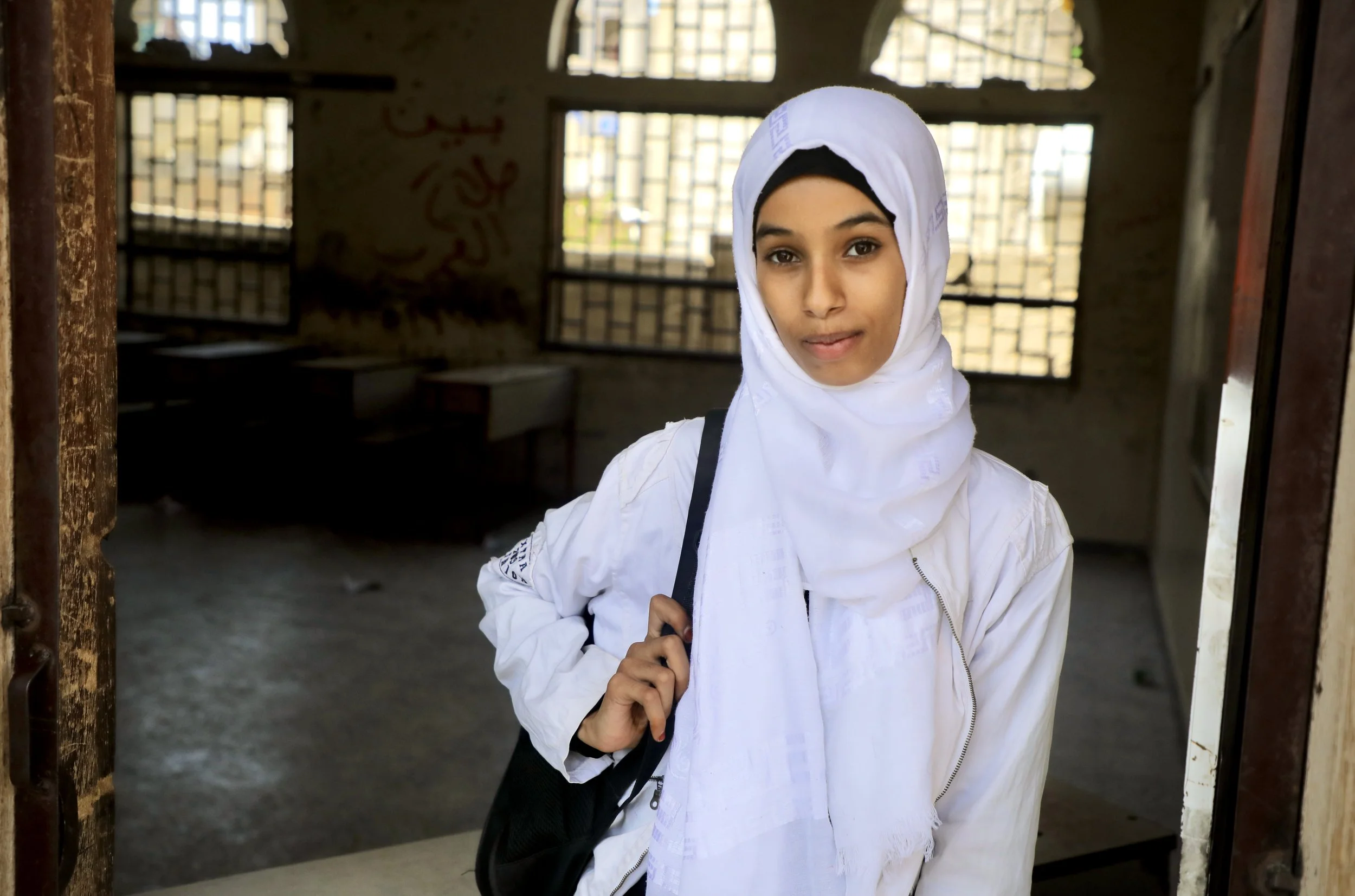
Mariam Fouad, 13, inside a classroom at Ibrahim Aqeel School in Taiz. She now studies in eighth grade after missing years of education because of the war and landmine contamination.
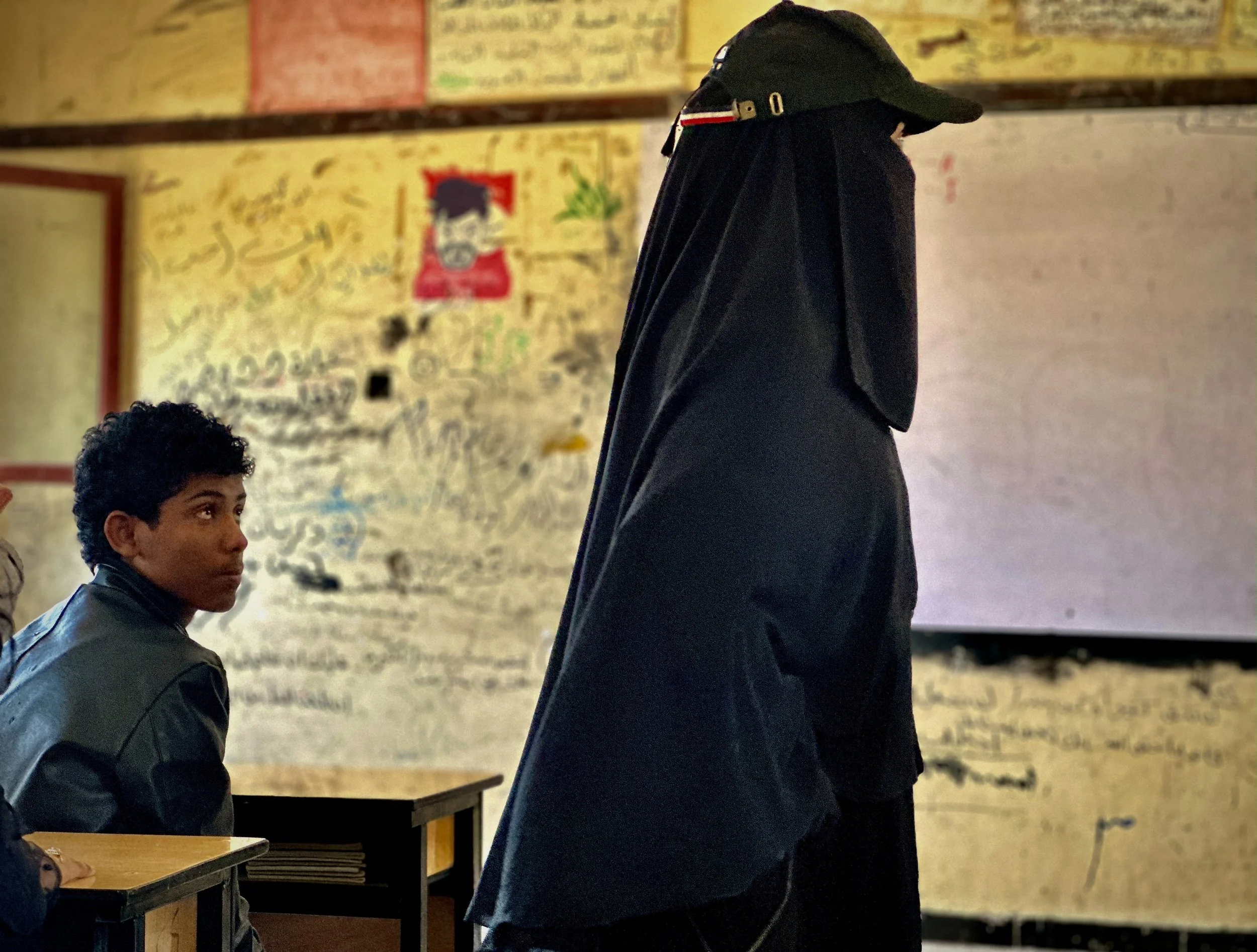
A teacher stands inside a classroom at Ibrahim Aqeel School in Taiz, Yemen, as a student looks up during lessons.
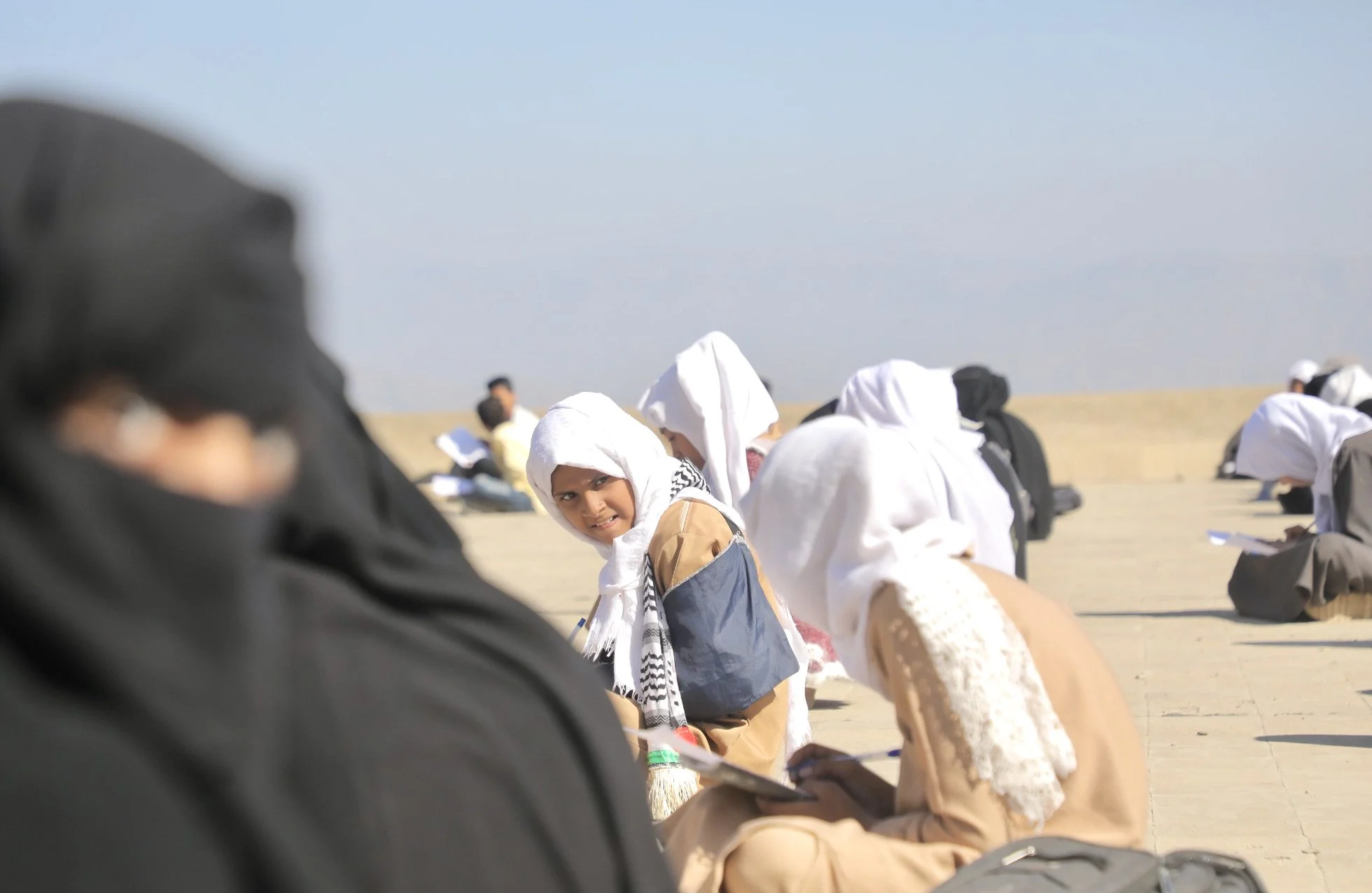
Female students secretly speak during rooftop exam sessions at Ibrahim Aqeel School in Taiz, Yemen, where students continue studying in improvised spaces after classrooms were damaged during the conflict.
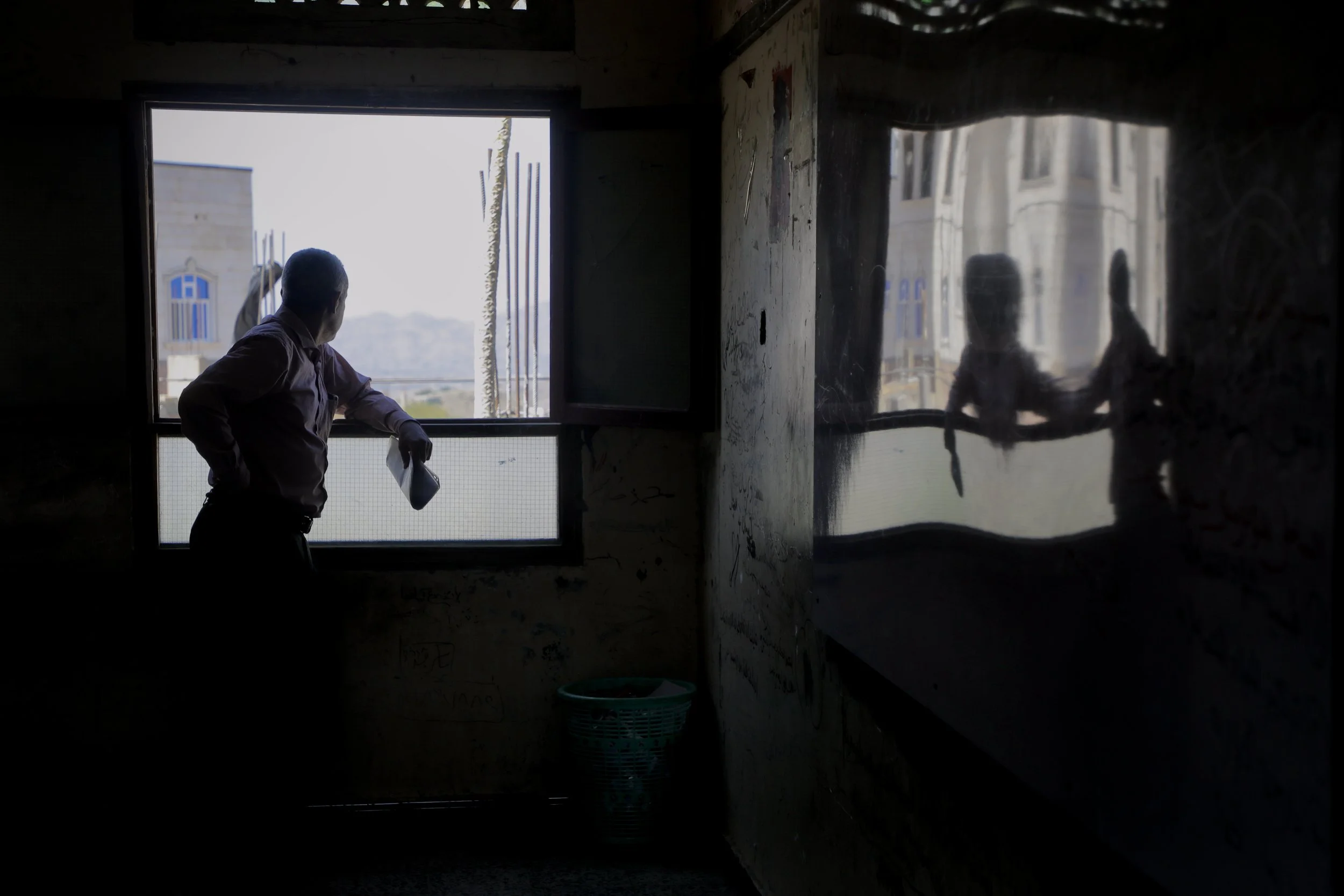
Abdulghani al-Haidari, director of Ibrahim Aqeel School stands inside a darkened classroom at Ibrahim Aqeel School in Taiz. Several parts of the school remain damaged or unusable after the explosion.
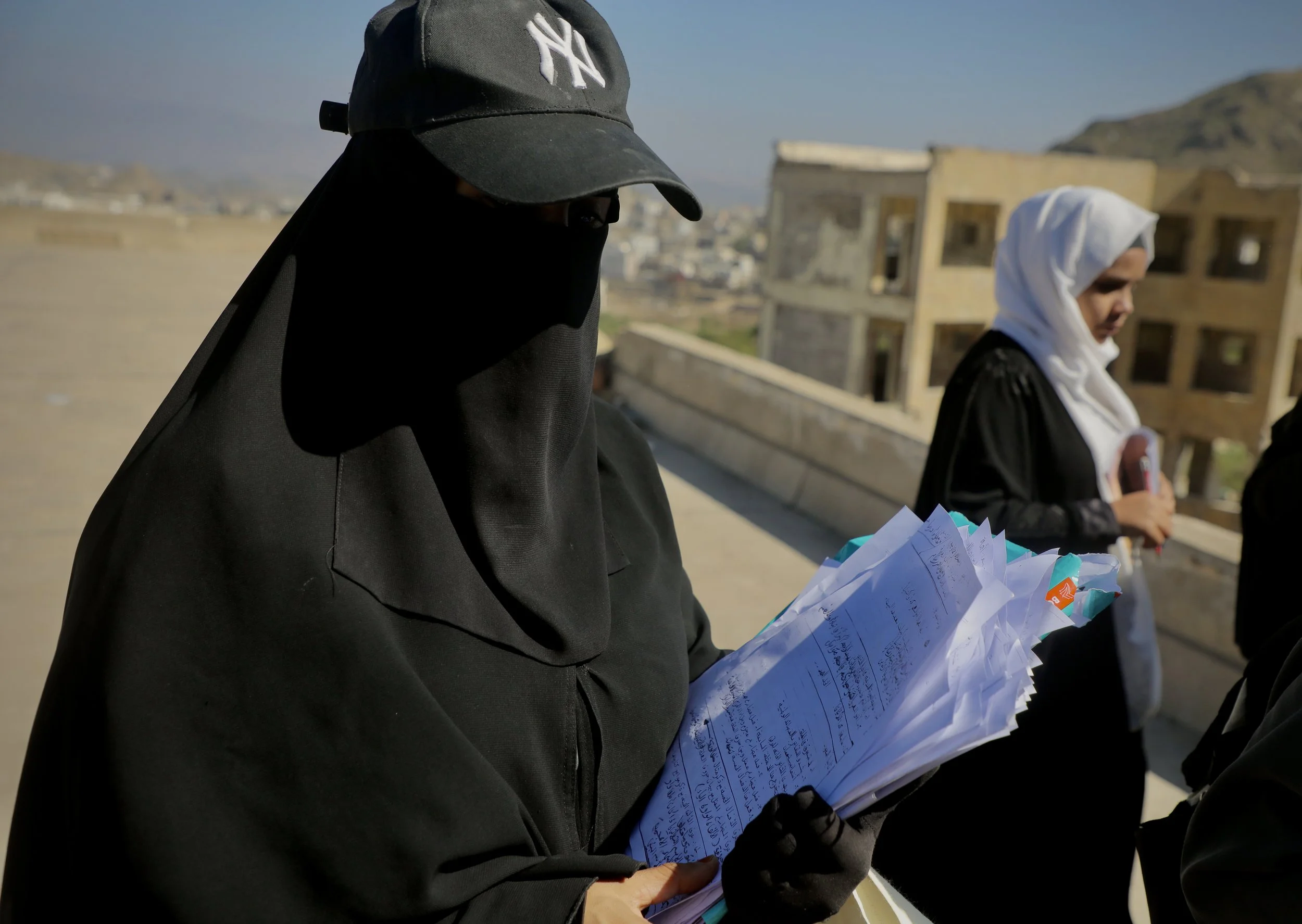
A teacher carries exam papers after collecting them from students during rooftop exam sessions at Ibrahim Aqeel School in Taiz, Yemen.
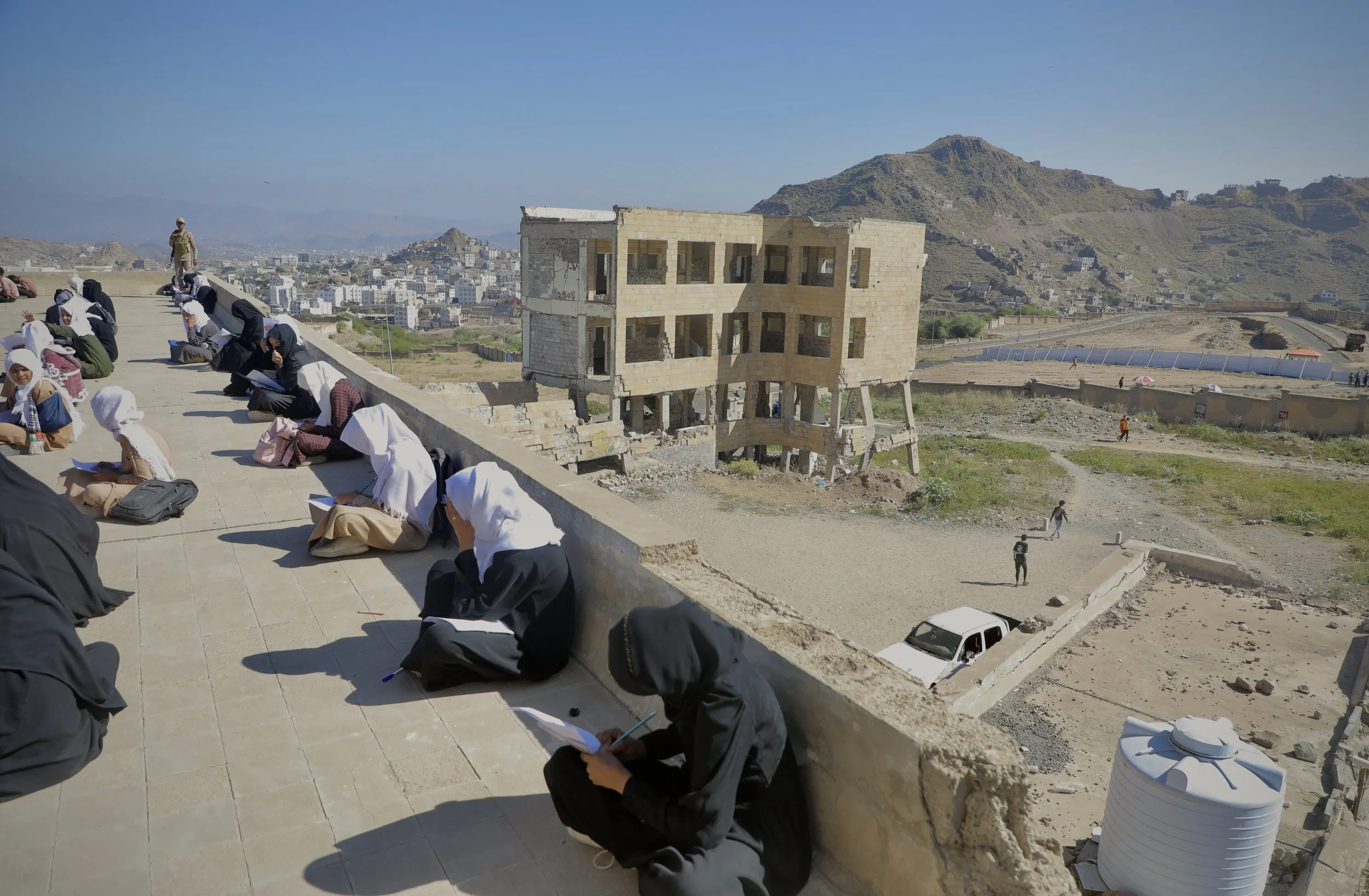
Students sit on the rooftop of Ibrahim Aqeel School overlooking damaged sections of the campus in Taiz, where classrooms were destroyed in an explosion linked to landmines and improvised explosive devices stored at the site during the war.
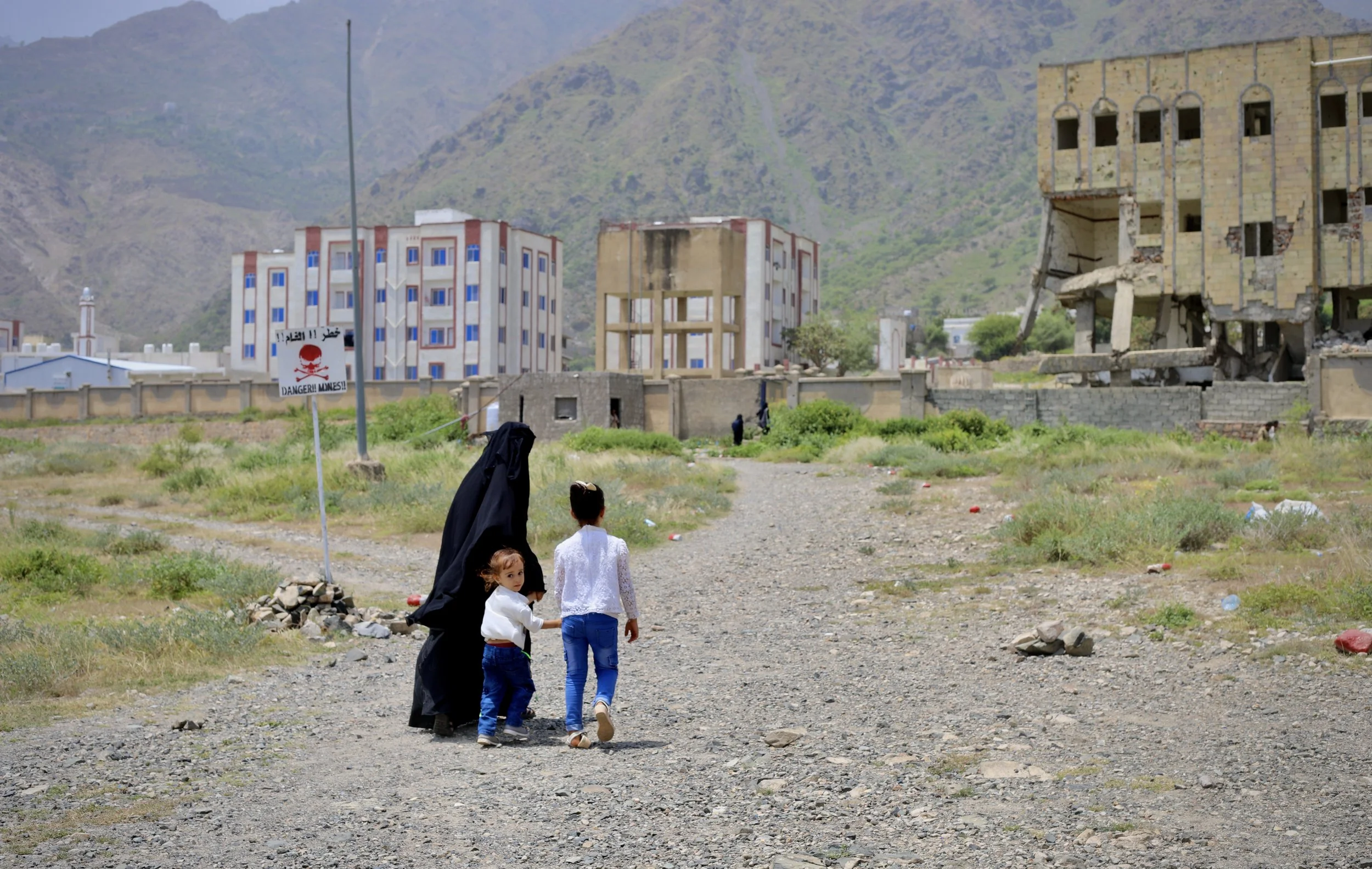
A woman and her children walk toward Ibrahim Aqeel School in Taiz, where students continue attending classes despite extensive war damage to the campus and the continuous presence of landmines in the vicinity.
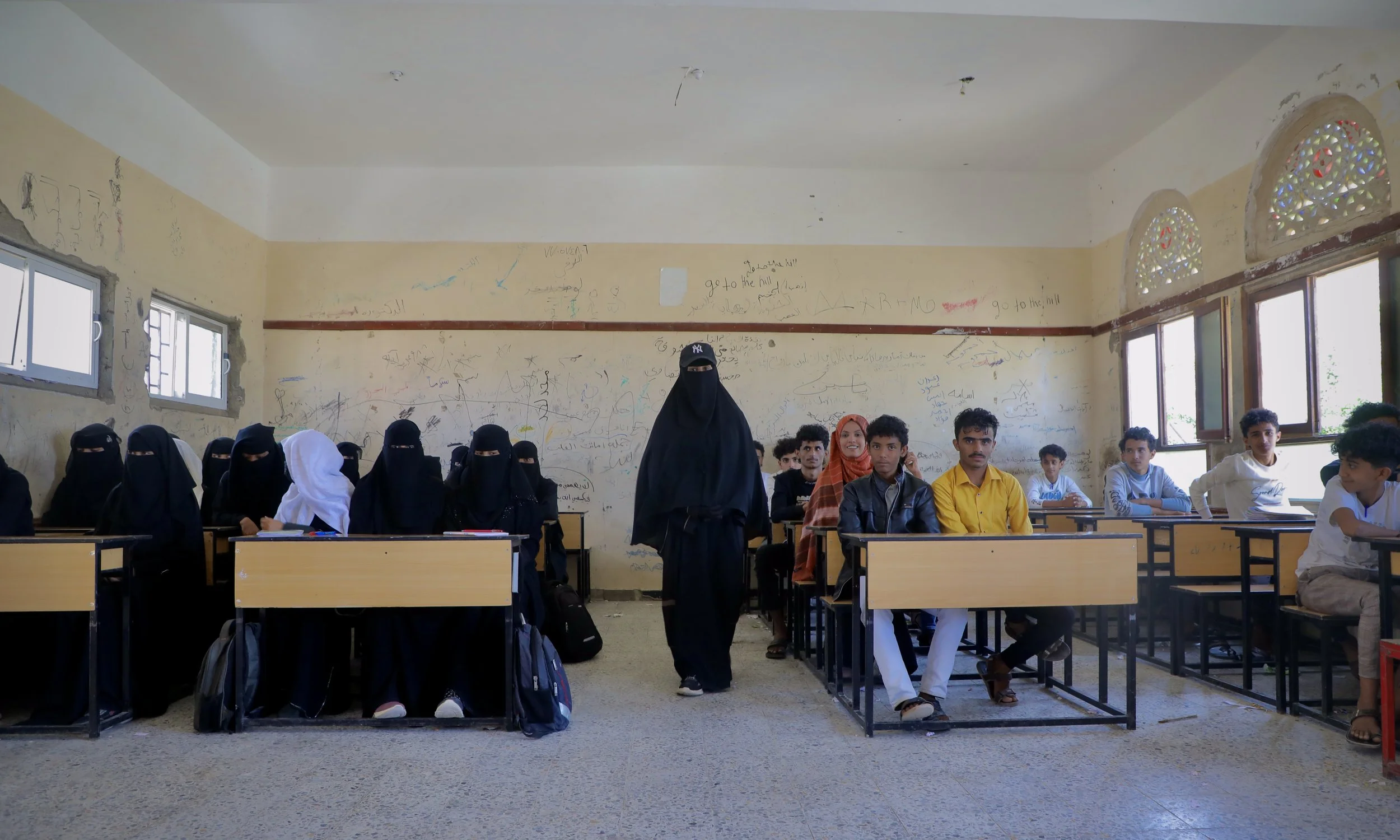
Students attend class inside Ibrahim Aqeel School in Taiz after the school partially reopened following damage caused by an explosion involving stored landmines and IEDs.
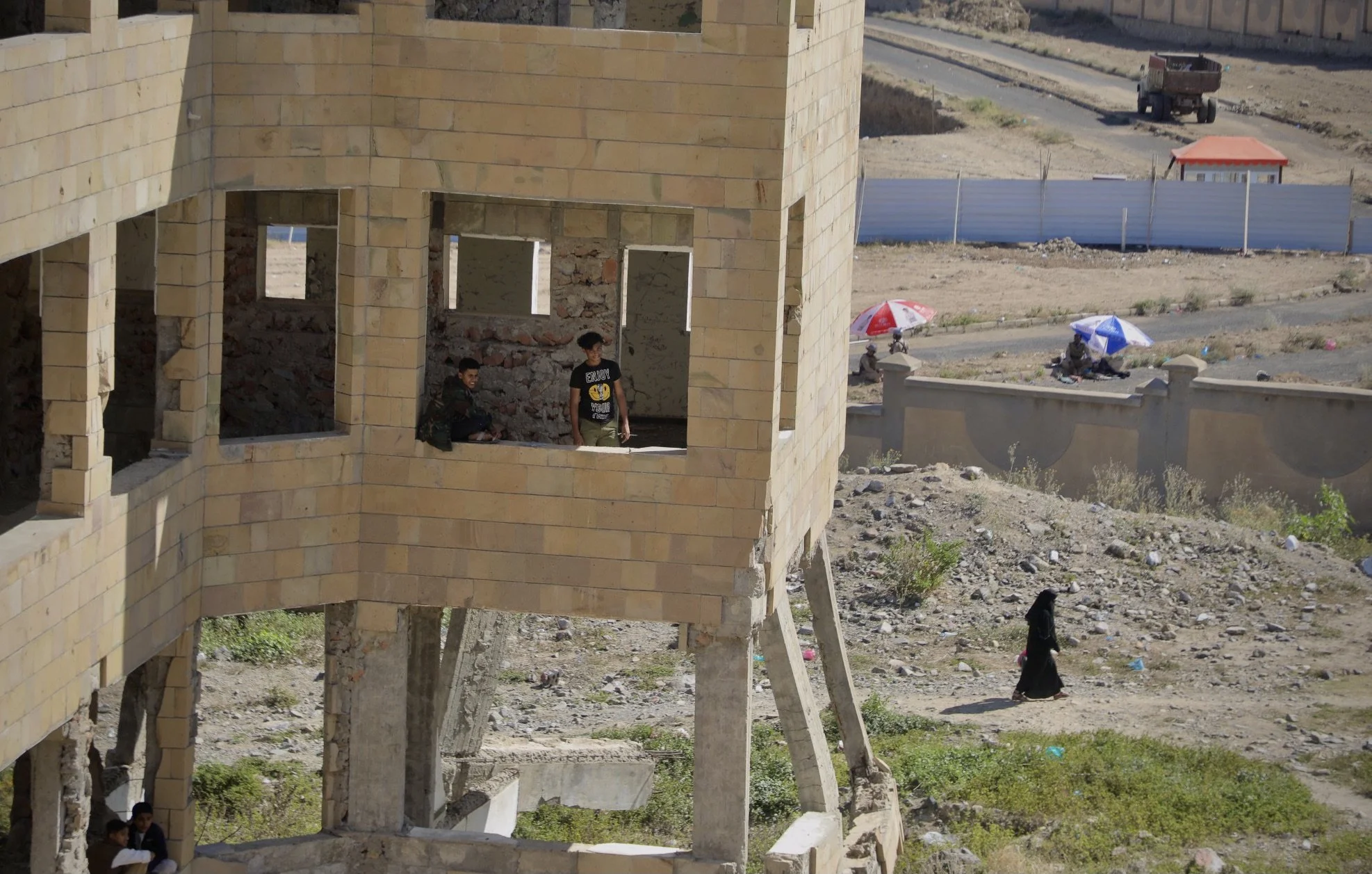
Students gather inside a heavily damaged section of Ibrahim Aqeel School in Taiz, Yemen, where buildings were left partially destroyed after landmines and improvised explosive devices stored at the school exploded during the conflict. In the background, deminers work near the school grounds under umbrellas protecting them from the heat.
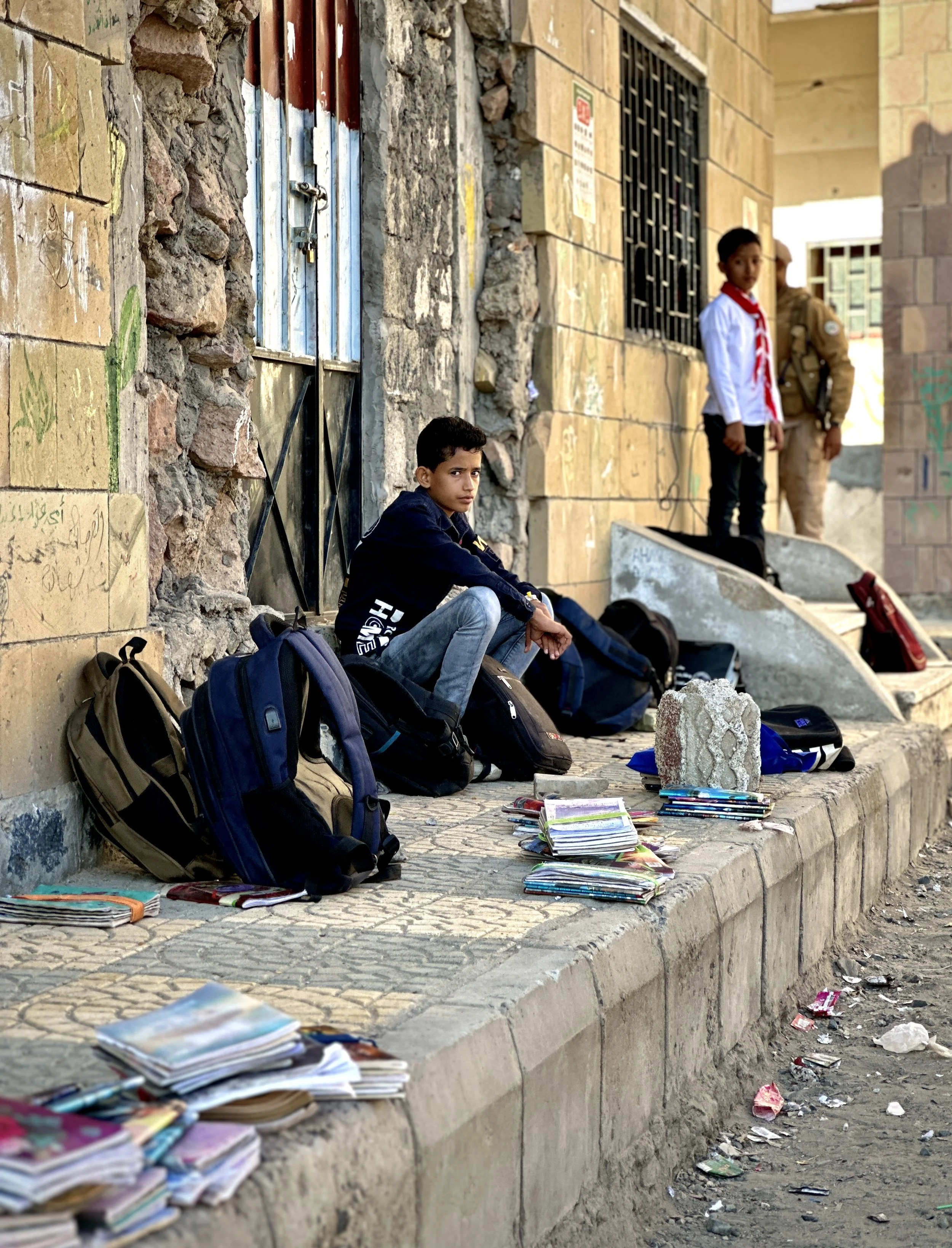
Students loiter outside damaged classrooms at Ibrahim Aqeel School in Taiz while waiting for lessons. The school continues operating despite the loss of multiple classrooms in the explosion.