In Aden, Yemen, a prosthetics and rehabilitation centre supported by the King Salman Humanitarian Aid and Relief Centre receives patients whose injuries were caused by war, shelling, landmines and unexploded ordnance. Many arrive after losing limbs in a conflict that has reshaped both bodies and daily life.
This series follows the spaces between injury and mobility: examination rooms, physiotherapy exercises, workshop benches, measurements, moulds and unfinished limbs. Rather than focusing only on trauma, the photographs observe the slow, technical and deeply human process of adaptation: the labour required to reconstruct movement, balance and routine.
The centre functions through a combination of medical care, craftsmanship and repetition. Prosthetic limbs are measured, cast, sanded and assembled by hand. Patients relearn how to stand, walk and distribute weight. The body becomes something recalibrated through practice.
Photographed from within the clinic’s confined interiors, the images emphasise process over spectacle. Institutional walls, fluorescent light, worn equipment and improvised workspaces form the visual language of rehabilitation in a country where healthcare systems remain under severe strain.
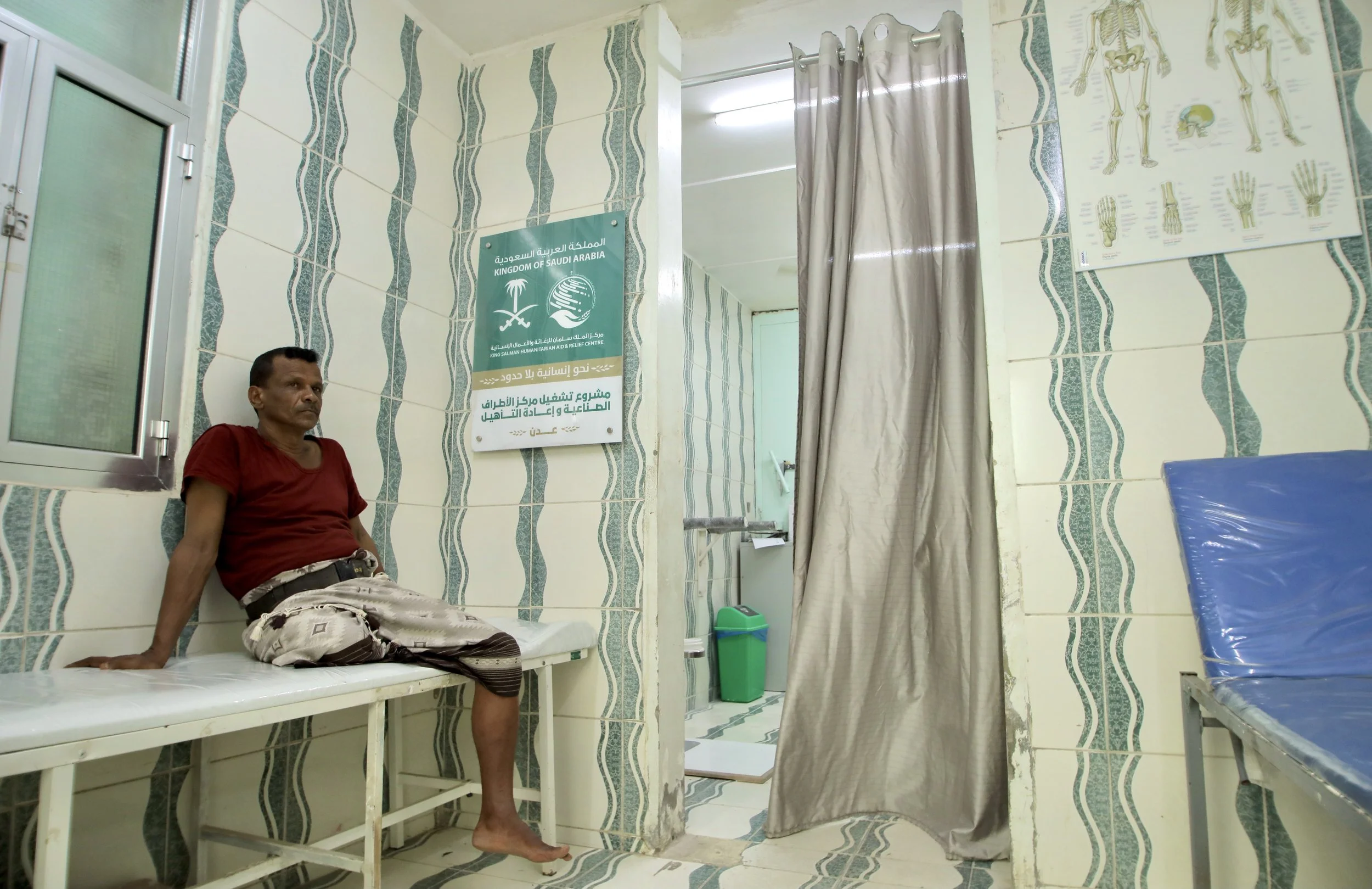
A patient waits inside the Artificial Limbs and Rehabilitation Centre in Aden, Yemen. Around 88 percent of beneficiaries receiving treatment at the centre were injured during the conflict, most of them survivors of landmine accidents or unexploded ordnance.
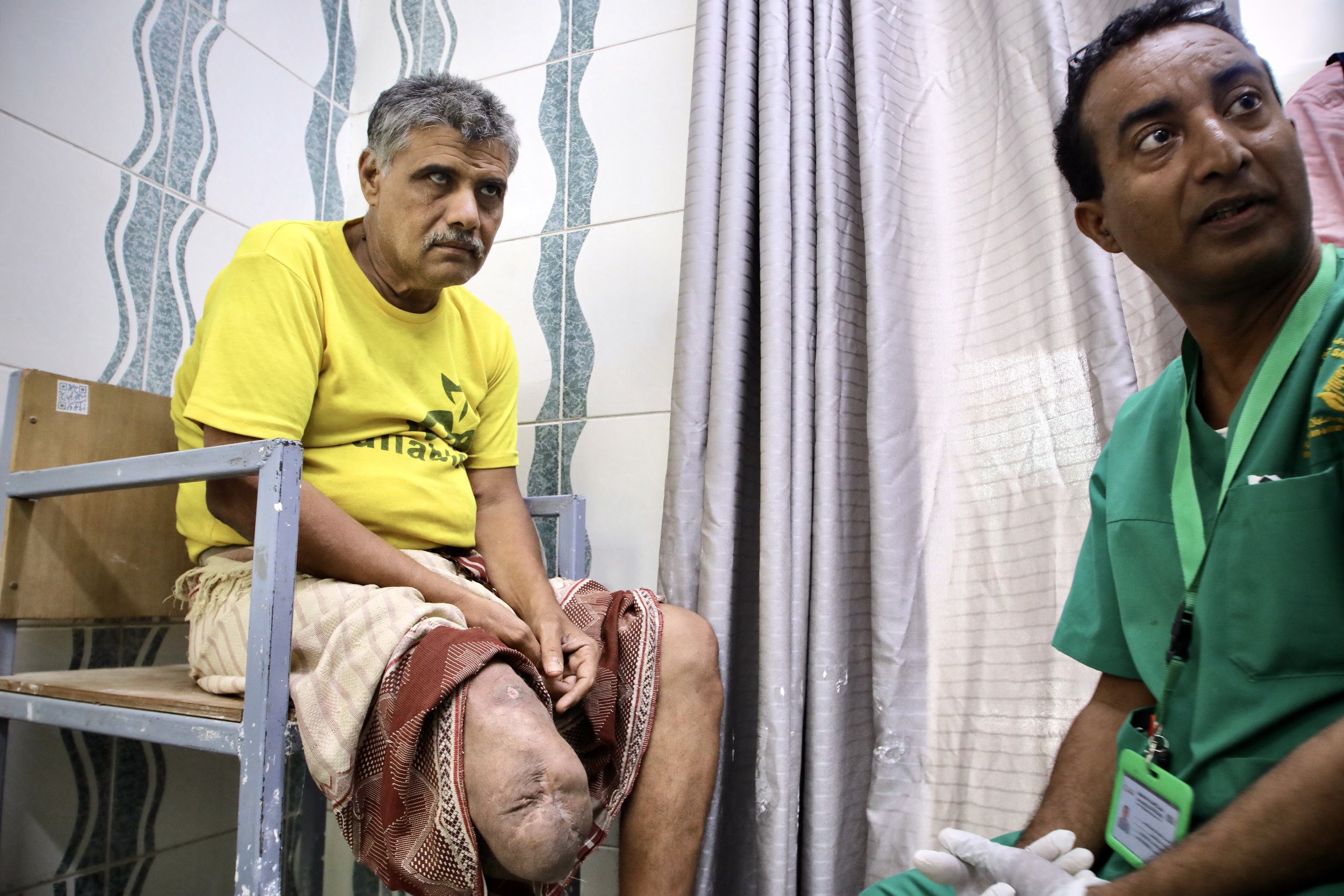
A clinician speaks with a patient during a consultation session at the rehabilitation centre in Aden. Depending on the case, patients are often treated for between one and three months before staff determine the correct prosthetic fit.
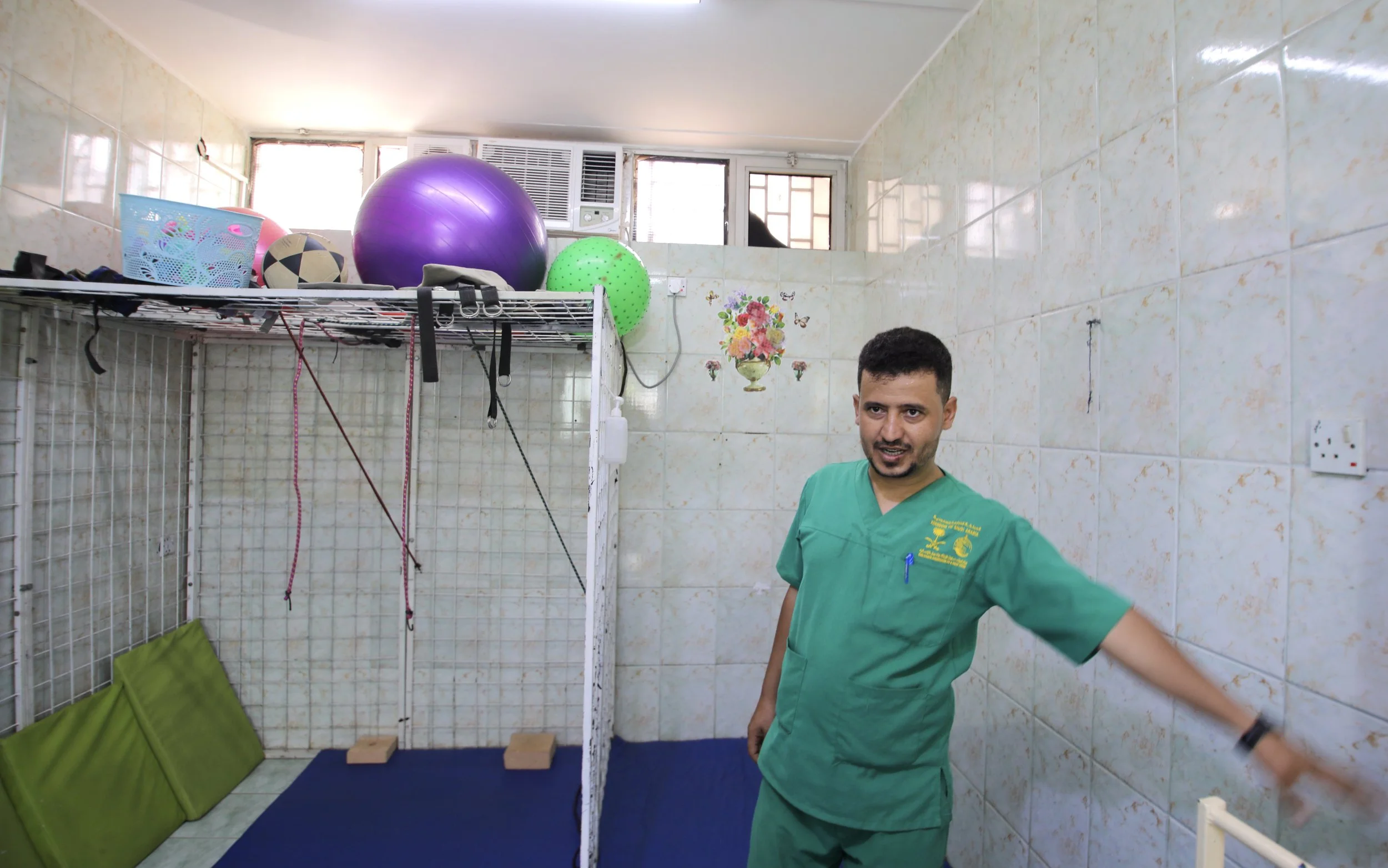
A physiotherapist demonstrates the balance and movement exercises used with patients newly fitted with prosthetic limbs at the rehabilitation centre in Aden.
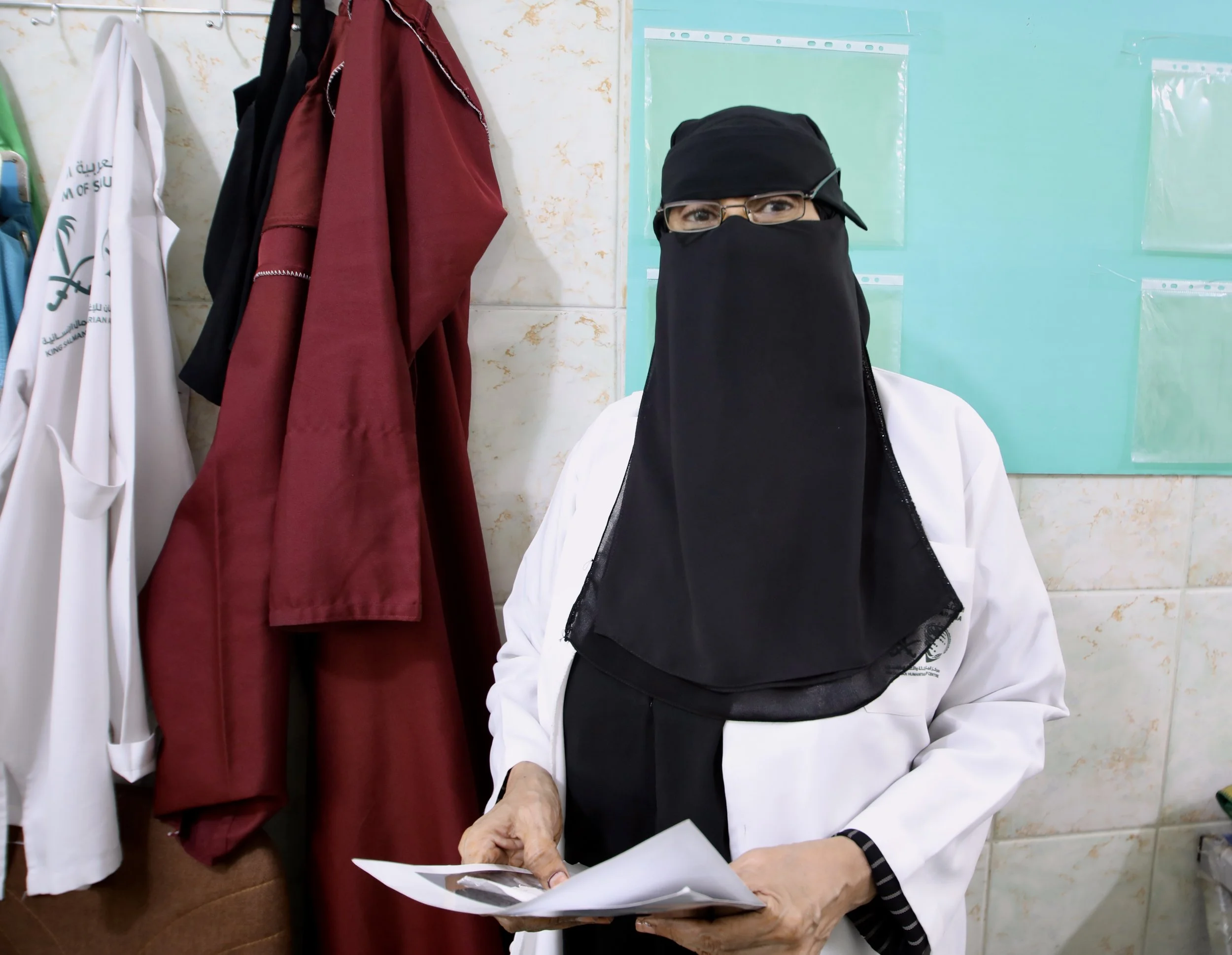
Dr Entesar, 50, who heads women’s services at the Artificial Limbs and Rehabilitation Centre in Aden, Yemen.
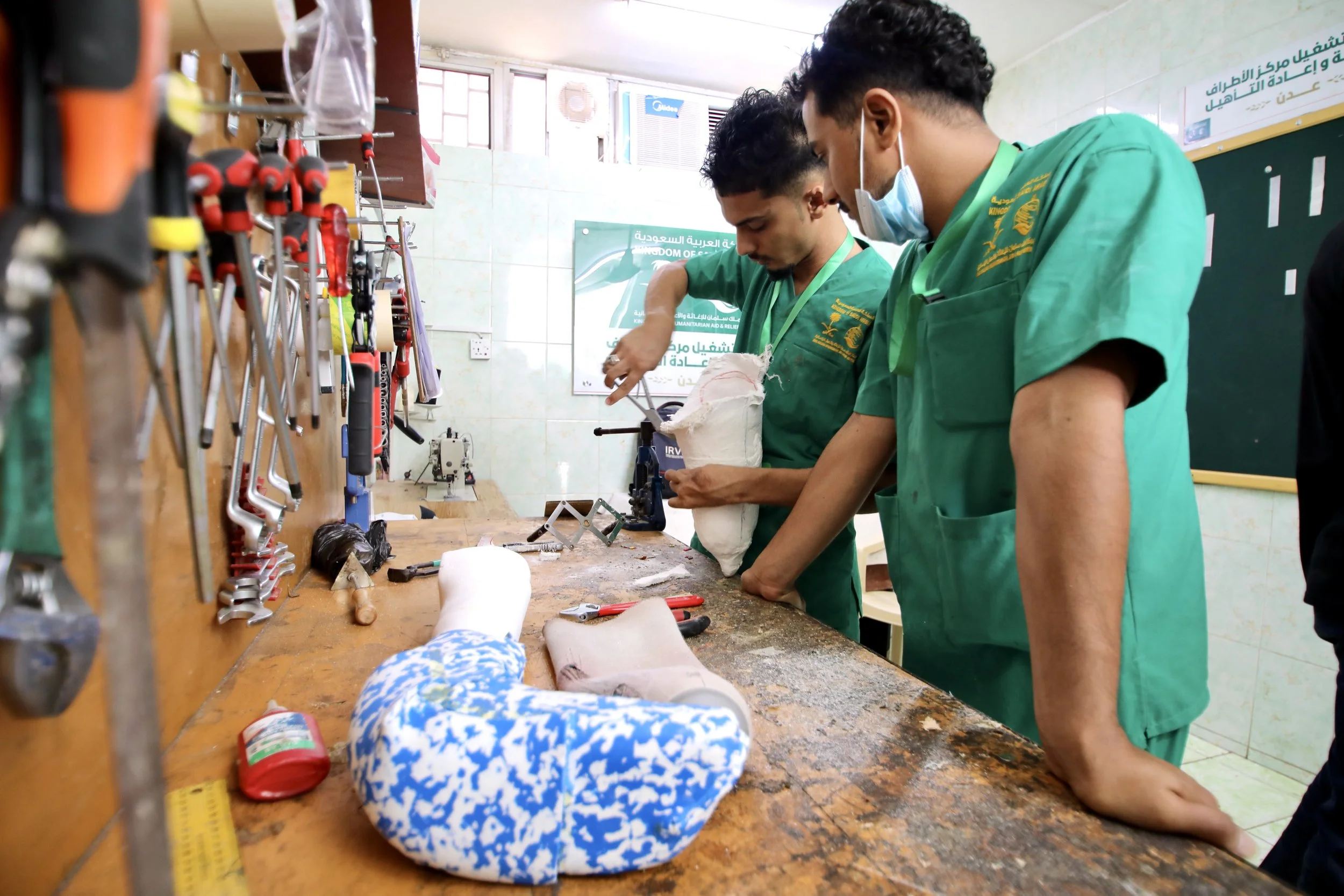
Technicians shape prosthetic moulds inside the workshop where artificial limbs are fabricated largely by hand at the rehabilitation centre in Aden.
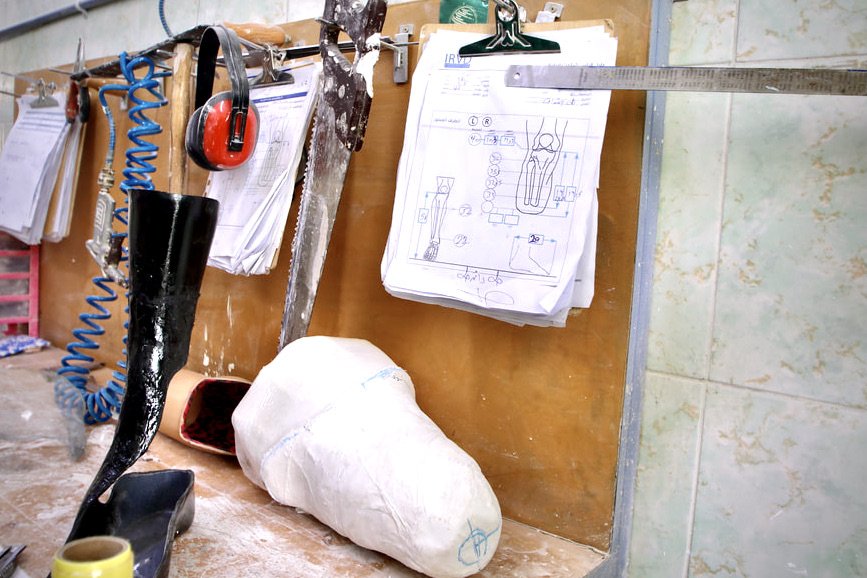
Measurement diagrams, moulds and prosthetic components inside the workshop used to produce customised artificial limbs for patients at the centre.
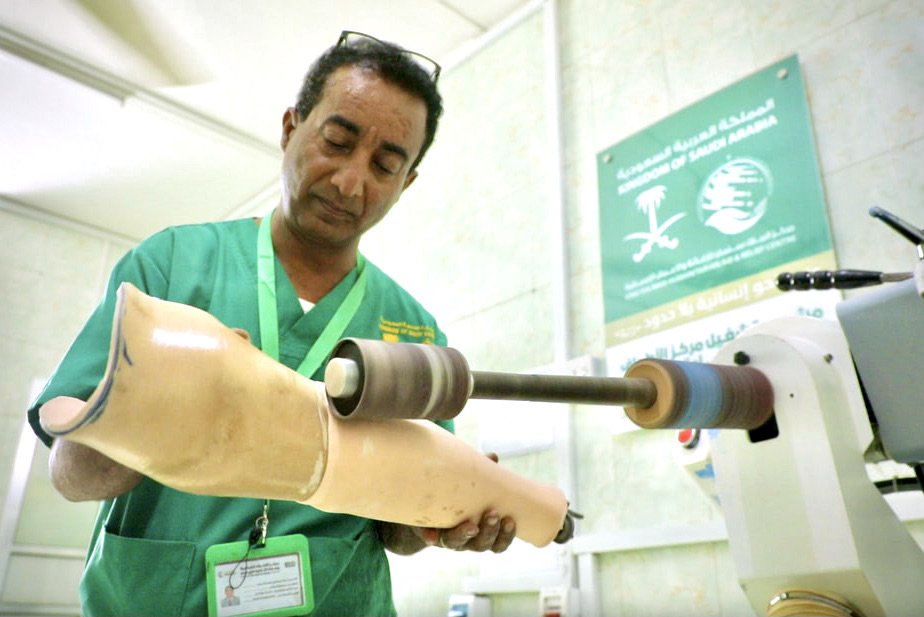
A technician sands and shapes a prosthetic socket during the fabrication process at the Artificial Limbs Centre in Aden. Once measurements are completed, staff require between five and nine working days to produce a tailor-made artificial limb.
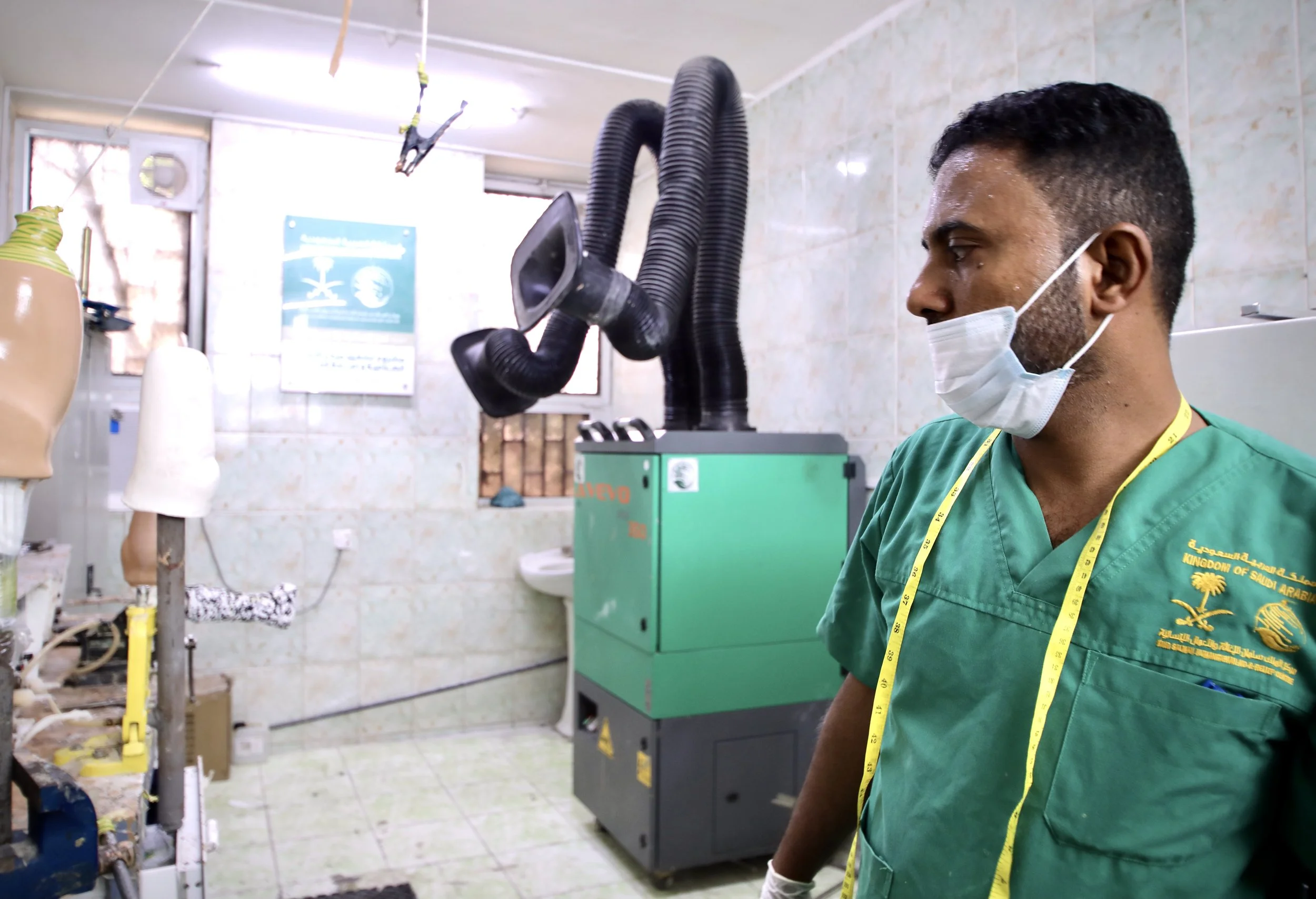
A technician waits beside a heating unit used to harden plastic prosthetic components inside the workshop at the rehabilitation centre in Aden, Yemen.
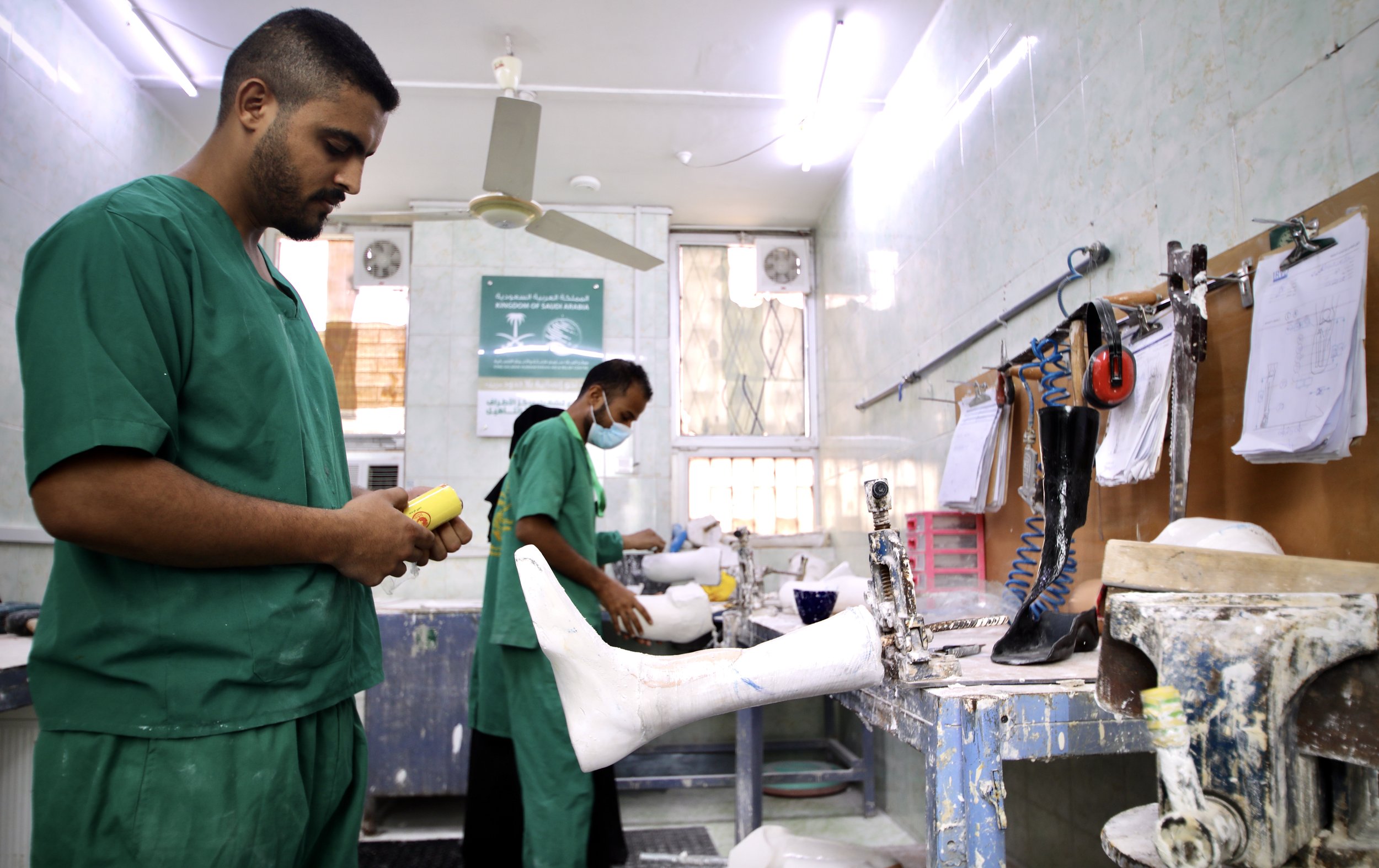
Technicians fabricate prosthetic limbs inside the rehabilitation workshop in Aden. The centre produces around 500 artificial limbs each year and carries out maintenance on another 400.
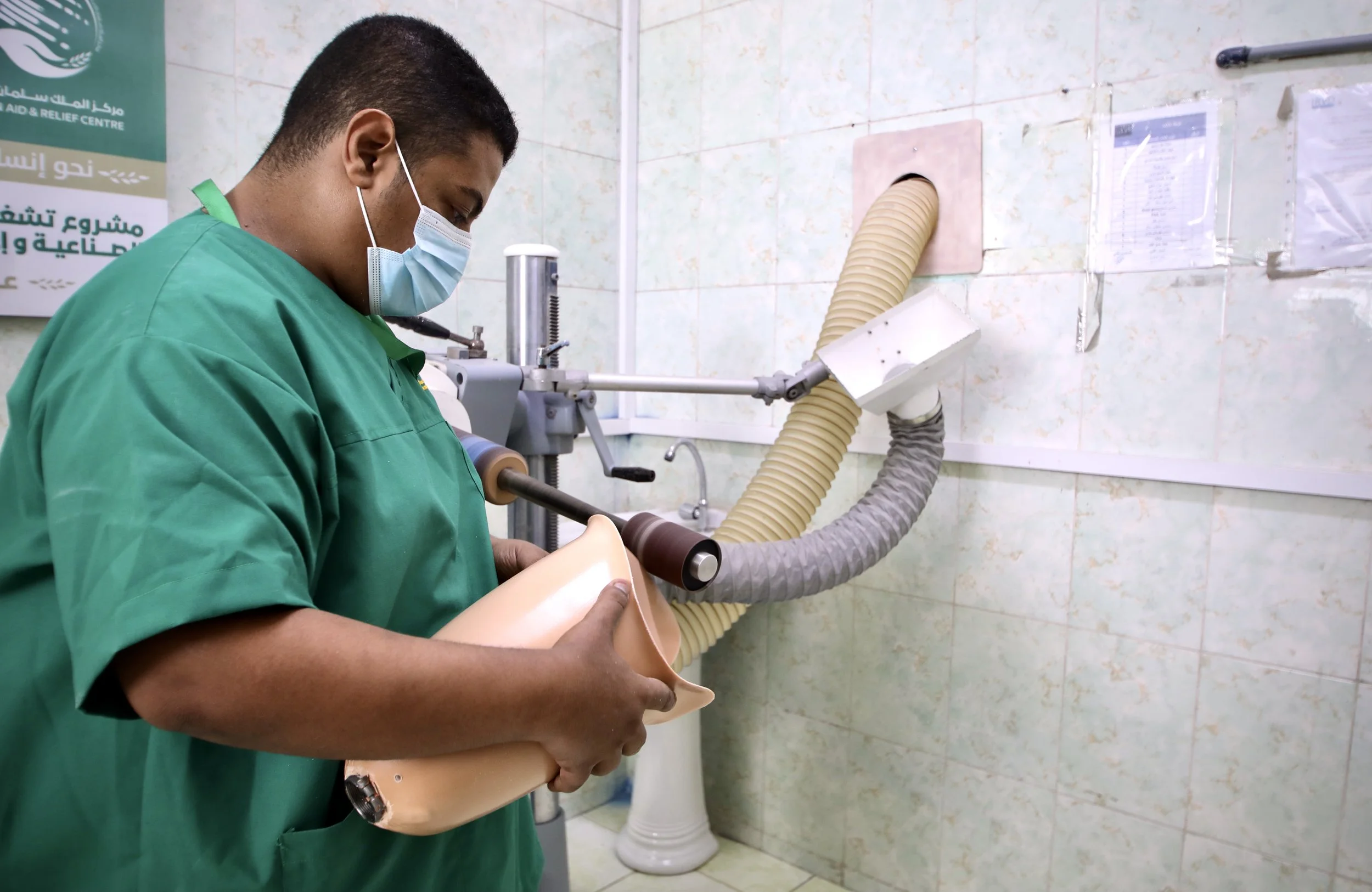
A technician sands and smooths a prosthetic socket inside the workshop at the Artificial Limbs and Rehabilitation Centre in Aden, Yemen.
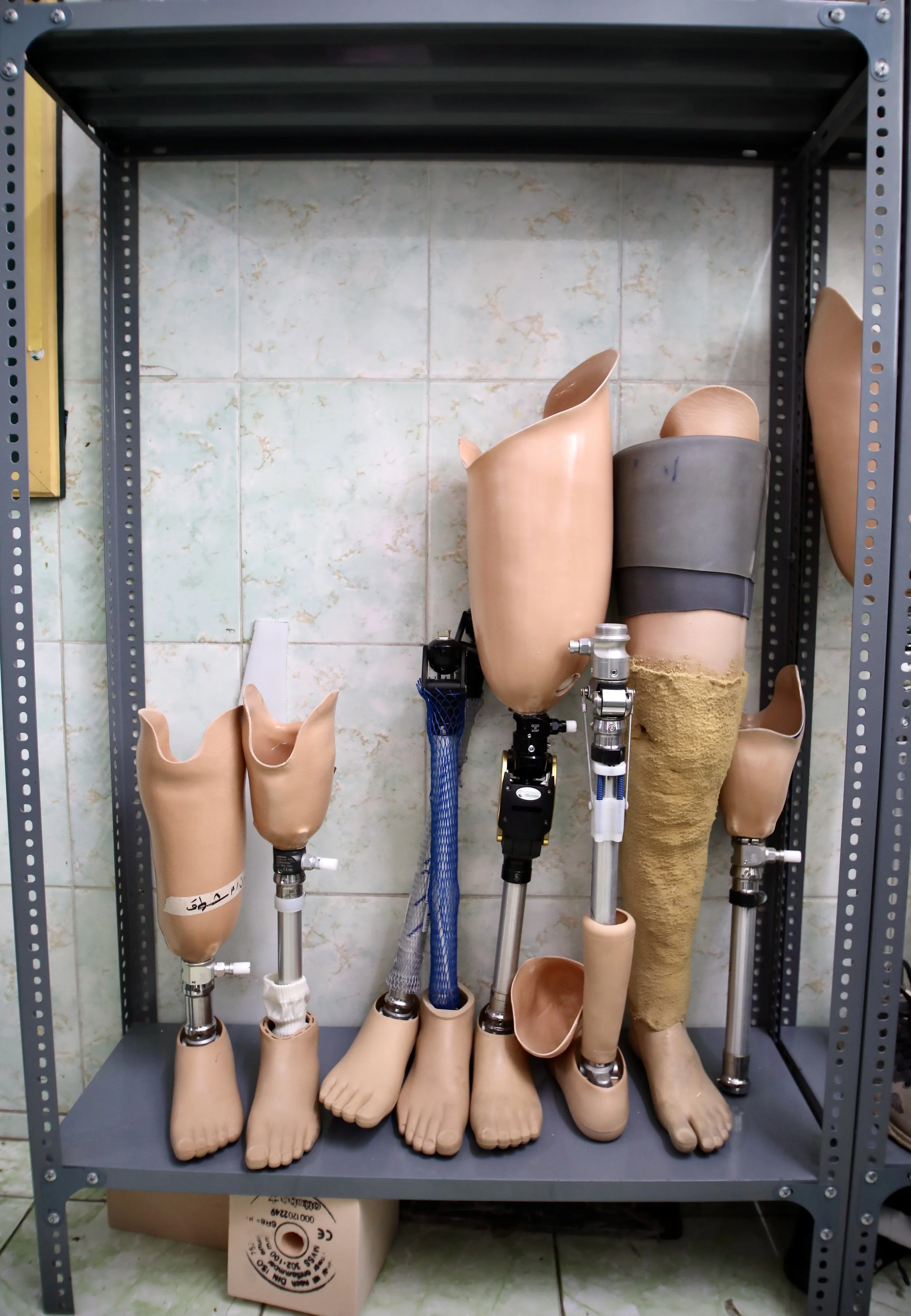
Finished prosthetic limbs stored inside the rehabilitation centre workshop in Aden, Yemen. The youngest patients treated at the centre are five months old.