Al Dhale Governorate looks, from a distance, peaceful. It is not. During the war, Houthi forces planted thousands of landmines and IEDs across this region; in fields, along roads, inside homes, hidden in cooking ovens, buried where children play. When the fighting moved on, the mines stayed.
The three families in this series live within sight of one another around Shakhab and Qatabah. Between them they carry the same story: displacement, return, and the discovery that the ground they came home to was still trying to kill them. Mosaid Mohammed Ali Naji lost part of his leg to an improvised explosive device (IED) concealed in his own oven. Radwan Mohammed's young daughters found anti-personnel mines while playing marbles outside their home. Saleh Abdullah Qassem lost family members to booby-traps planted outside and inside his house.
This series does not attempt to represent the scale of Yemen's landmine crisis. It attempts something smaller and harder: to sit with three families on their own ground, and to show what it looks like to rebuild a life on land that was made to destroy it.
The photographs were made across the chapters of daily life, from a grandfather playing with his grandson and children in school uniforms, to a chieftain receiving visitors in a plastic chair in a lane, and demining teams at the end of a shift. The ordinariness is the point. Project Masam's teams, led in this area by Ahmed Al Radfani of Team 18, are on first-name terms with every family here. They cleared the ground these photographs were made on.
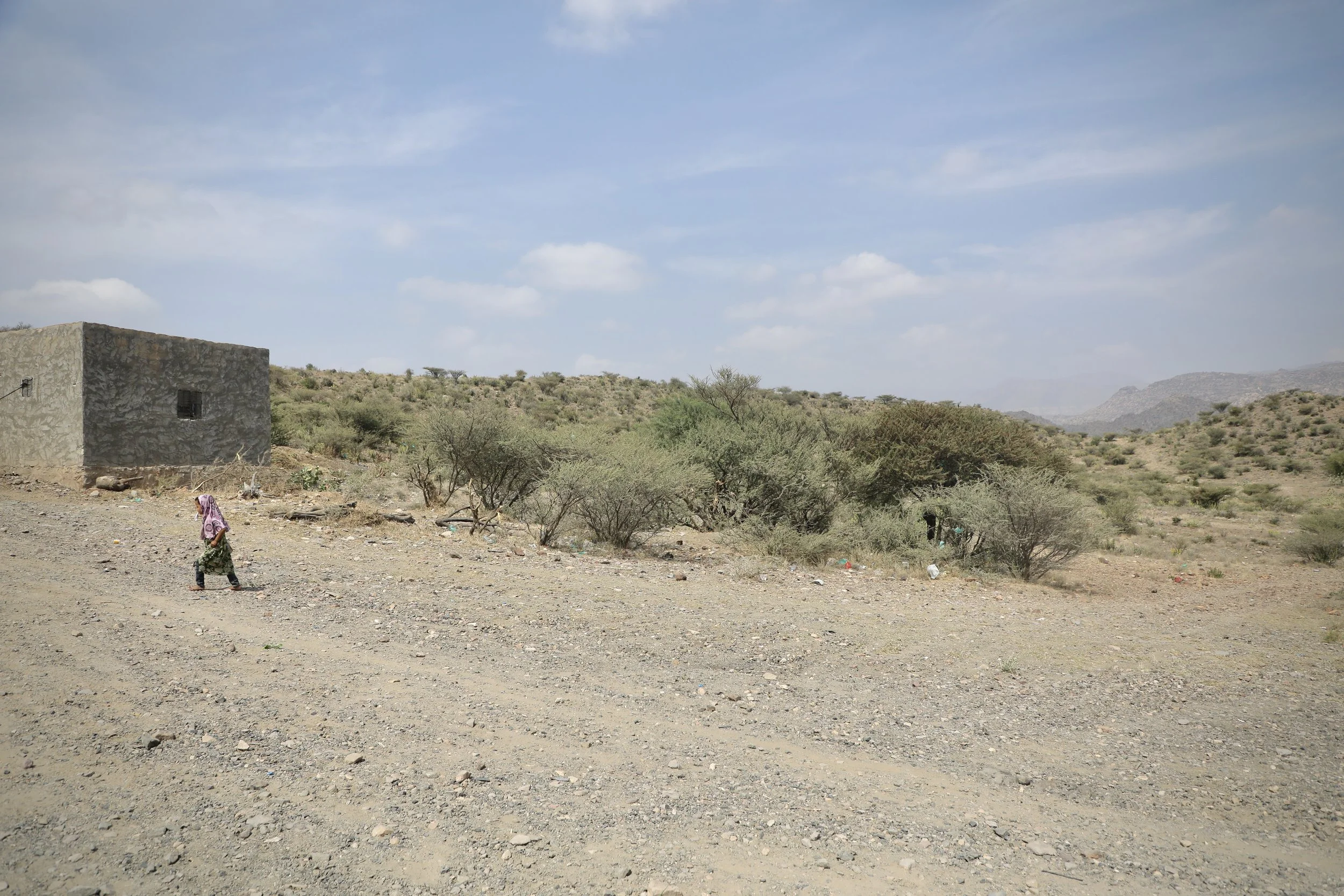
A child crosses open scrubland near Shakhab, in Al Dhale Governorate, Yemen. This terrain - fertile-looking, seemingly peaceful - remains one of the most heavily mined areas in the country.
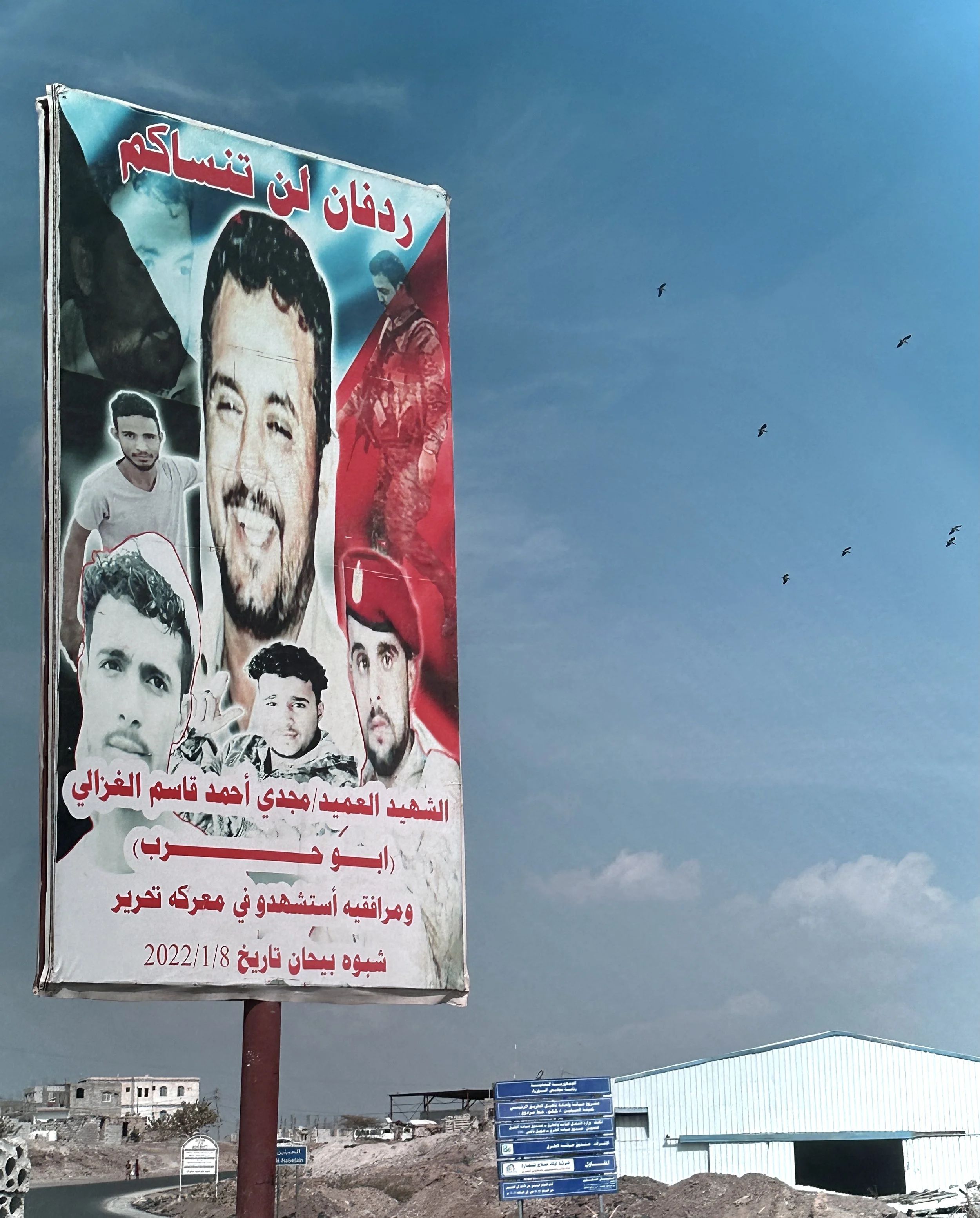
A roadside memorial billboard commemorating fighters killed in the battle of Bayhan, Shabwah, January 2022. Roadside memorials to the dead are a constant of the landscape on the road to Qatabah in Al Dhale, Yemen.
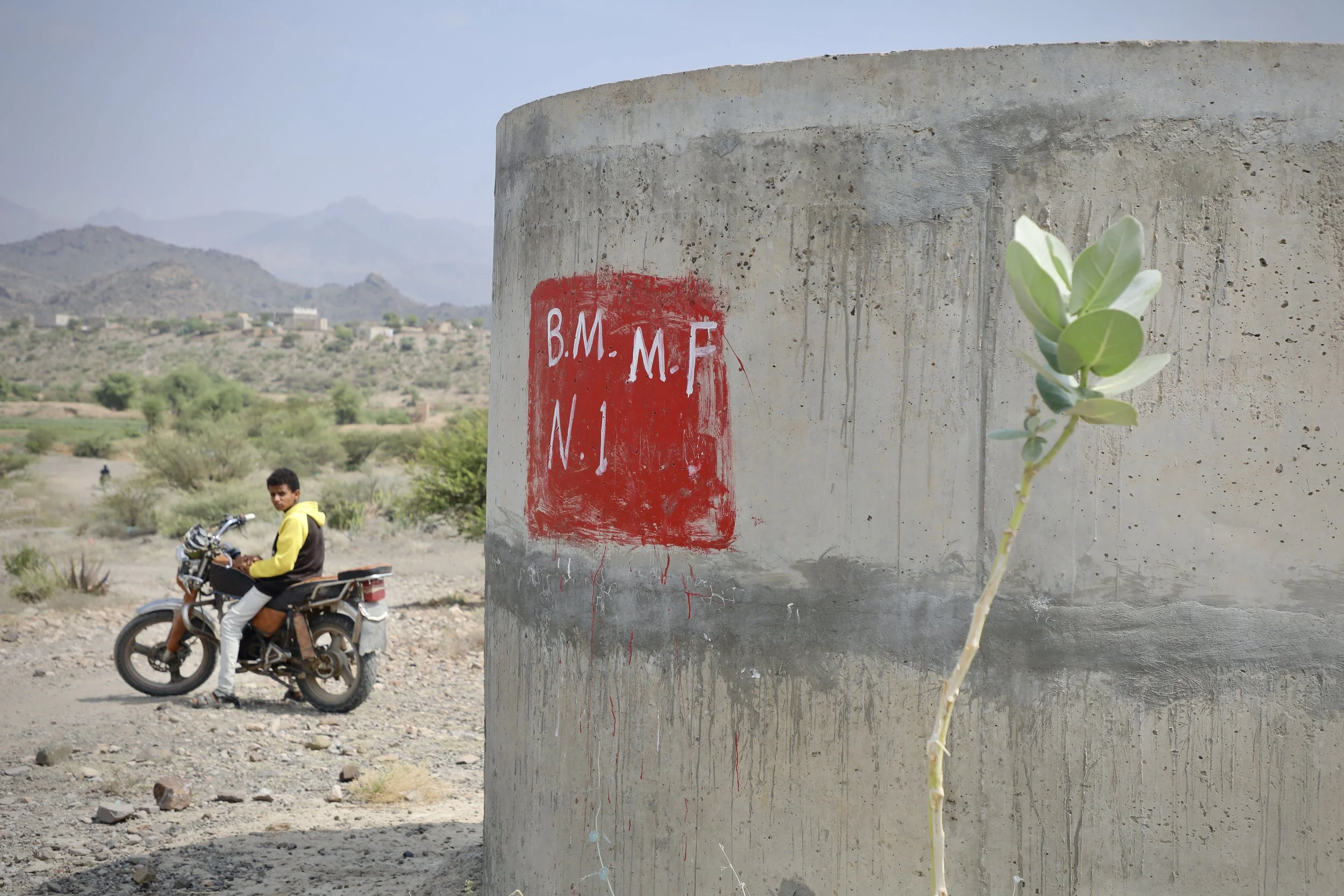
A Project Masam demining marker near Shakhab, Al Dhale. The red square indicates a cleared or active survey area. A boy passes on a motorbike. Life continues around the markers. The green sprig growing from the concrete is not incidental.
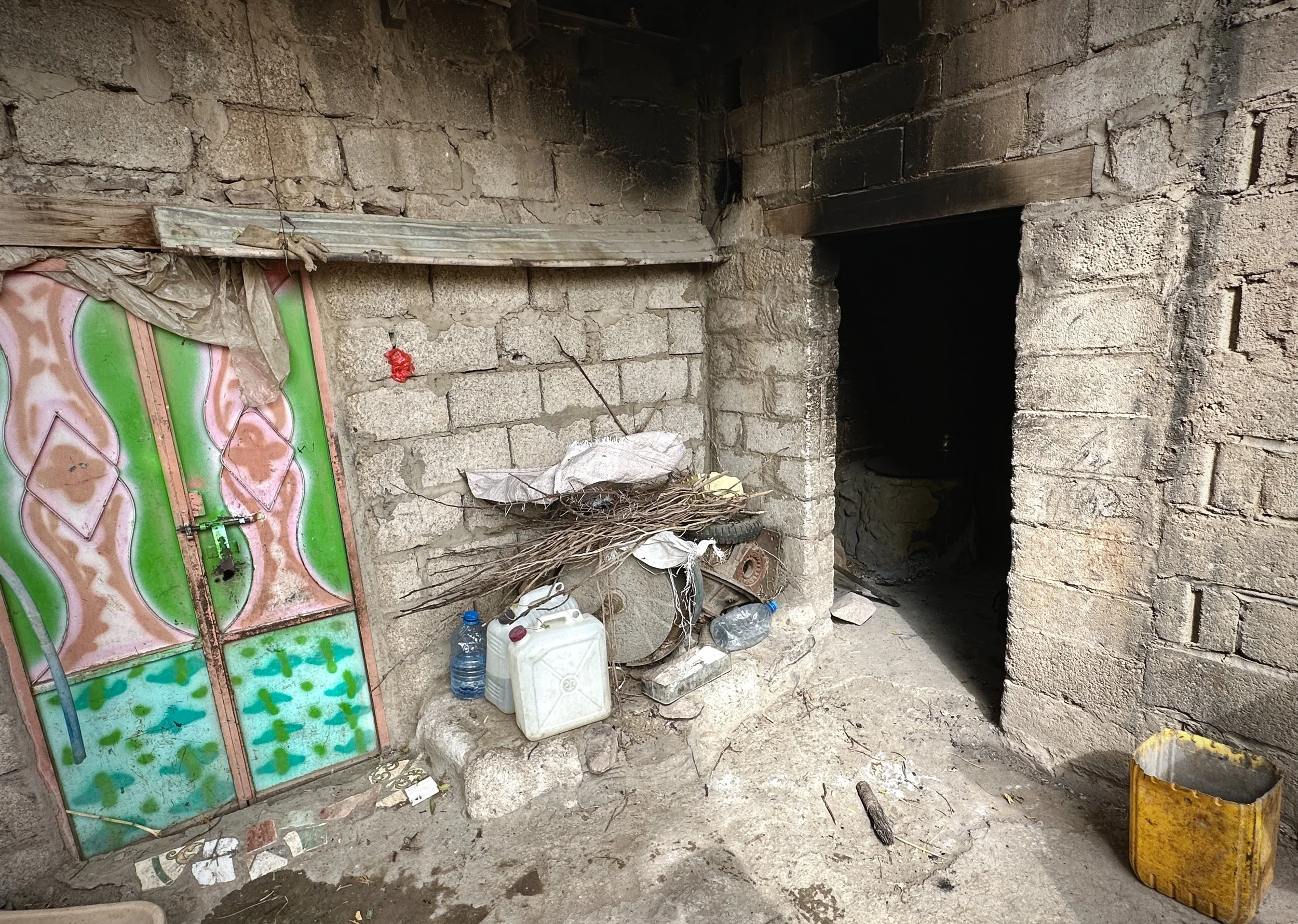
The entrance to the outdoor kitchen of Mosaid Mohammed Ali Naji, Shakhab, Al Dhale. An IED concealed inside the wood-fire oven beyond this doorway detonated when he returned home from his third displacement. He lost part of his leg and sustained serious abdominal injuries.
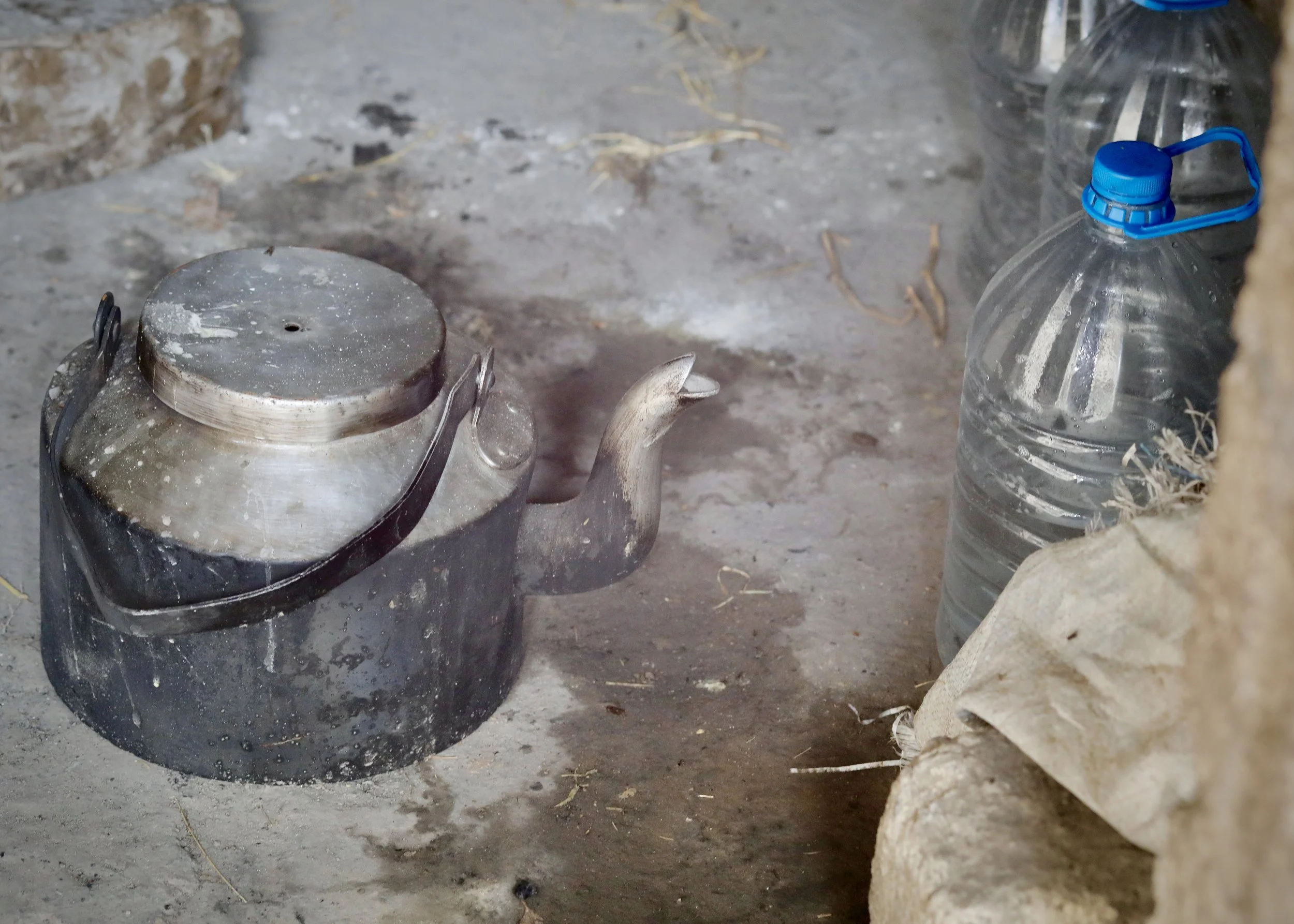
The outdoor kitchen of Mosaid Mohammed Ali Naji, Shakhab, Al Dhale. Domestic objects in the compound where a landmine detonated on his return from displacement.
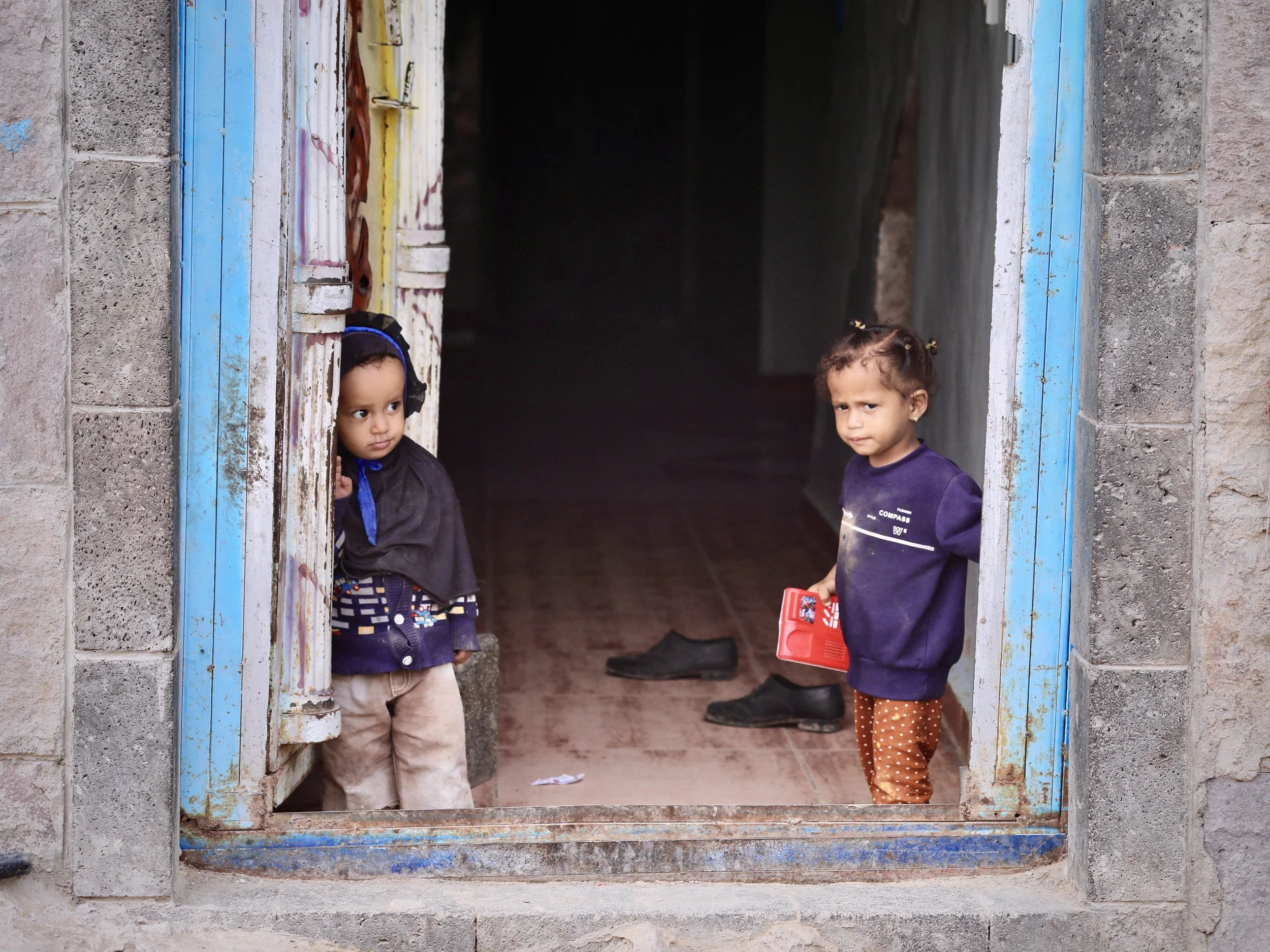
Grandchildren at the threshold of Mosaid Mohammed Ali Naji's home in Shakhab, Al Dhale. The families in this area returned from displacement to find their land and courtyards still contaminated with landmines and IEDs.
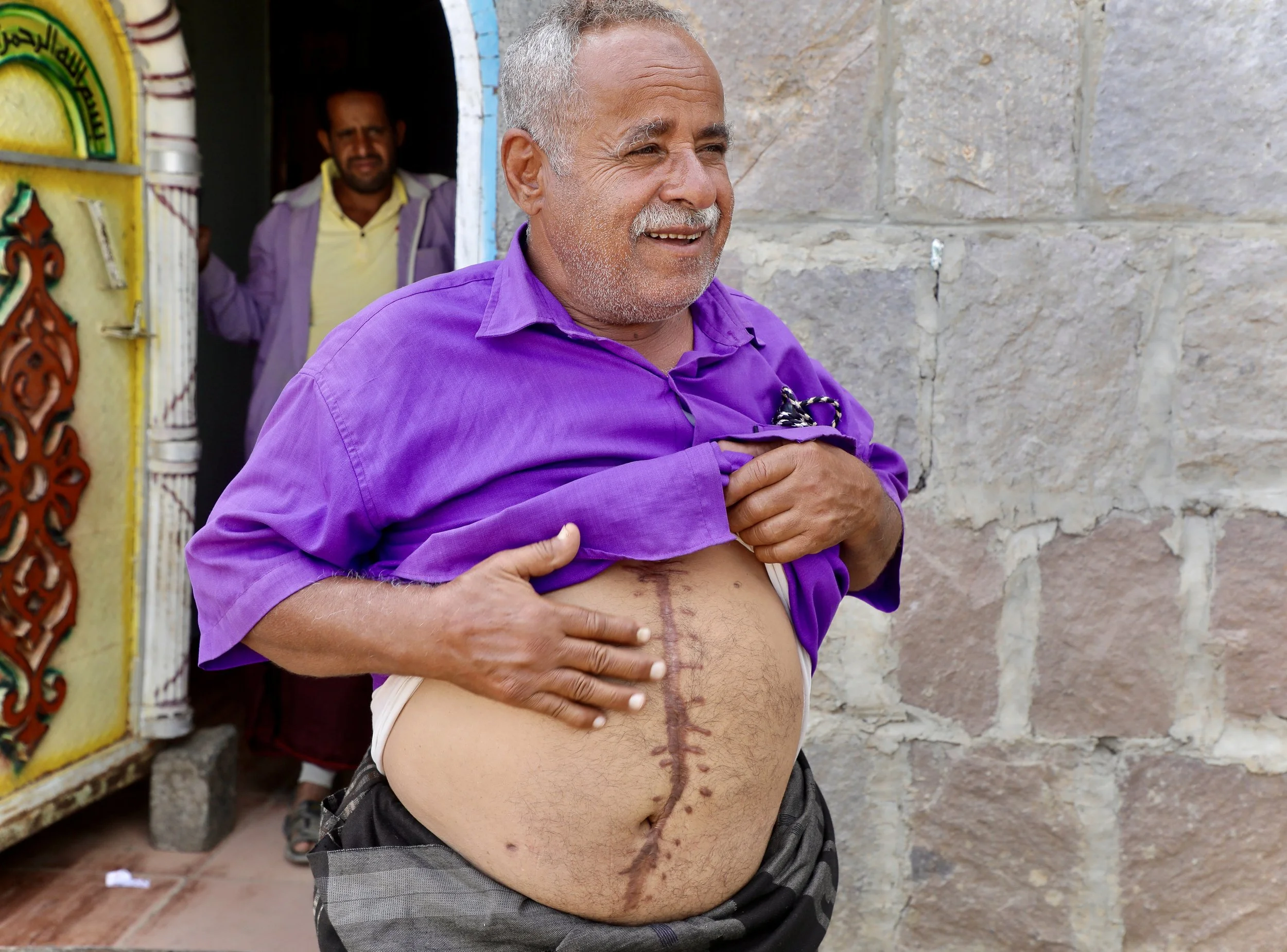
Mosaid Mohammed Ali Naji shows the injuries sustained when an IED exploded in his courtyard, Shakhab, Al Dhale. The vertical scar running down his abdomen is the result of surgery following the detonation. Mosaid, grandfather to 30, was displaced three times during the war.
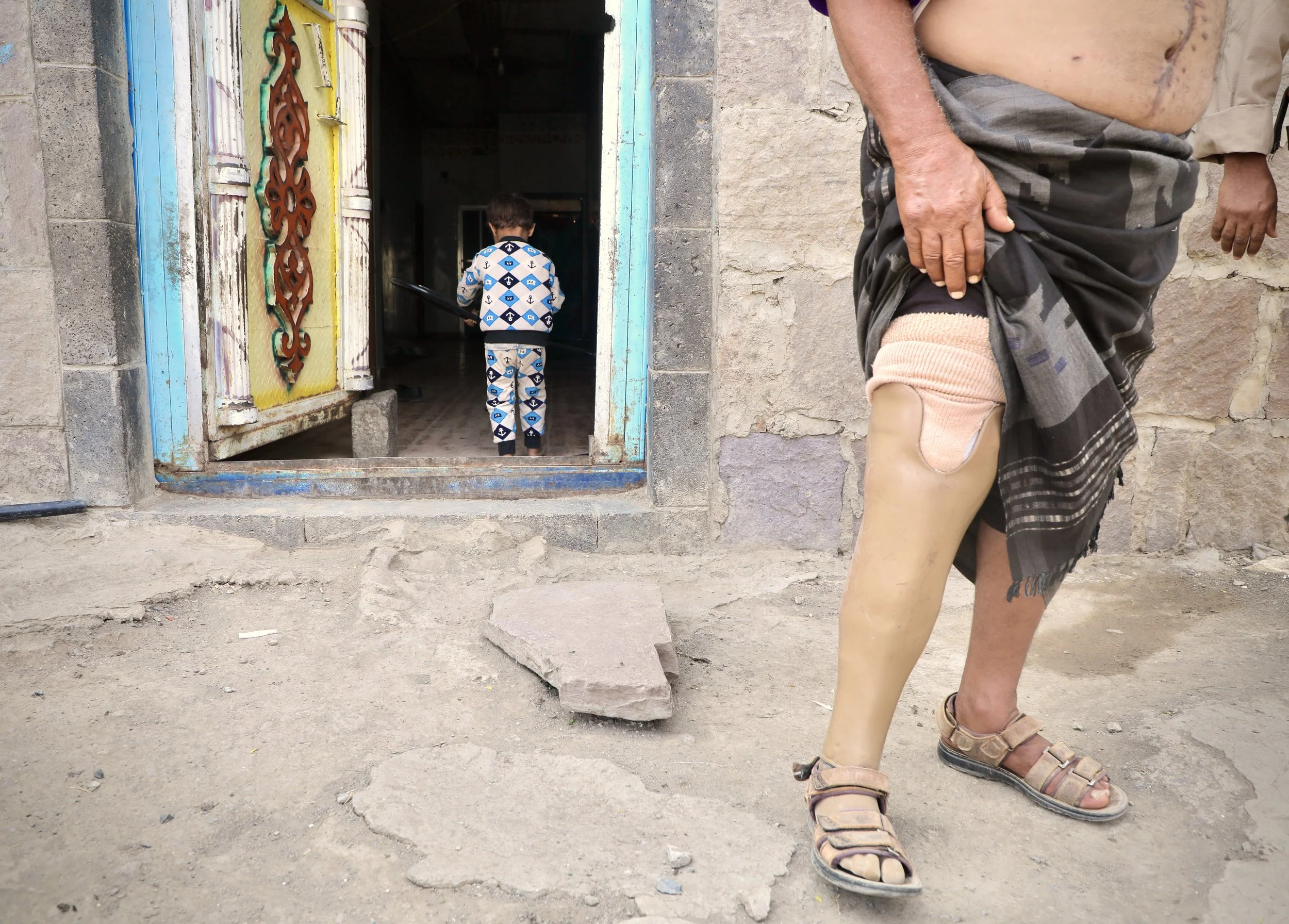
Mosaid Mohammed Ali Naji, Shakhab, Al Dhale. His grandchild - wearing anchor-print pyjamas - walks toward the interior of the home. Mosaid stands on the ground of his courtyard, where a further 17 landmines were subsequently discovered. The burn scarring on his torso is visible above the waistband alongside the surgical wound from the detonation.
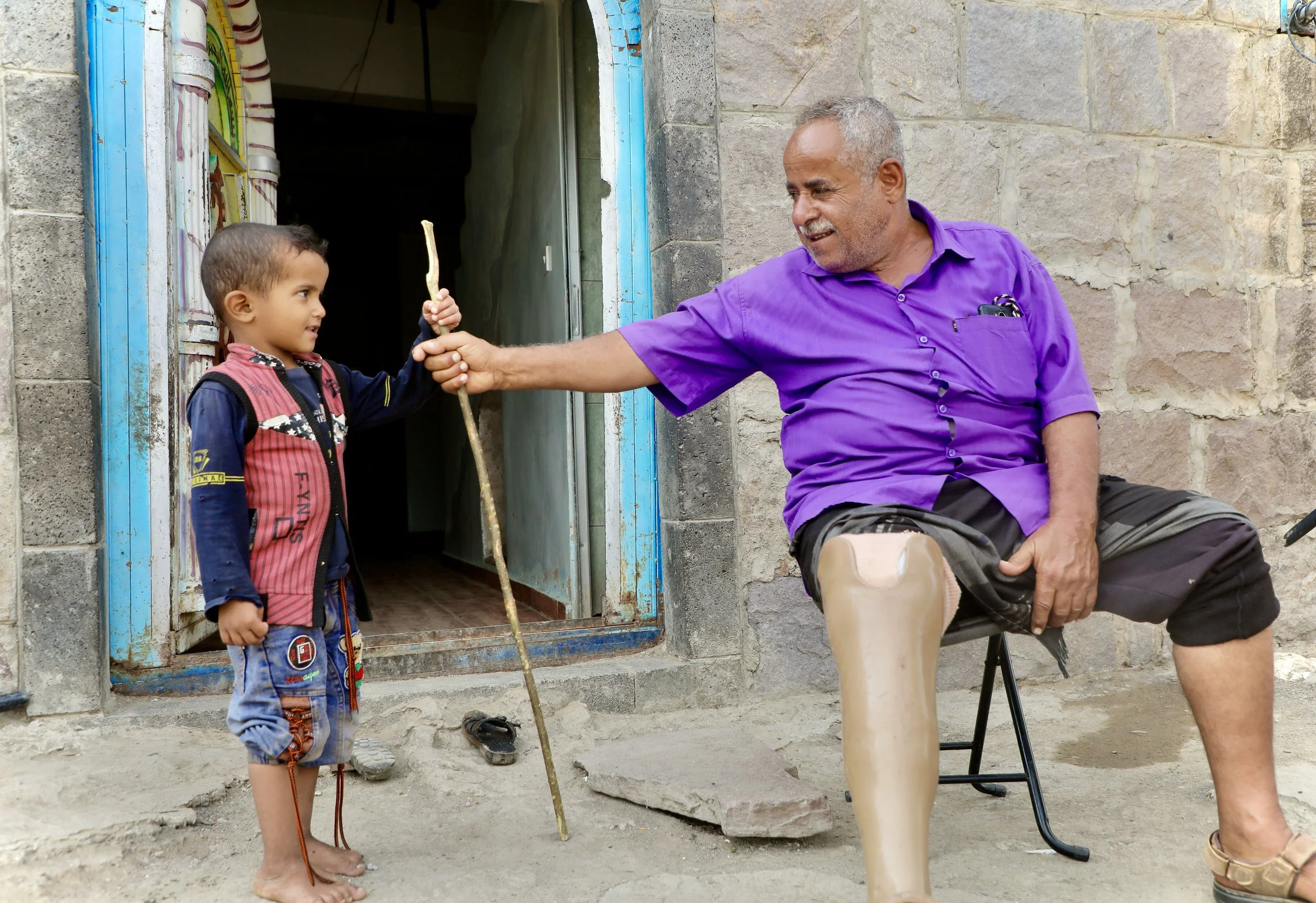
Mosaid Mohammed Ali Naji with his grandson outside their home in Shakhab, Al Dhale. His grandson holds out a stick - the gesture somewhere between an offering and a game. Mosaid's prosthetic leg is visible; he lost part of his leg when a landmine hidden in his outdoor oven detonated in his courtyard.
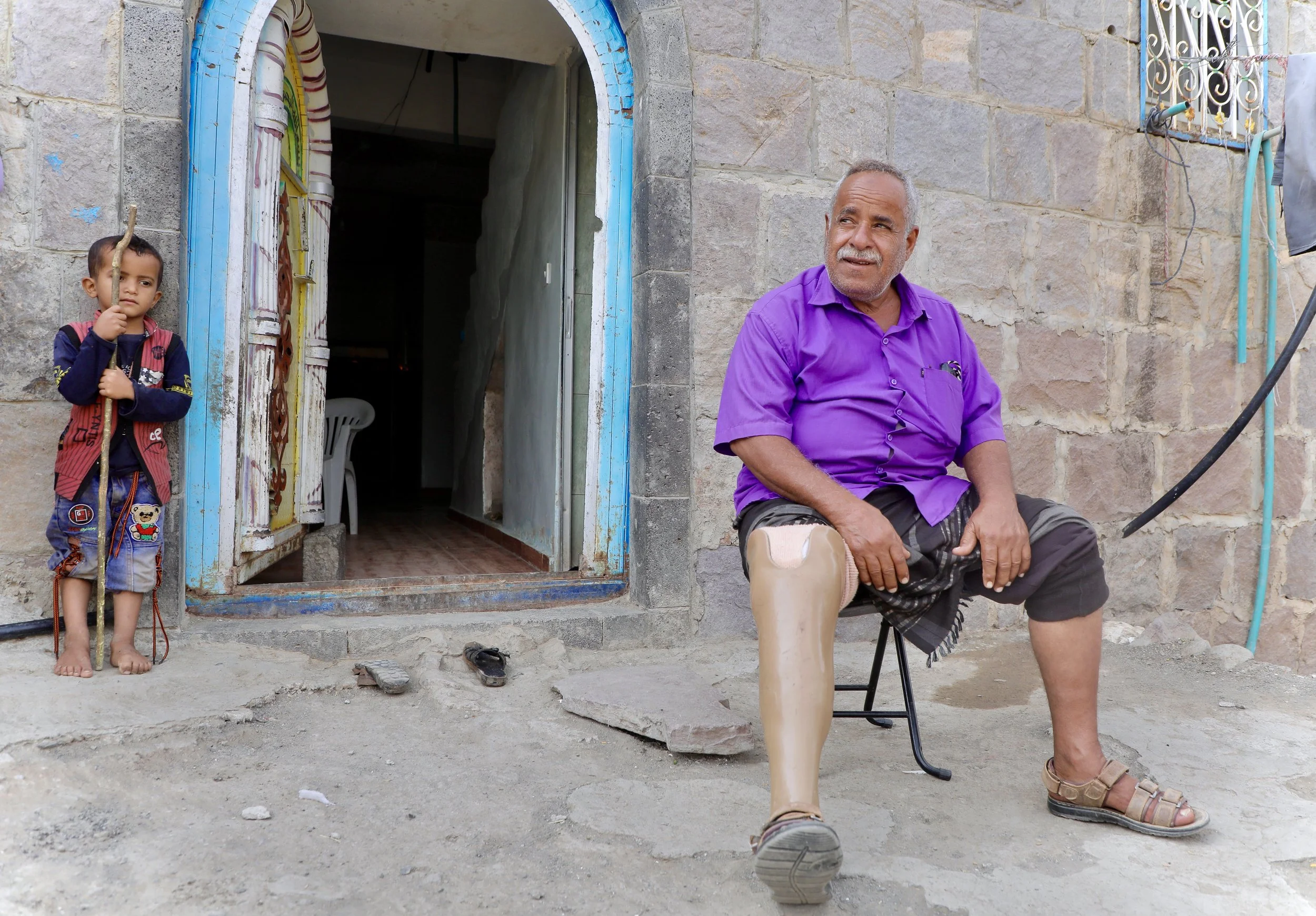
Mosaid Mohammed Ali Naji, Shakhab, Al Dhale. His grandson watches from the doorway behind him. When he returned home, he tragically discovered landmine and IEDs planted in this courtyard.
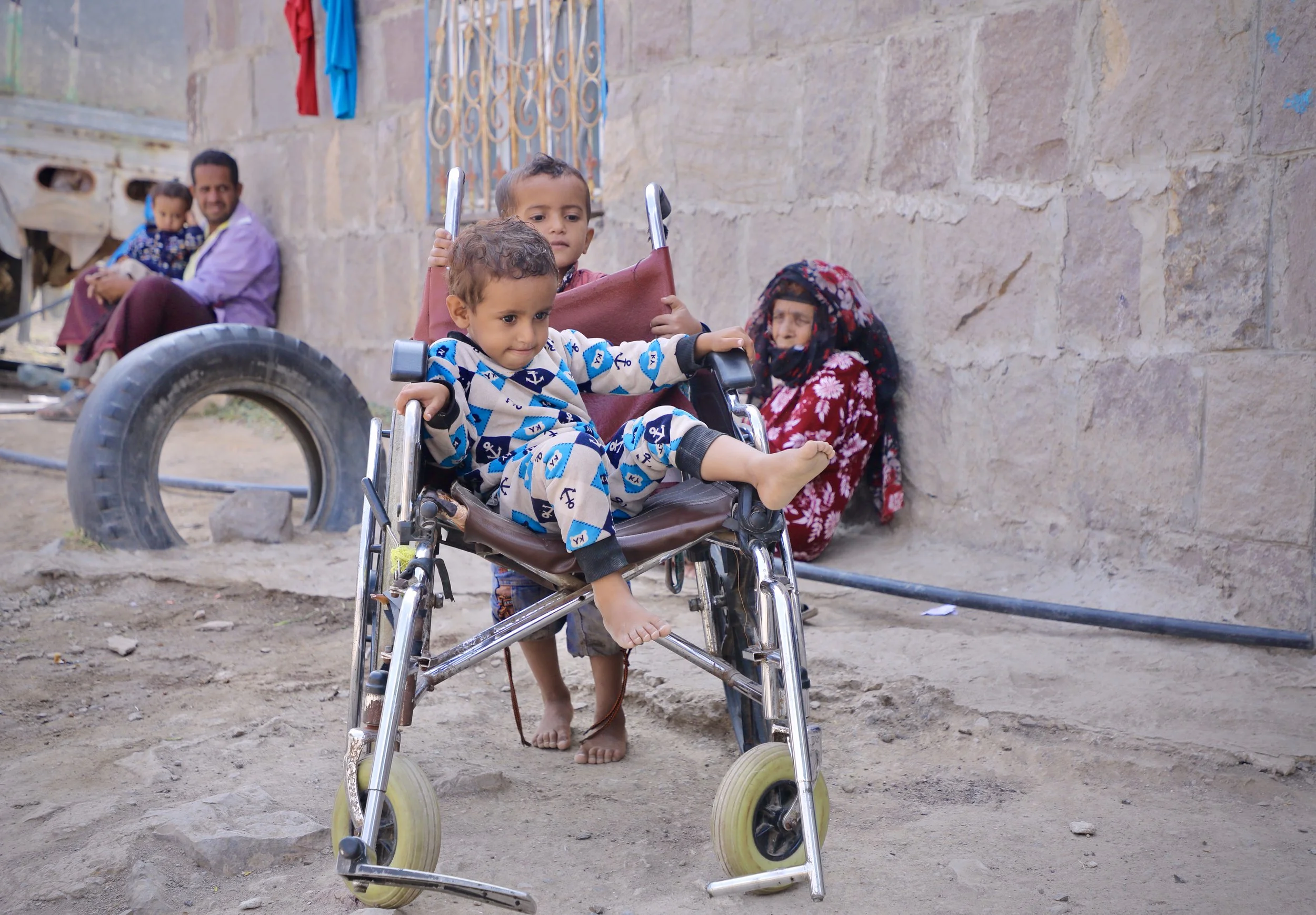
A grandchild plays in Mosaid Mohammed Ali Naji's wheelchair in the courtyard of his home, Shakhab, Al Dhale. The wheelchair - used by Mosaid when outside the compound - has become a toy. The great-grandmother of the family is seated against the wall behind.
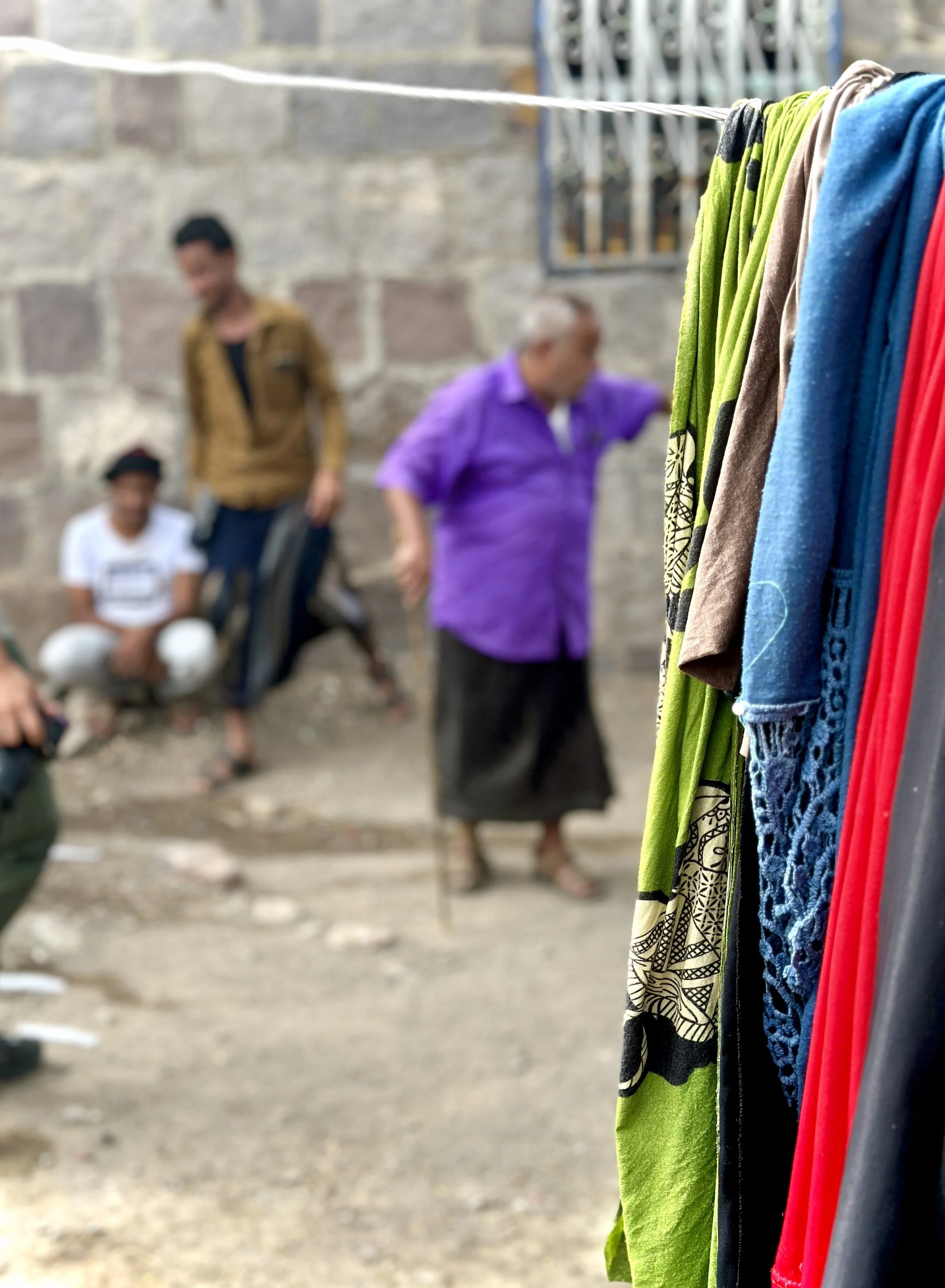
The courtyard of Mosaid Mohammed Ali Naji's home, Shakhab, Al Dhale. Mosaid - in the purple shirt he wears throughout these photographs - moves through the compound with members of his family. Further landmines were discovered along his property wall after the detonation in his kitchen.
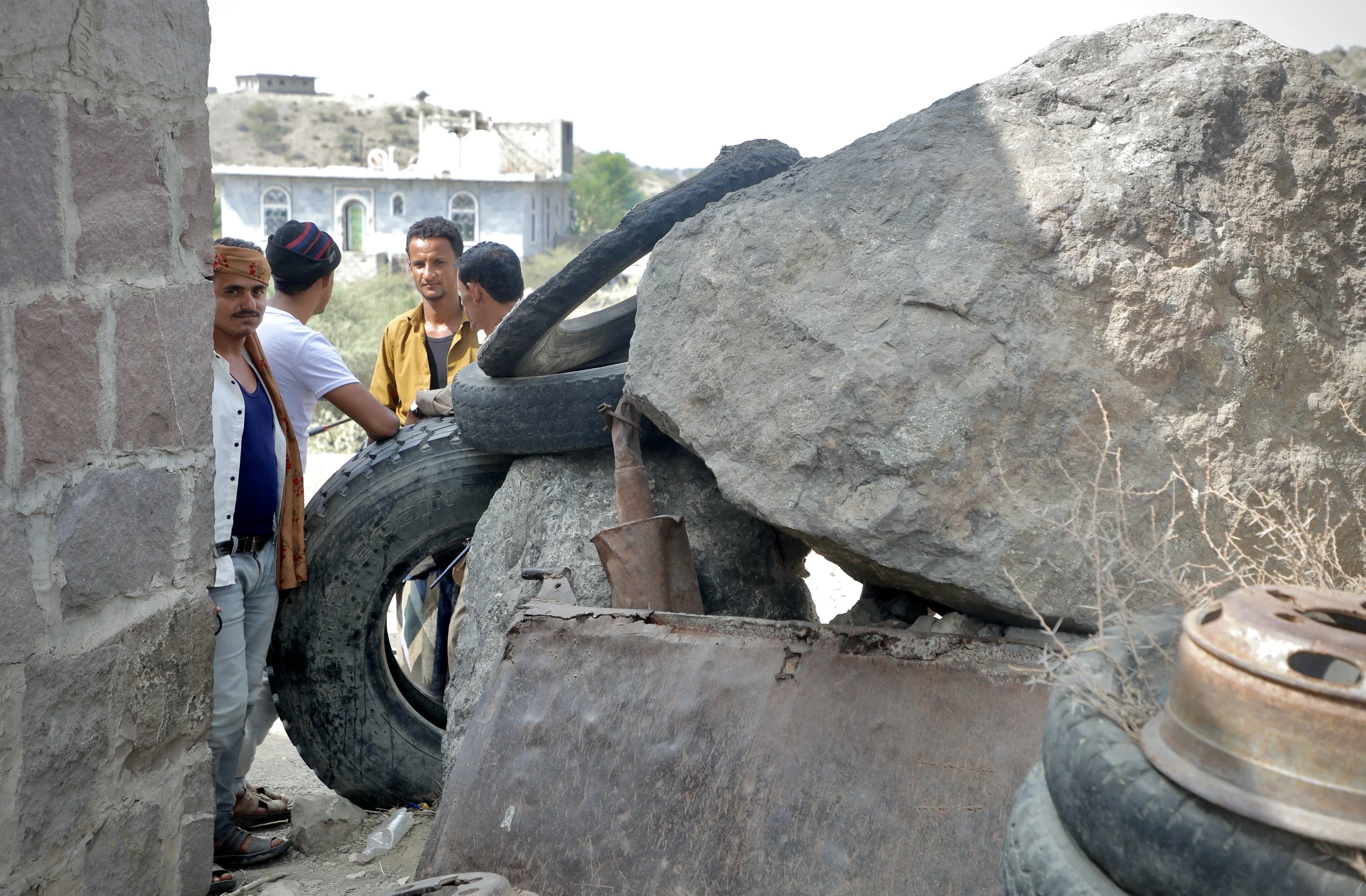
Community members beside the defensive perimeter outside the home of Mosaid Mohammed Ali Naji, Shakhab, Al Dhale. The barrier - constructed from boulders, vehicle parts and tyres - was built by local men to protect the property against potential future Houthi incursion. Landmines were found along this wall after the detonation that cost Mosaid part of his leg.
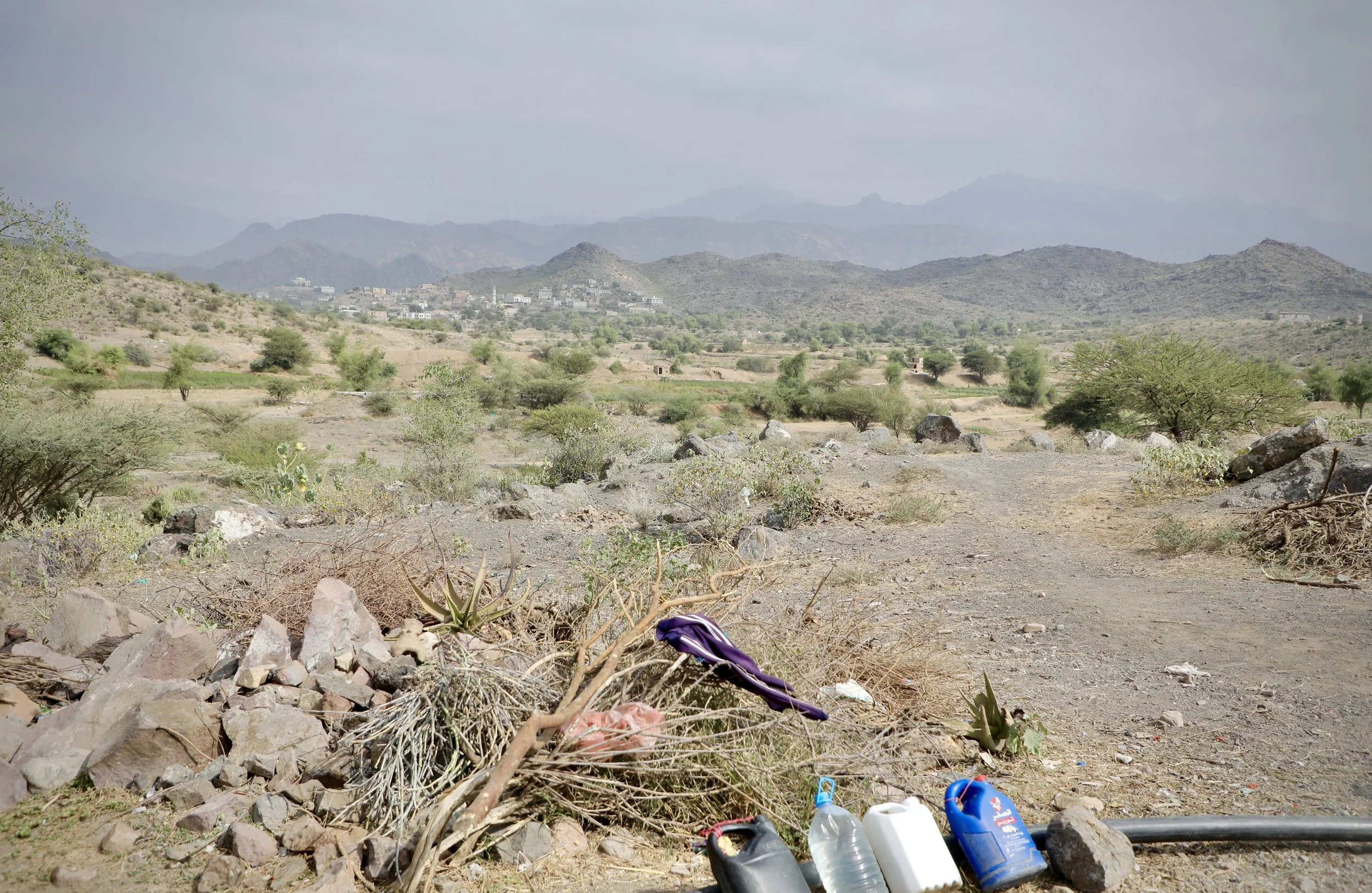
The view from the edge of Mosaid Mohammed Ali Naji's property, Shakhab, Al Dhale. The scrubland and hills visible beyond this boundary have not yet been fully cleared of landmines. Water containers and domestic objects mark the threshold between the compound and the wider terrain. The landscape looks peaceful. It is not.
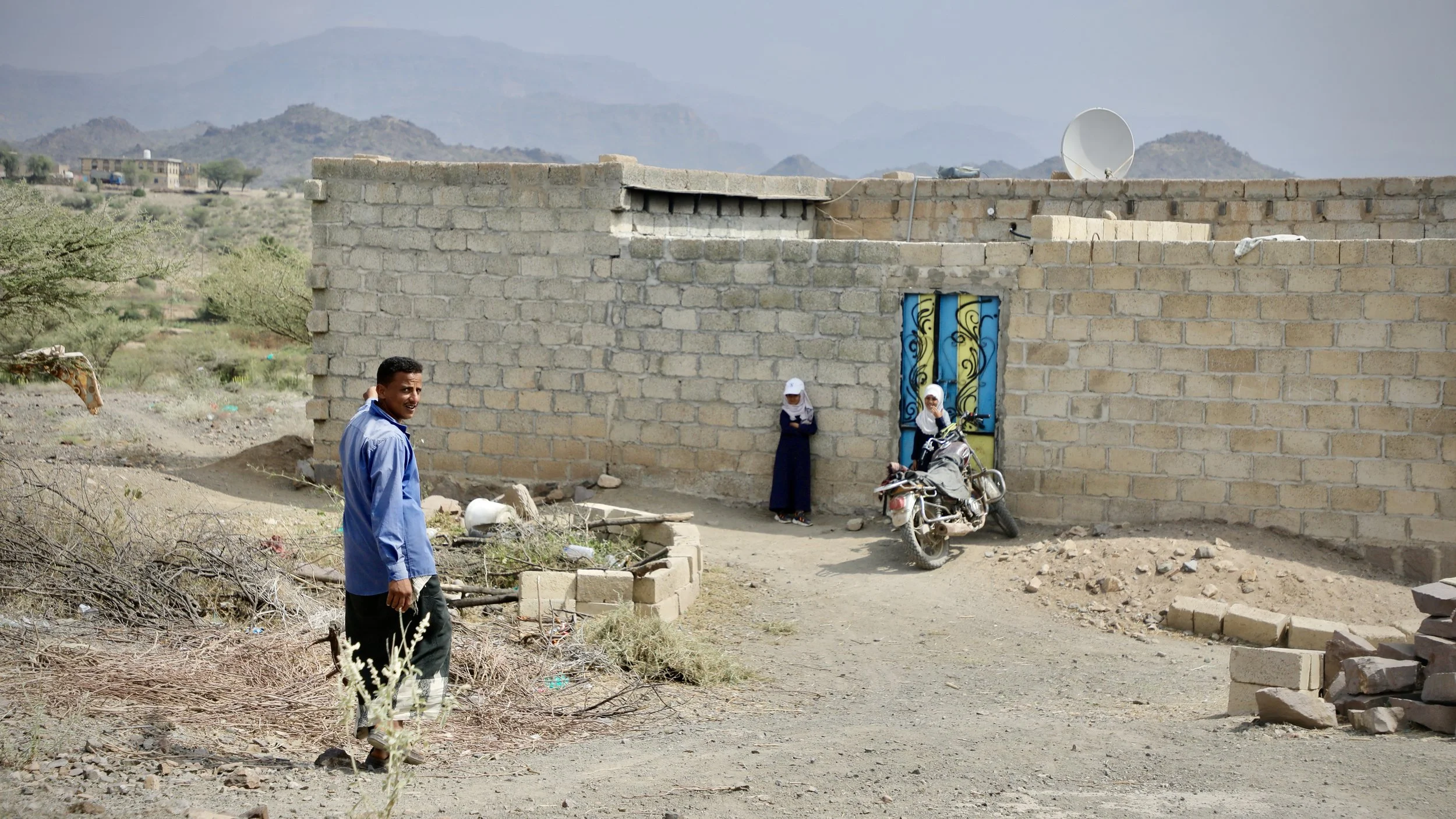
Radwan Mohammed, 35, outside his home in Al Jadanah village, Shakhab, Al Dhale. His daughters Ilham and Iman stand at the doorway behind him. The open ground between them is the perimeter from which Project Masam's Team 18 subsequently cleared 50 Houthi-manufactured anti-personnel landmines.
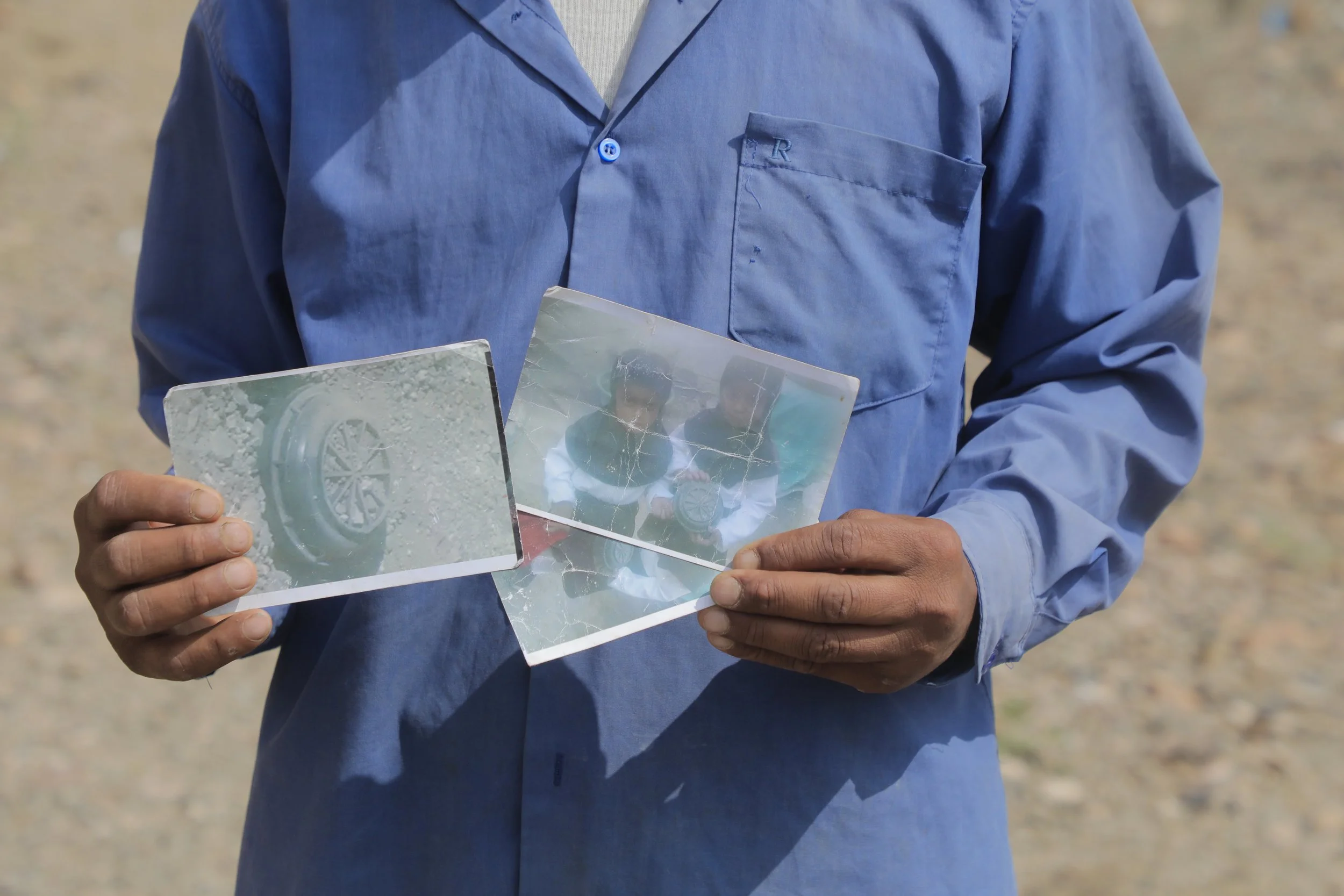
Radwan Mohammed holds the photographs he took when his daughters Ilham, 7, and Iman, 5, discovered anti-personnel landmines while playing marbles outside their home, Al Jadanah village, Shakhab, Al Dhale. The photographs - cracked and worn from handling - show the devices and the children beside them. Radwan used these images as evidence when he reported the discovery to Project Masam Team 18.
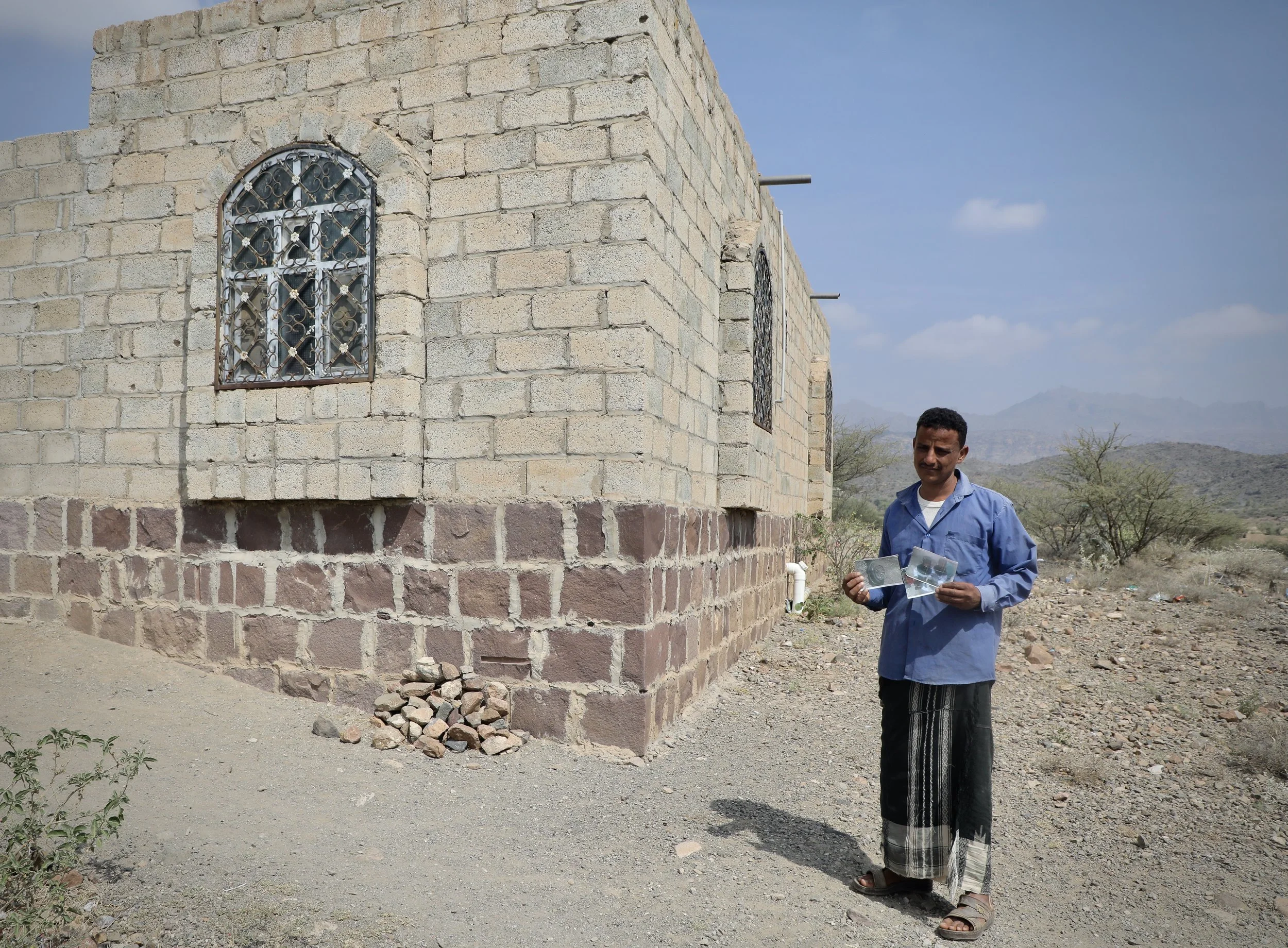
Radwan Mohammed at the perimeter of his home in Al Jadanah village, Shakhab, Al Dhale at the precise location where his daughters Ilham and Iman discovered anti-personnel landmines while playing marbles. Project Masam's Team 18 subsequently cleared 50 devices from around this perimeter. The family were trapped inside their home until Team 18 leader Ahmed Al Radfani confirmed it was safe to leave.
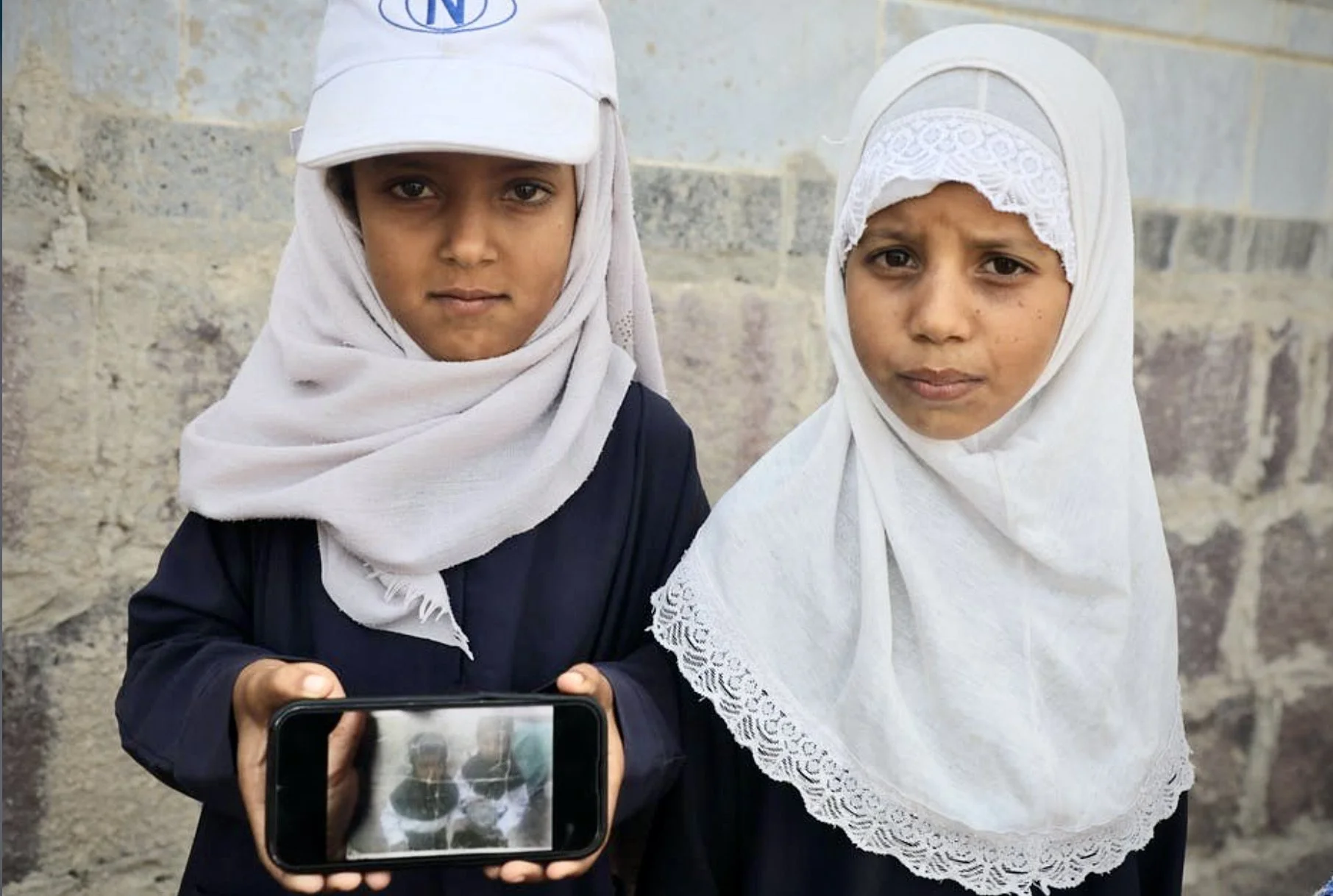
Ilham, 7, and Iman, 5, daughters of Radwan Mohammed, hold up their father's evidence photograph of the anti-personnel landmines they discovered while playing marbles outside their home, Al Jadanah village, Shakhab, Al Dhale.
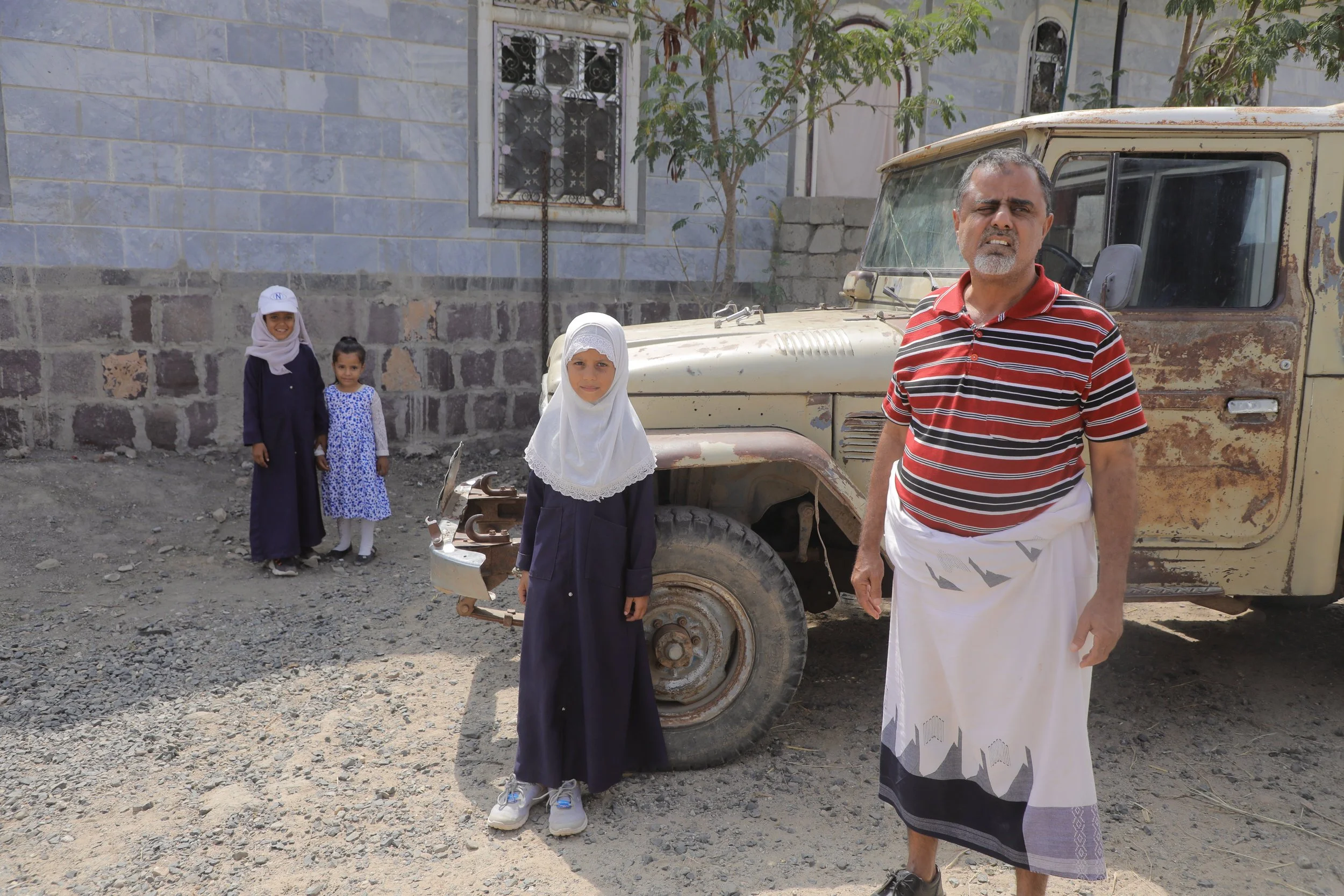
A village leader, with Ilham, Iman and Amlak, who was not two years old when her sisters encountered the mines, daughters of Radwan Mohammed, outside their home in Al Jadanah village, Shakhab, Al Dhale. An abandoned military vehicle - a remnant of the conflict - sits in front of the compound.
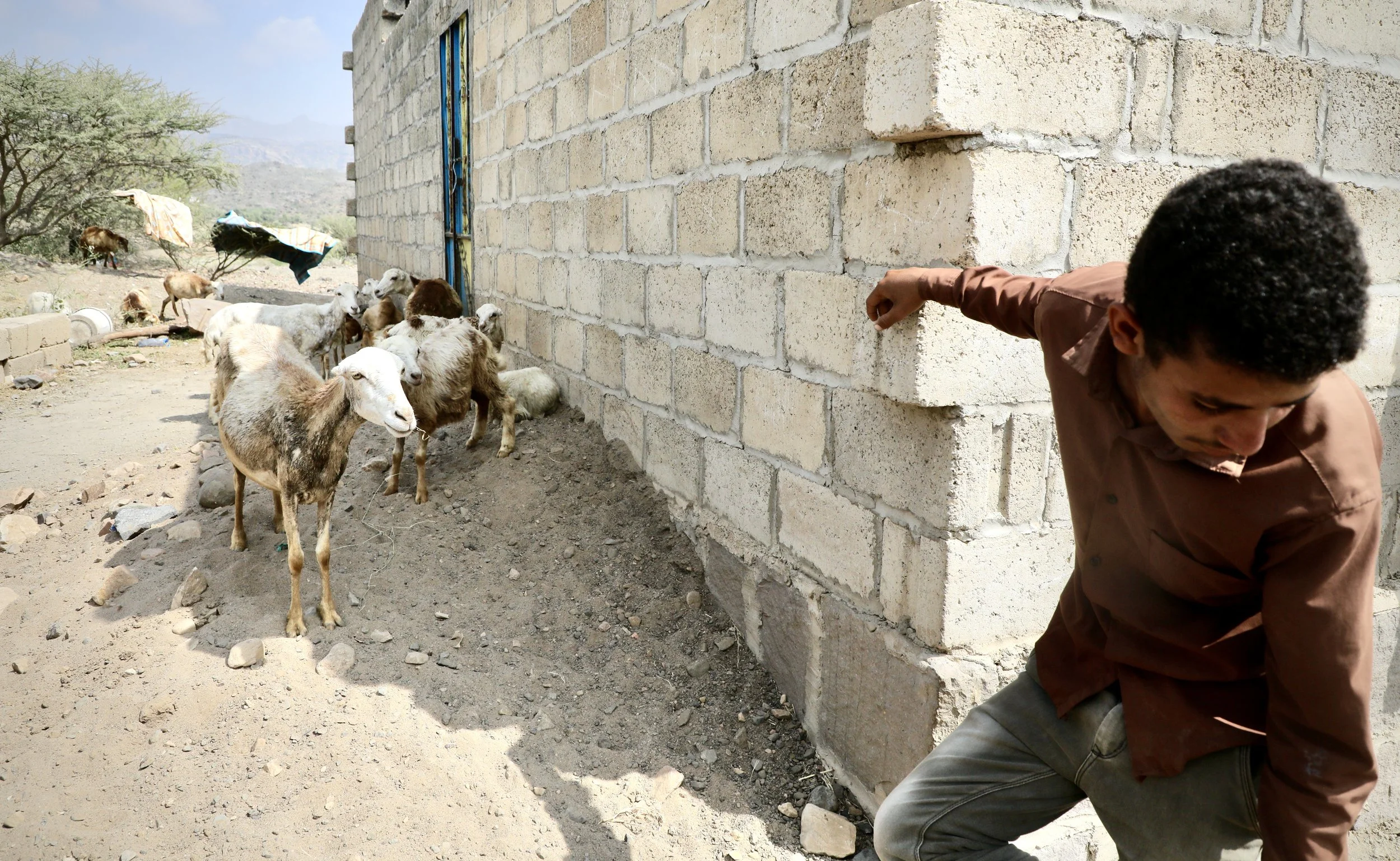
Outside the home of Radwan Mohammed, Al Jadanah village, Shakhab, Al Dhale. A flock of sheep shelter at the wall of the compound from which Project Masam's Team 18 cleared 50 Houthi-manufactured anti-personnel landmines. Life continues on the cleared ground.
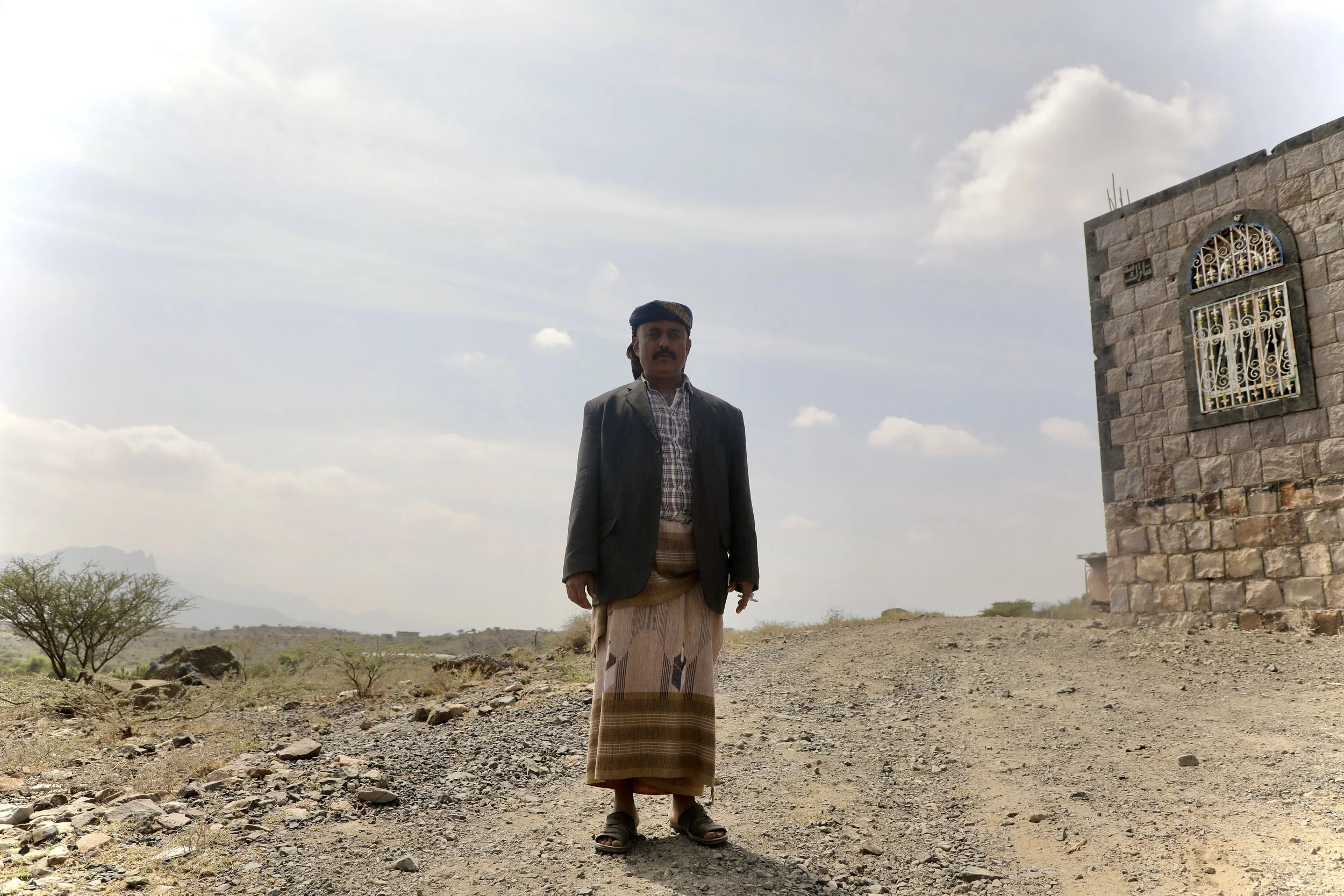
Saleh Abdullah Qassem, local chieftain of Qatabah, Al Dhale Governorate, outside his home. Members of his family were killed and injured by landmines and booby-traps planted inside the family compound. He stands on the ground where demining teams subsequently discovered dozens of devices.
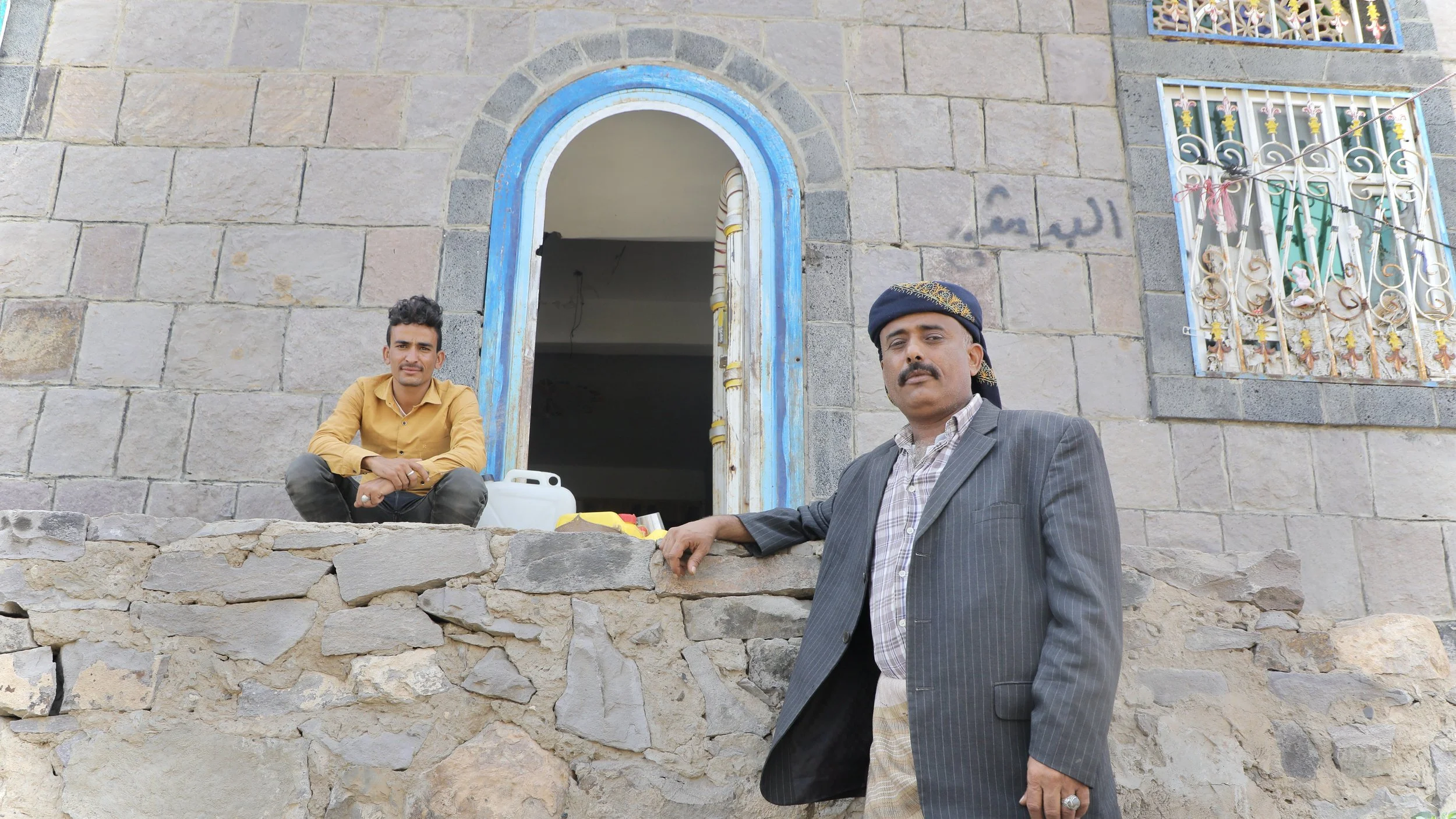
Saleh Abdullah Qassem at the entrance to his home, Qatabah, Al Dhale Governorate, with a member of his family. Members of the Qassem family were killed and injured by landmines and booby-traps planted inside this compound during the war.
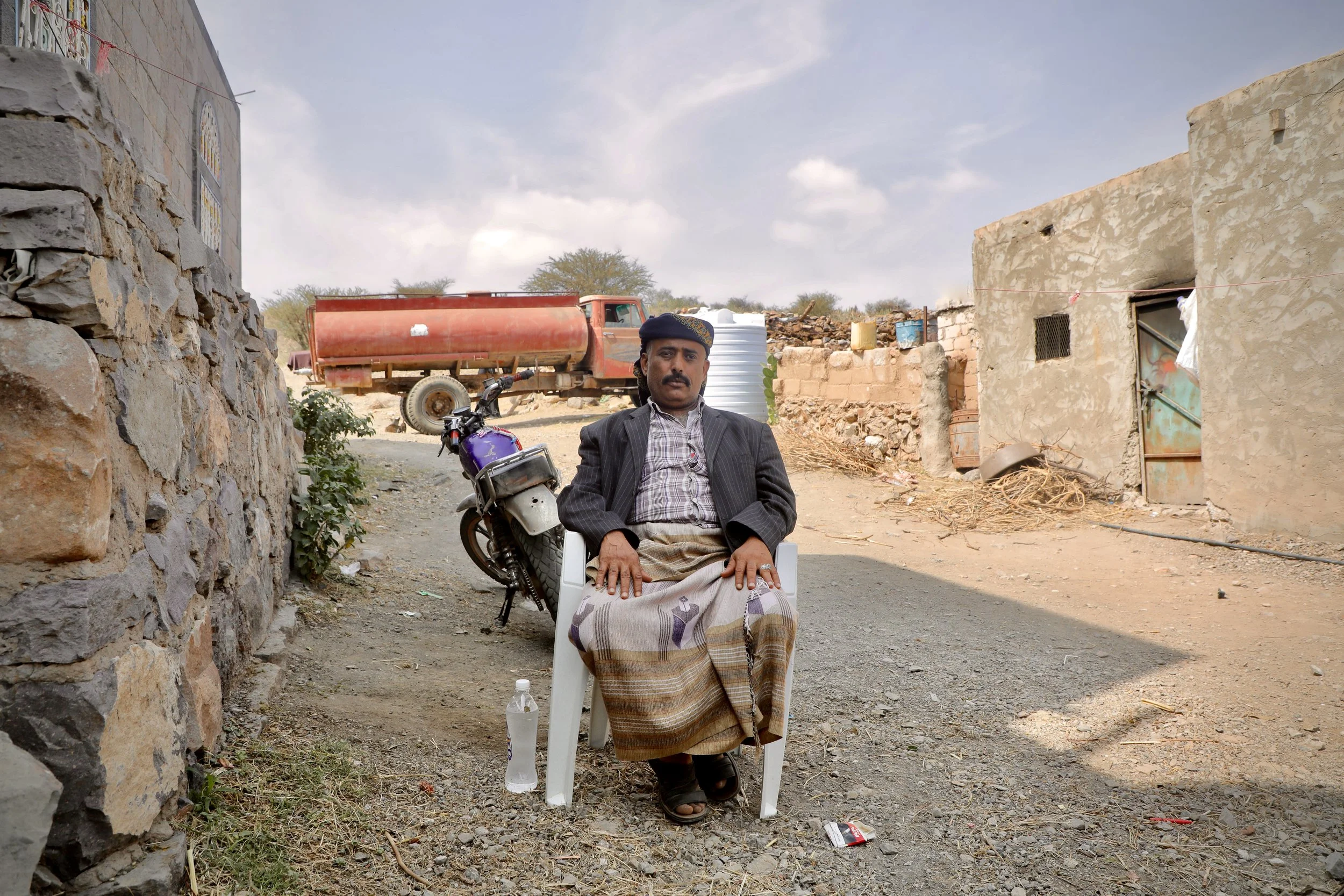
Saleh Abdullah Qassem, local chieftain, seated outside his home in Qatabah, Al Dhale Governorate. Demining teams subsequently discovered dozens of landmines in the precise location where he sits. The red tanker in the background is a marker of working life continuing in the area.
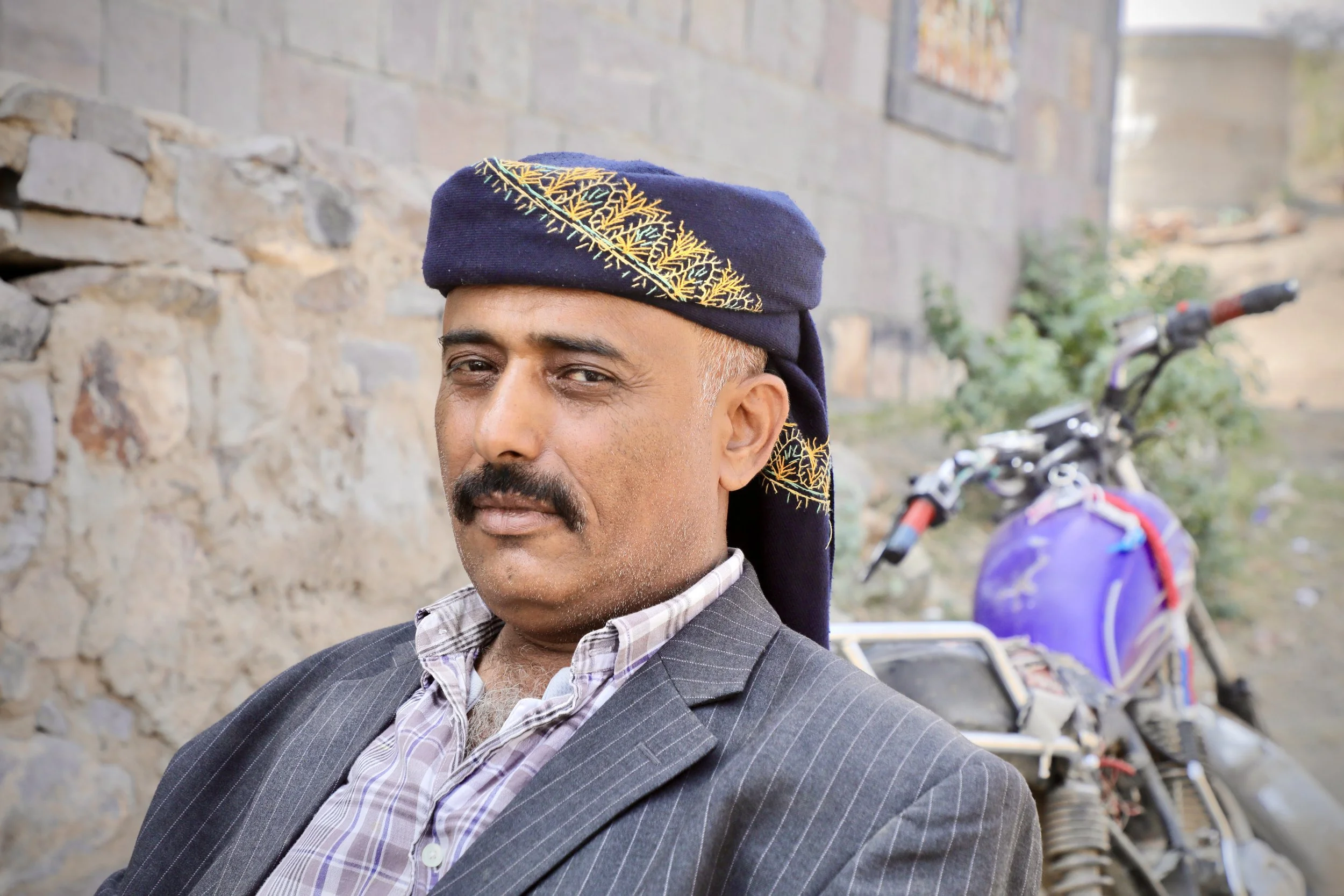
Saleh Abdullah Qassem, local chieftain, Qatabah, Al Dhale Governorate. Members of his family were killed and injured by landmines and booby-traps planted inside the family home during the war.
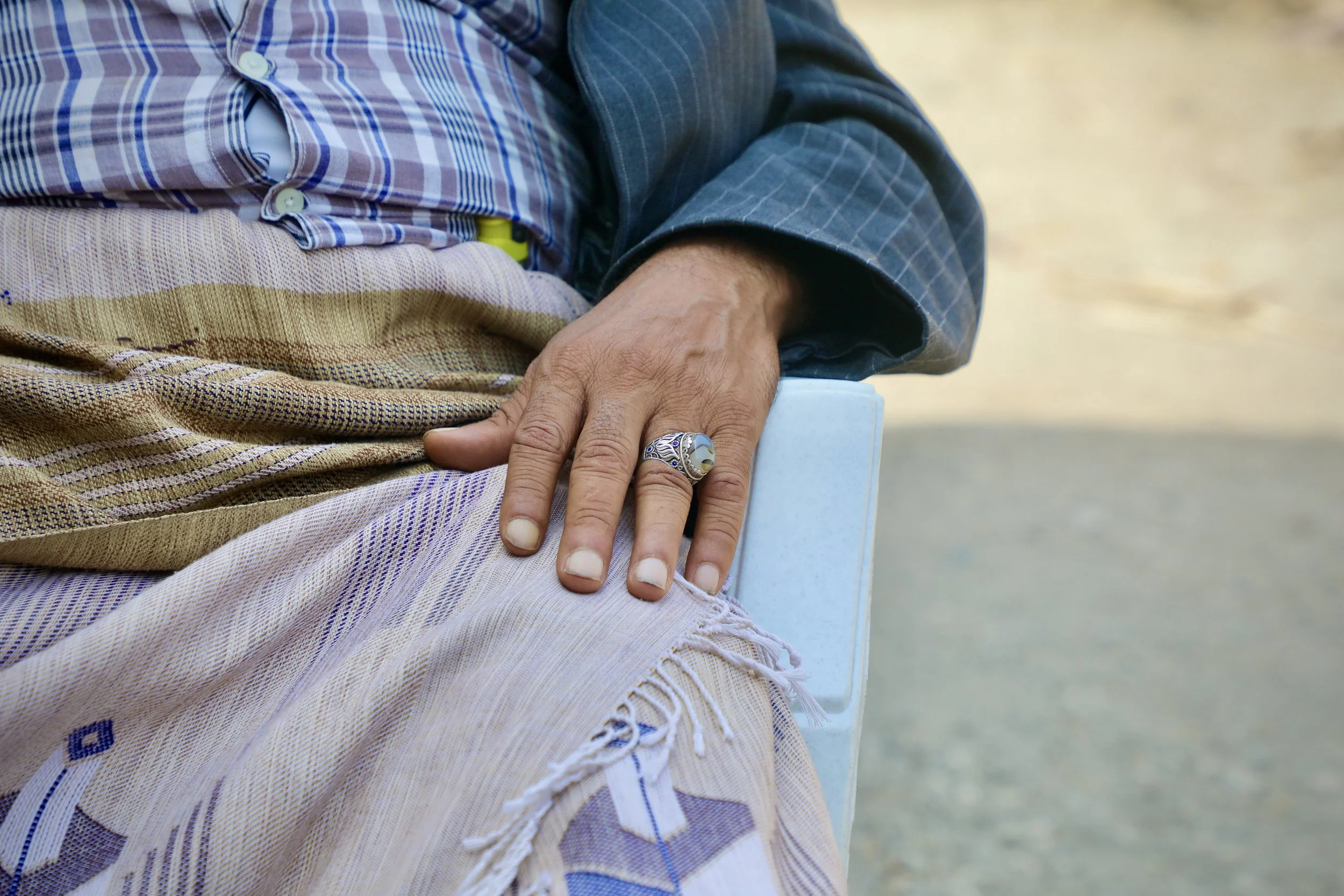
Saleh Abdullah Qassem, Qatabah, Al Dhale Governorate.
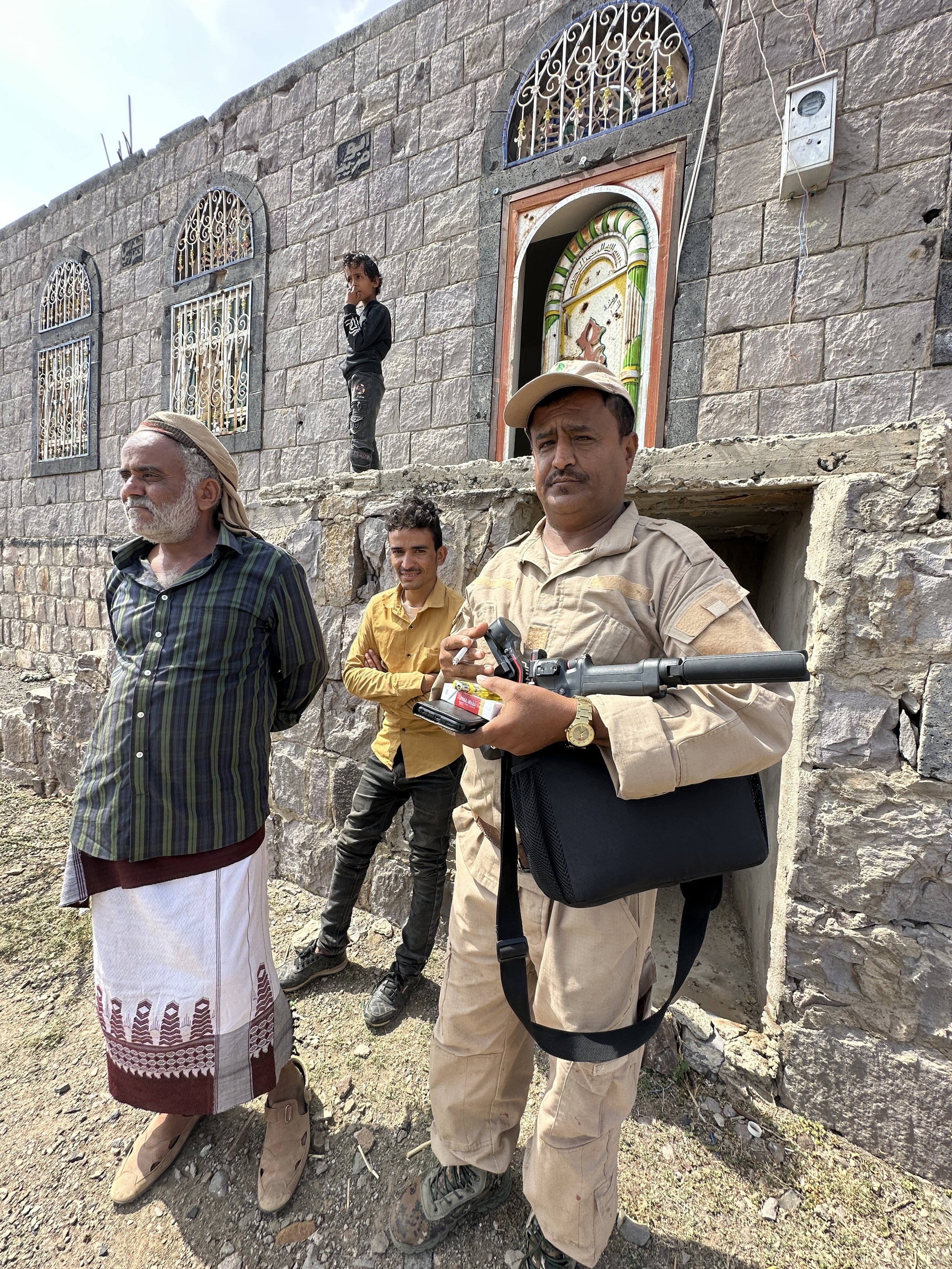
A Project Masam deminer catches up with local residents outside a home in Shakhab, Al Dhale, at the end of a working day. Project Masam's teams are on first-name terms with the families whose land they clear.
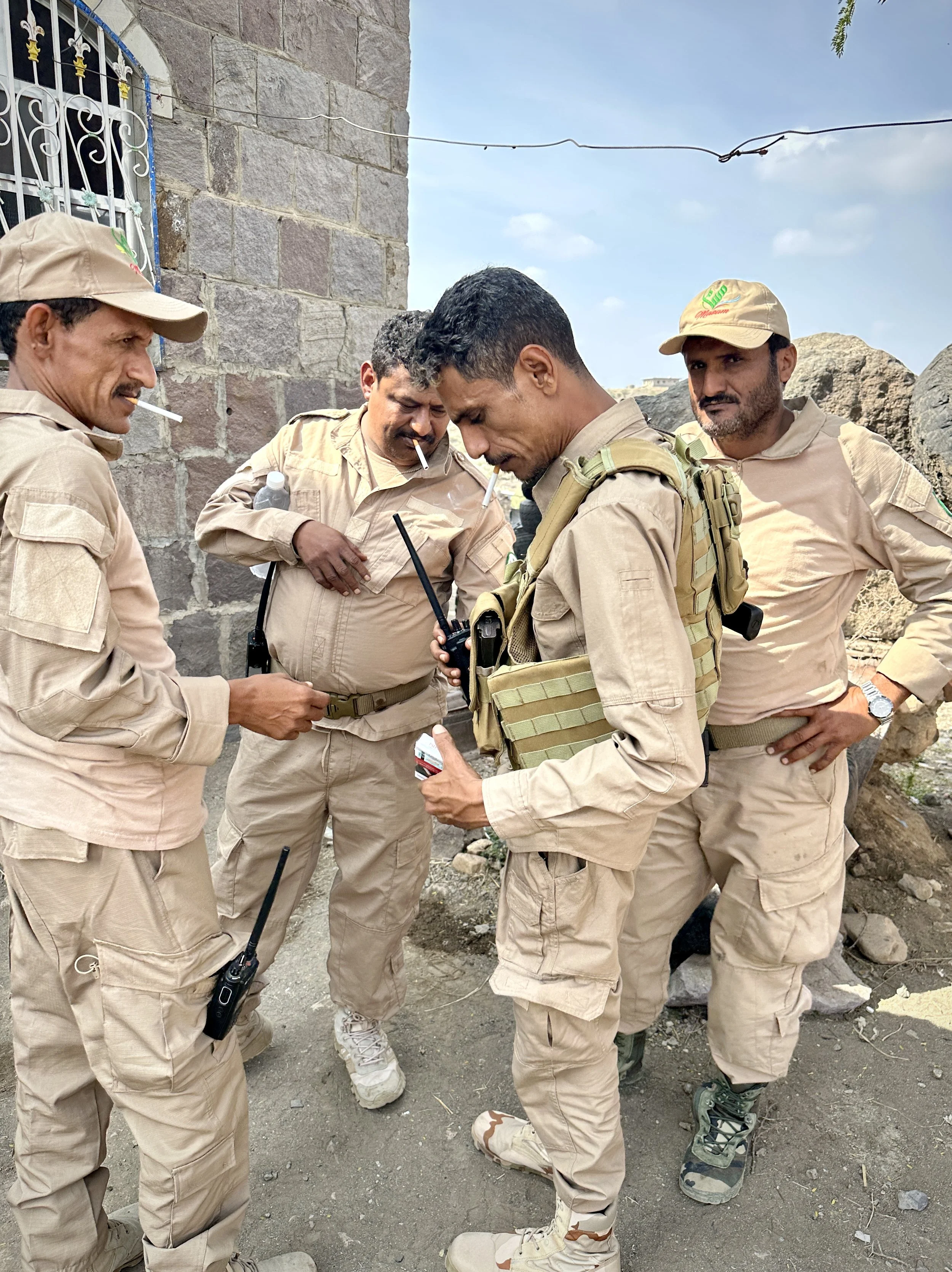
Project Masam demining team members at the end of a working day, Shakhab, Al Dhale. Teams like these have cleared the ground on which these families live, work and raise their children. Team leader Ahmed Al Radfani is on the left.
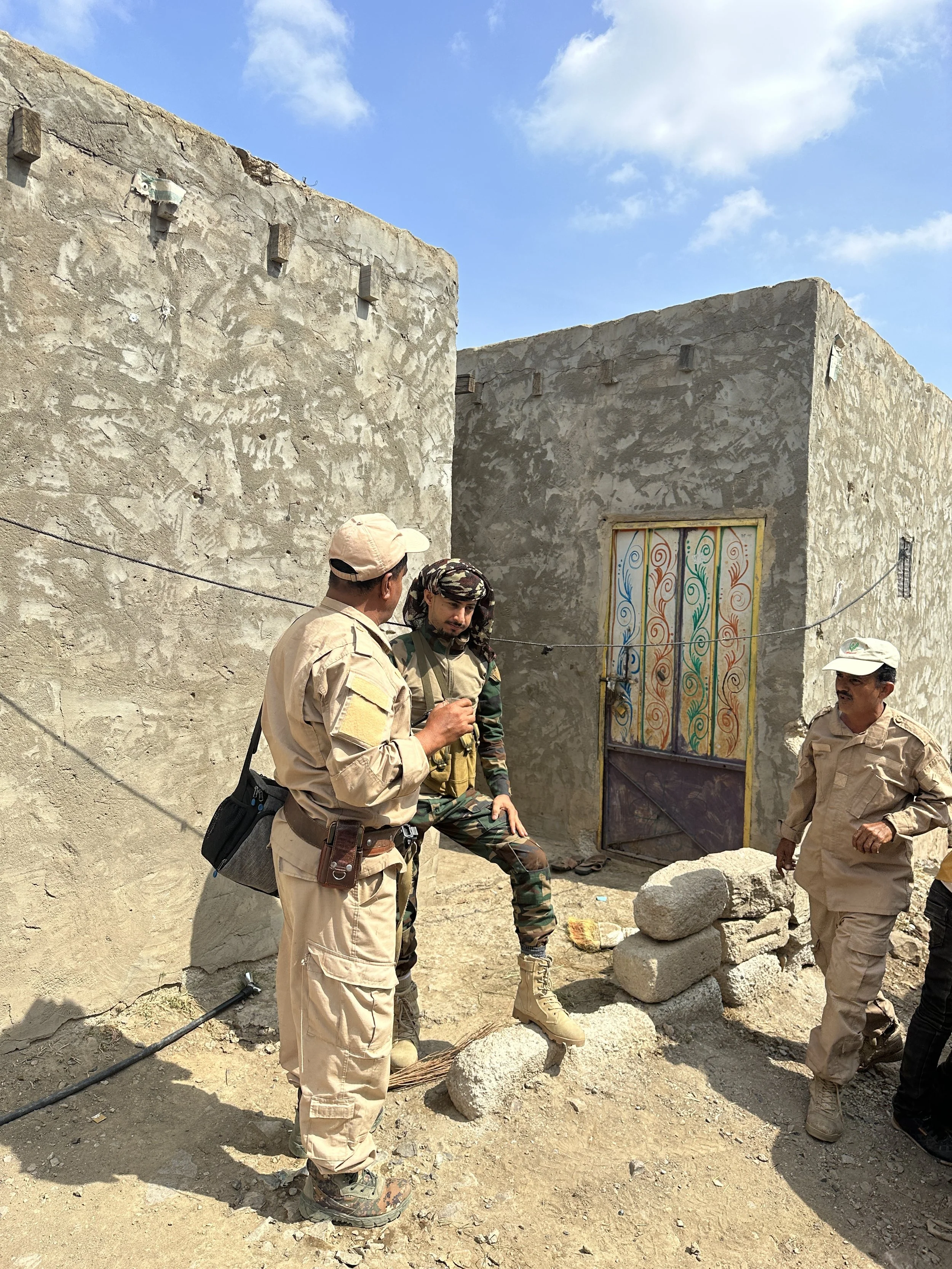
Project Masam demining team members in discussion with a local security escort outside a home in Al Dhale Governorate. The demining teams work in close coordination with local security to operate safely in areas where Houthi forces planted landmines and IEDs.
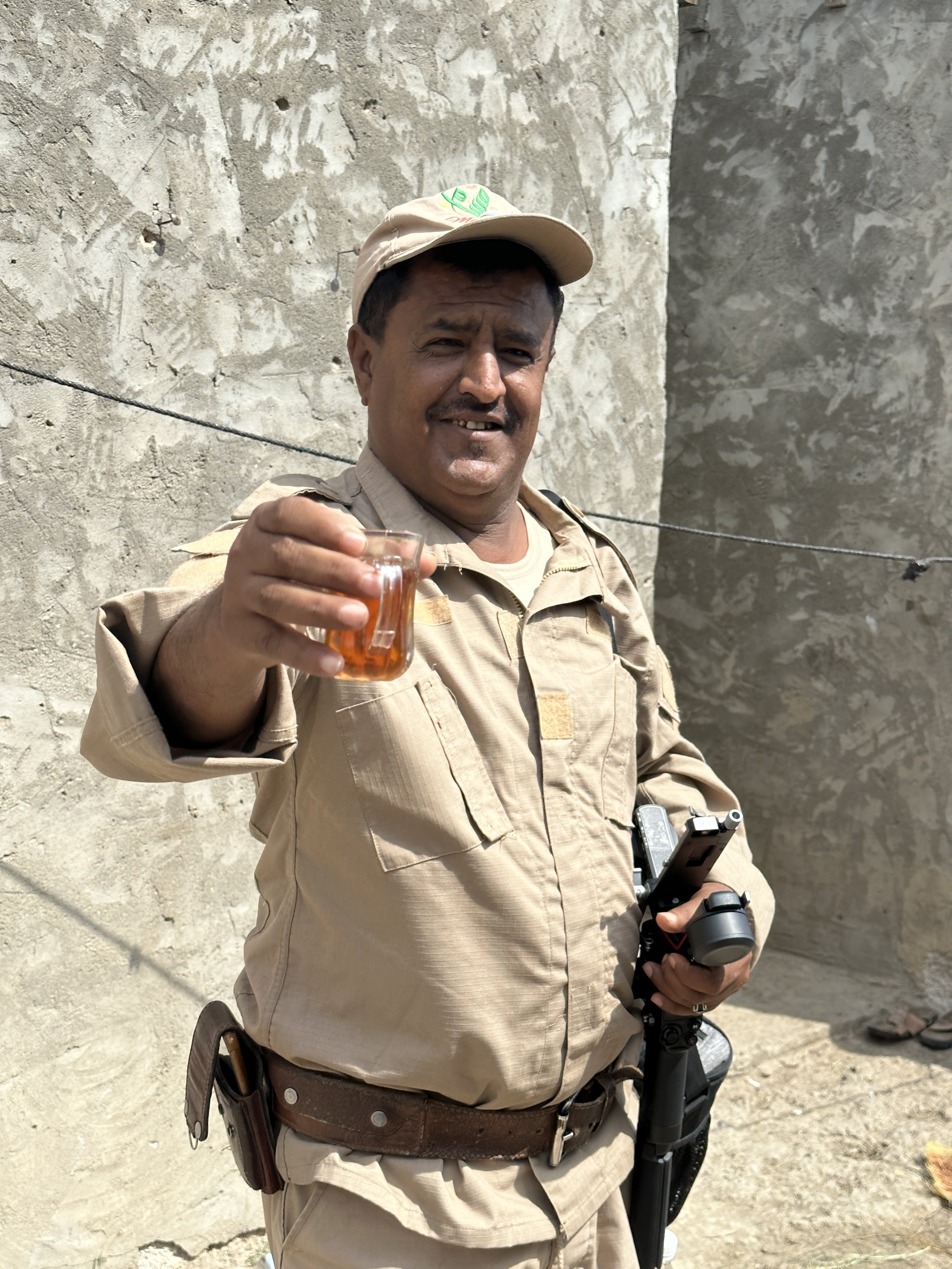
A Project Masam deminer, Al Dhale Governorate. The teams are on first-name terms with the families whose land they clear. The offer of tea - the gesture of hospitality extended even in the field - speaks to the relationships built between deminers and the communities they serve.