In Al Remah, Mocha, in Yemen’s Taiz governorate, deminers from Project Masam’s Team 21 work in landscapes that are anything but remote. Mine clearance here unfolds in close proximity to daily life—along roads, beside fields, near trees where people rest, and on tracks used by farmers and children.
Led by team leader Abdullah Mohamed Shafel, the men navigate environments where the boundaries between danger and normalcy are often indistinct. Livestock pass within sight of marked ground. Children play nearby. Conversations with villagers are as integral to the work as the detectors themselves.
These images explore the relationship between deminers and the communities and environments in which they operate. They challenge the perception that demining takes place in isolated, distant terrain, instead revealing it as a practice embedded within lived spaces—places of movement, work, and routine.
The work is methodical, repetitive, and slow. Its impact, however, extends far beyond the cleared ground, shaping how people inhabit and move through their own landscapes.
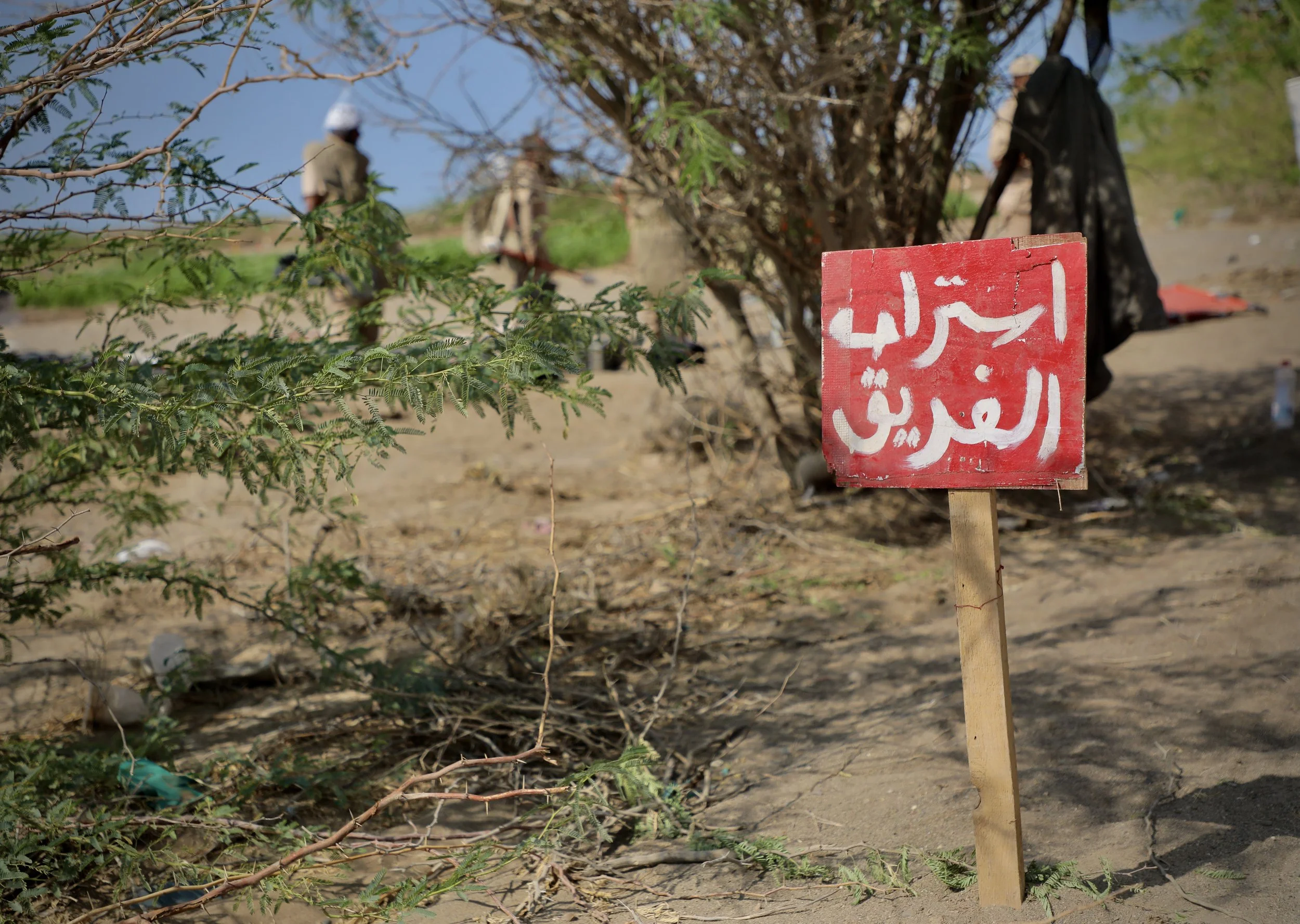
A warning sign marking a hazardous area in Al Remah, near Mocha, Taiz governorate, Yemen.
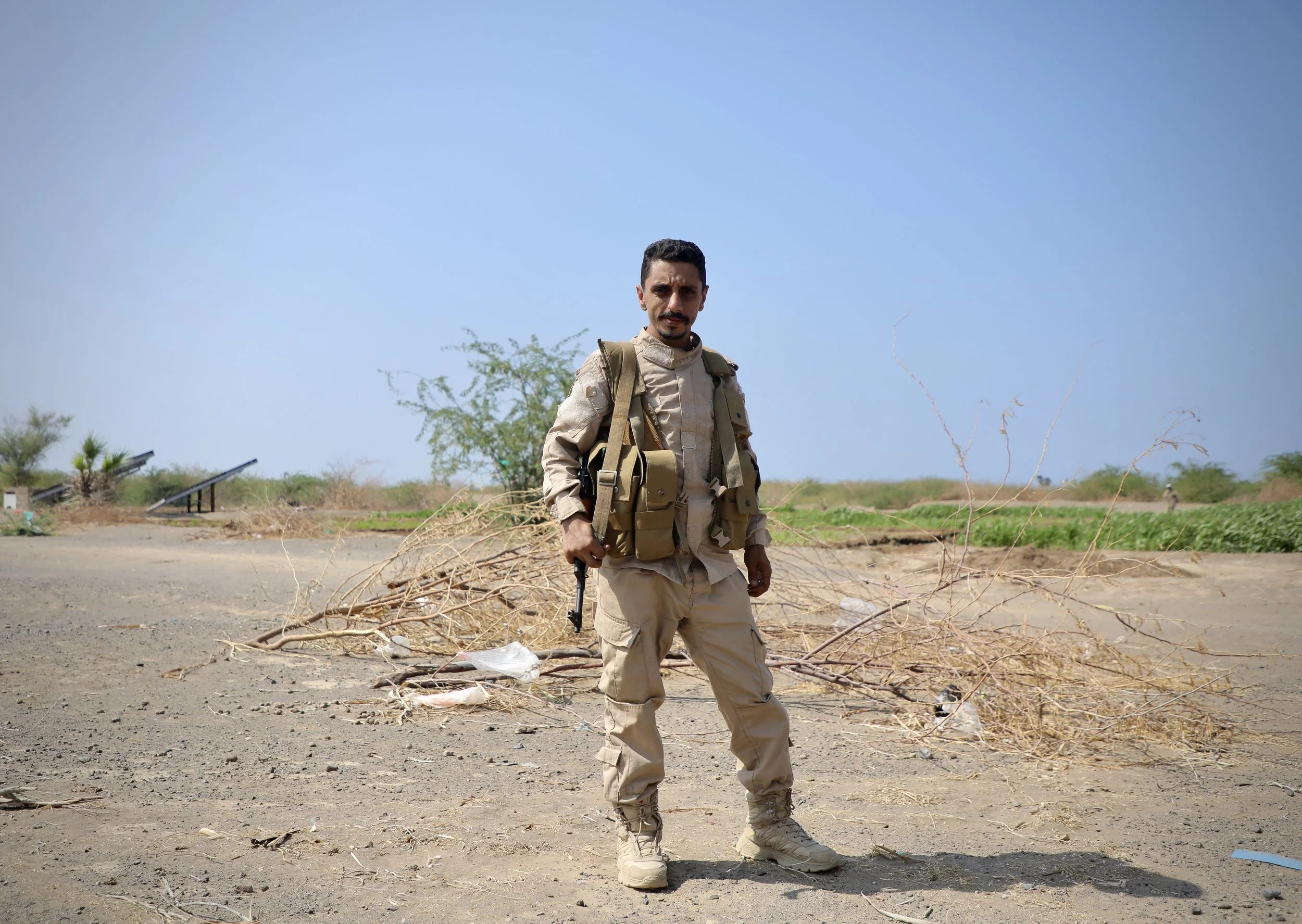
A security guard stands near a demining site in Al Remah, near Mocha, Taiz governorate, Yemen.
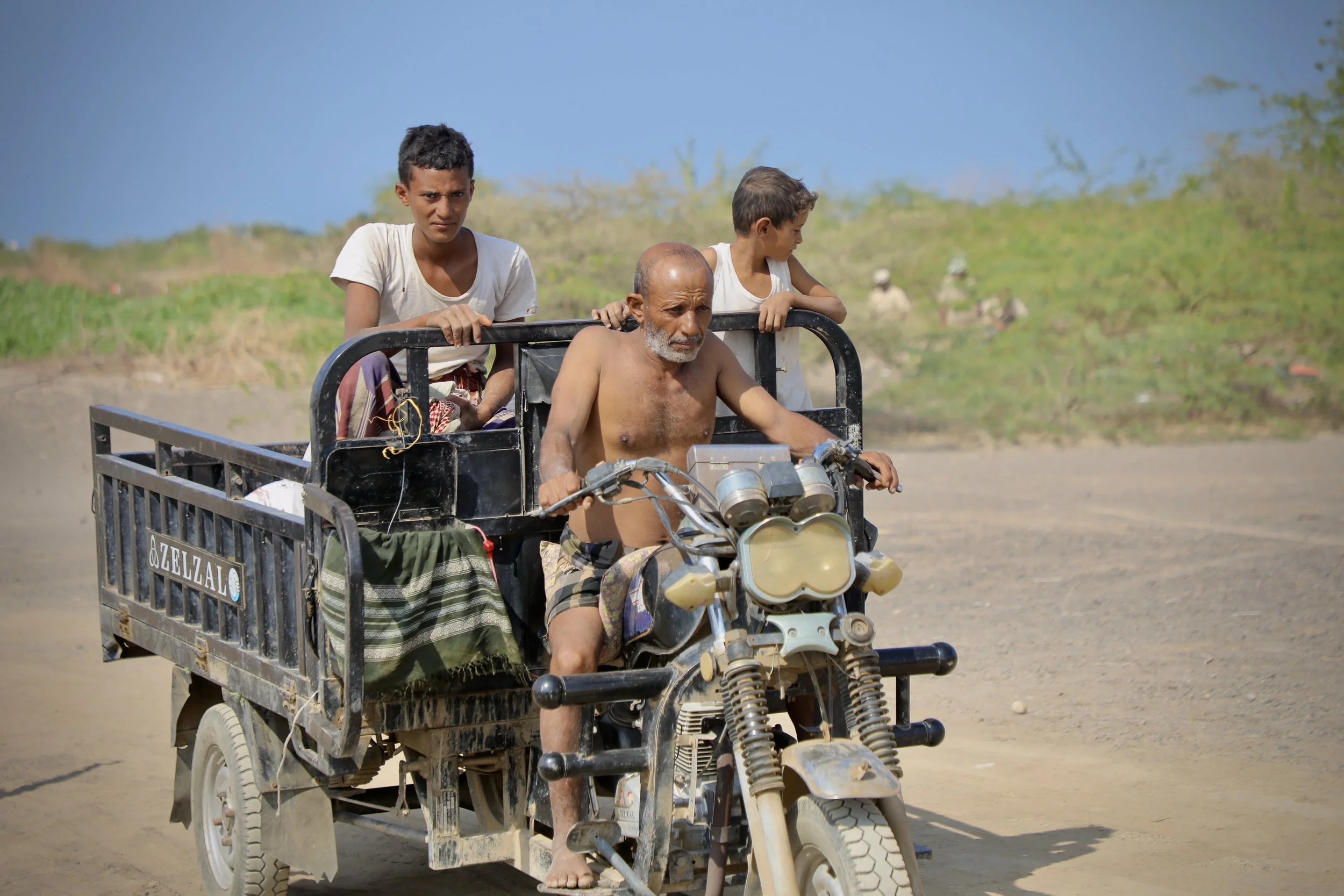
Men travel along a track while deminers work in the background in Al Remah, near Mocha, Taiz governorate, Yemen, where civilian movement and clearance activity often overlap.
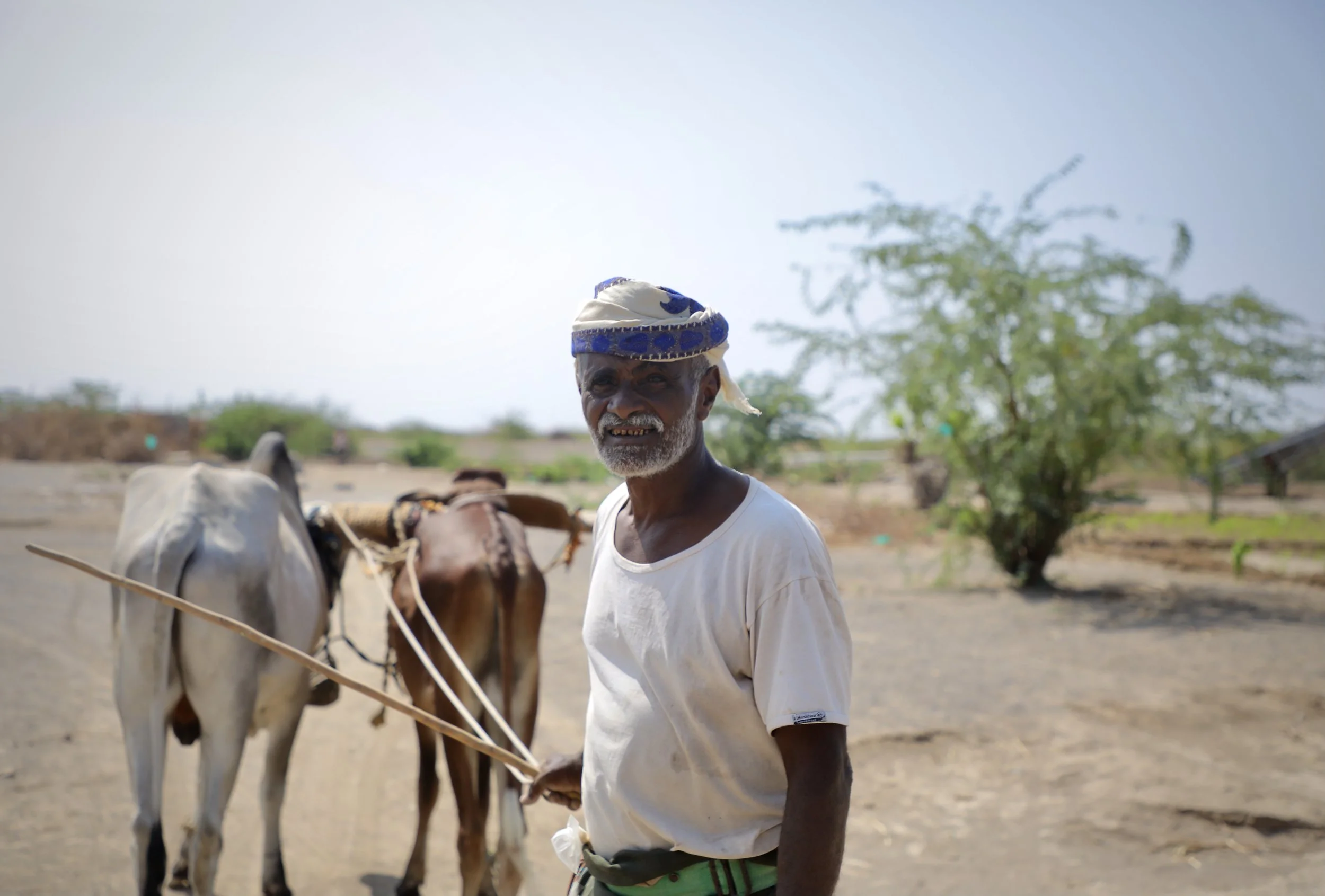
A farmer leads oxen along a track near a demining site in Al Remah, near Mocha, Taiz governorate, Yemen.
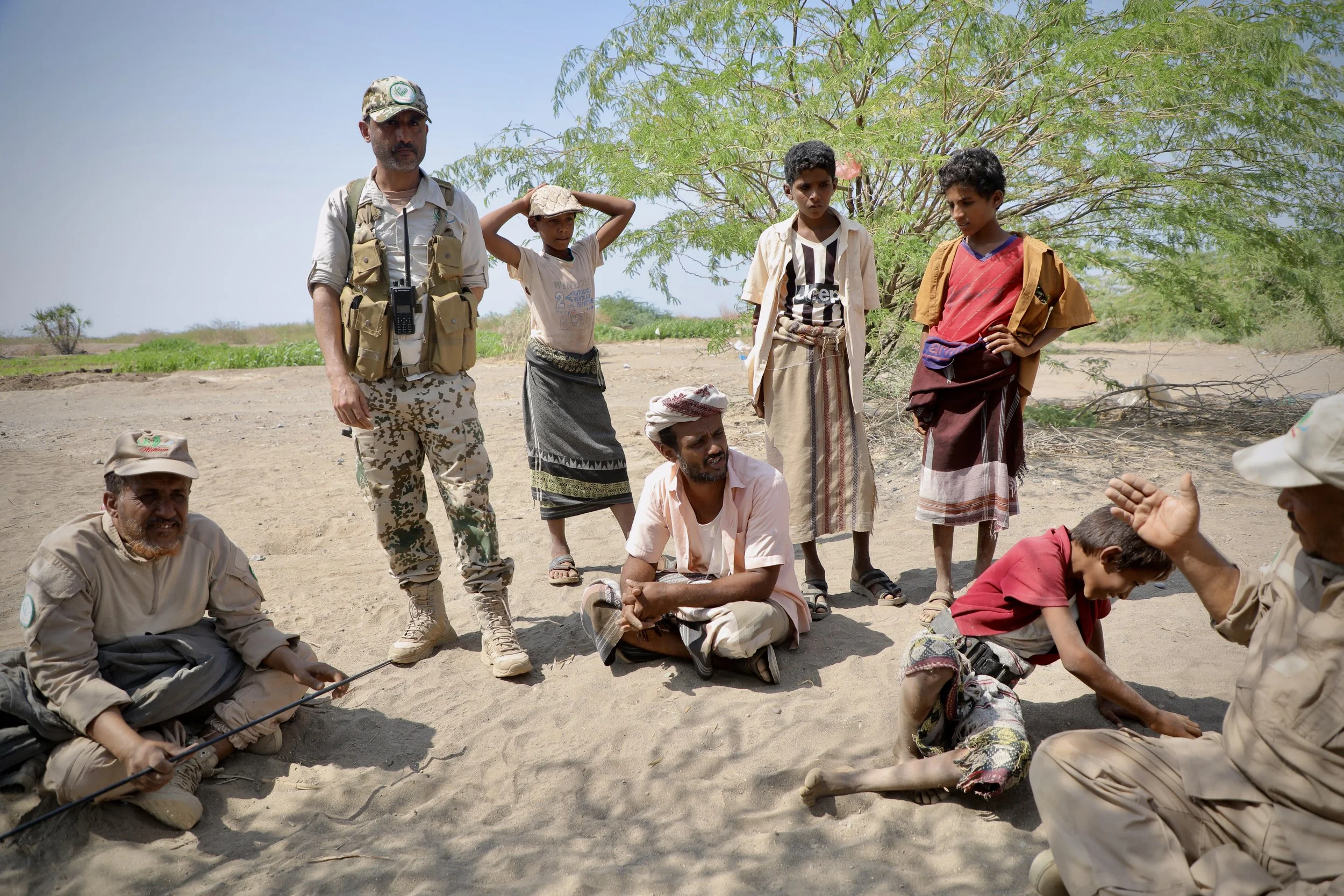
Deminers from Team 21 speak with local residents in Al Remah, near Mocha, Taiz governorate, Yemen. Conversations like these form part of informal Explosive Ordnance Risk Education (EORE), where information about suspected hazards and recent incidents is shared.
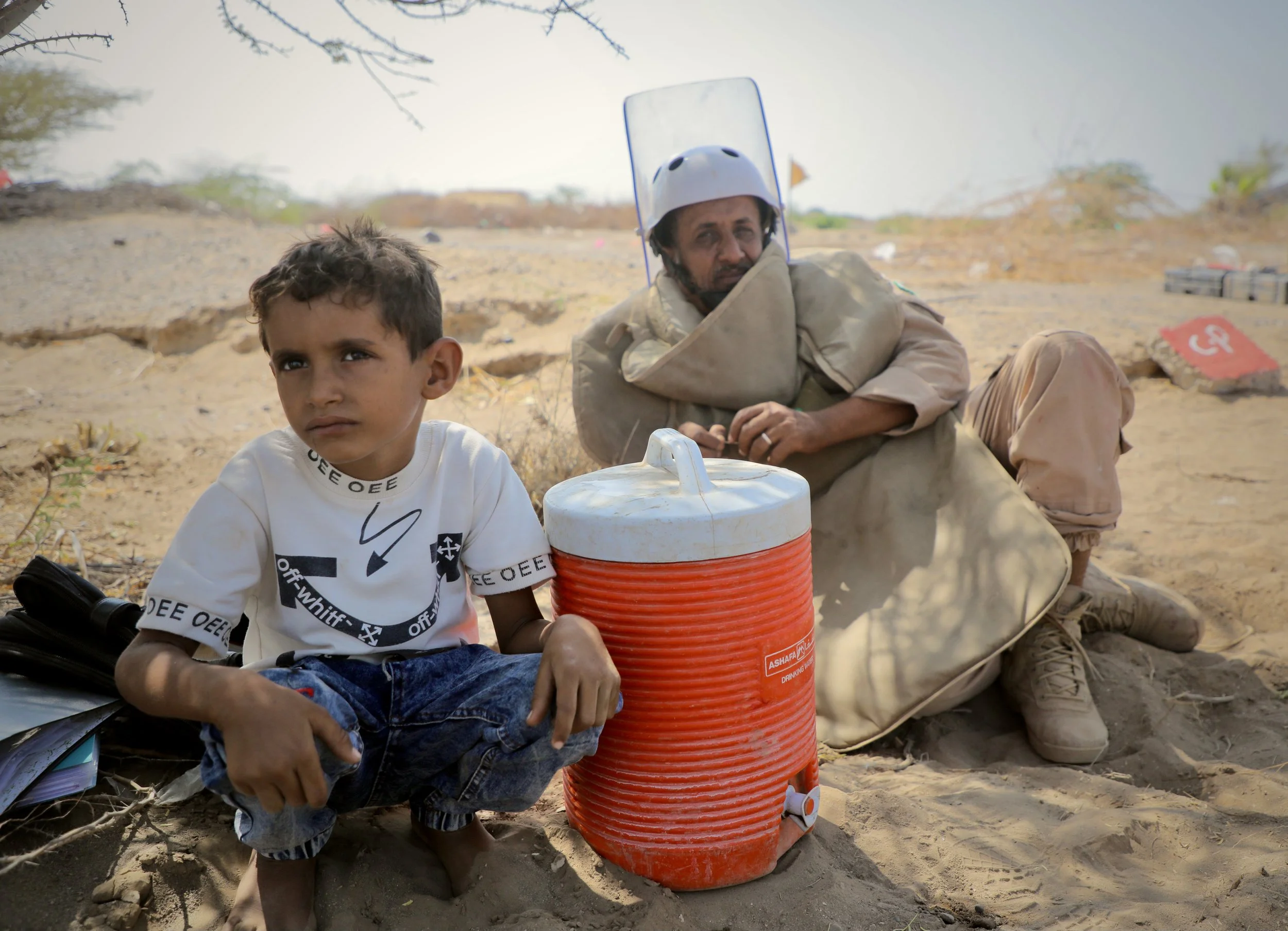
A child sits near a deminer resting beside a marked area in Al Remah, near Mocha, Taiz governorate, Yemen. Clearance work often takes place in close proximity to daily life, where informal exchanges contribute to awareness of potential risks.
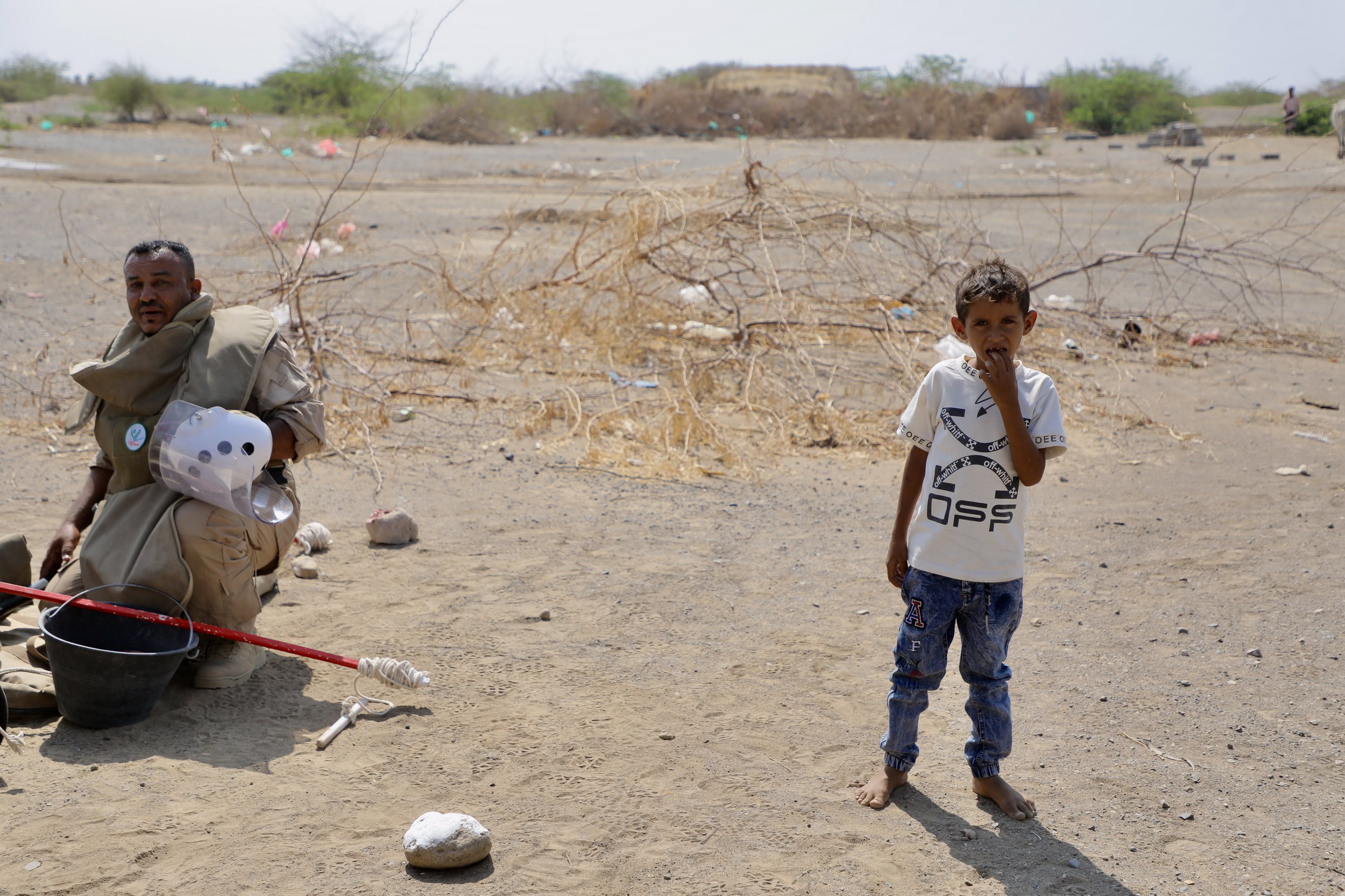
A child stands near a deminer at a marked site in Al Remah, near Mocha, Taiz governorate, Yemen. Children frequently encounter demining activity as part of their everyday environment.
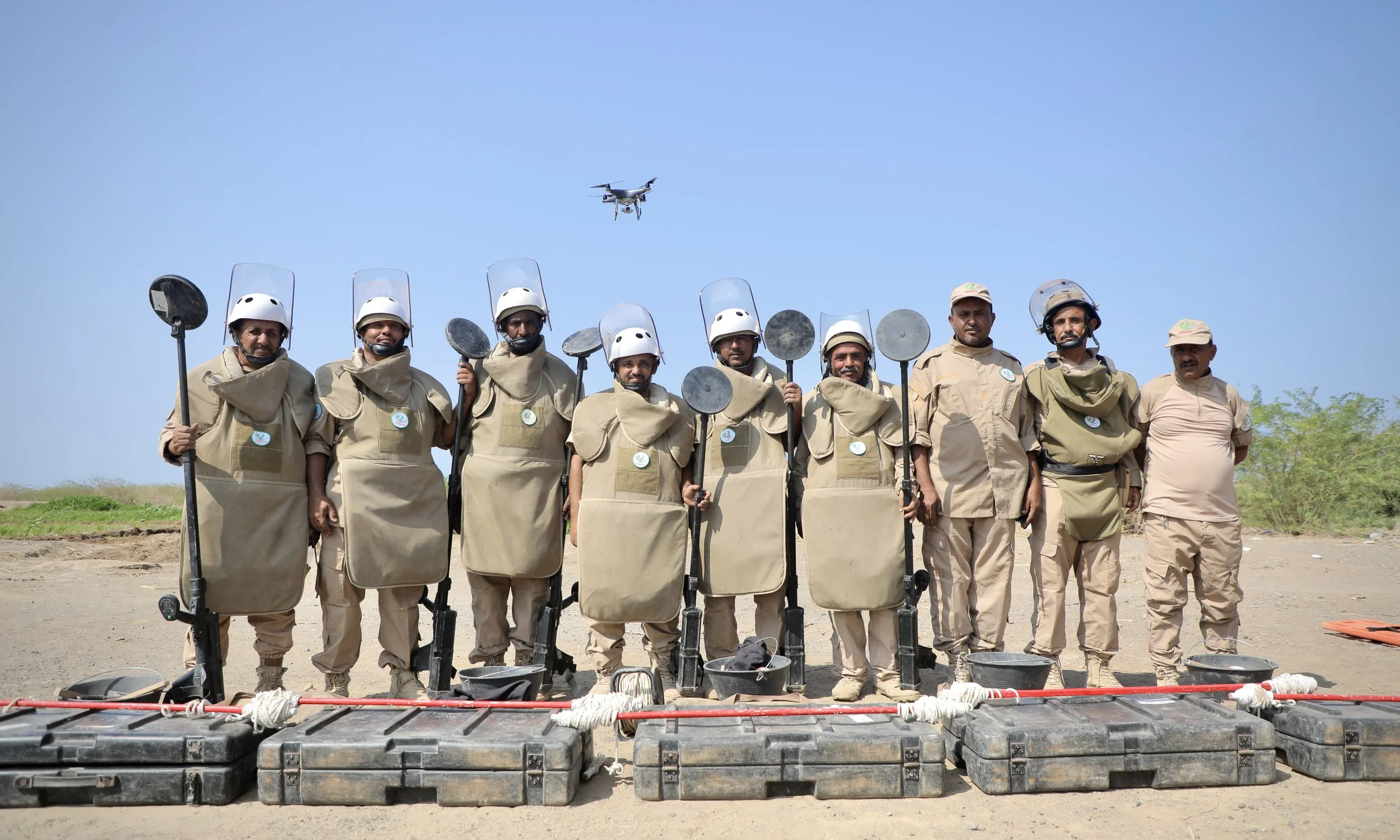
Members of Team 21 pose with their equipment in Al Remah below a drone, near Mocha, Taiz governorate, Yemen.
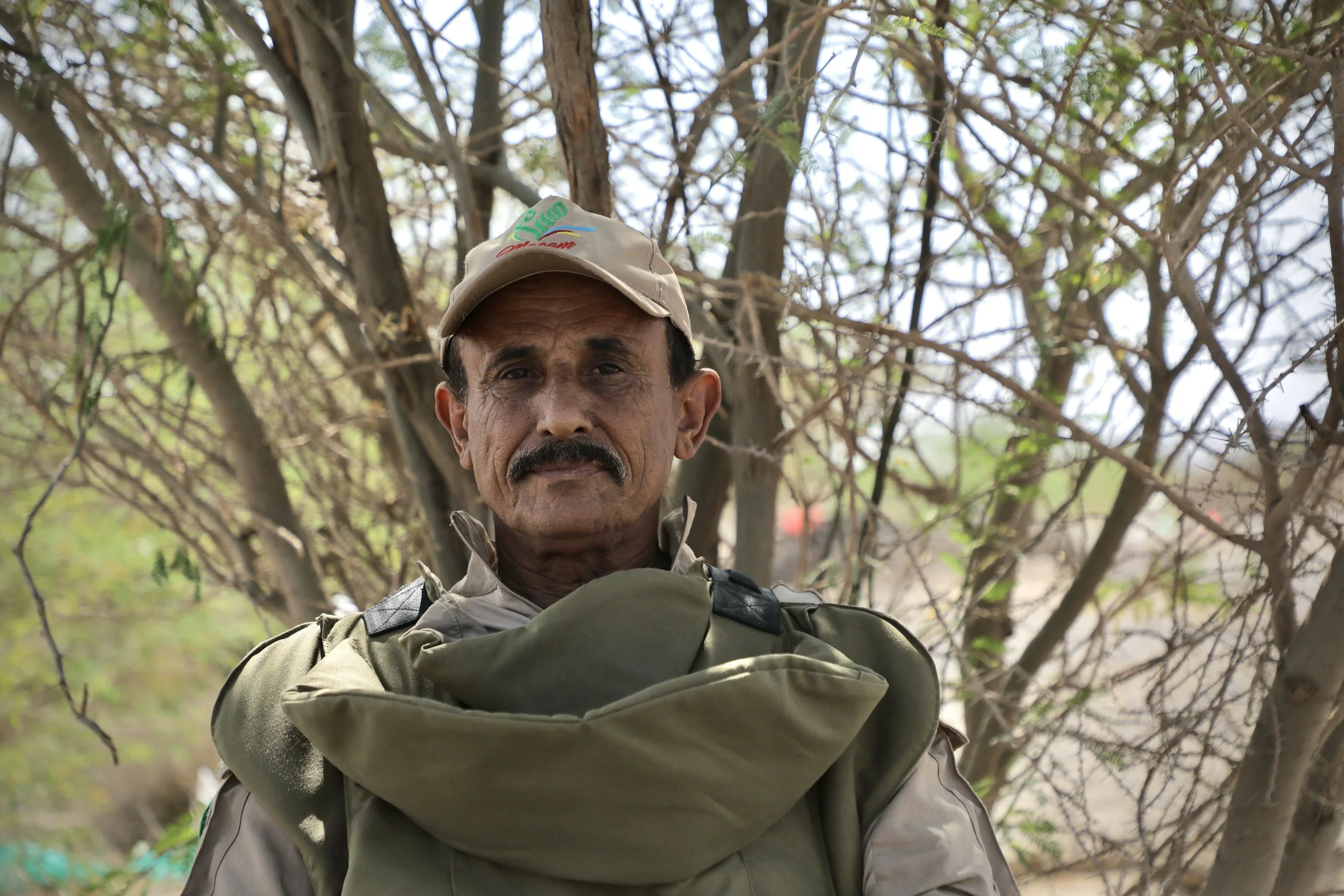
Abdullah Mohamed Shafel, team leader of Team 21, in Al Remah, near Mocha, Taiz governorate, Yemen.
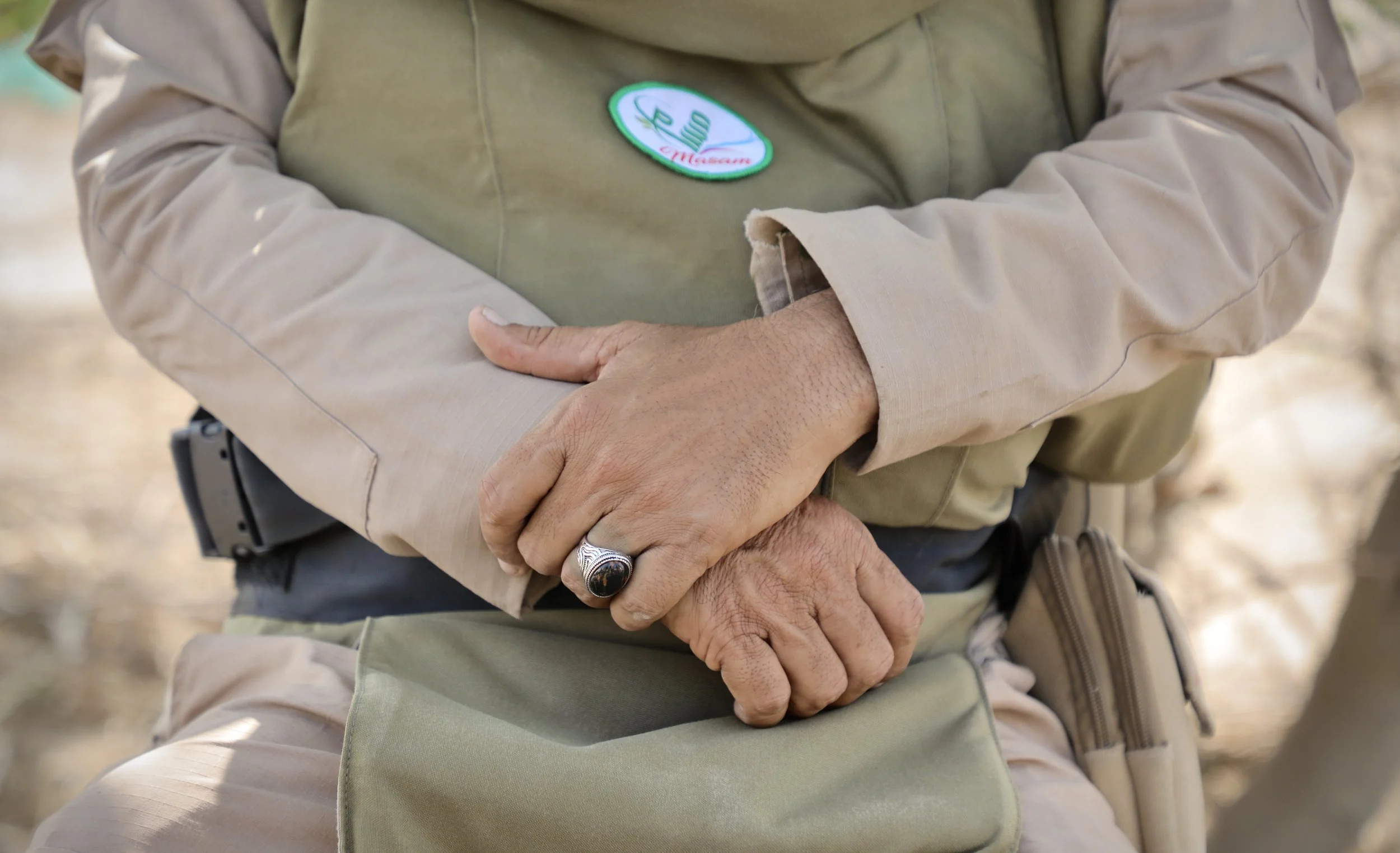
Detail of a deminer’s hands and protective equipment in Al Remah, near Mocha, Taiz governorate, Yemen.
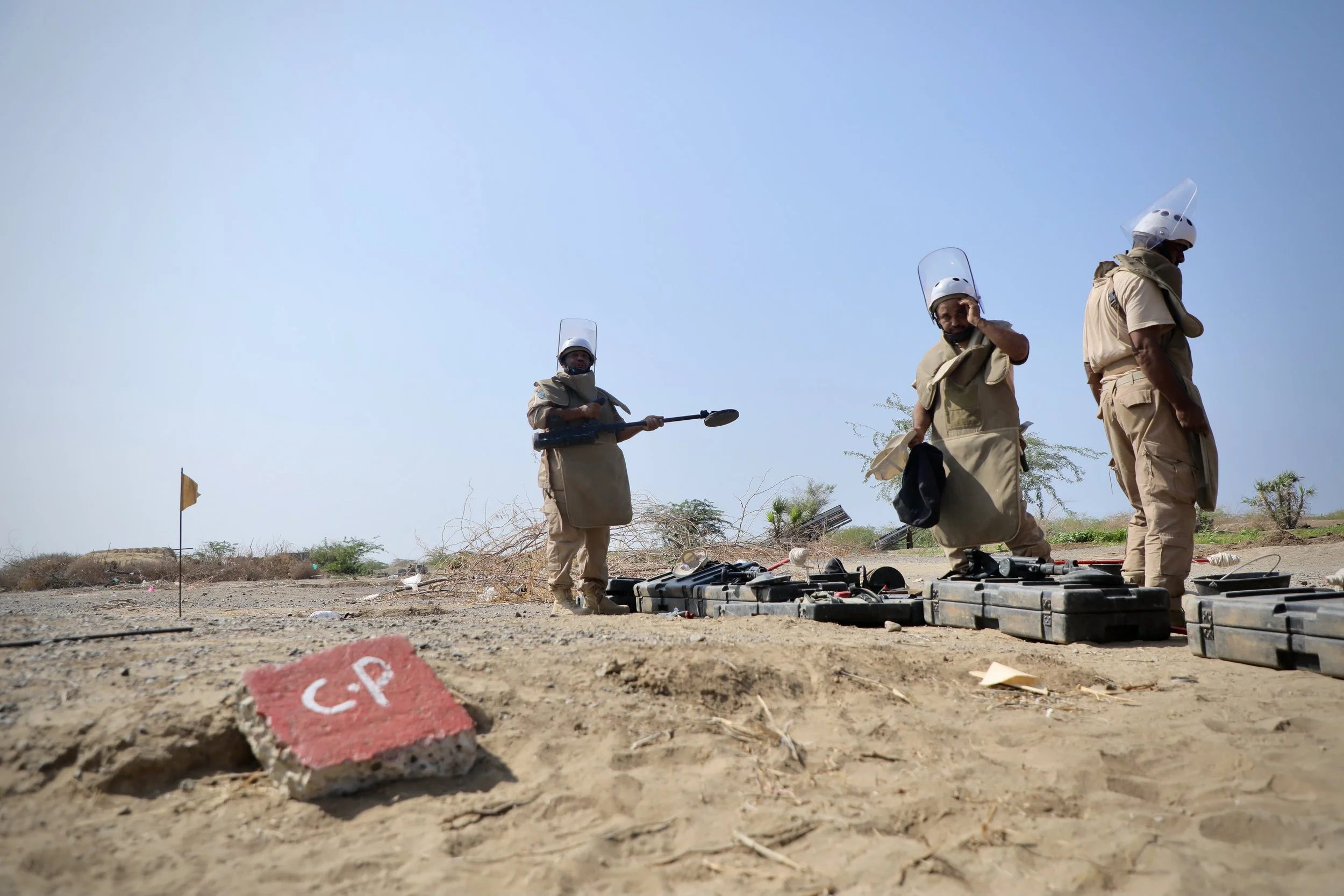
Deminers from Team 21 check their equipment before beginning clearance operations in designated safe lanes in Al Remah, near Mocha, Taiz governorate, Yemen.
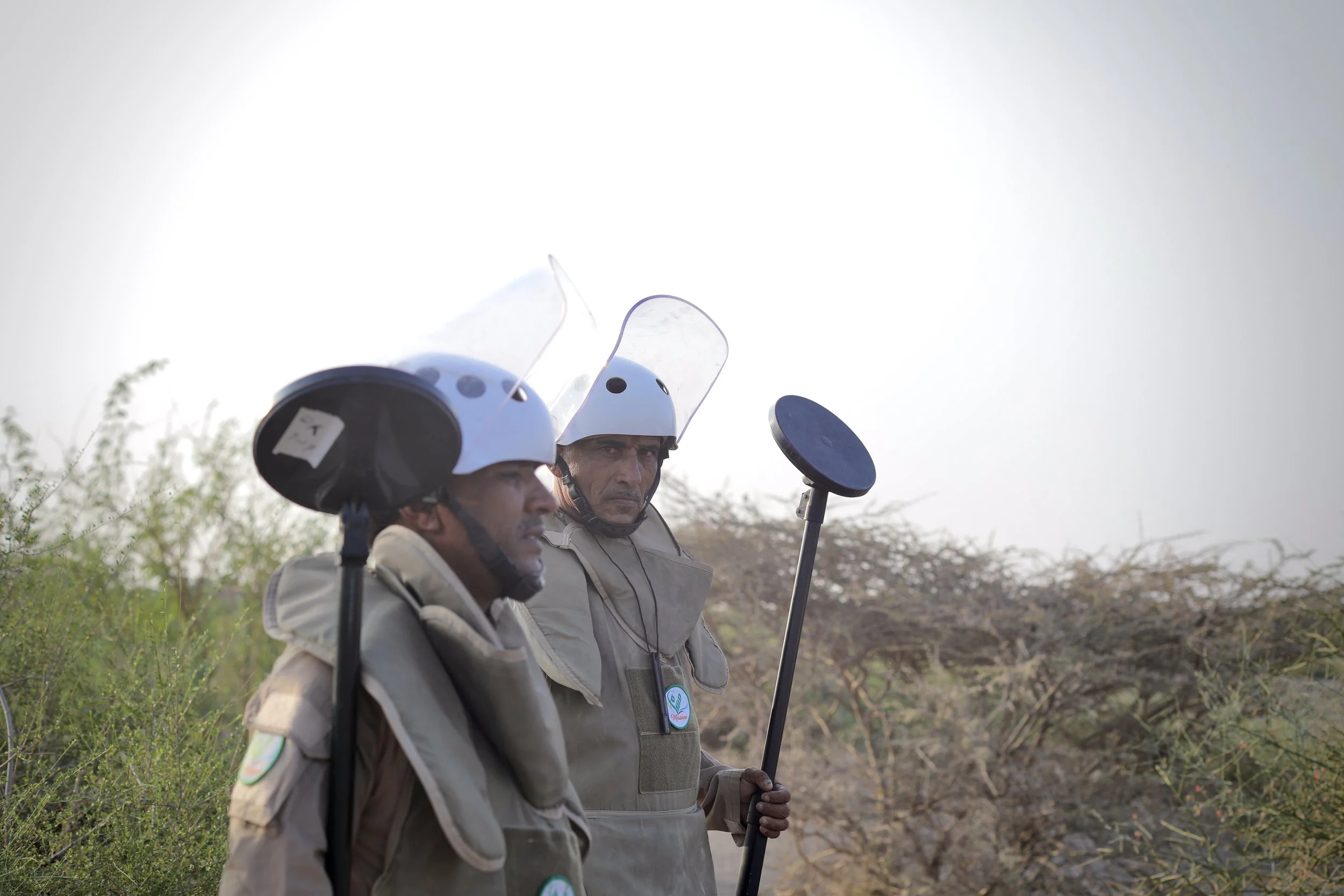
Deminers walk towards the start of designated safe lanes in Al Remah, near Mocha, Taiz governorate, Yemen. Clearance operations are often guided by reports from local residents and prior incidents in the area.
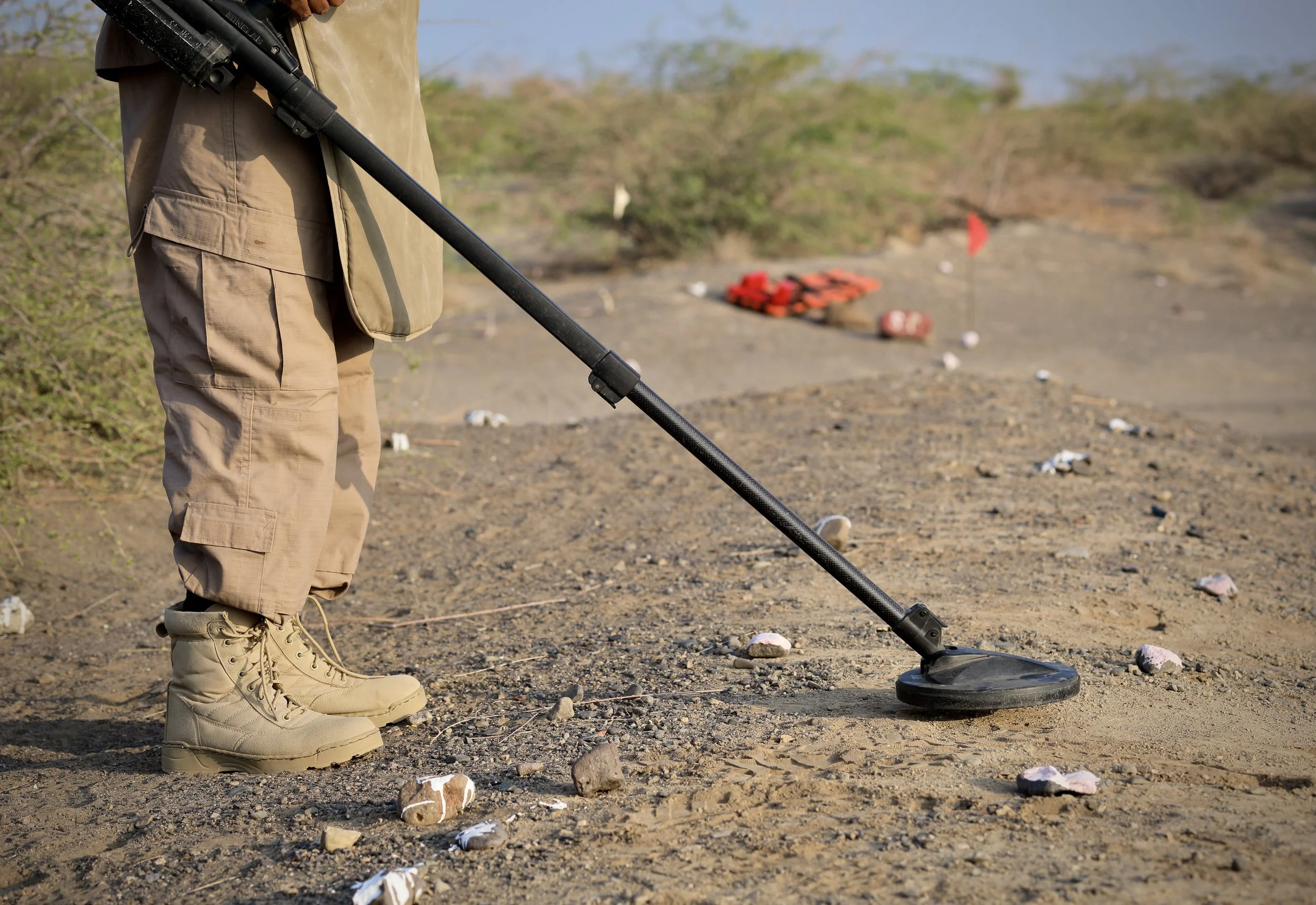
A deminer uses a metal detector to scan the ground during clearance operations in Al Remah, near Mocha, Taiz governorate, Yemen.

A painted stone marks a cleared or hazardous area in Al Remah, near Mocha, Taiz governorate, Yemen. Red for Danger, white for Safe.
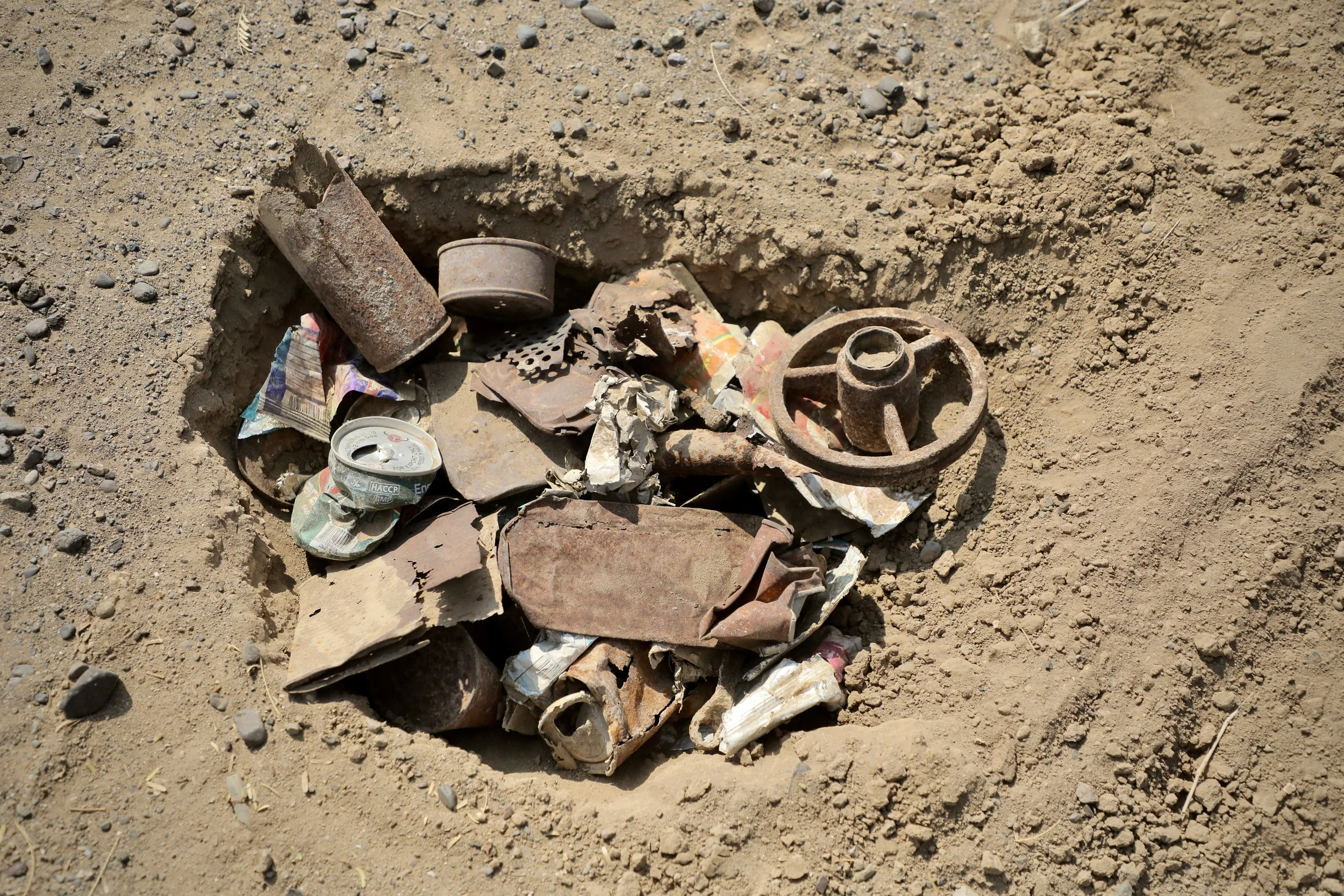
Collected metal fragments and debris are placed in a designated pit away from the clearance area in Al Remah, near Mocha, Taiz governorate, Yemen, to prevent detectors from responding to non-hazardous metal during operations.
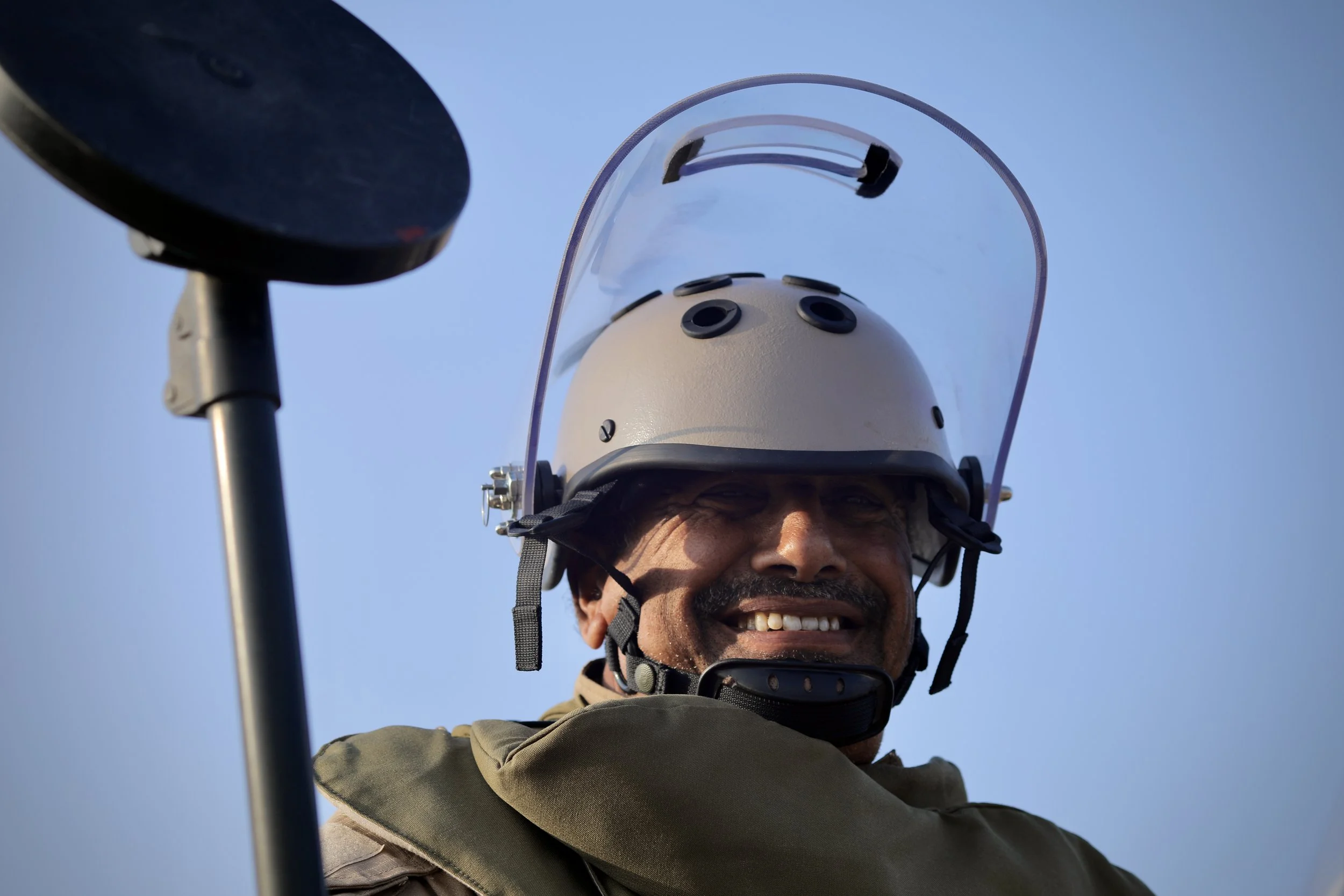
A deminer from Team 21 smiles after returning to the Control Point at the end of a shift in Al Remah, near Mocha, Taiz governorate, Yemen. Protective equipment is only removed once deminers exit the clearance lane.