Commercial aircraft still land and depart from Aden International Airport, one of Yemen’s most important links to the outside world. Passengers travel, cargo moves and daily operations continue. Yet beyond the active runway and terminal, parts of the wider airport grounds still carry the hidden legacy of the 2015 Battle of Aden.
Mines, unexploded ordnance and battlefield debris left behind during the fighting continue to obstruct land needed for safer operations, redevelopment and future expansion. Project Masam’s Team 24 is tasked with clearing that danger.
Working metre by metre across harsh, metal-contaminated terrain, the deminers investigate every signal and remove mortars, rockets, grenades and other explosive remnants. Their work is slow, technical and dangerous - but essential.
Each item destroyed helps secure a gateway used by thousands, supports commerce and humanitarian access, and brings Aden Airport closer to full recovery.
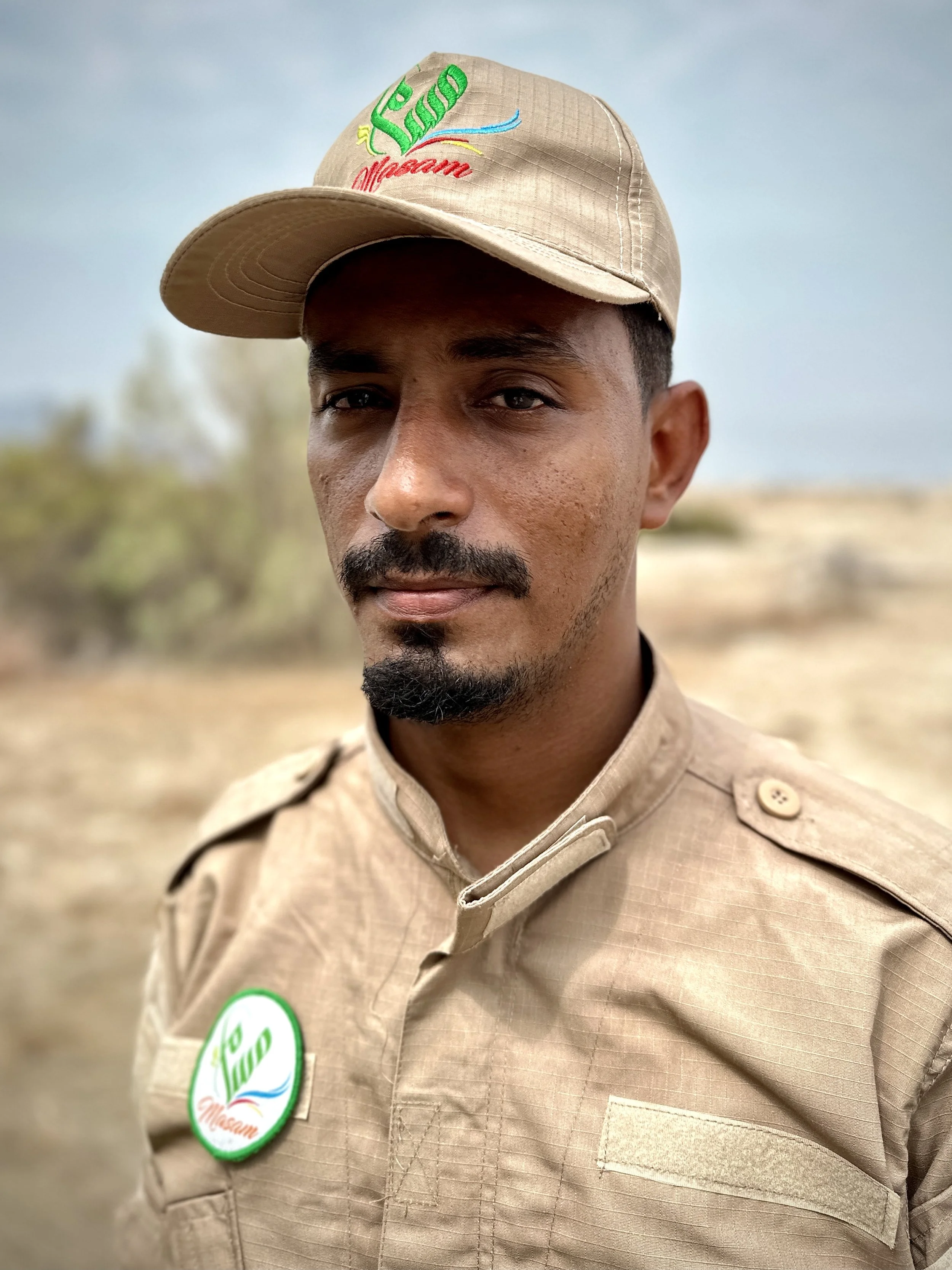
Project Masam Team 24 Leader Jalal Ama'abd Amer stands at Aden International Airport, where deminers continue clearing landmines and unexploded ordnance from ground contested during the 2015 battle for the city. Teams say the airport’s mixed terrain of rubble, compacted earth and buried debris makes every search slow and methodical.
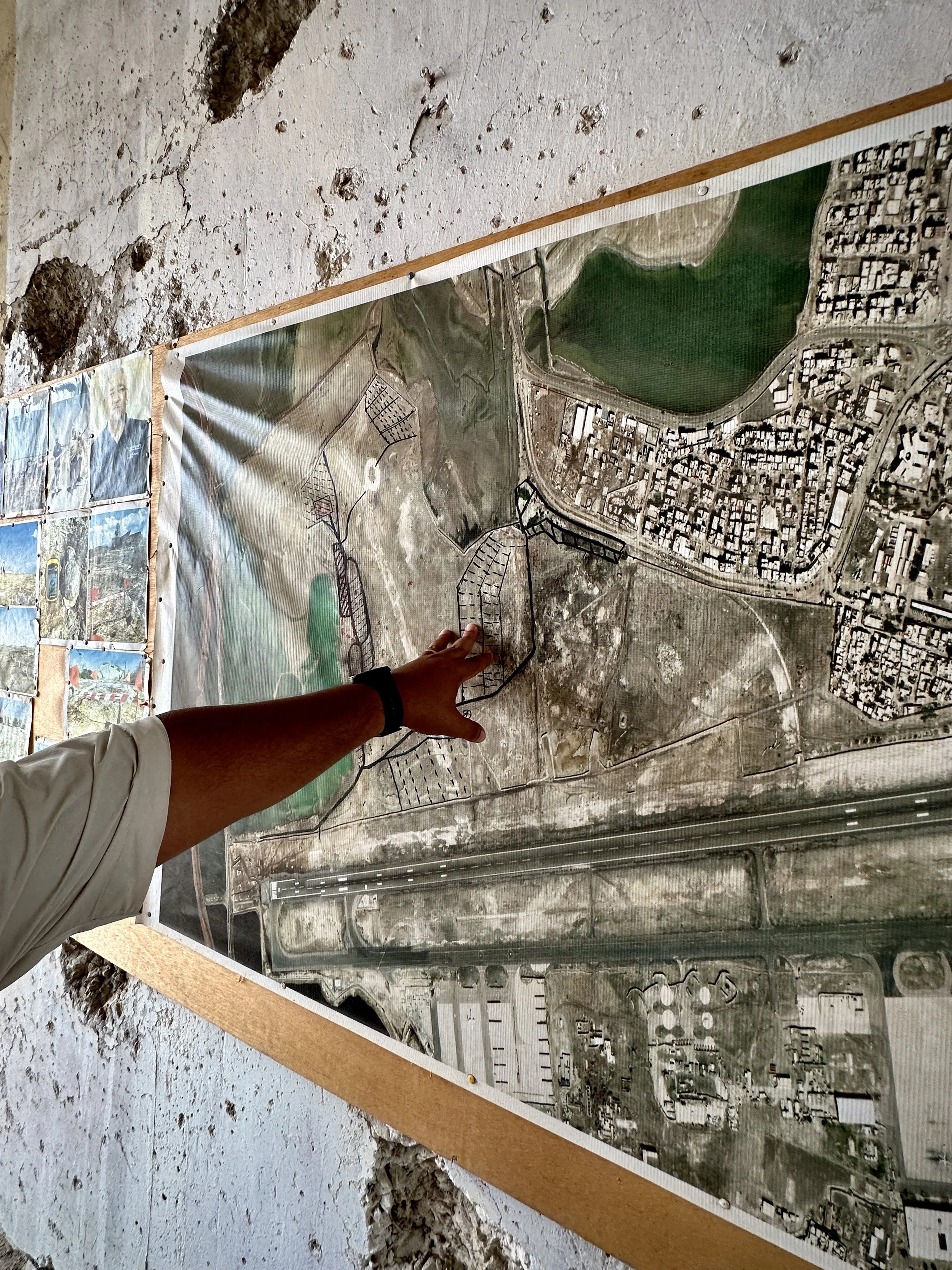
A supervisor points to a clearance map marking searched sectors and hazardous areas at Aden International Airport. Detailed mapping is used to track progress and guide deminers working across former battlefield terrain still contaminated by wartime explosives.
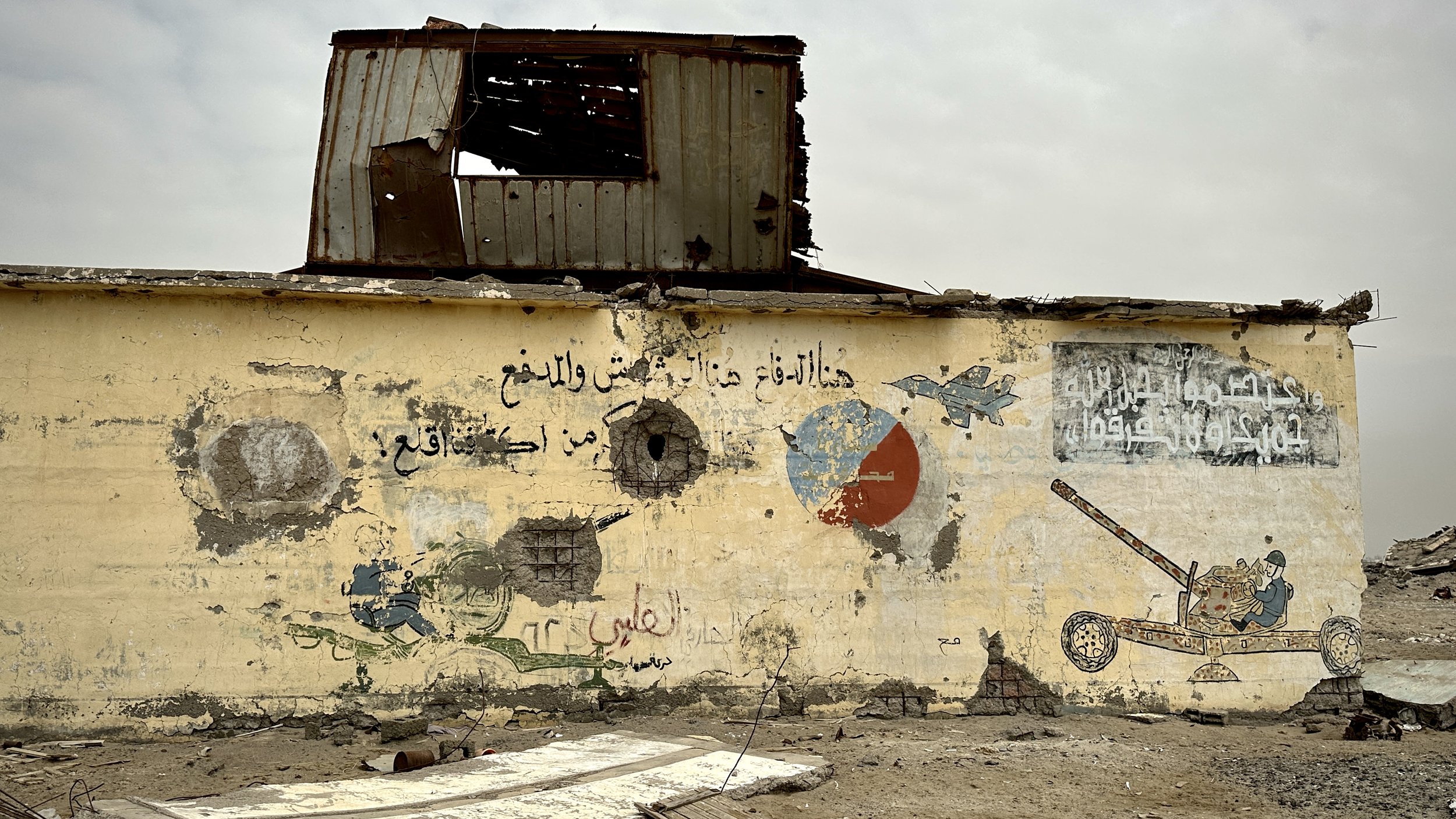
War-damaged airport buildings remain standing inside Aden International Airport years after fighting swept through the area in 2015. Clearance teams say former defensive positions, broken structures and disturbed ground can complicate efforts to locate hidden mines and unexploded ordnance.
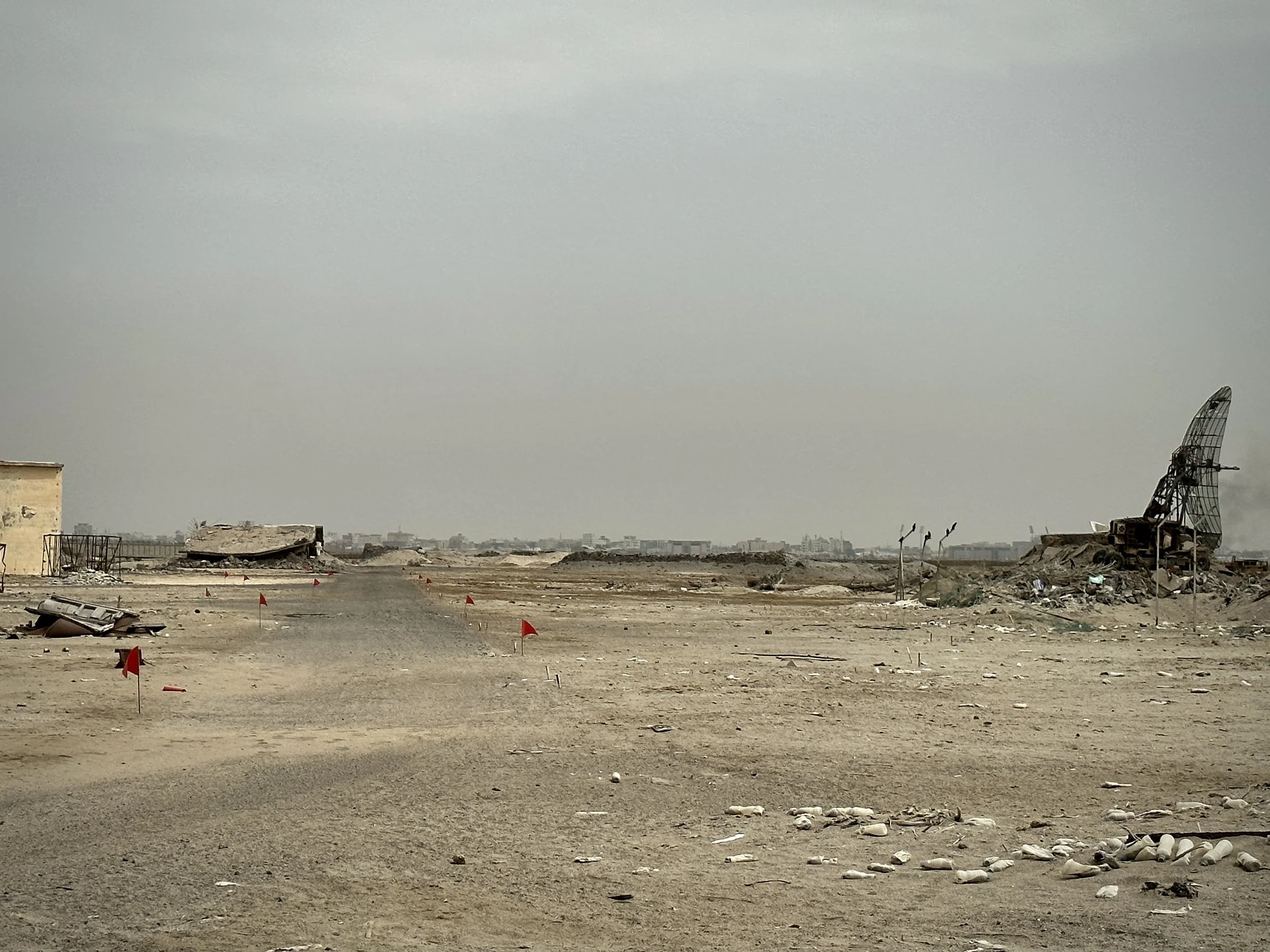
A wide stretch of damaged open ground inside Aden International Airport awaits continued clearance and redevelopment. Deminers say large exposed areas can still conceal explosive hazards beneath sand, rubble and compacted soil.
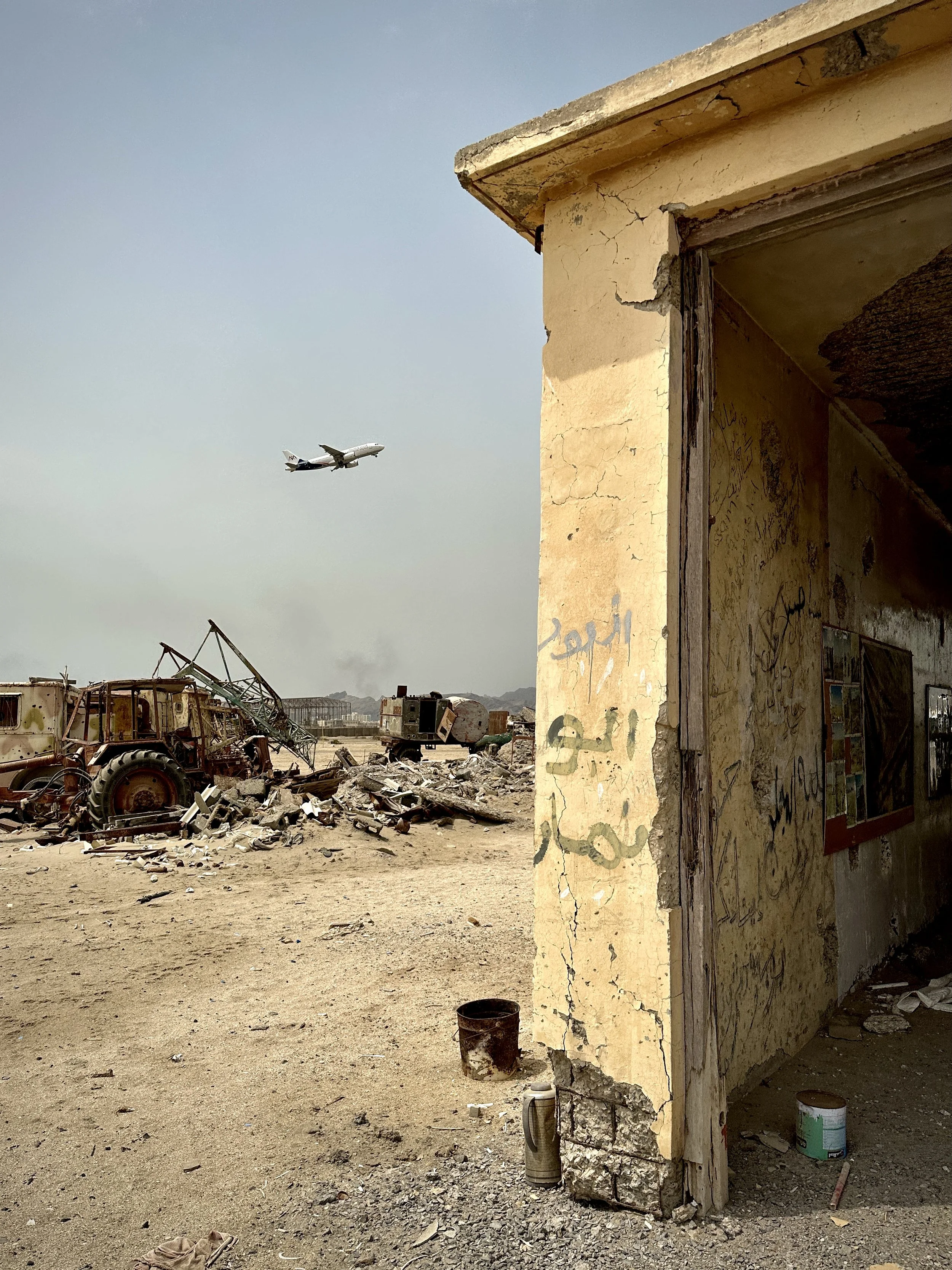
A commercial aircraft departs Aden International Airport beyond ruined structures left by war. While flights operate today, Project Masam teams continue removing mines and unexploded ordnance so passengers, workers and future airport expansion can be made safer.
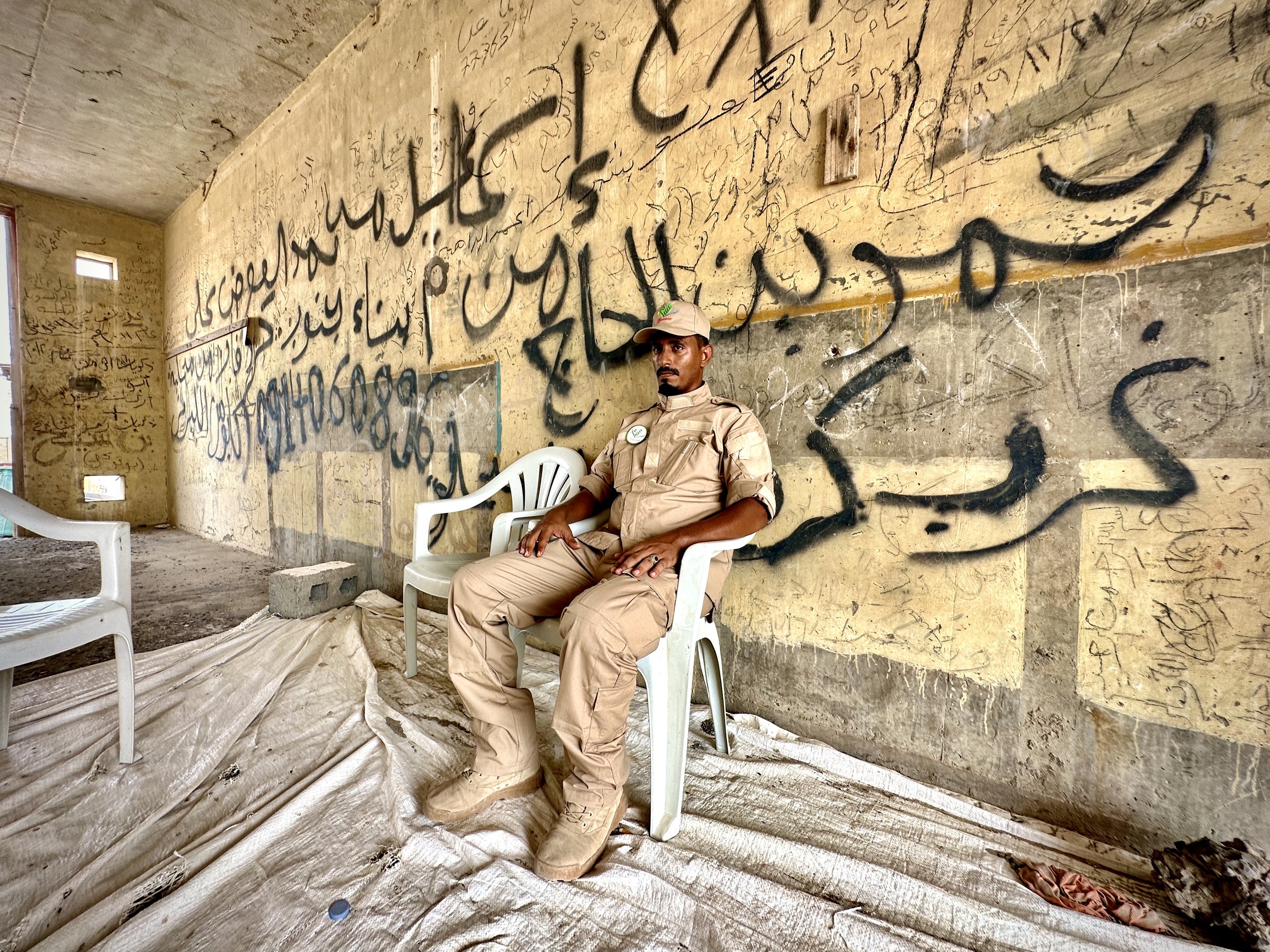
Project Masam Team 24 Leader Jalal Ama'abd Amer rests inside a bomb-damaged building now used as a control point during clearance operations at Aden International Airport. Deminers often pause during extreme heat before returning to careful search work in hazardous areas.
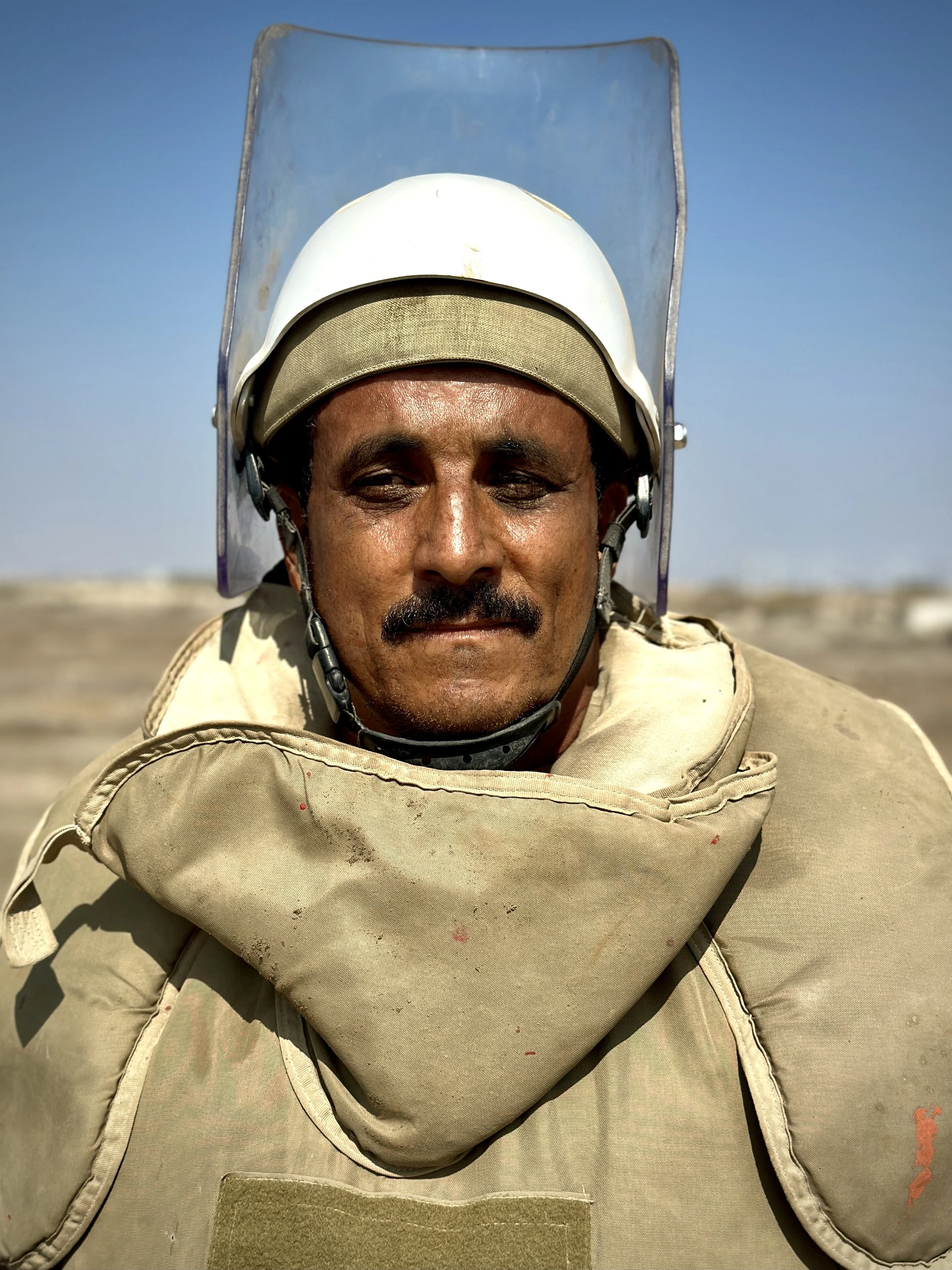
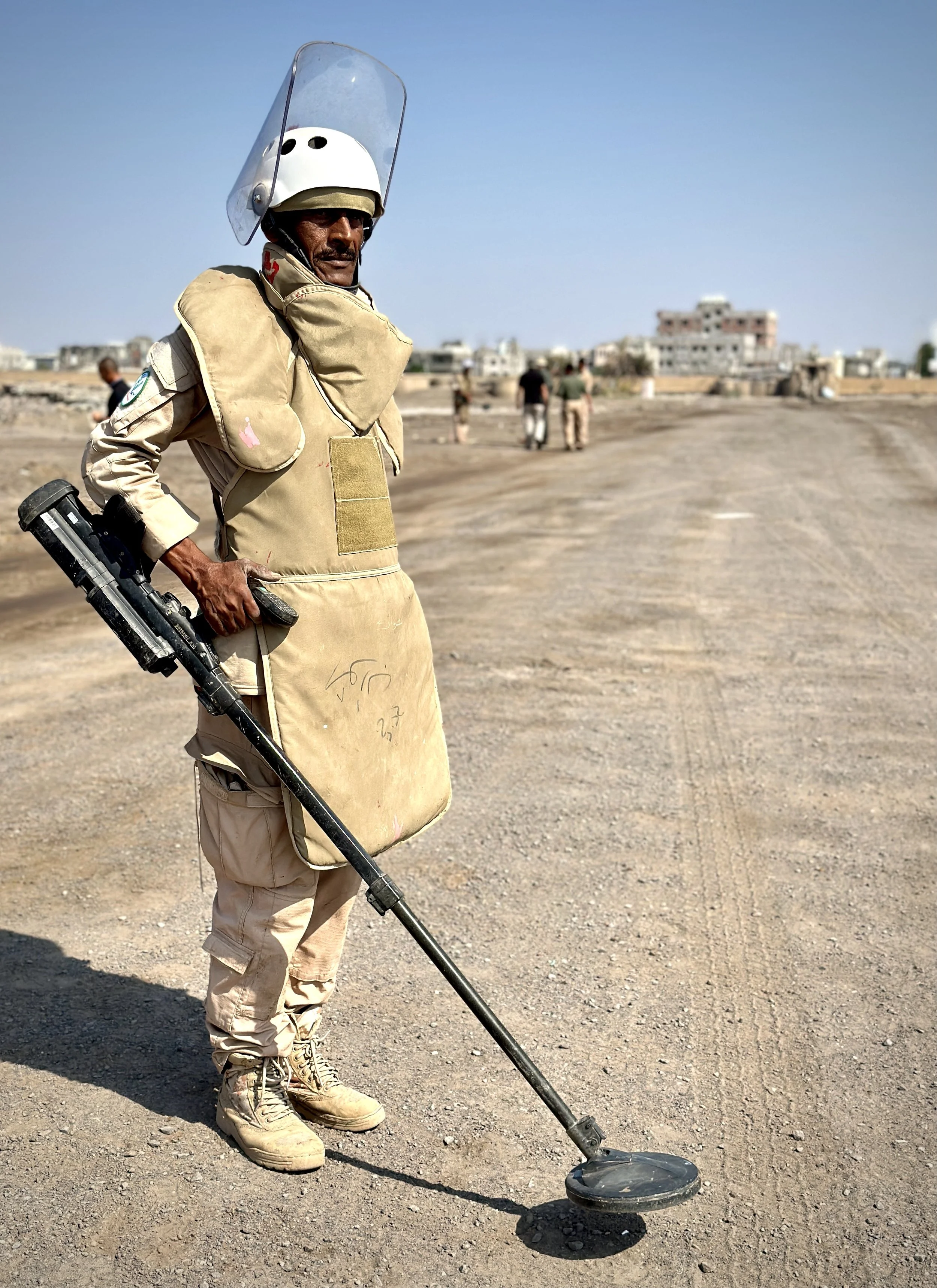
Project Masam Team 24 deminer Mohammed Saleh Gharamah poses during operations at Aden International Airport. Protective equipment is worn while clearing ground contaminated by mines and unexploded ordnance left from past fighting.
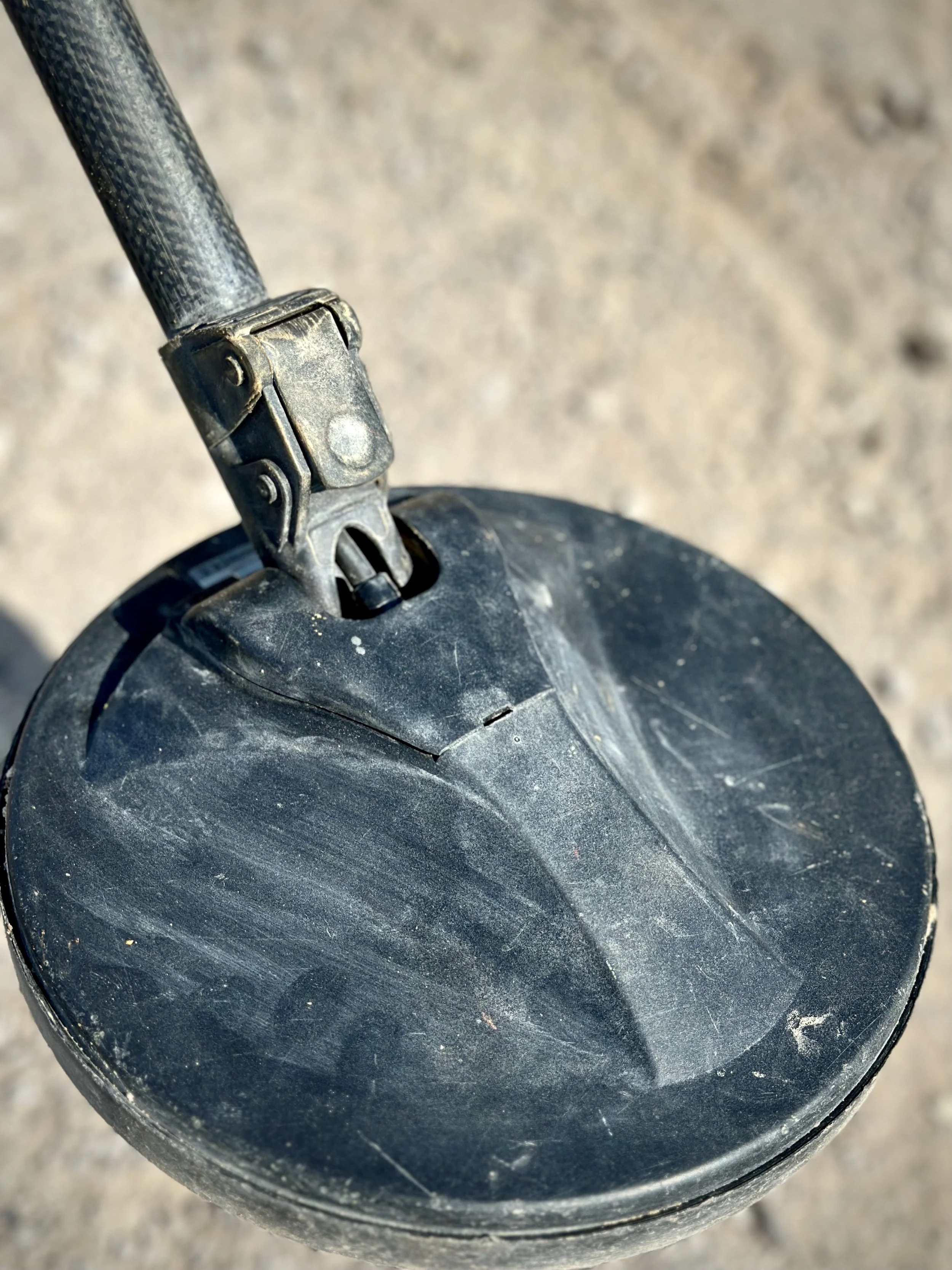
The search head of a metal detector rests on the ground during mine-clearance operations at Aden International Airport. Deminers sweep slowly across difficult terrain where metal fragments, construction debris and war remnants can complicate detection.
Project Masam deminer Mohammed Qassim Naji advances across cleared lanes with a detector at Aden International Airport. Teams move metre by metre through former conflict ground to locate hidden explosives before land can be safely reused.
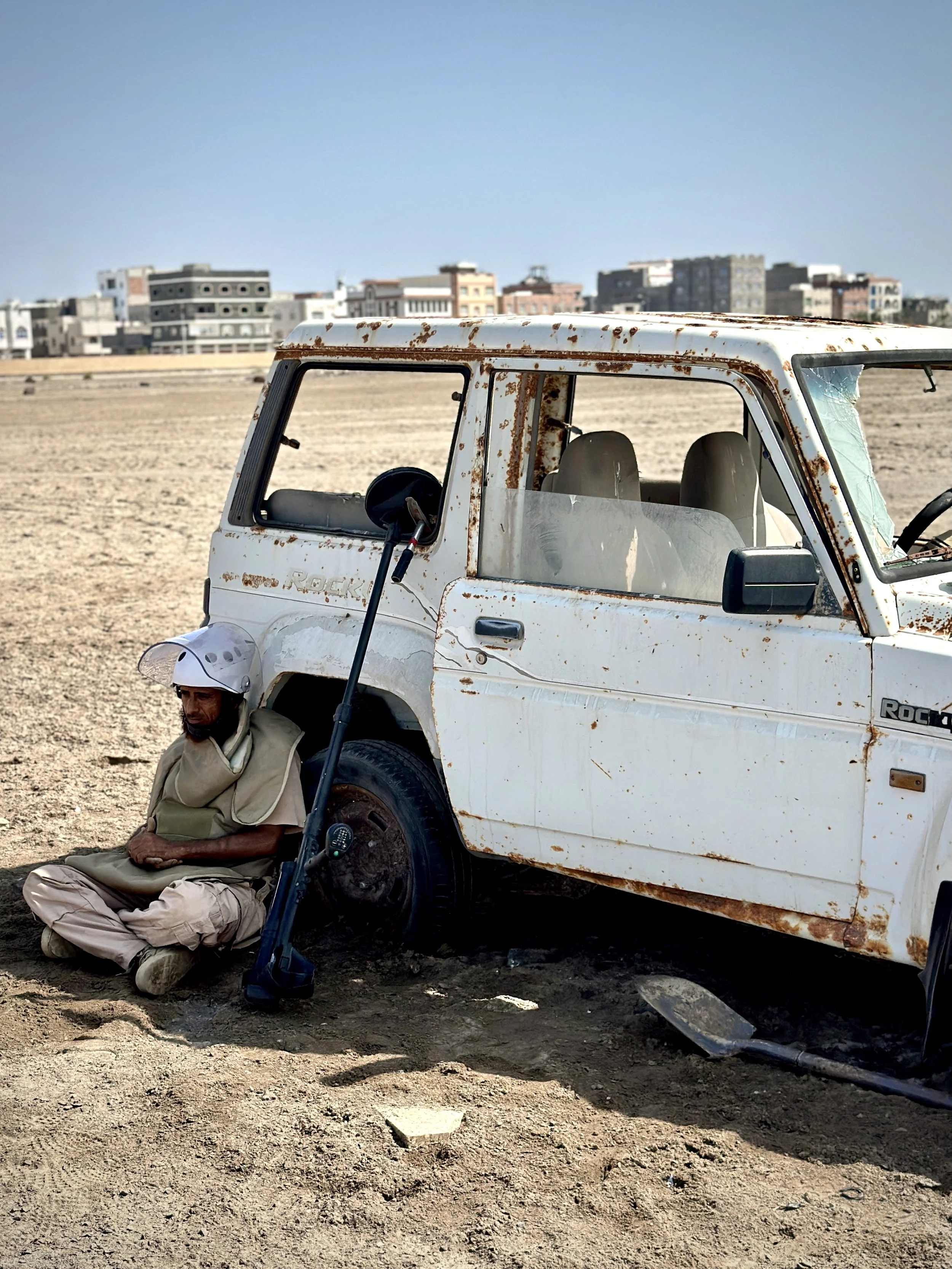
A burned-out vehicle remains inside Aden International Airport, where wreckage and debris still mark past battles. Deminers say abandoned machinery, twisted metal and disturbed earth can make clearance work more complex.
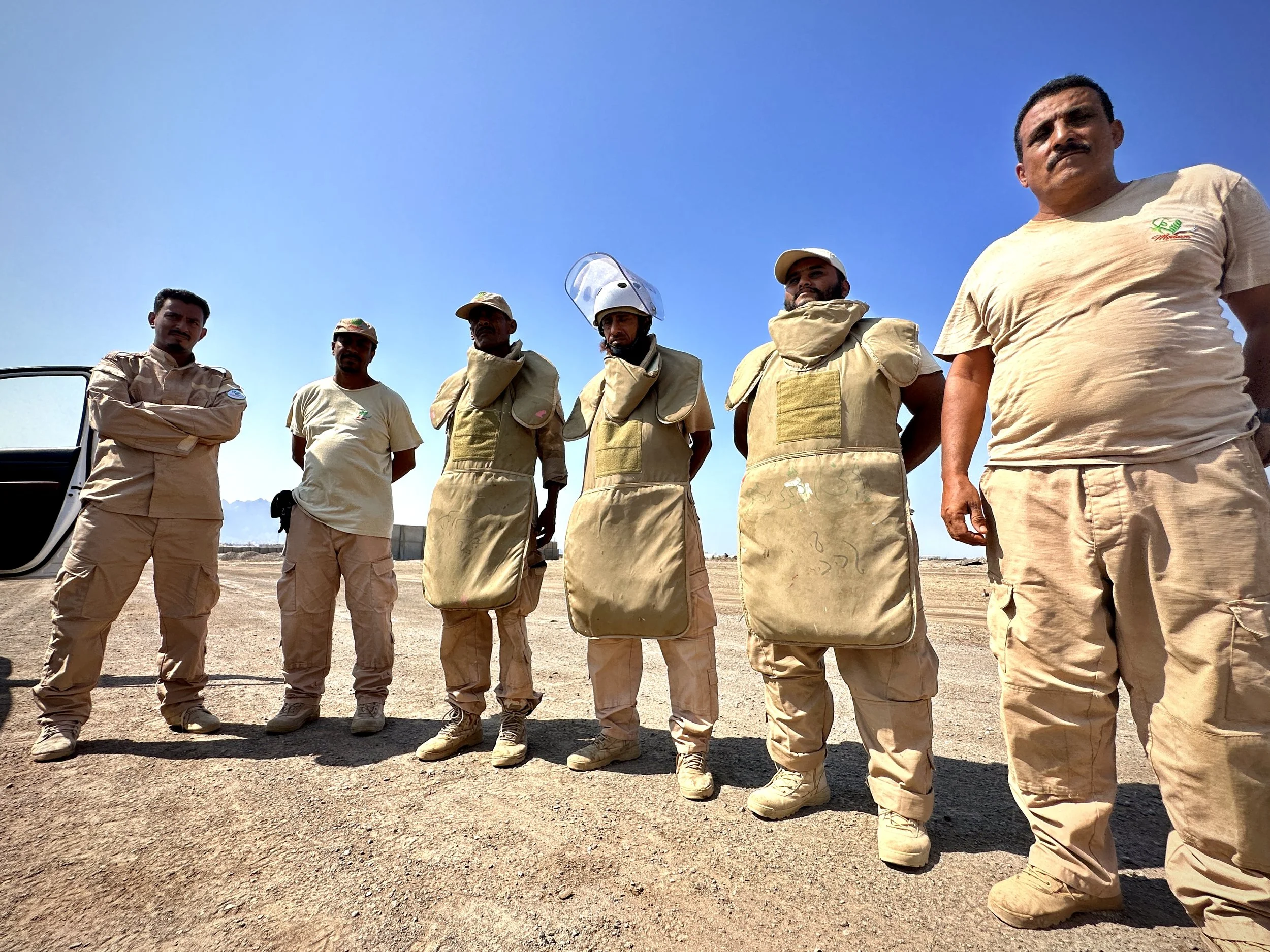
Members of Project Masam Team 24 stand together during operations at Aden International Airport. The team continues unexploded ordnance and mine-clearance work aimed at improving safety and supporting the airport’s long-term recovery.
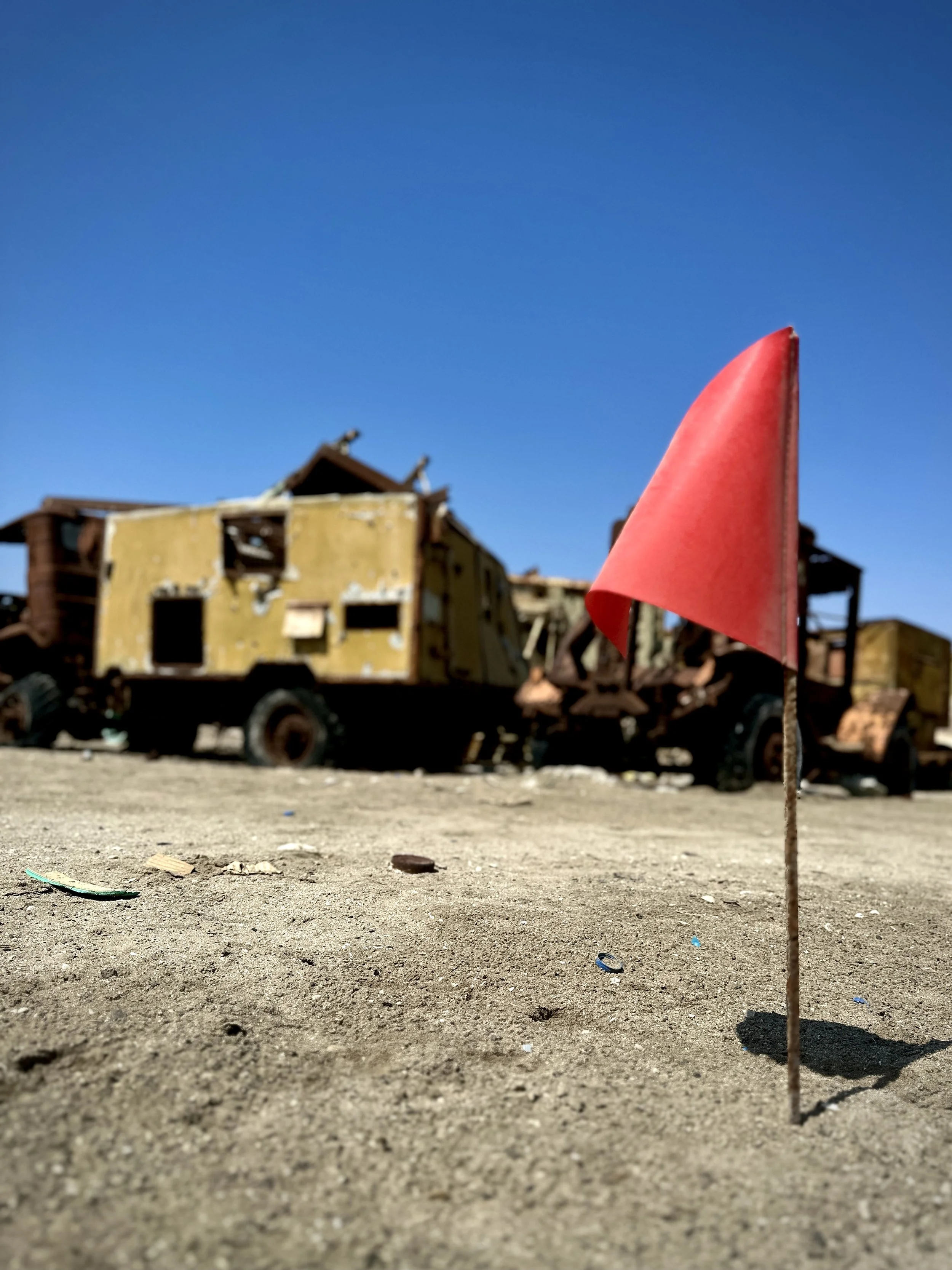
A red marker flag identifies a hazardous or controlled search area during clearance work at Aden International Airport. Such markers help teams map progress and warn others away from potentially contaminated ground.
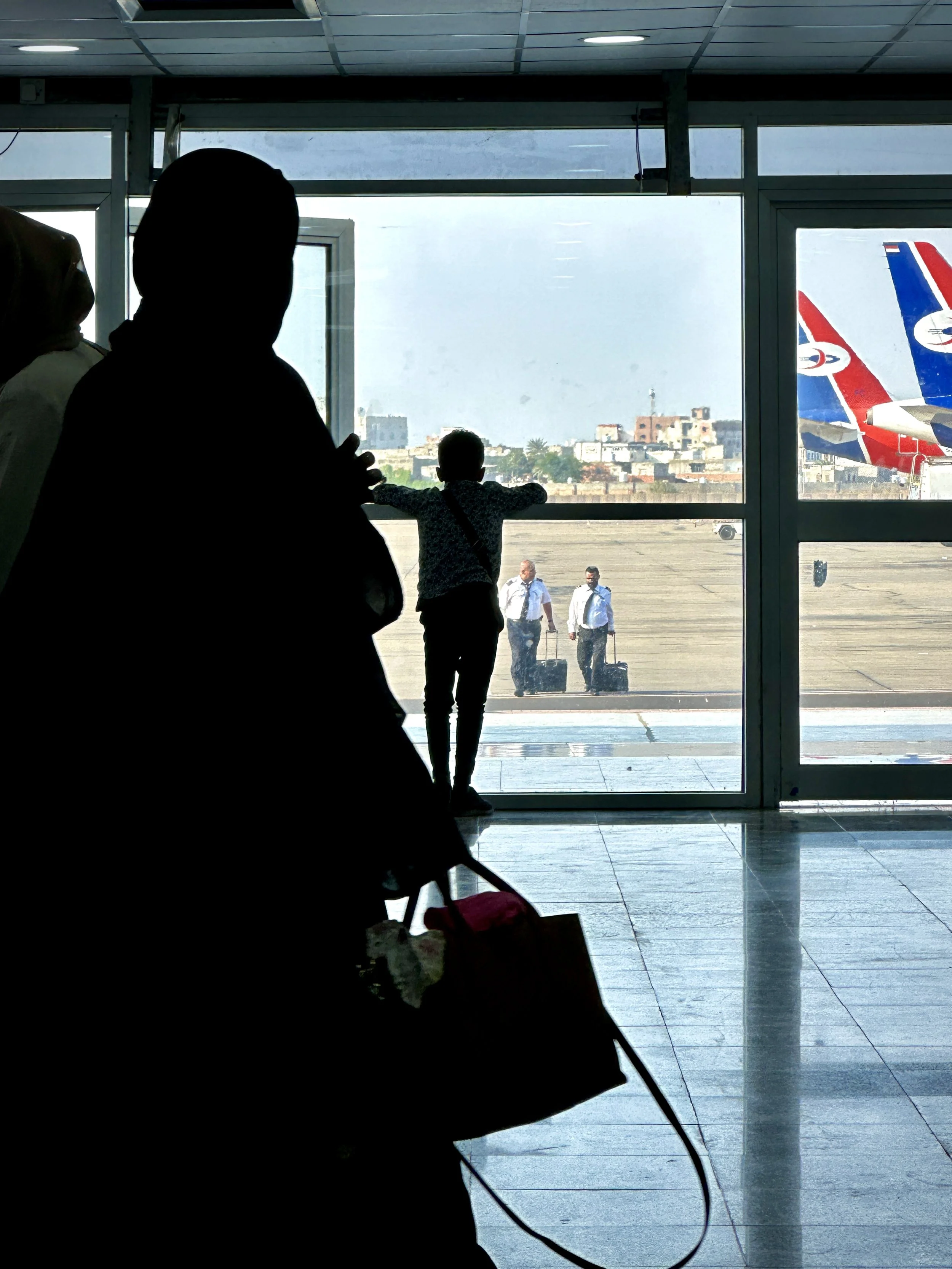
A child watches aircraft through the terminal windows at Aden International Airport. With Yemenia Airways often the only commercial airline serving Aden, the airport remains an essential link for passengers travelling in and out of southern Yemen.
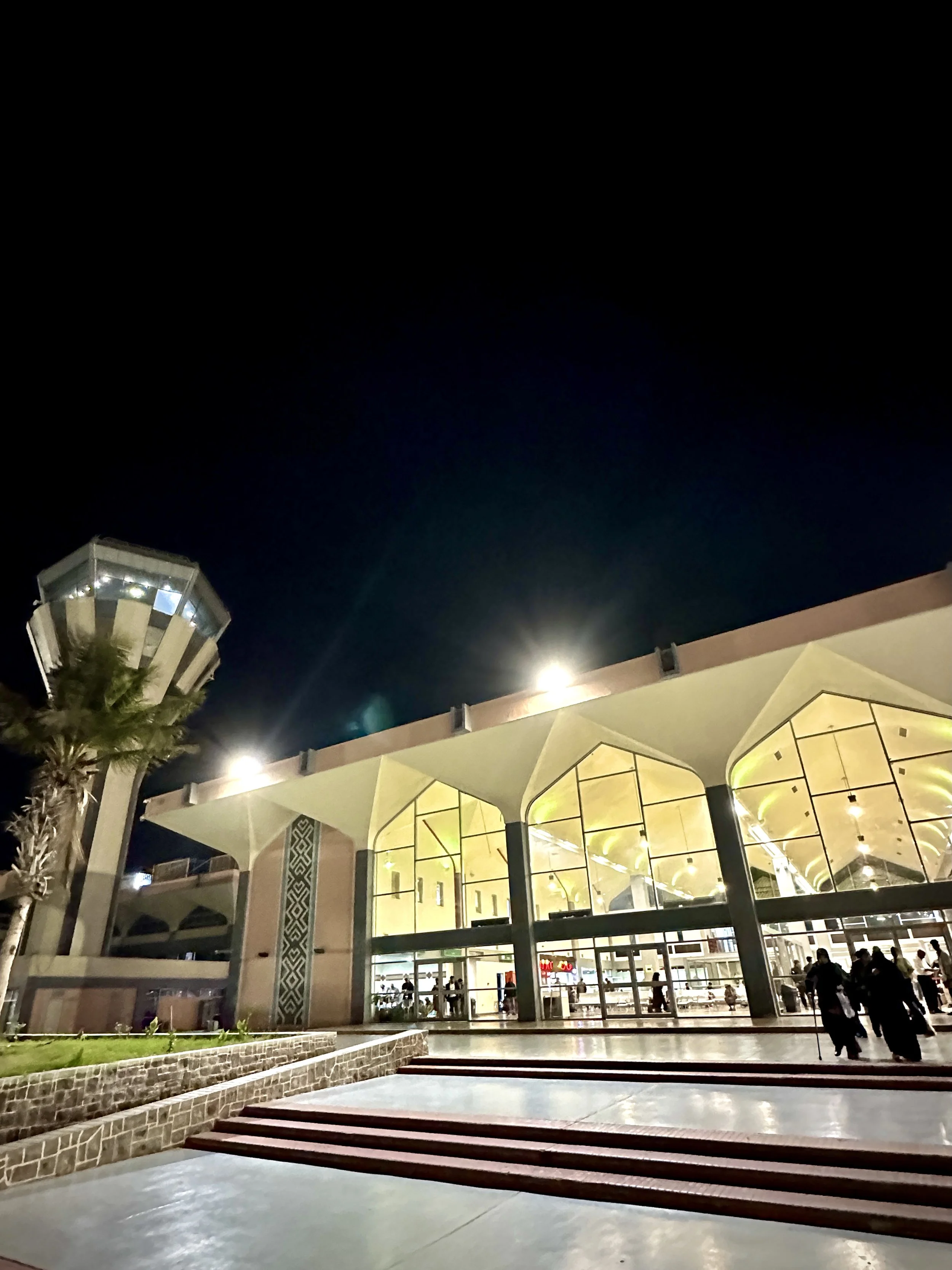
Aden International Airport illuminated at night. New reconstruction funding announced in 2026 includes restoration works, runway rehabilitation and upgraded navigation systems aimed at improving safety and expanding operations.