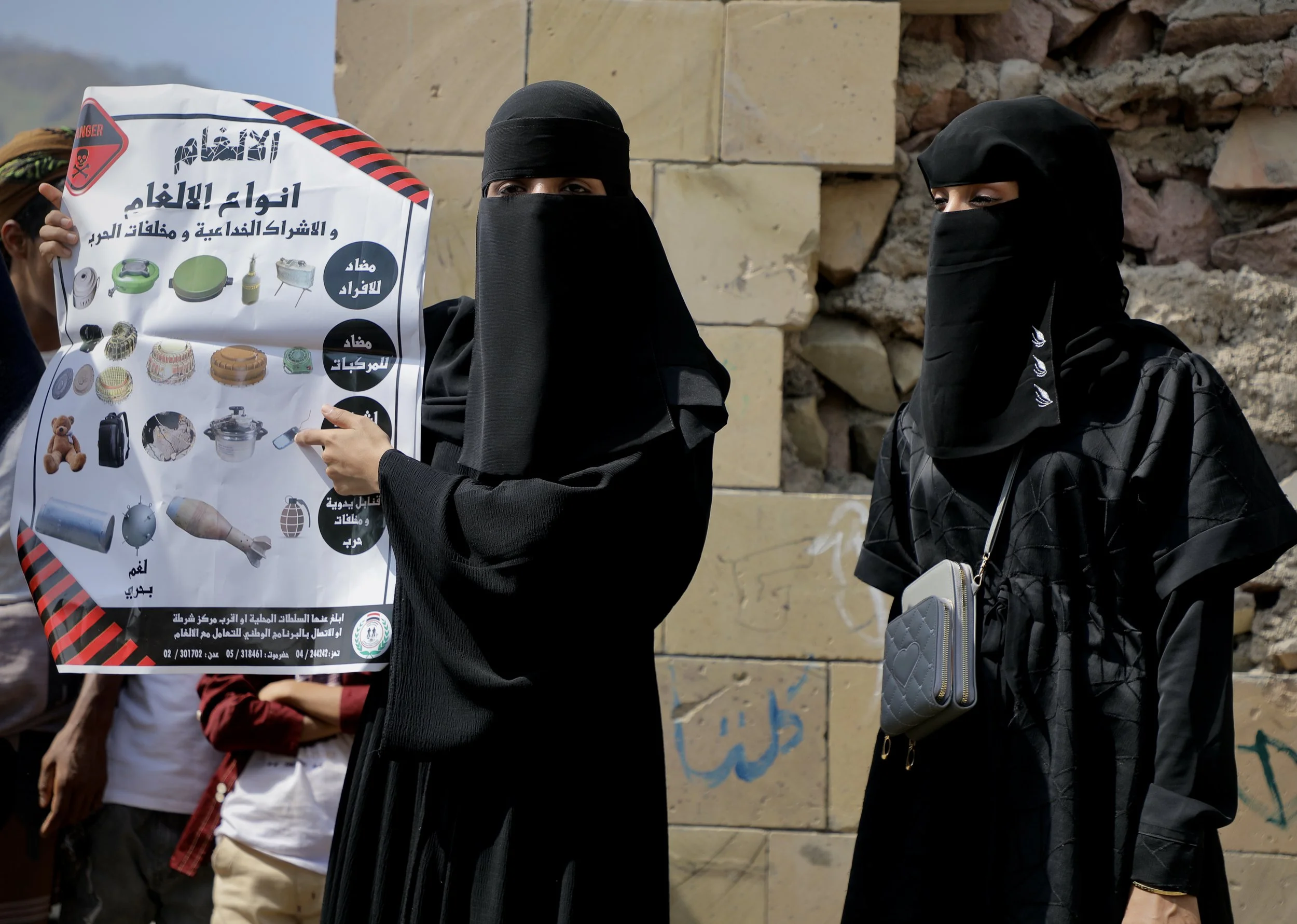
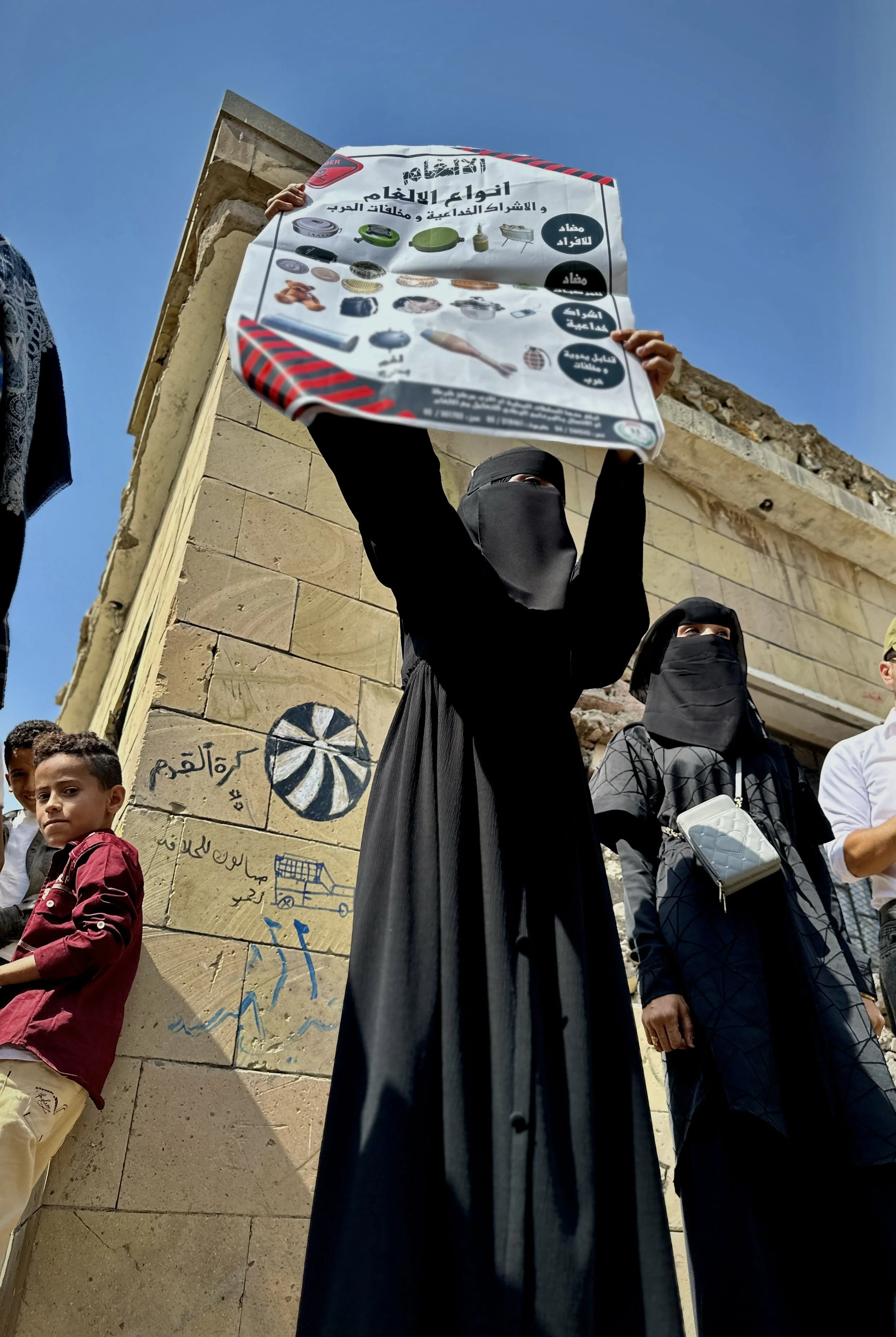
This series explores changing gender dynamics in Yemen through the work of young female Mine Risk Educators in Taiz, a city deeply affected by years of civil war and contamination from landmines and explosive remnants of war. In a conservative society where public authority, community outreach, and security-related work have traditionally been dominated by men, the presence of young women leading awareness sessions in front of mixed audiences reflects subtle but important social shifts accelerated by conflict.
Photographed during community-based explosive ordnance risk education sessions, the series focuses on the interactions between women educators, families, children, local officials, and deminers as communities learn to navigate life alongside hidden explosives. The young women at the centre of these photographs are not only sharing potentially life-saving information, but also occupying public space, addressing men and women alike, and becoming visible figures of leadership within their communities.
The photographs move between wider environmental scenes, group dynamics, and intimate portraits to explore both the visible and psychological aftermath of war. Particular attention is given to gestures, body language, and social interactions within public spaces, revealing how conflict and displacement have reshaped everyday roles and responsibilities. Access to these gatherings also offered a rare opportunity to witness community interactions (particularly involving women and families) within spaces that often remain closed to outsiders in conservative parts of Yemen.
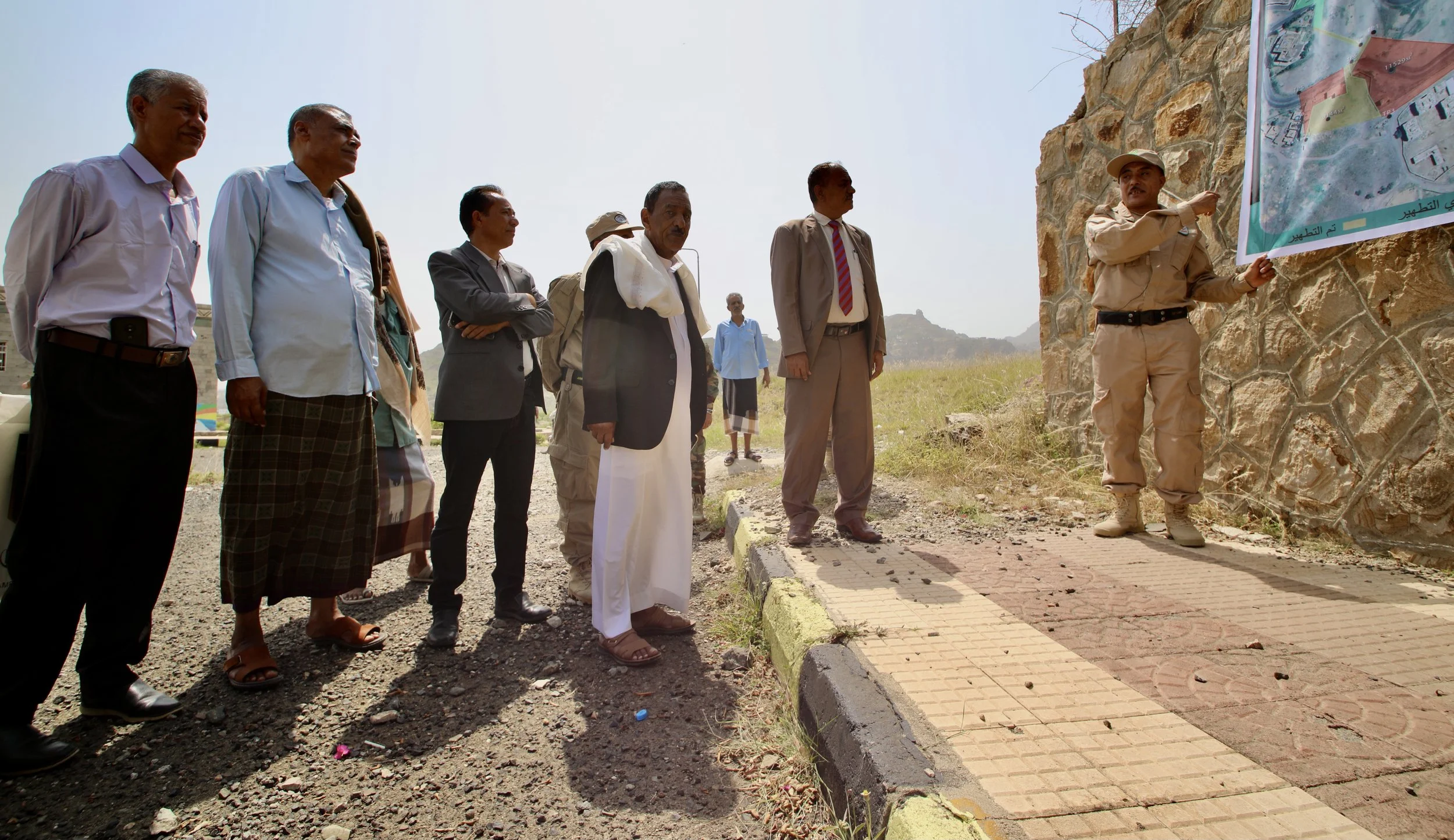
Local sheikhs and education officials receive a briefing by Colonel Aref Al-Qahtani, Supervisor of Project Masam demining teams across Taiz Governorate, before an Explosive Ordnance Risk Education (EORE) session in western Taiz, Yemen. Community awareness sessions are conducted alongside clearance operations to help residents identify and avoid landmines, improvised explosive devices (IEDs) and other remnants of war.
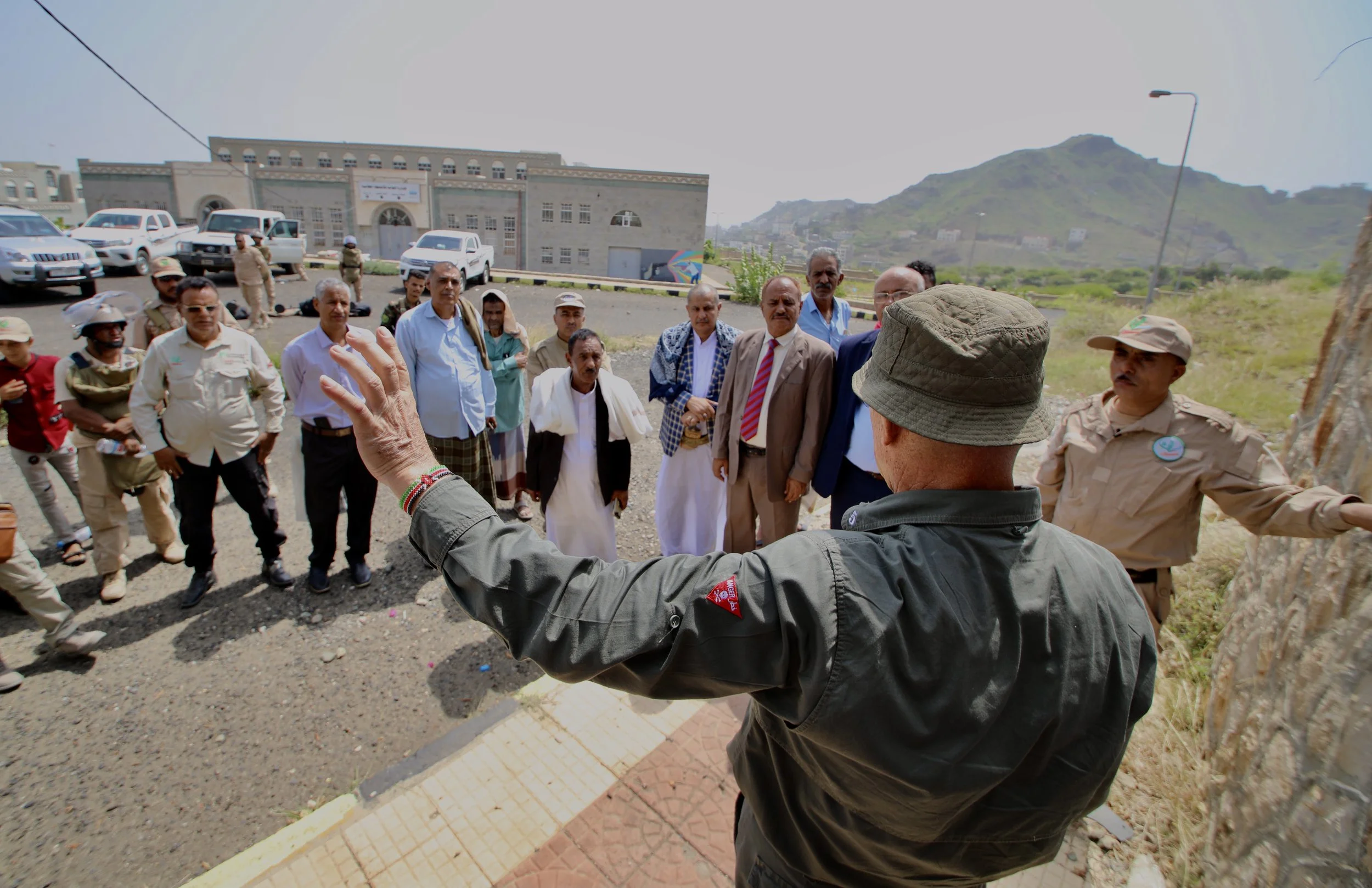
Residents, local officials and demimers gather around Deon von Landsberg, Training Adviser and Training Officer at Project Masam, during a community awareness session in Sabr Almawadim, western Taiz, Yemen. Public awareness campaigns are a key component of humanitarian mine action efforts in areas heavily contaminated by landmines and explosive remnants of war.
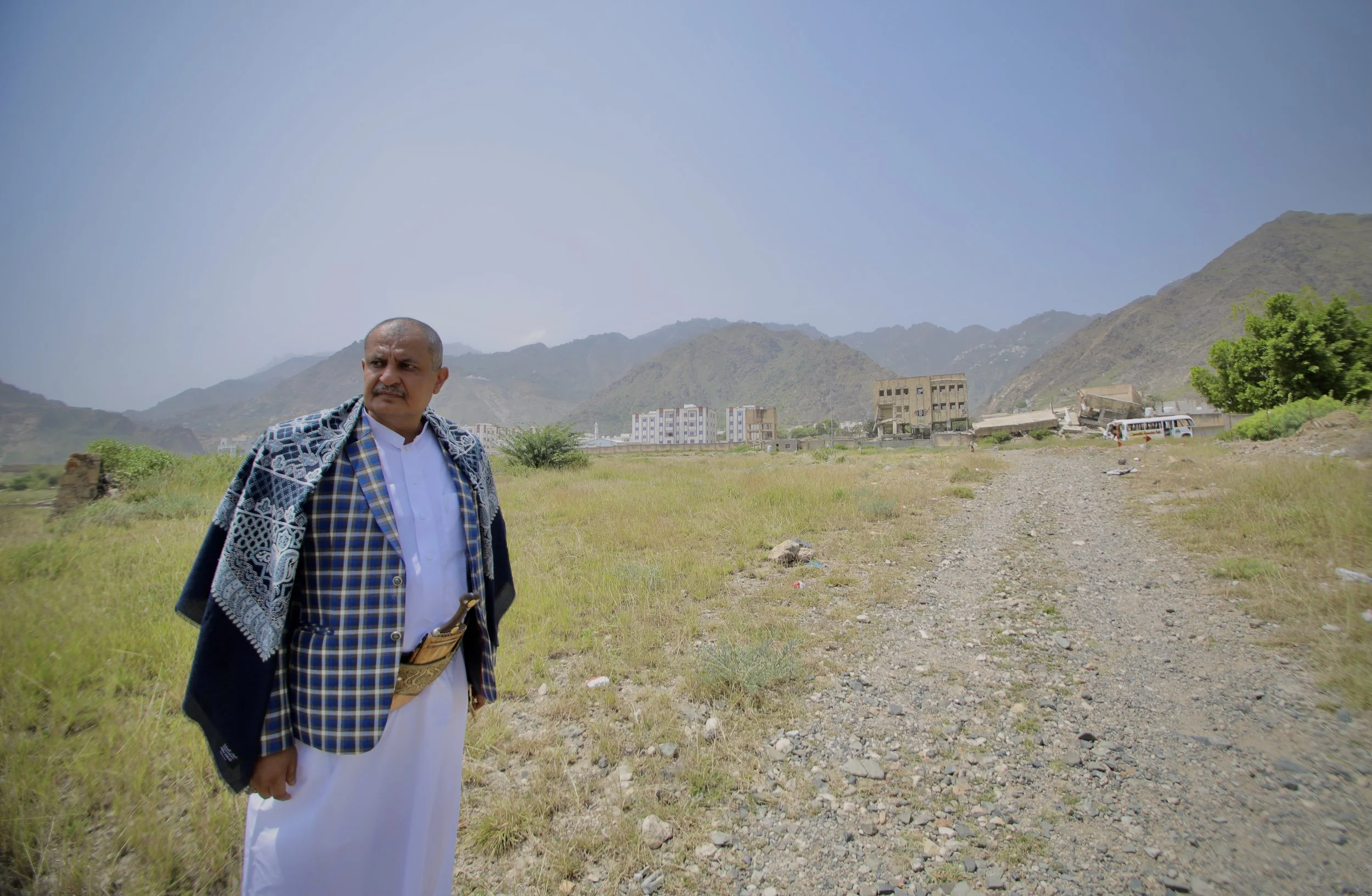
The local Director of Education (Taiz Governorate) stands near contaminated land on the outskirts of Taiz, Yemen. Former frontlines around the city remain heavily affected by landmines and unexploded ordnance, restricting movement and threatening nearby communities.
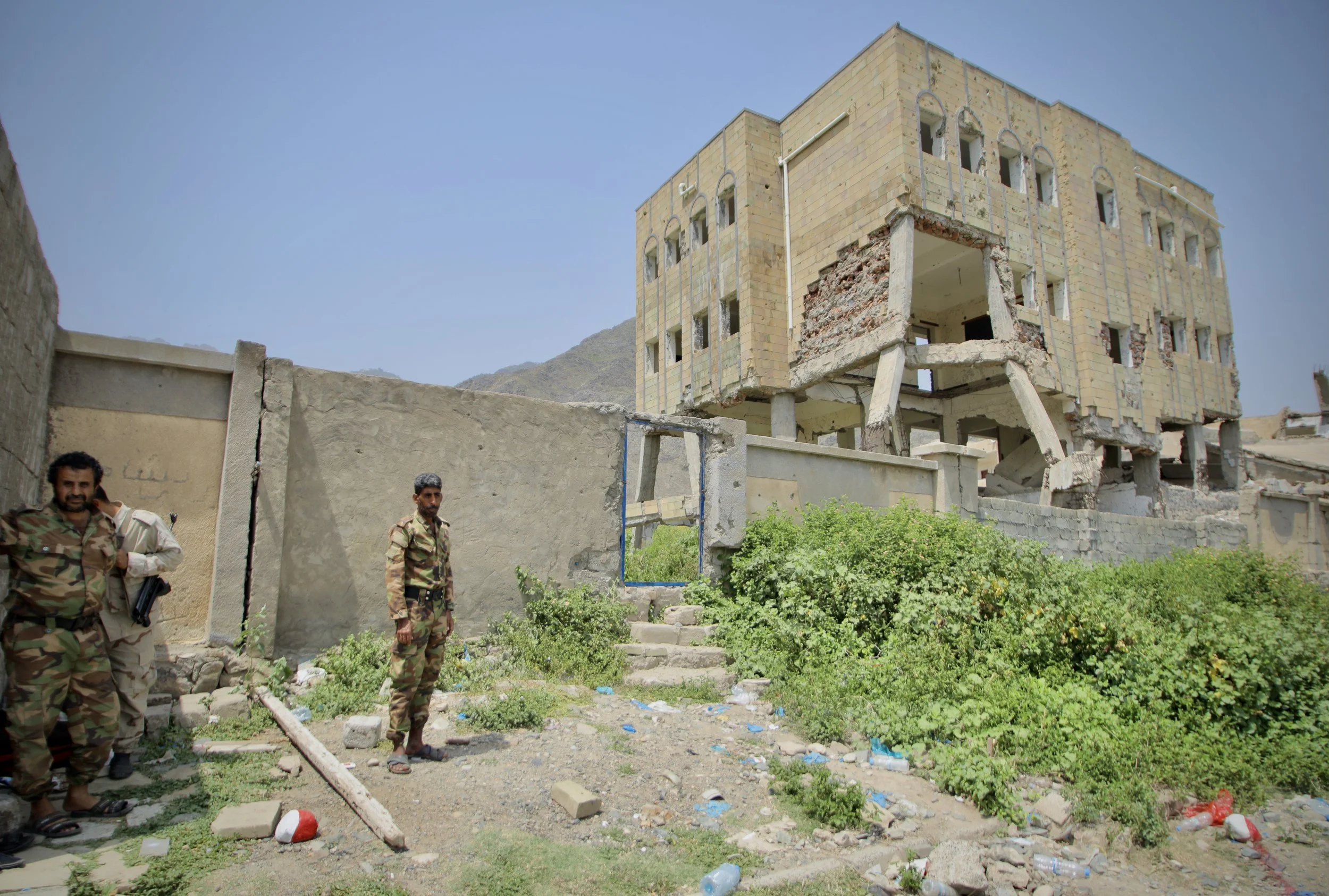
A damaged building stands near a former battleground in western Taiz, Yemen. Clearance teams prioritise roads, schools, homes and public areas affected by explosive contamination to allow displaced families and residents to return safely.
A damaged building stands near a former battleground in western Taiz, Yemen. Clearance teams prioritise roads, schools, homes and public areas affected by explosive contamination to allow displaced families and residents to return safely.
A damaged building stands near a former battleground in western Taiz, Yemen. Clearance teams prioritise roads, schools, homes and public areas affected by explosive contamination to allow displaced families and residents to return safely.
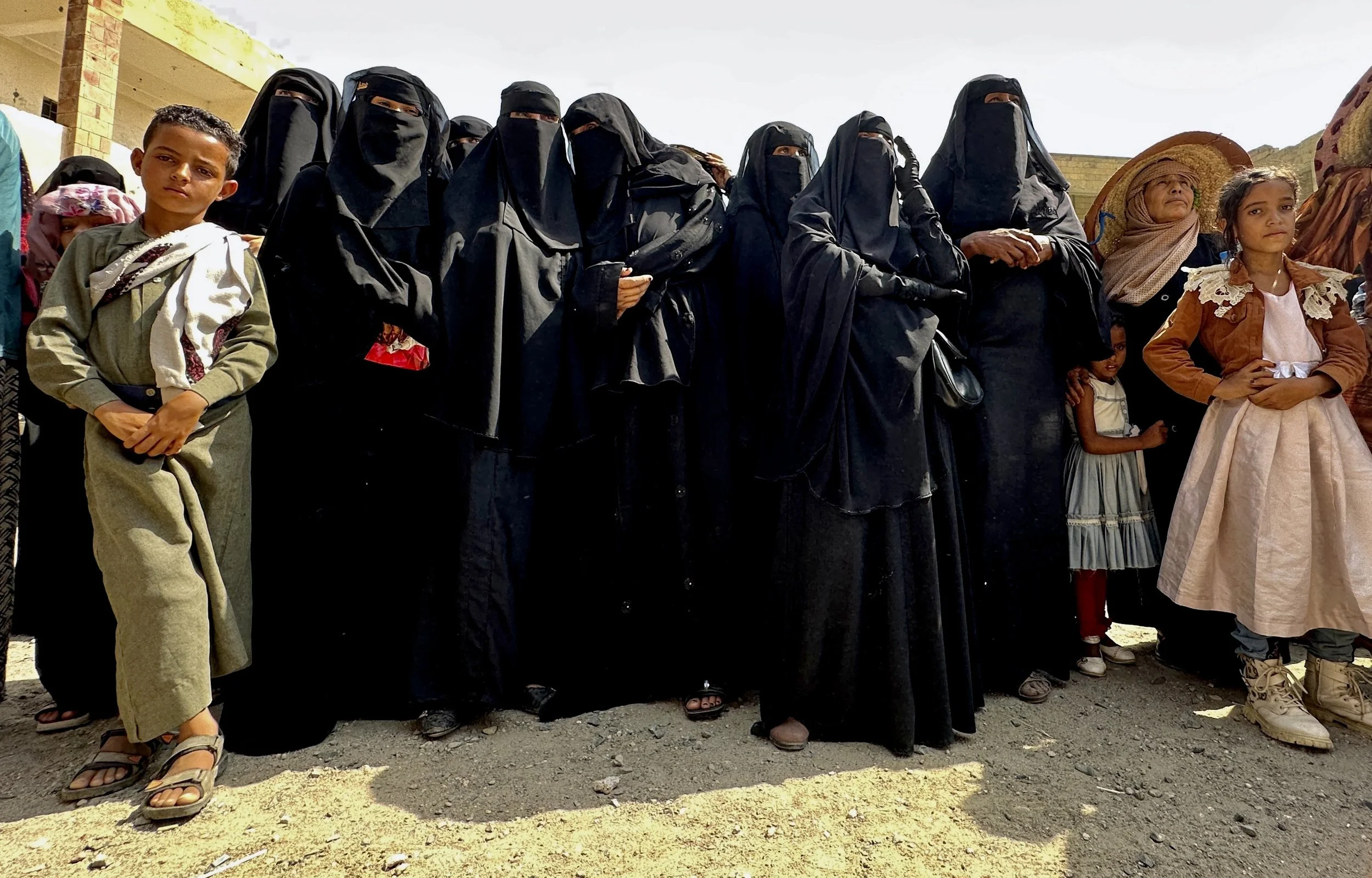
Women and children gather during an Explosive Ordnance Risk Education session in Sabr Almawadim, western Taiz, Yemen. Gender-sensitive awareness campaigns increasingly target mothers and children, who are among the civilians most vulnerable to explosive hazards in Yemen.
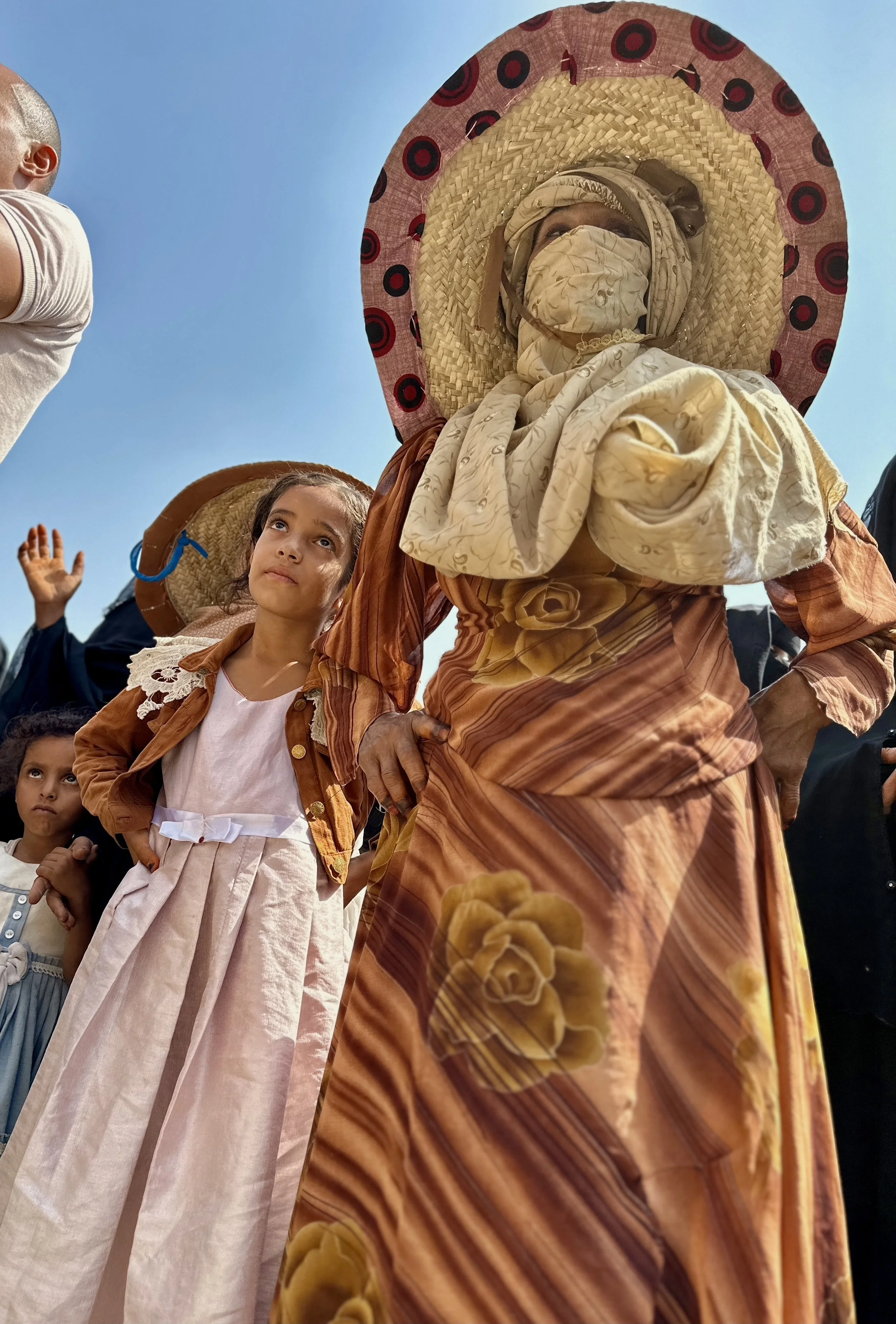
A woman and young girl attend an Explosive Ordnance Risk Education session in western Taiz, Yemen. Women and children are disproportionately exposed to landmines and unexploded ordnance while carrying out daily responsibilities such as collecting water, gathering firewood and caring for livestock.
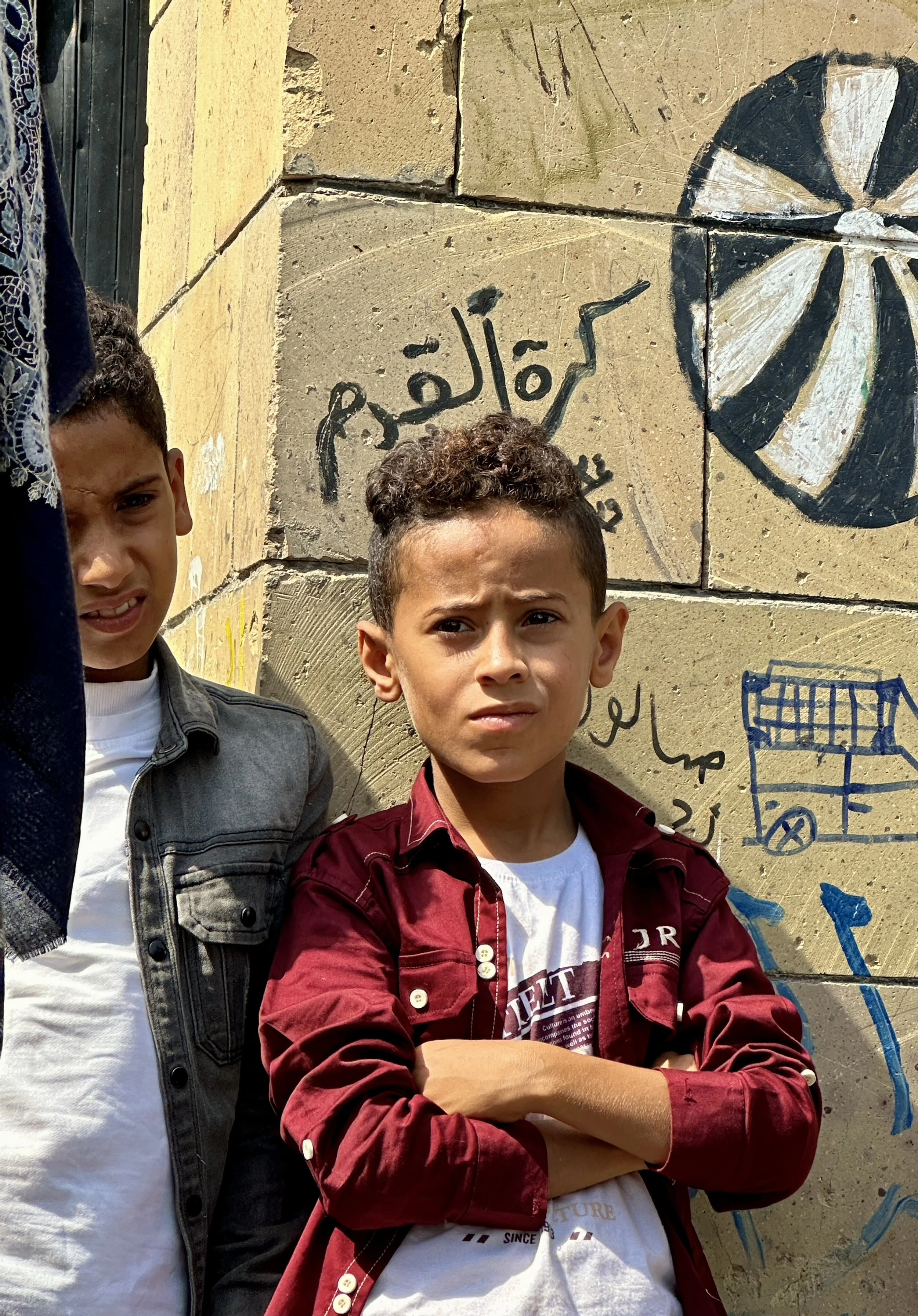
A child watches a community Explosive Ordnance Risk Education session in western Taiz, Yemen. Awareness campaigns seek to help children recognise suspicious objects and understand the dangers posed by explosive remnants of war still scattered across former frontline communities.
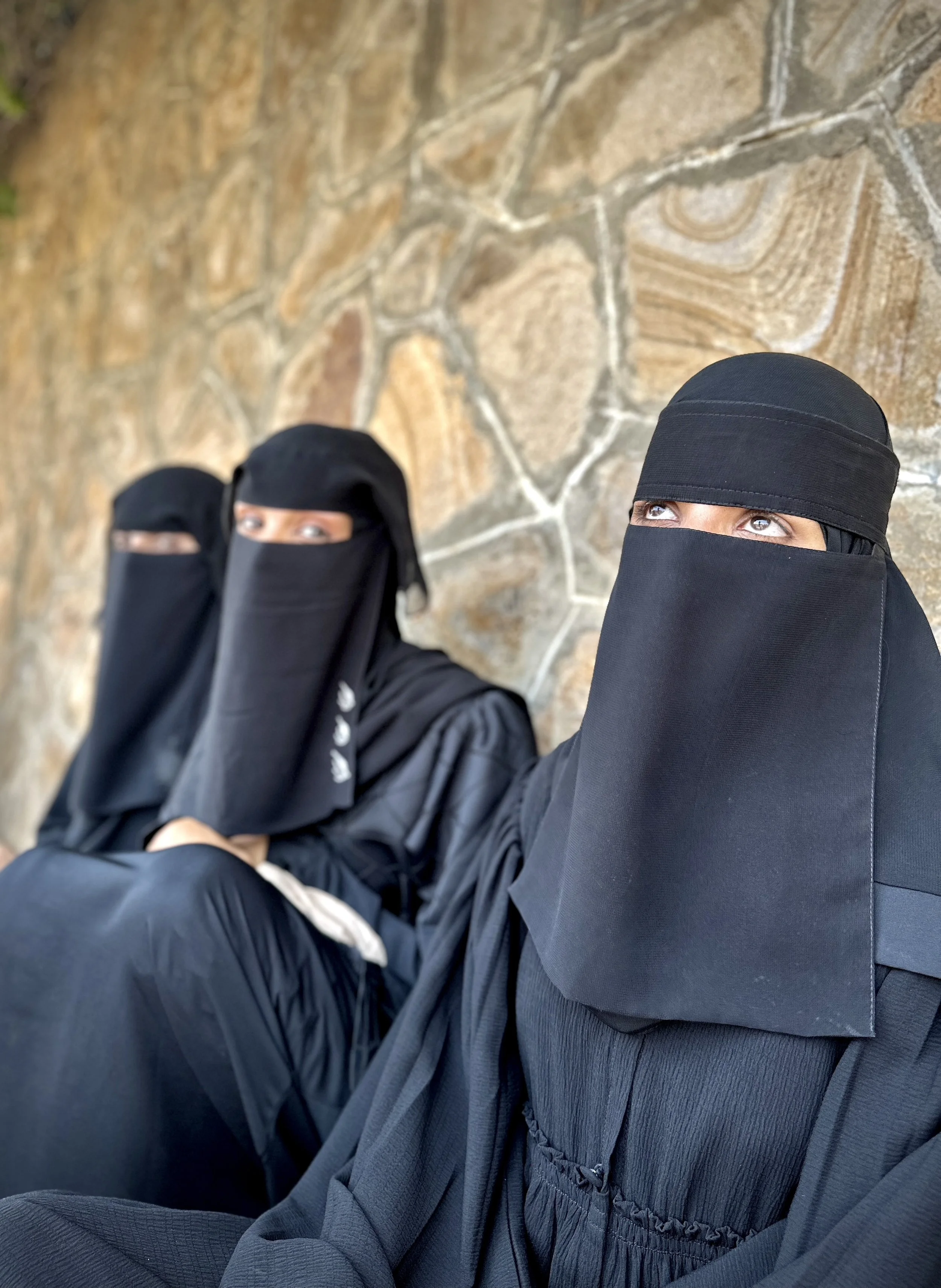
Explosive Ordnance Risk Educators Sara Abdulwahab Baggash (foreground right) and Boshra Mohammed (centre) wait for transport after completing a community awareness session in Taiz, Yemen. The educators, who work with the Yemen Executive Mine Action Centre (YEMAC), conduct sessions aimed at helping women and children recognise and avoid explosive hazards.
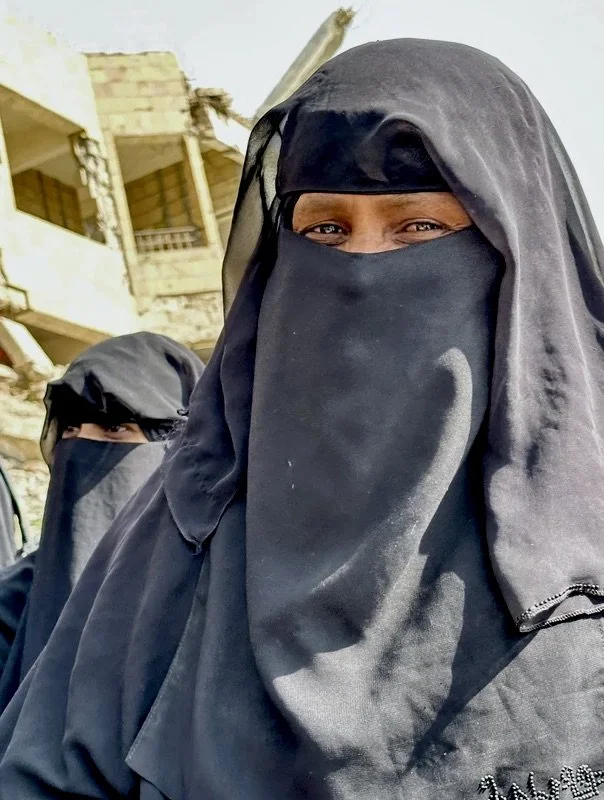
An older woman attends a community-based explosive ordnance risk education session in Taiz, Yemen. Years after frontline fighting moved away from the area, residents continue to live alongside landmines and explosive remnants of war, while women increasingly take on more visible public roles within community awareness and protection efforts.
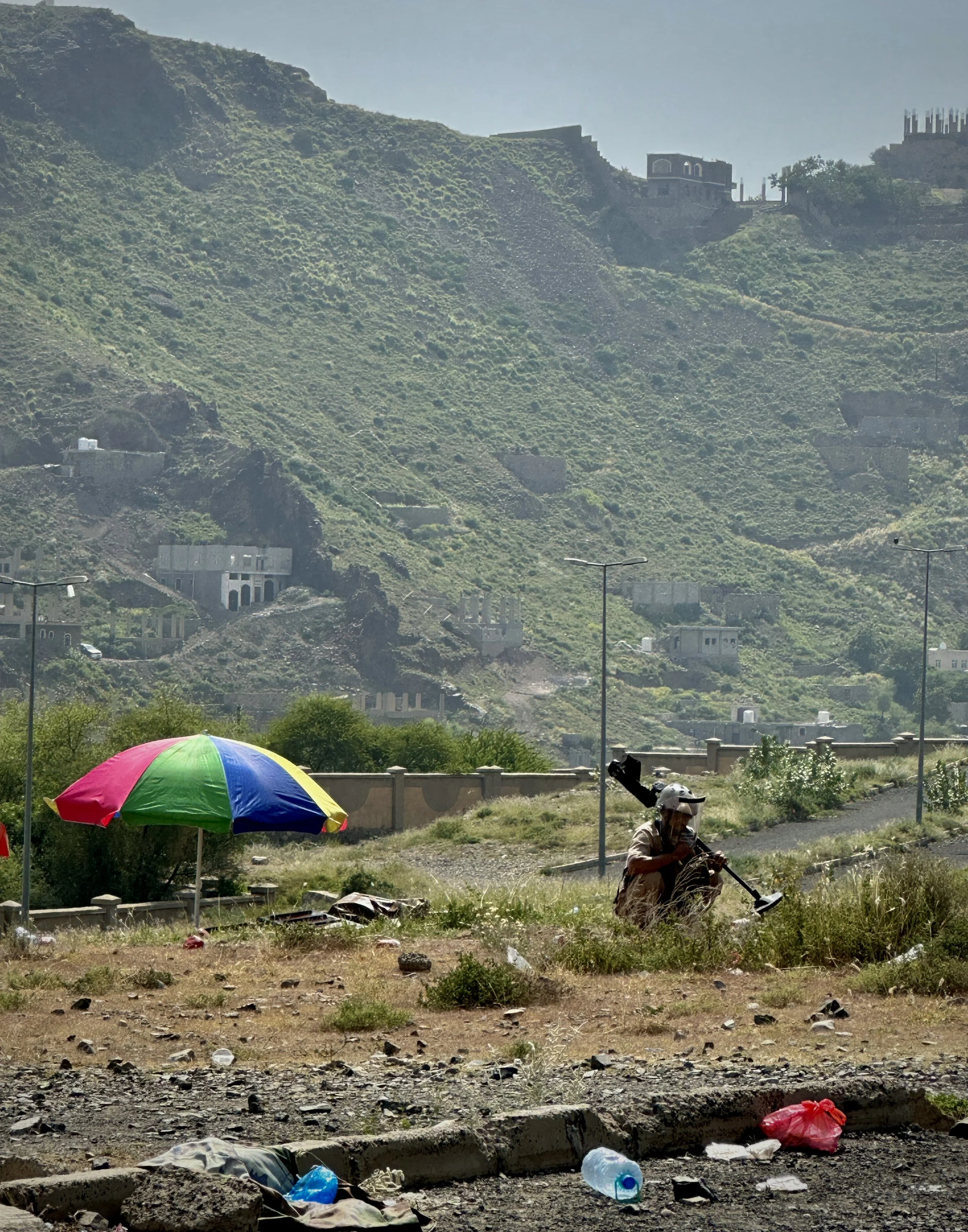
A deminer clears contaminated terrain during operations in Taiz, Yemen - behind the location of the EORE session. Humanitarian clearance teams continue to work across mountainous and rural areas affected by landmines, improvised explosive devices and other explosive remnants of war.
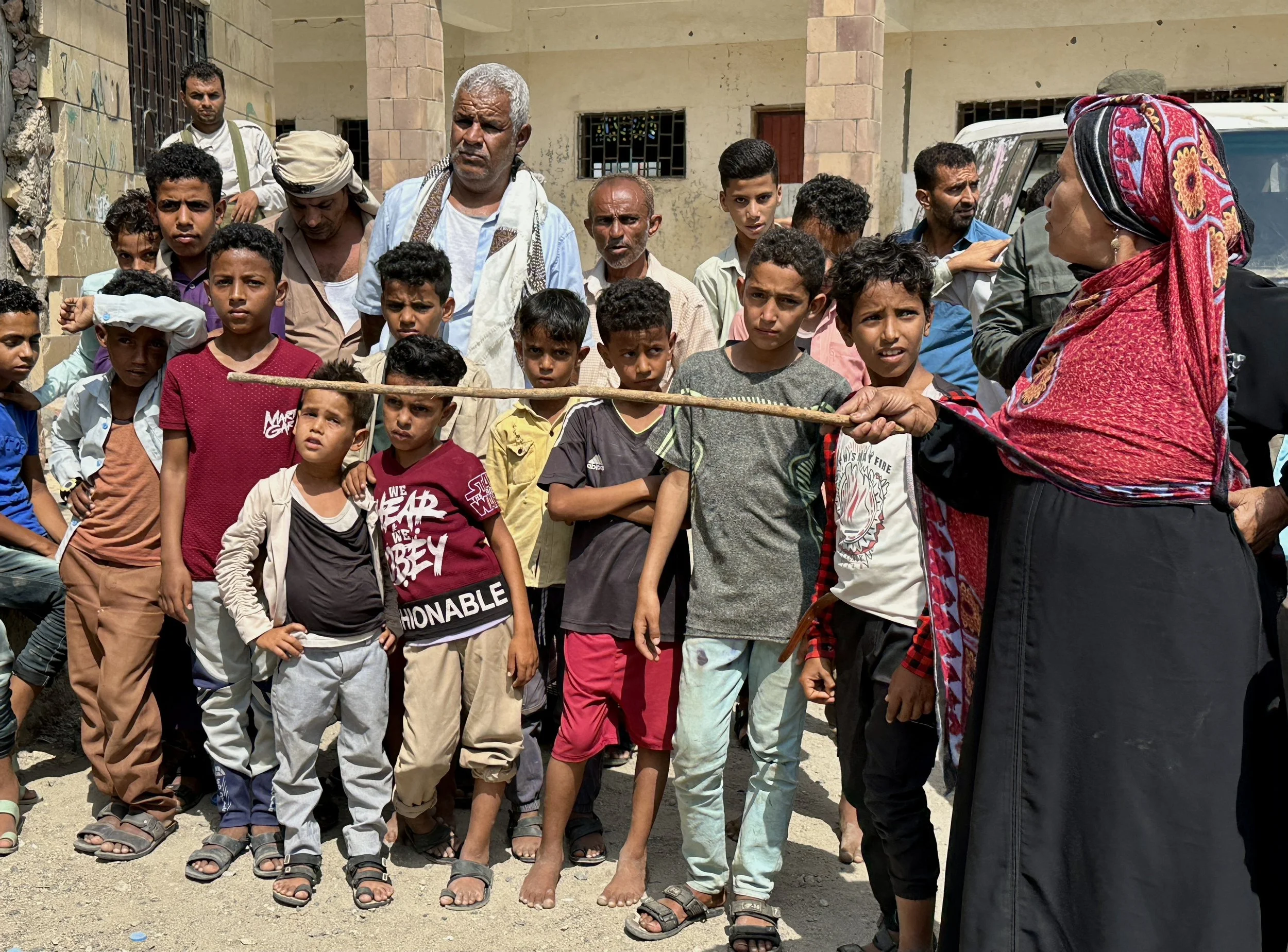
A local woman speaks to residents during an Explosive Ordnance Risk Education session in Taiz, Yemen, as children and community members listen nearby. Awareness campaigns encourage civilians to report suspicious objects and avoid touching unfamiliar items that may contain explosives.
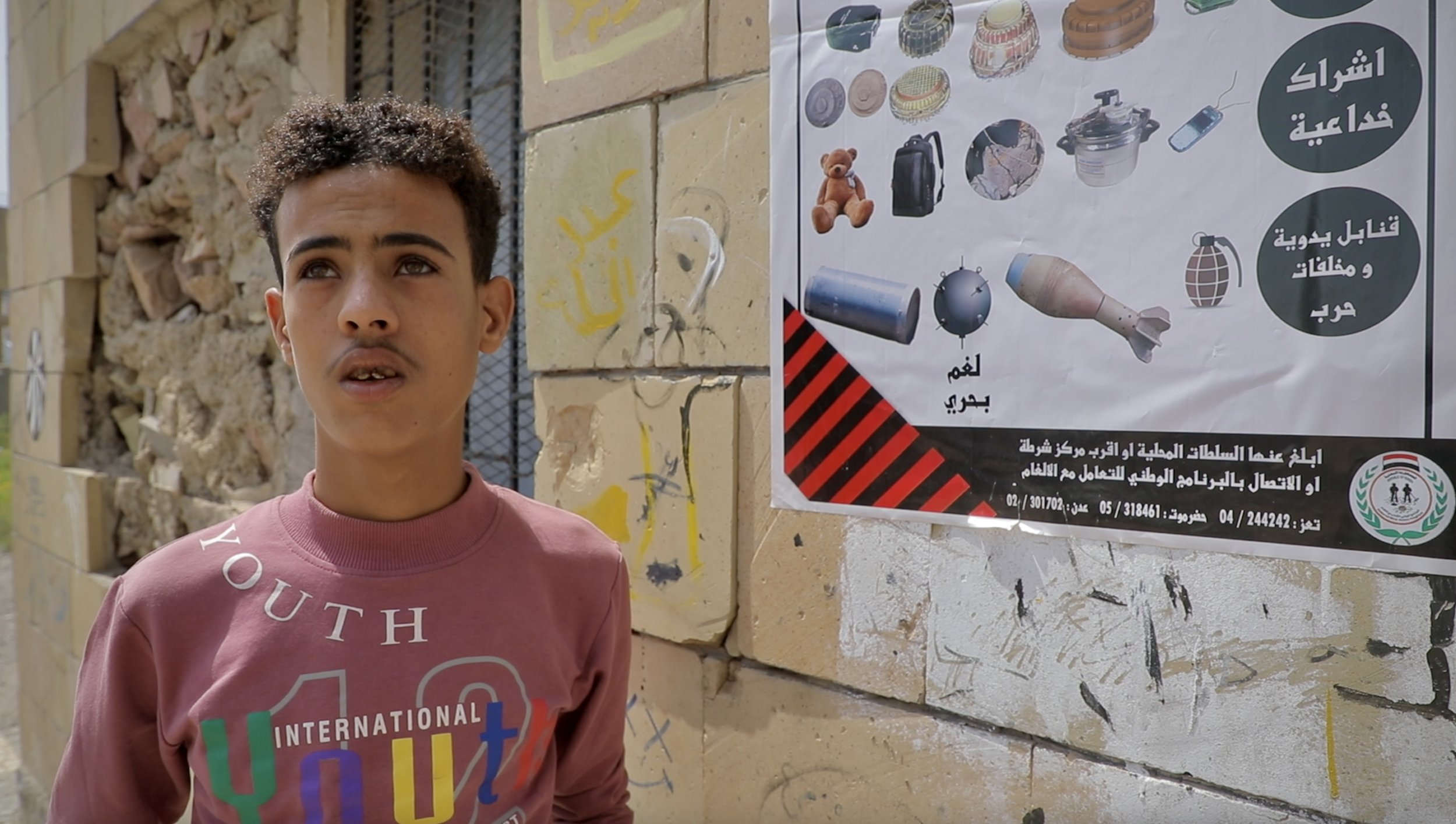
A child stands beside a warning poster illustrating explosive threats during an Explosive Ordnance Risk Education session in western Taiz, Yemen. Educators warn that landmines and improvised explosive devices may be concealed inside everyday objects, including toys, containers and household items.
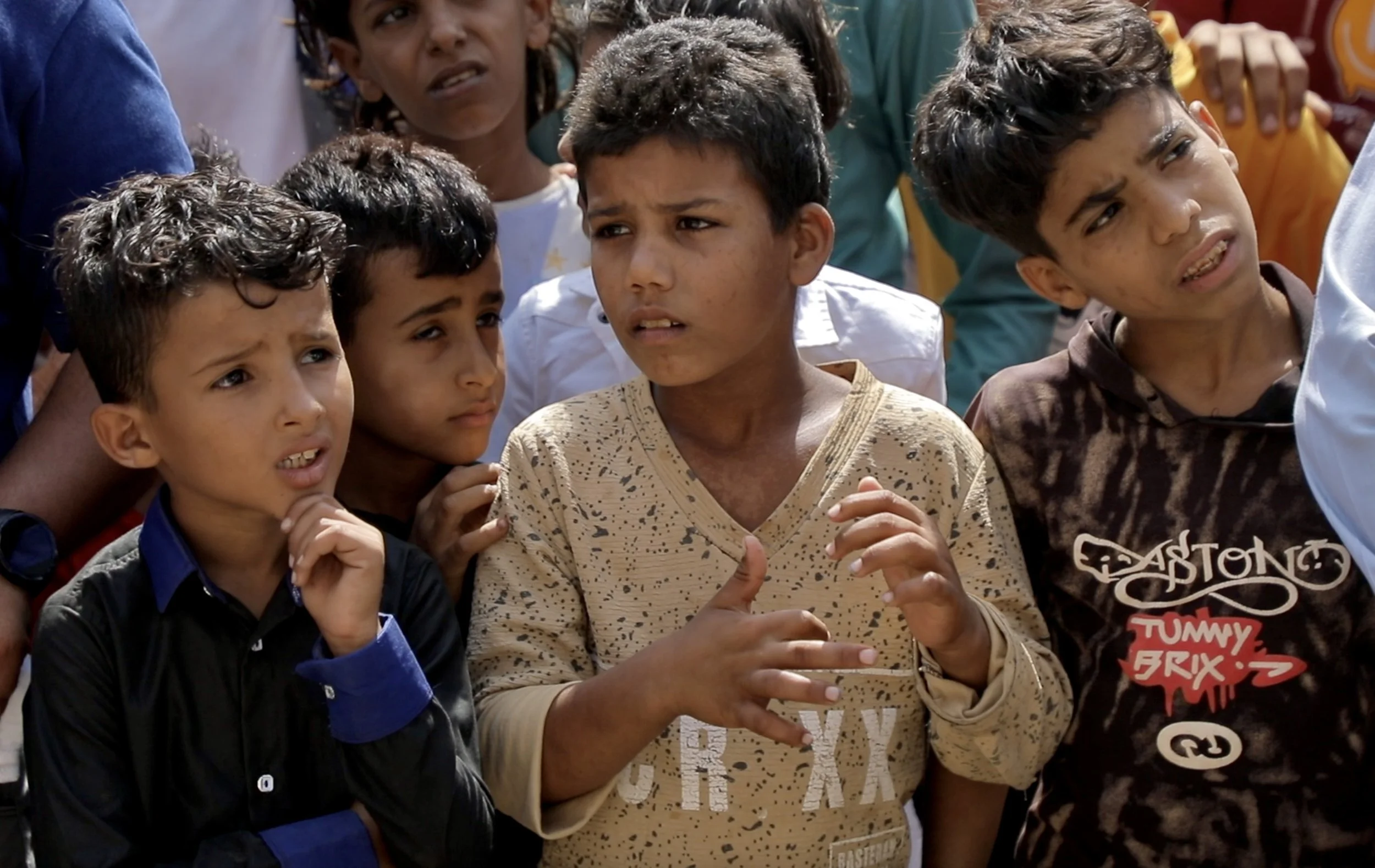
Boys listen during an Explosive Ordnance Risk Education session in western Taiz, Yemen. Educators say children are among the groups most at risk from landmines and unexploded ordnance, particularly in former frontline communities where explosive hazards remain embedded in everyday environments.
Boys listen during an Explosive Ordnance Risk Education session in western Taiz, Yemen. Educators say children are among the groups most at risk from landmines and unexploded ordnance, particularly in former frontline communities where explosive hazards remain embedded in everyday environments.
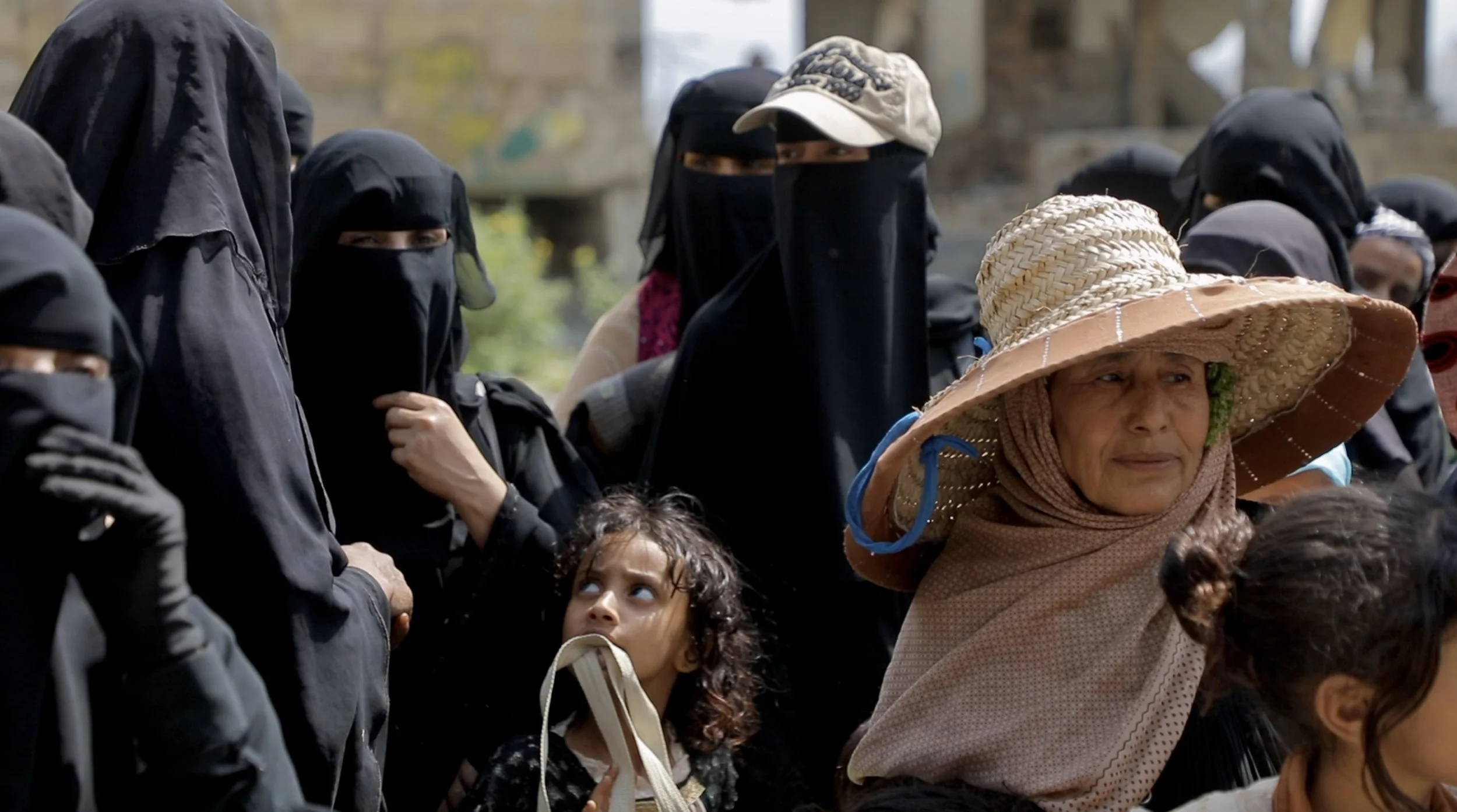
Women and children attend an Explosive Ordnance Risk Education session in Sabr Almawadim, western Taiz, Yemen. Humanitarian organisations and Yemeni educators say community-led and gender-sensitive awareness programmes have contributed to a reduction in landmine and explosive ordnance casualties across affected districts.