Al Shaab School lies in Akkad village, in Yemen’s Taiz governorate, a region still shaped by frontlines, insecurity and areas of Houthi control. Reaching places like this remains difficult for foreign journalists and photographers, and the school carries the atmosphere of a site few outsiders have entered since the war transformed it.
From 2015 onwards, parts of the school were used by Houthi forces to store landmines and explosive devices. Armed personnel also occupied classrooms, cutting holes into window bars so weapons could be fired towards the road and nearby fields. During Eid in 2022, explosives stored at the school detonated, destroying six classrooms.
Before the war, Al Shaab School welcomed between 700 and 800 students. Today, around 300 remain, split across four surviving classrooms. Others were displaced, transferred to distant schools, or dropped out of education altogether.
The photographs move through rooms where the idea of a school is still visible — desks, chalkboards, hand-drawn maps, posters, exercise books — but everything is marked by militarisation and abandonment. The yellow walls, barred windows, dust, rubble and hard sunlight give the building an eerie stillness, as if childhood and violence have been forced to occupy the same space.
This series documents not only the destruction of classrooms, but the way war continues to inhabit civilian places long after the weapons have been removed.
Photographed in Akkad village, Taiz governorate, Yemen.
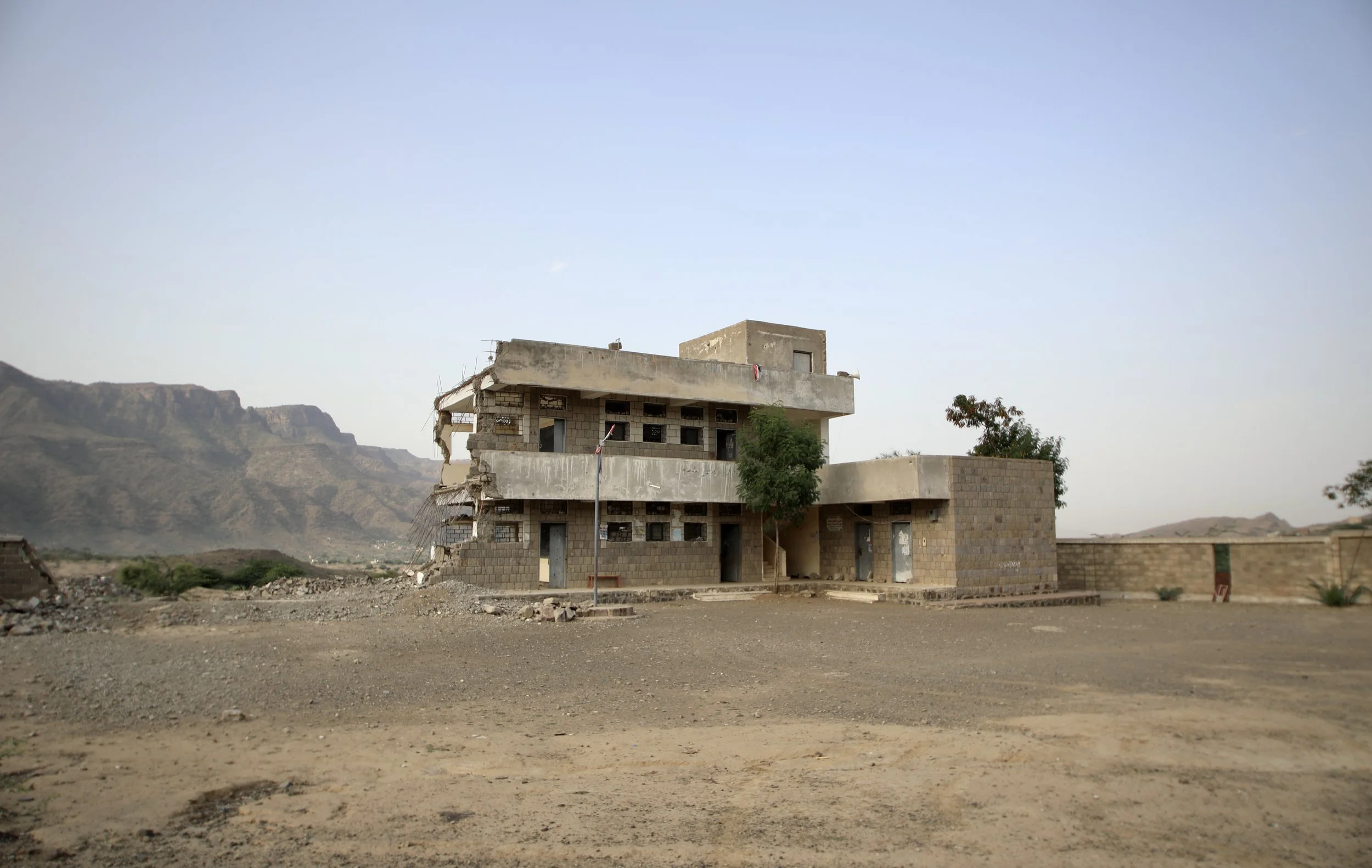
Al Shaab School in Jabal Habashi district, Taiz governorate, Yemen. Parts of the school were destroyed during the conflict after the building was reportedly used for military purposes and the storage of weapons. Years later, sections of the school remain unsafe and unusable.
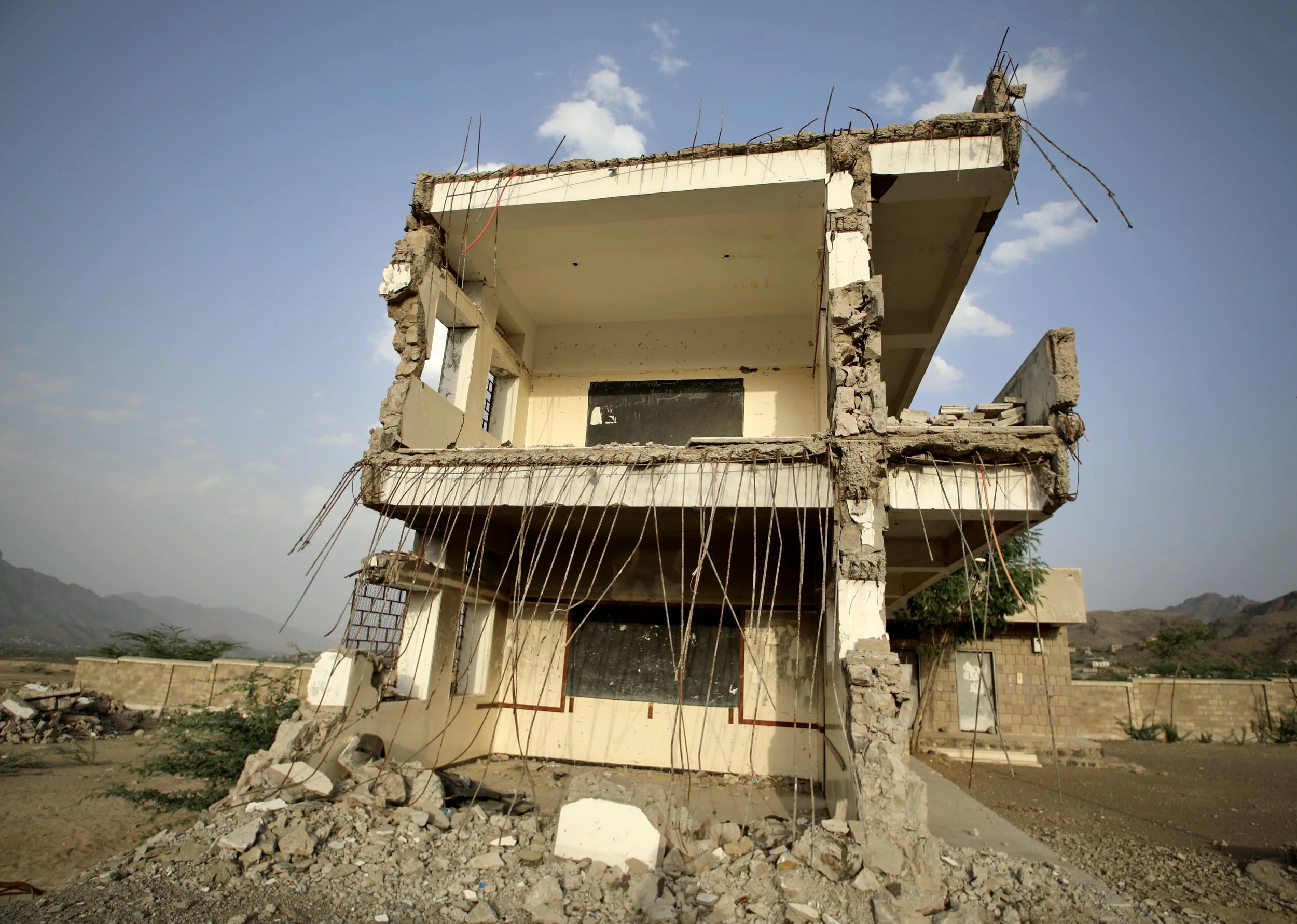
The destroyed side of Al Shaab School in Taiz governorate. Residents say the building was damaged during fighting after armed groups allegedly stored weapons inside the school compound.
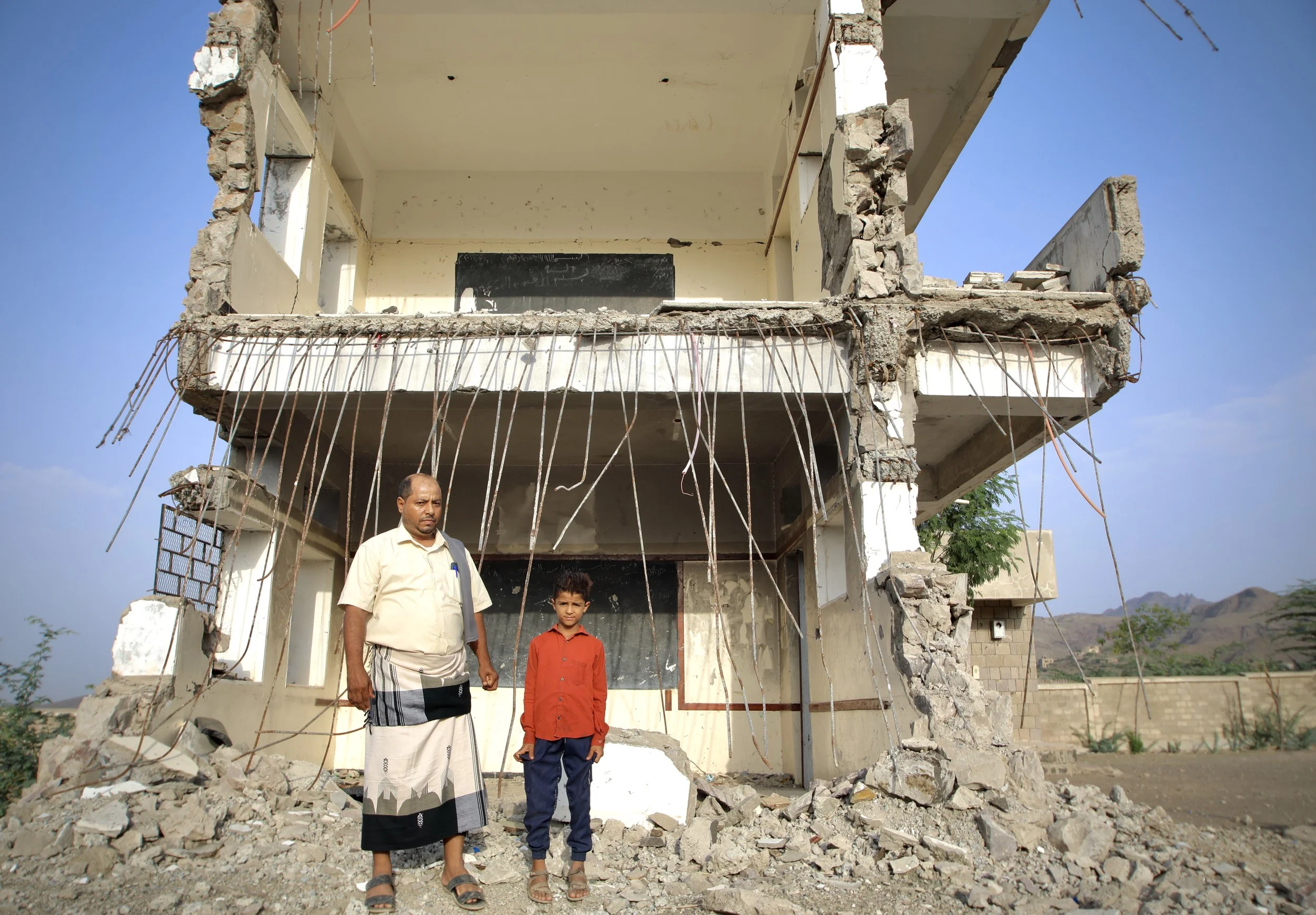
School Director Ahmad Mohamad Al Barakani, 33, poses with his son Marwan, 10, inside what would have been a classroom at Al Shaab School in Jabal Habashi district, Taiz governorate, Yemen.
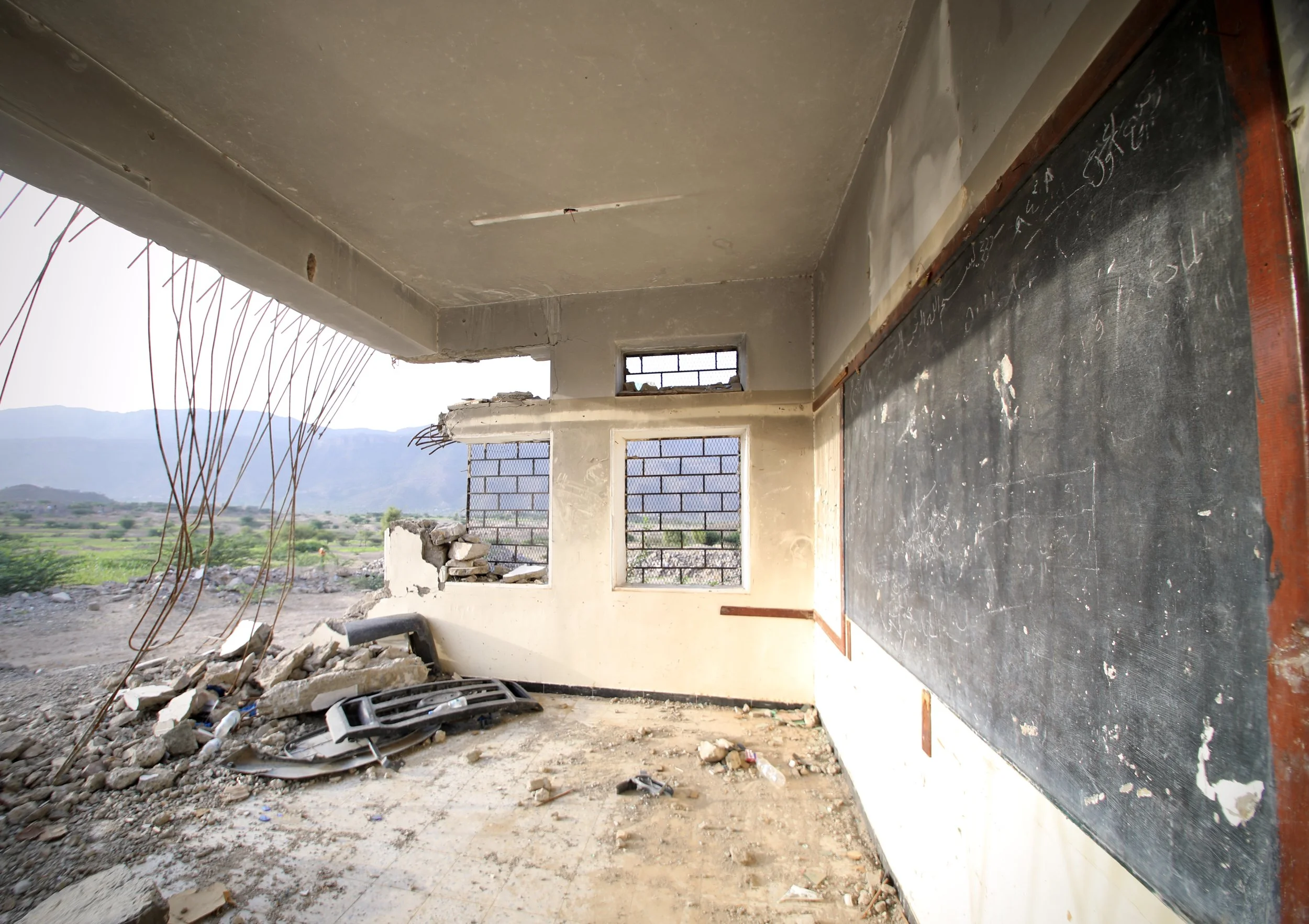
A classroom inside Al Shaab School remains exposed after part of the building was destroyed during the conflict.
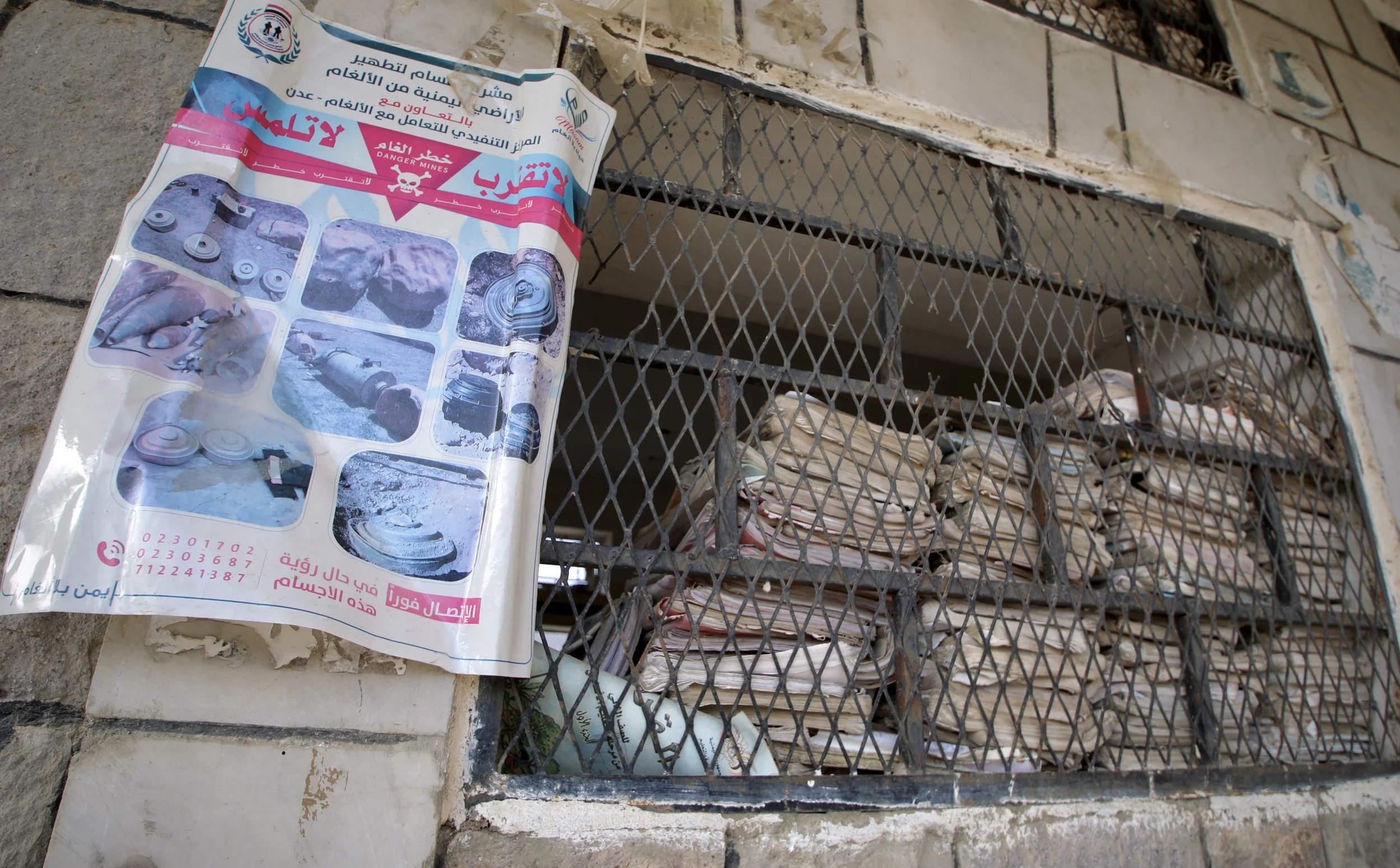
Mine-risk awareness posters hang inside Al Shaab School in Taiz governorate, where unexploded ordnance and conflict contamination remain a concern for residents and students.
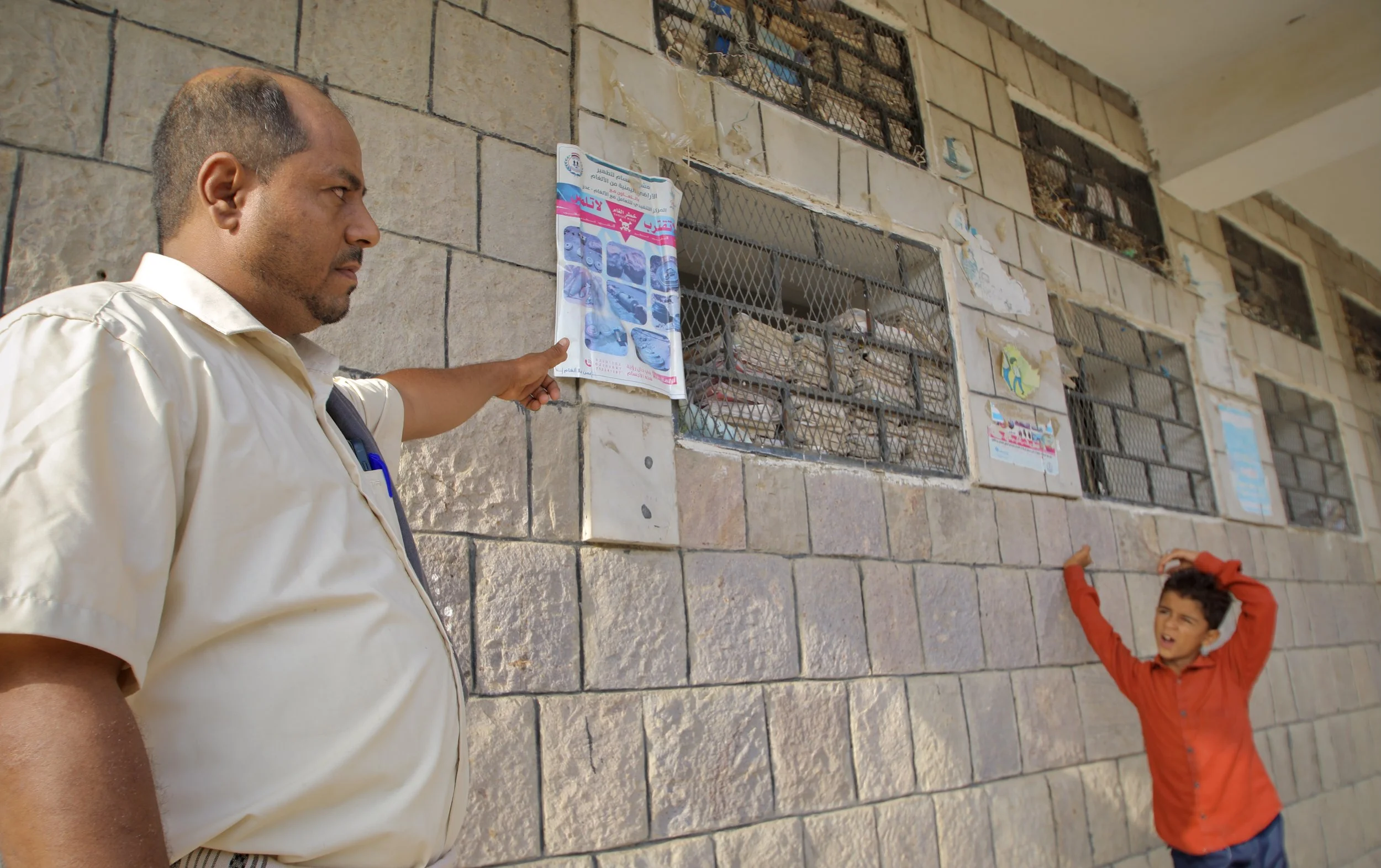
School Director Ahmad Mohamad Al Barakani points to a mine-risk awareness poster displayed inside Al Shaab School while student Ahmed Mohammed stands nearby. Residents say children continue studying in partially damaged sections of the building.
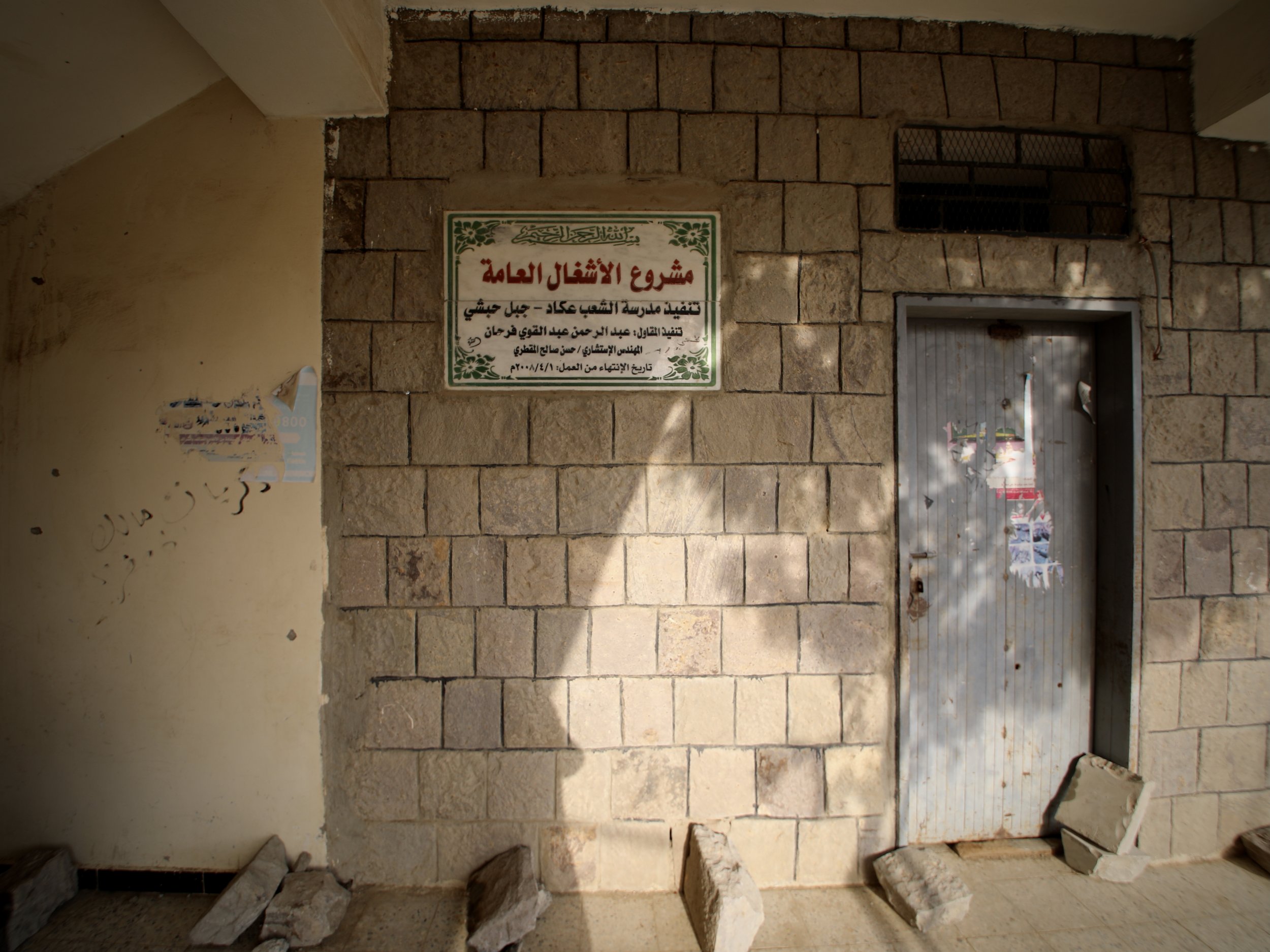
A forbidden section of Al Shaab School in Jabal Habashi district, Taiz governorate.
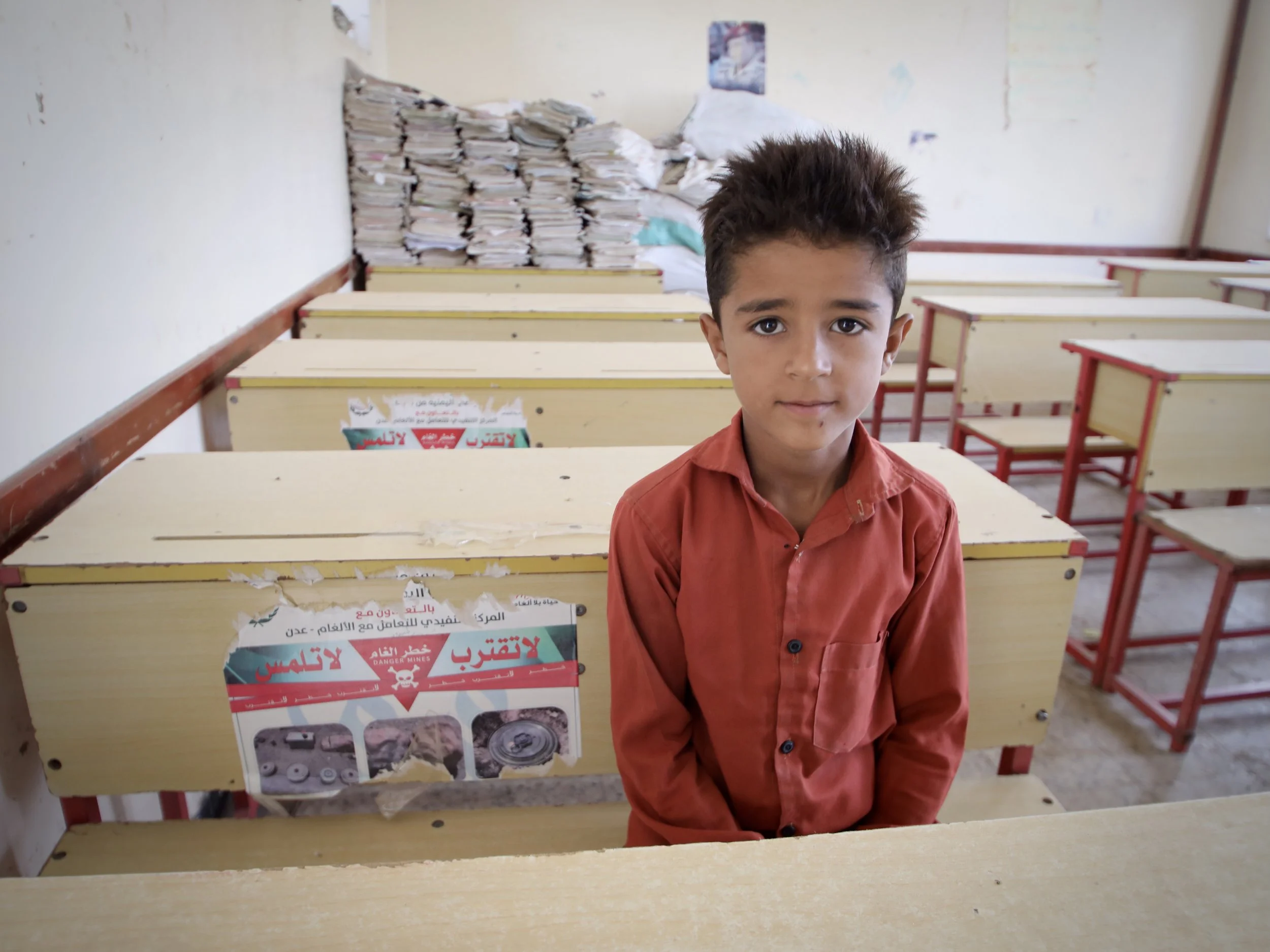
Marwan stands inside a classroom at Al Shaab School, where mine-risk awareness posters have been attached to school desks.
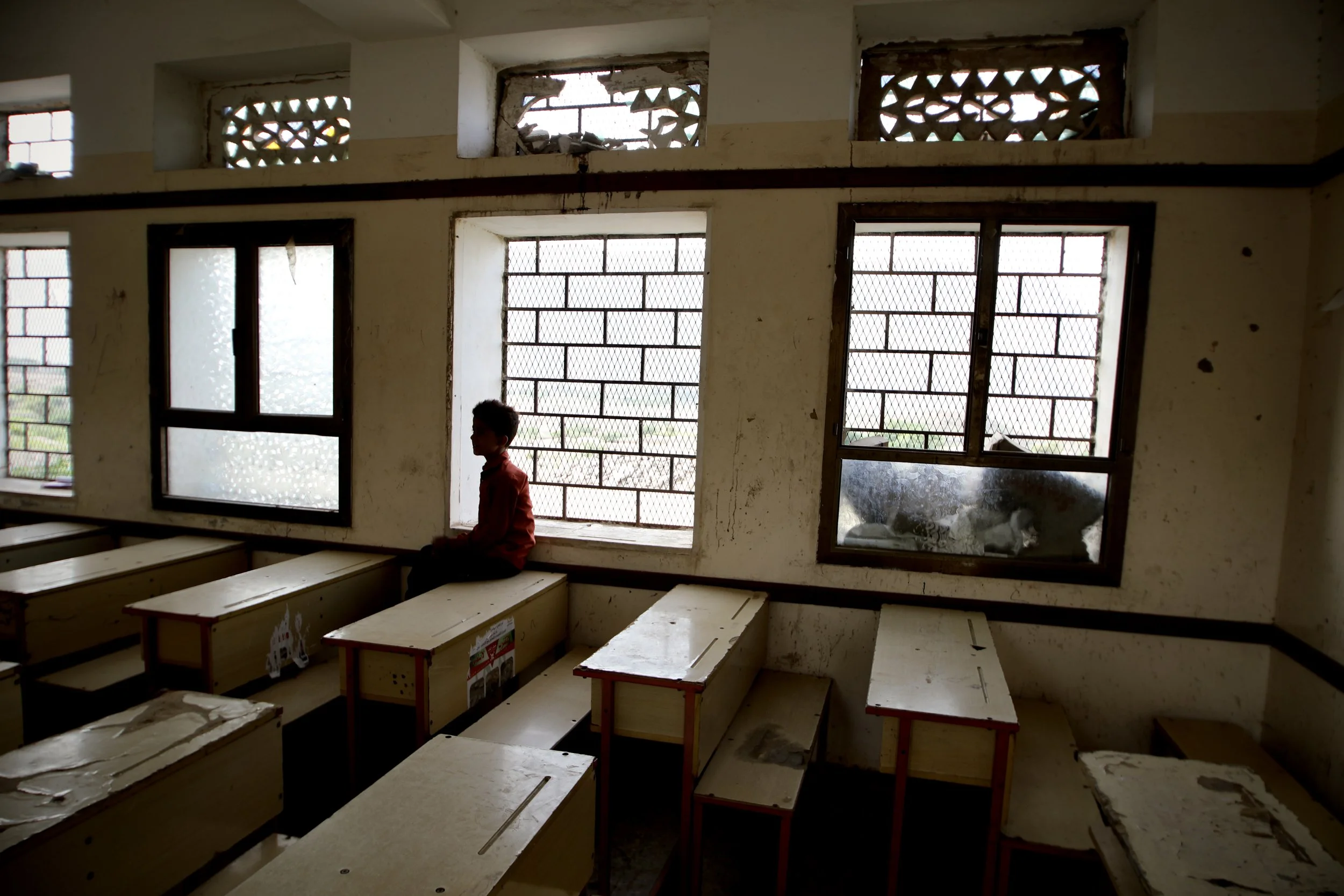
Marwan Al Barakani, 10, sits inside a damaged classroom at Al Shaab School in Jabal Habashi district, Taiz governorate, Yemen. Residents say openings carved into the classroom windows were used by Houthi fighters as firing positions for machine guns aimed at the surrounding road and nearby fields during the conflict.
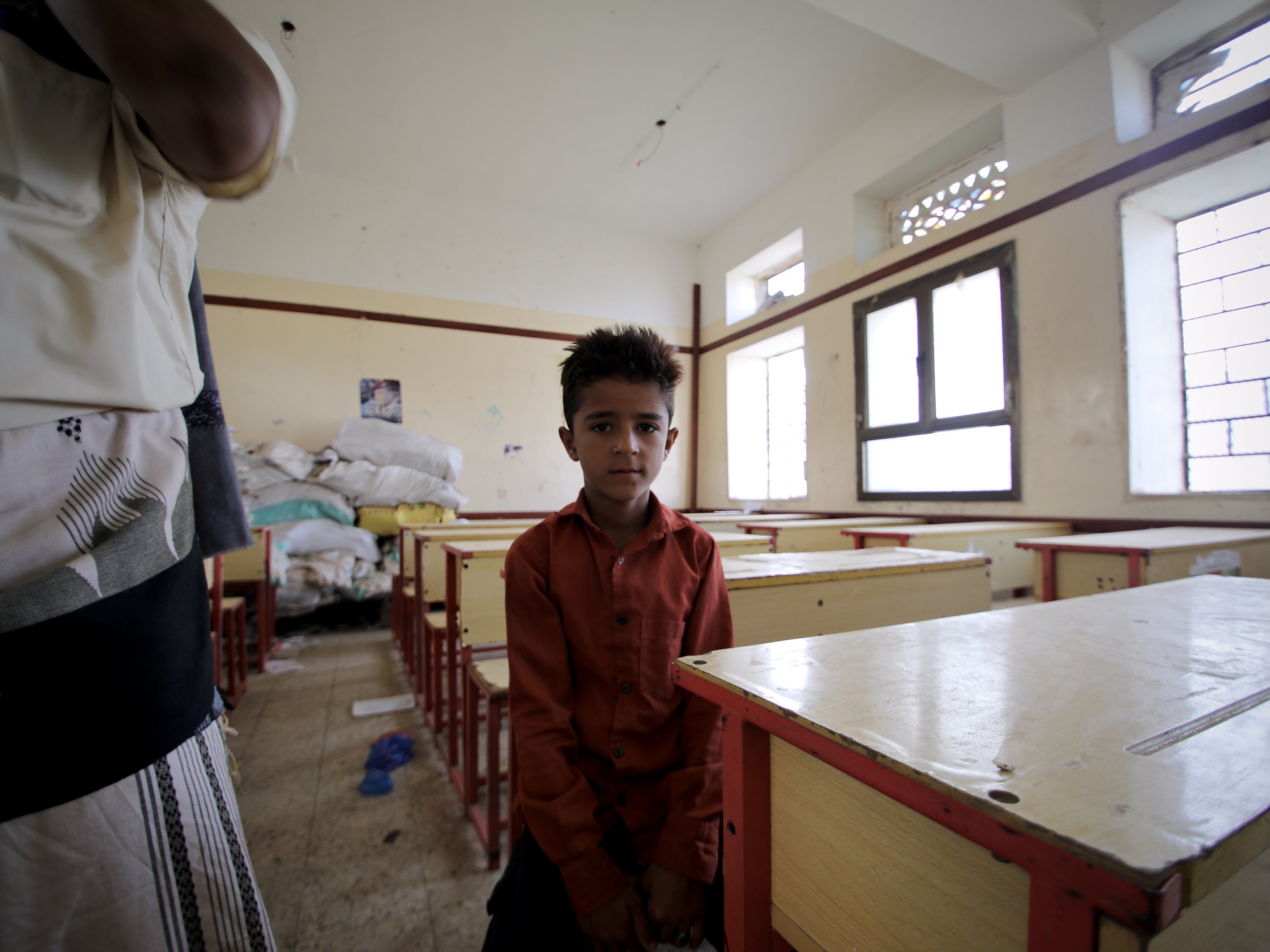
Marwan Al Barakani, 10, sits inside a classroom at Al Shaab School in Jabal Habashi district, Taiz governorate, Yemen, while his father Ahmad Mohamad Al Barakani, 33, stands nearby. After part of the school was destroyed during the conflict, around 300 students were left sharing four remaining classrooms. Marwan said that during hot weather, the 38 or 40 students crowded into the smallest rooms “can’t breathe”.
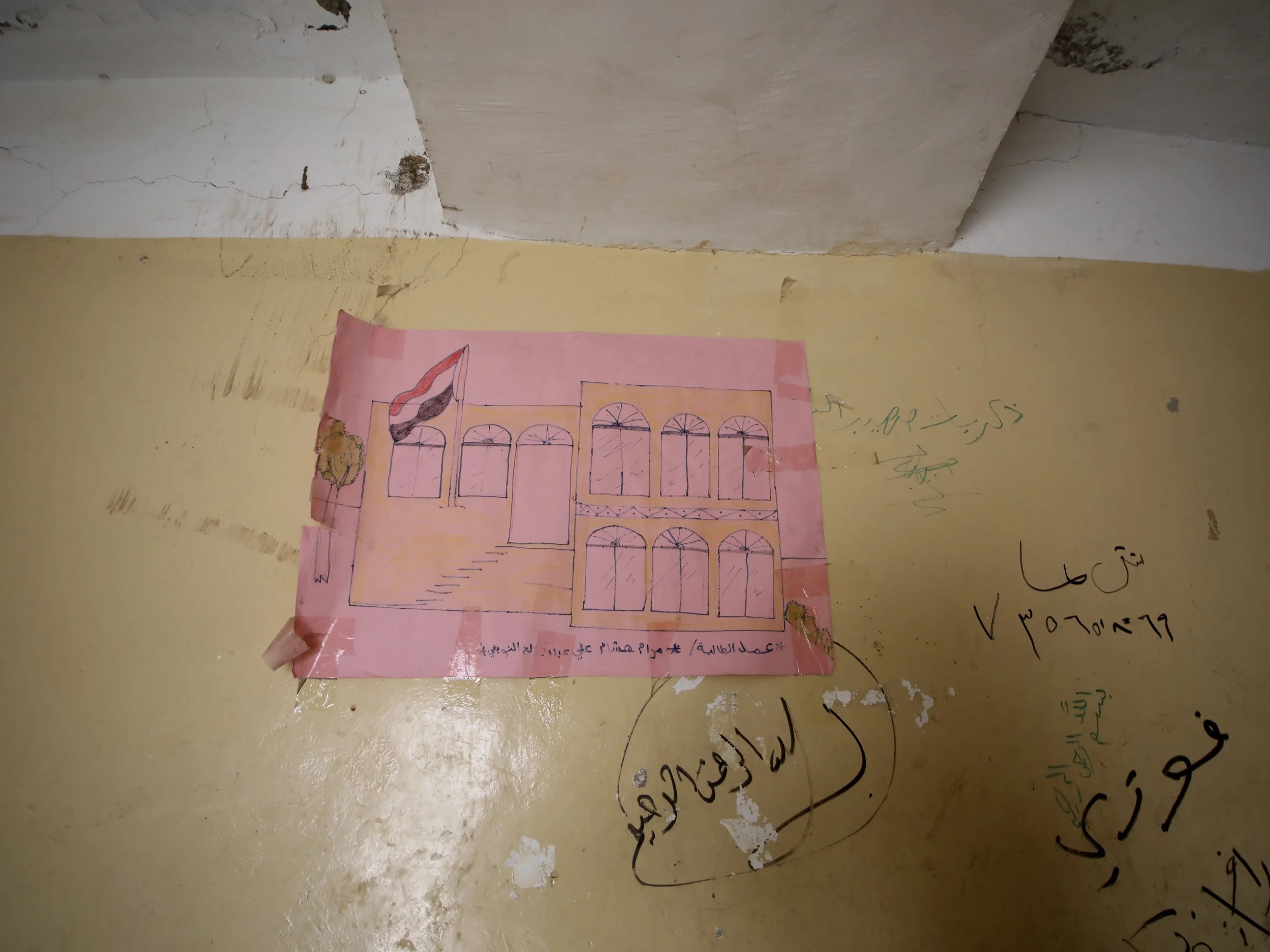
A child’s drawing inside Al Shaab School depicts the building before part of it was destroyed during the conflict.
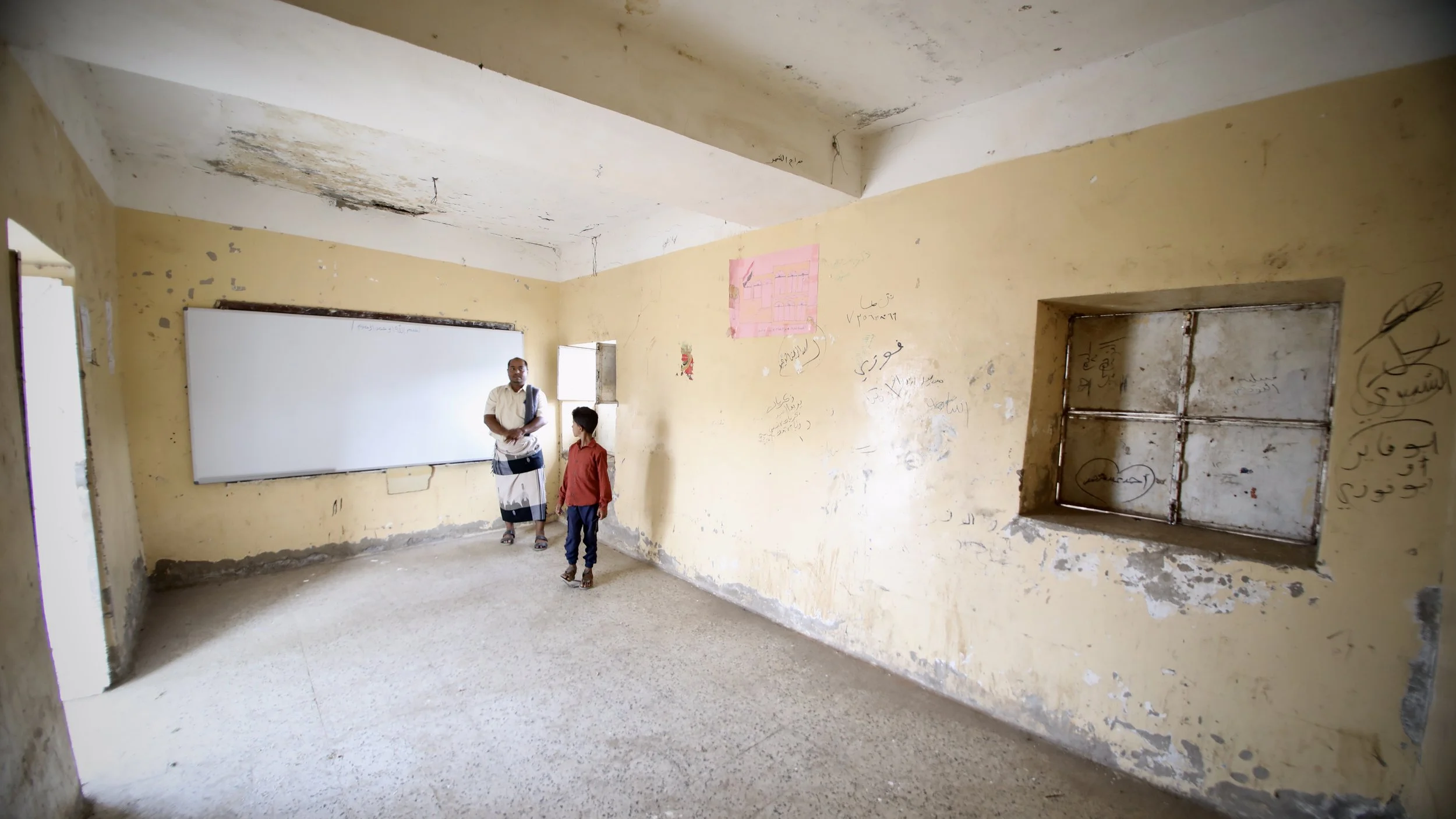
School Director Ahmad Mohamad Al Barakani, 33, and his son Marwan, stand inside an empty classroom at Al Shaab School, where some rooms remain unusable due to conflict damage.
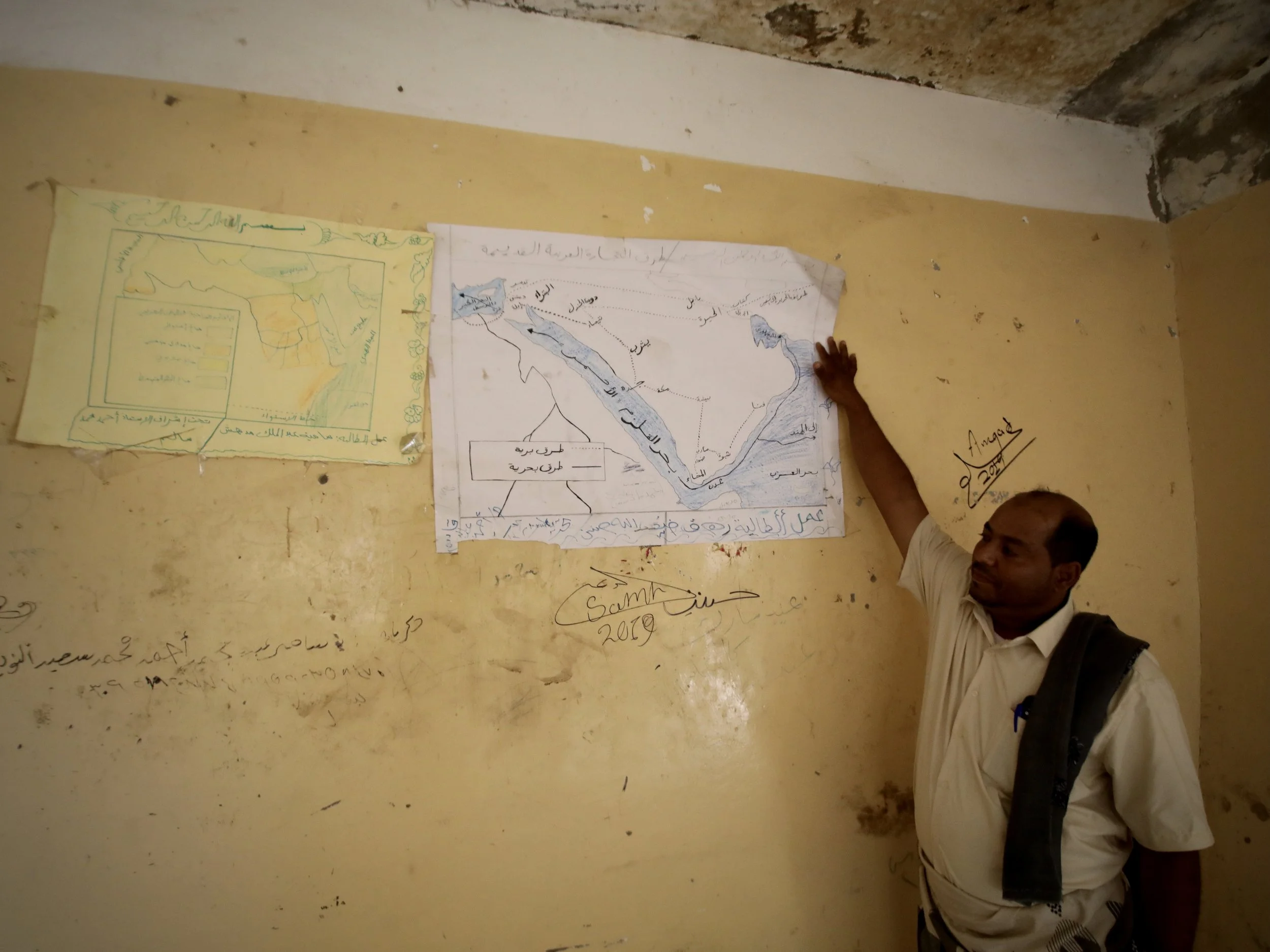
School Director Ahmad Mohamad Al Barakani points to hand drawn educational maps of Yemen still hanging inside a damaged classroom at Al Shaab School in Taiz governorate.
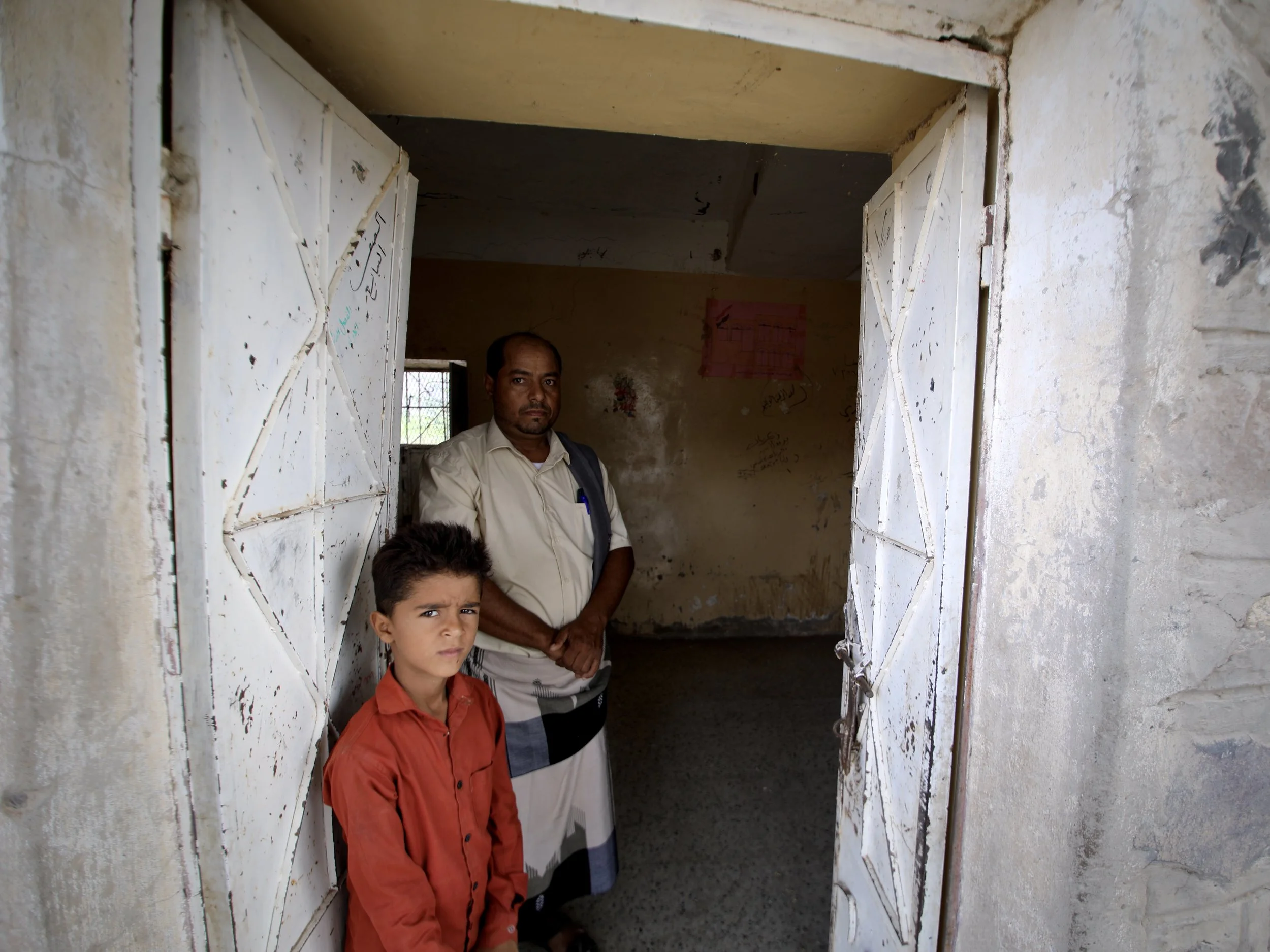
School Director Ahmad Mohamad Al Barakani, 33, and his son Marwan, stand in the doorway of a damaged classroom at Al Shaab School in Jabal Habashi district, Taiz governorate.
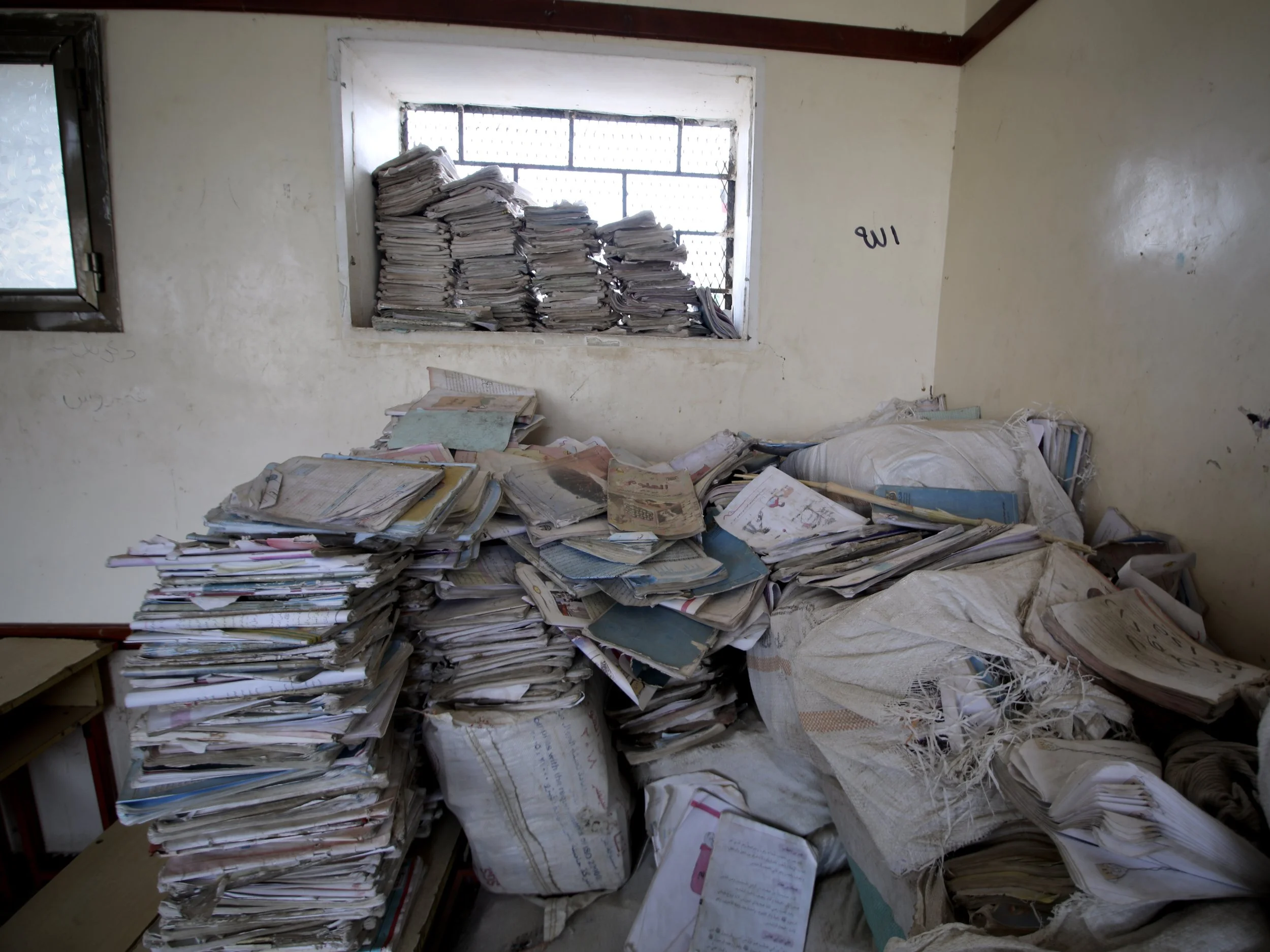
Damaged schoolbooks and teaching materials remain piled inside Al Shaab School years after parts of the building were destroyed during the conflict.